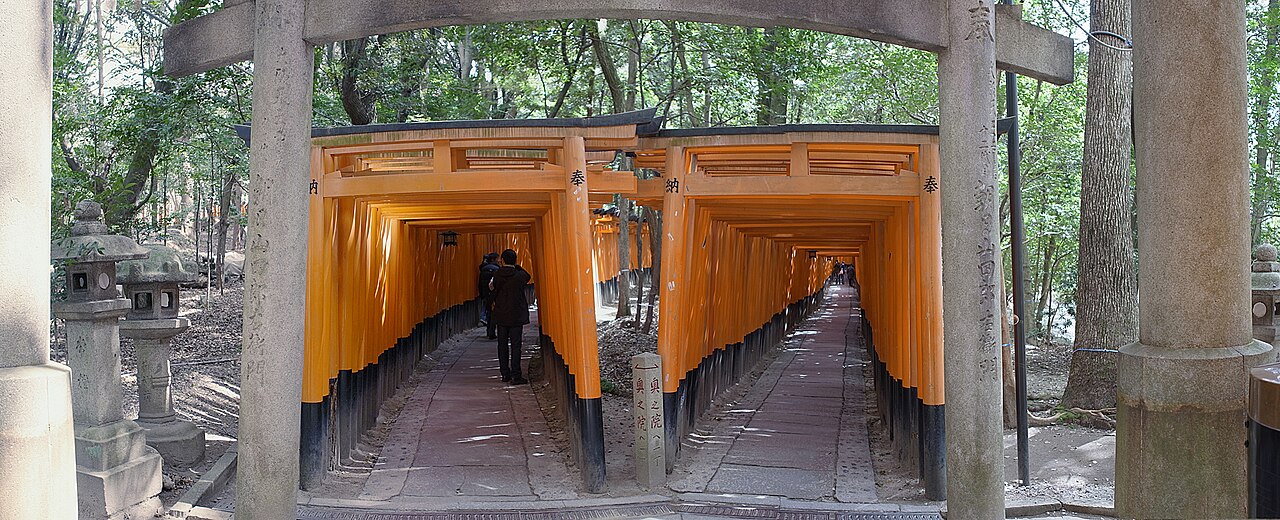
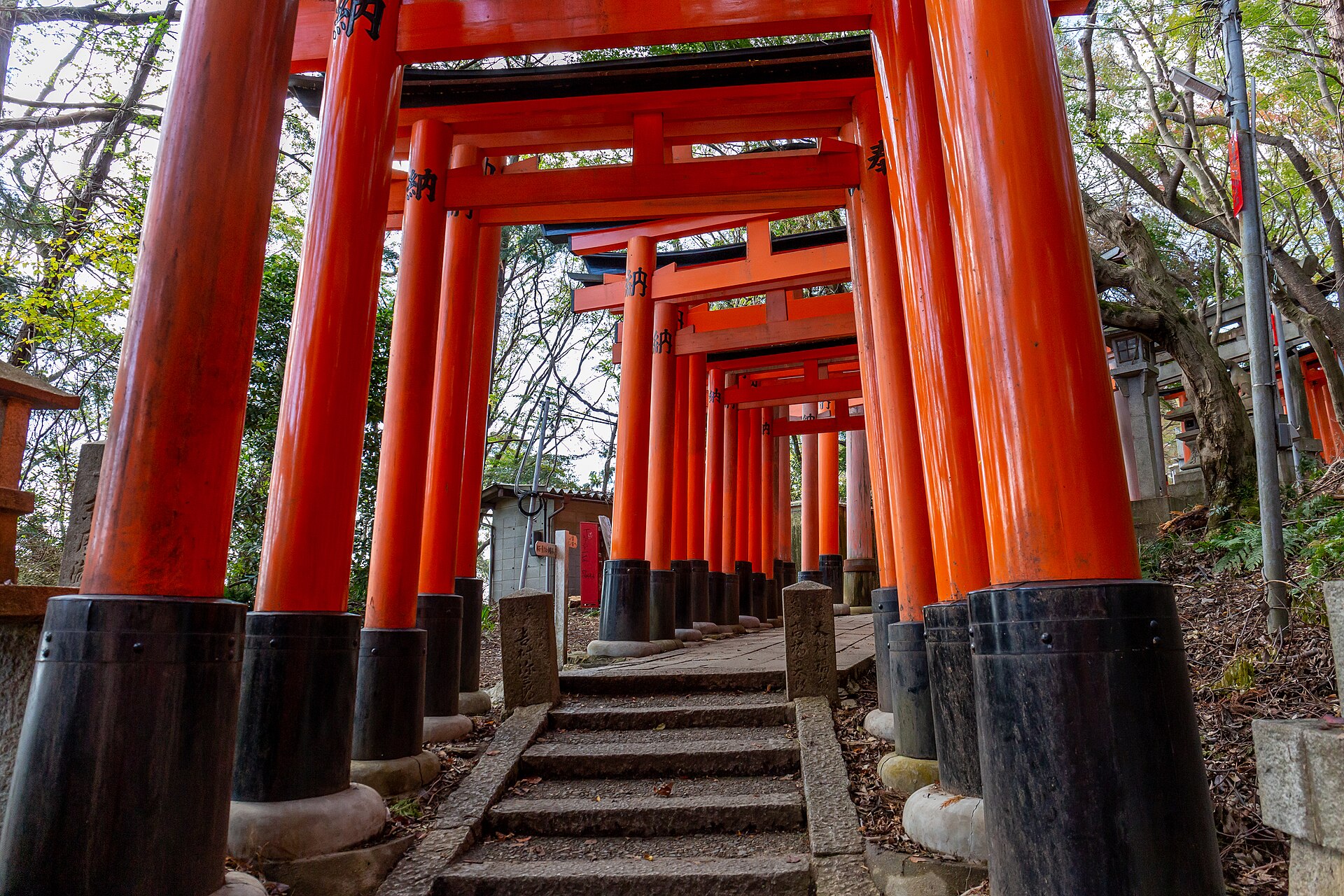
Senbon Torii is the vermilion torii-gate passage at Fushimi Inari Taisha in Kyoto. This page is about that named landmark, not the whole shrine or the full Inariyama circuit. The shrine says worshippers have donated torii since the Edo period (1603–1868) to express prayers and gratitude, and identifies this passage as its famous “Thousand Torii” gates. The vermilion color and painting technique are part of the shrine's visual and religious tradition. Senbon Torii, official landmark guideShrine FAQ on torii
The landmark is made up of vermilion torii gates forming a passage through the shrine precinct. Fushimi Inari Taisha says the gates are painted using the same Inari-nuri technique as its buildings; vermilion carries associations with brightness, hope, and belief in Inari Okami. Worshippers have donated gates since the Edo period, and the shrine calls this feature Senbon Torii, or “Thousand Torii.” Official Senbon Torii description The passage leads onward to Okusha Hohaisho, also called Okuno-in, a separate prayer building in Myobu-dani valley. The shrine map shows it as the next named stop after Senbon Torii. Okusha HohaishoOfficial precinct map
Fushimi Inari Taisha does not publish a visit duration or timed walking estimate for Senbon Torii on its landmark page or precinct map. The shrine map places the gate passage between the Honden area and Okusha Hohaisho, so a visit to this viewpoint does not require treating the full mountain circuit as part of the same stop. Decide whether to turn back after the gates or continue to Okusha, and leave enough time for the route you choose. Move at the pace of others on the narrow path, leaving space for worshippers to pass. Any total duration depends on pace and pauses; no official number is recorded. Senbon ToriiOfficial precinct mapVisitor requests
The shrine's Senbon Torii page and map do not publish hours, a seasonal schedule, or a quiet-time guarantee for this gate passage. They identify its position on the route to Okusha Hohaisho, but do not confirm when this particular section may be restricted. Check current notices and follow shrine staff directions on the day rather than applying service hours or other schedules to the viewpoint. Senbon Torii landmark pageOfficial precinct mapVisitor requests
The shrine's dedicated Senbon Torii page and precinct map list no separate ticket or admission price for this viewpoint. No gate-specific charge or ticket procedure is recorded in those sources, so do not treat a shrine service fee, offering, or another site’s ticket as the entry price here. Check current notices if access arrangements matter for your visit. Senbon Torii landmark pageOfficial precinct map
Reach Fushimi Inari Taisha by public transport, then follow the shrine's marked precinct route to Senbon Torii. The shrine says JR Inari Station is beside the approach and two stops, about five minutes, from Kyoto Station; Fushimi-inari Station on the Keihan Main Line is a five-minute walk east of the shrine. The Minami 5 city bus stops at Inari Taisha-mae, a seven-minute walk away. Official access information On the shrine map, Senbon Torii follows the Honden and precedes Okusha Hohaisho. The operator does not give a station-to-gate distance or walking time, so allow for the walk through the precinct without relying on a made-up estimate. Official precinct map
Senbon Torii is inside a sacred shrine precinct. The shrine prohibits blocking worshippers on narrow paths, damaging torii or other property, drones, and eating or drinking outside marked free rest areas; entry into restricted areas and spaces beyond fences requires permission. Keep the passage clear and follow signs and staff instructions. These are precinct-wide visitor rules, not a separate code written only for Senbon Torii. Requests for all visitorsSenbon Torii landmark page
Personal photographs must not obstruct worshippers using the narrow passage. The shrine prohibits photography for commercial purposes and photography in prohibited areas; it also bans drones and other aircraft over the precinct. Do not assume that a rule against commercial photography permits entry into restricted spaces or use of equipment that disrupts worship. Take a quick image from a permitted place, then move aside so the route remains clear. These rules apply across the Fushimi Inari Taisha precinct. Visitor requestsSenbon Torii landmark page
Senbon Torii is the famous vermilion torii-gate passage at Fushimi Inari Taisha. The shrine says worshippers have donated torii since the Edo period (1603–1868) to express prayers and gratitude; the official pages do not give a separate gate count for this passage. [Official Senbon Torii page](https://inari.jp/en/map/spot_07/) [Shrine FAQ](https://inari.jp/en/faq/)
Where is Senbon Torii on the shrine route?
The shrine map places Senbon Torii after the Honden and before Okusha Hohaisho, also called Okuno-in. The latter is a separate prayer building at the end of the gate passage. [Official precinct map](https://inari.jp/en/map/) [Okusha Hohaisho](https://inari.jp/en/map/spot_08/)
How long does it take to visit Senbon Torii?
The shrine does not publish a timed estimate for Senbon Torii. Its map shows the gate passage as one stop on the route between the Honden and Okusha Hohaisho; choose whether to turn back at the gates or continue to Okusha. [Official landmark page](https://inari.jp/en/map/spot_07/) [Official precinct map](https://inari.jp/en/map/)
What are Senbon Torii's opening hours?
No gate-specific opening or closing hours are published on the shrine's Senbon Torii page or precinct map. Check current shrine notices and staff directions; service hours elsewhere at the shrine do not establish this viewpoint's access hours. [Senbon Torii page](https://inari.jp/en/map/spot_07/) [Official precinct map](https://inari.jp/en/map/)
Is there an admission fee for Senbon Torii?
The shrine's Senbon Torii page and map do not list a separate ticket or price for the gate passage. A gate-specific admission amount is therefore not recorded; do not substitute a service fee or another attraction's ticket price. [Official Senbon Torii page](https://inari.jp/en/map/spot_07/) [Official precinct map](https://inari.jp/en/map/)
Can I take photographs at Senbon Torii?
The shrine prohibits commercial photography, photography in prohibited areas, drones, and blocking worshippers on narrow paths while taking photographs or filming. Follow signs and staff instructions, and move aside after taking a picture. [Requests for all visitors](https://inari.jp/en/request/)
Werbung ist derzeit ausgeschaltet. Wo eine Einwilligung erforderlich ist, warten optionale Cookies auf Ihre Entscheidung. Ablehnen deaktiviert die Analyse.