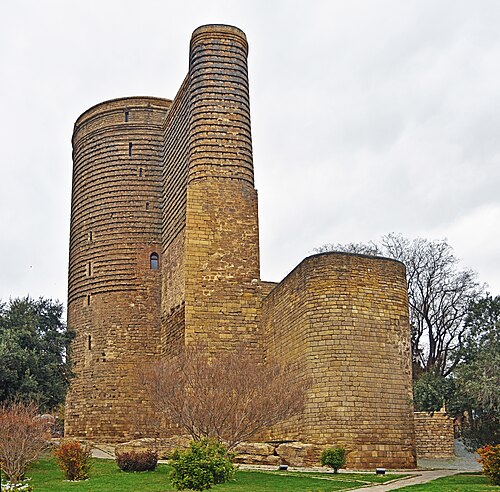
Maiden Tower
Qız Qalası
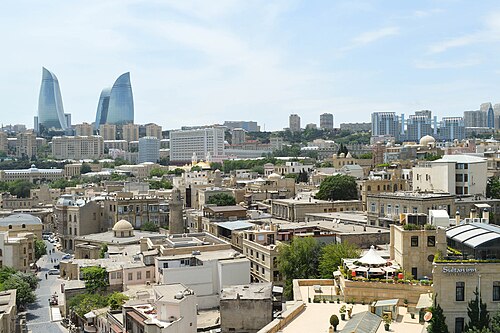
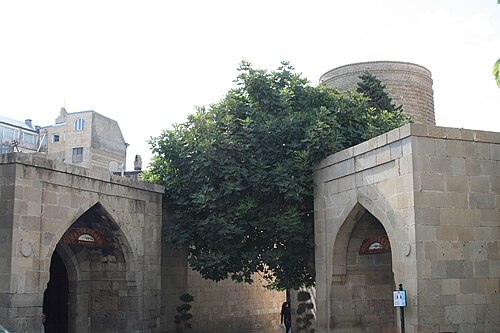
The Maiden Tower, known locally as Qız qalası, stands as Baku's most recognisable medieval landmark and the emblematic monument of the UNESCO-listed Old City.
- Must see
- Historic monument
- Baku
Language · 11 published
Country guide
Azerbaijan lies on the boundary between Western Asia and Eastern Europe, in the South Caucasus, with the Caspian Sea along its entire eastern edge and Iran to the south. Baku is both the capital and the largest city. The country is not one continuous block. The exclave of Nakhchivan is cut off from the rest by Armenian territory, and it holds the only stretch of border Azerbaijan shares with Turkey. Georgia is the neighbour to the northwest and Russia's republic of Dagestan to the north. It is one of six independent Turkic states, and the first secular democratic Muslim-majority state in the world, declared in 1918.
Reviewed by Elena Voss · Roavina Travel Editor
Every city catalogued in this country so far, ranked by how much there is to see.
Photograph · Ludvig14 · CC BY-SA 4.0
Ranked by importance — sitelinks, pageviews and heritage status, not editor preference.
30 places match
Category
Typical visit duration
Interests
Qız Qalası
The Maiden Tower, known locally as Qız qalası, stands as Baku's most recognisable medieval landmark and the emblematic monument of the UNESCO-listed Old City.
Dənizkənarı Milli Park
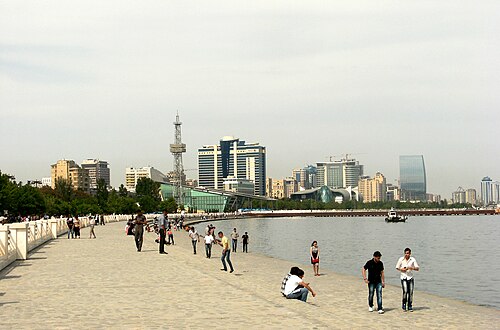
Baku Boulevard, known locally as Bakı Bulvarı, is a long Caspian waterfront promenade that serves as Baku's principal public leisure corridor.
Qobustan Qayaüstü İncəsənət Mədəni Landşaftı
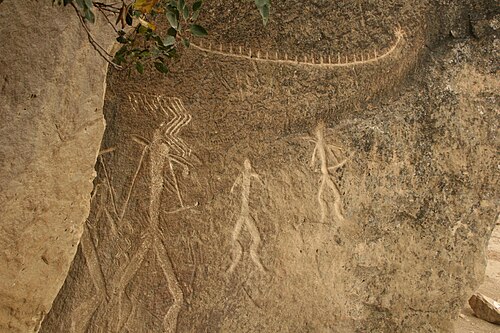
Gobustan Rock Art Cultural Landscape is a UNESCO World Heritage site located south of Baku. The protected area encompasses a vast collection of rock engravings, ancient human settlements, and archaeological remains spanning multiple historical periods.
Dağüstü Park
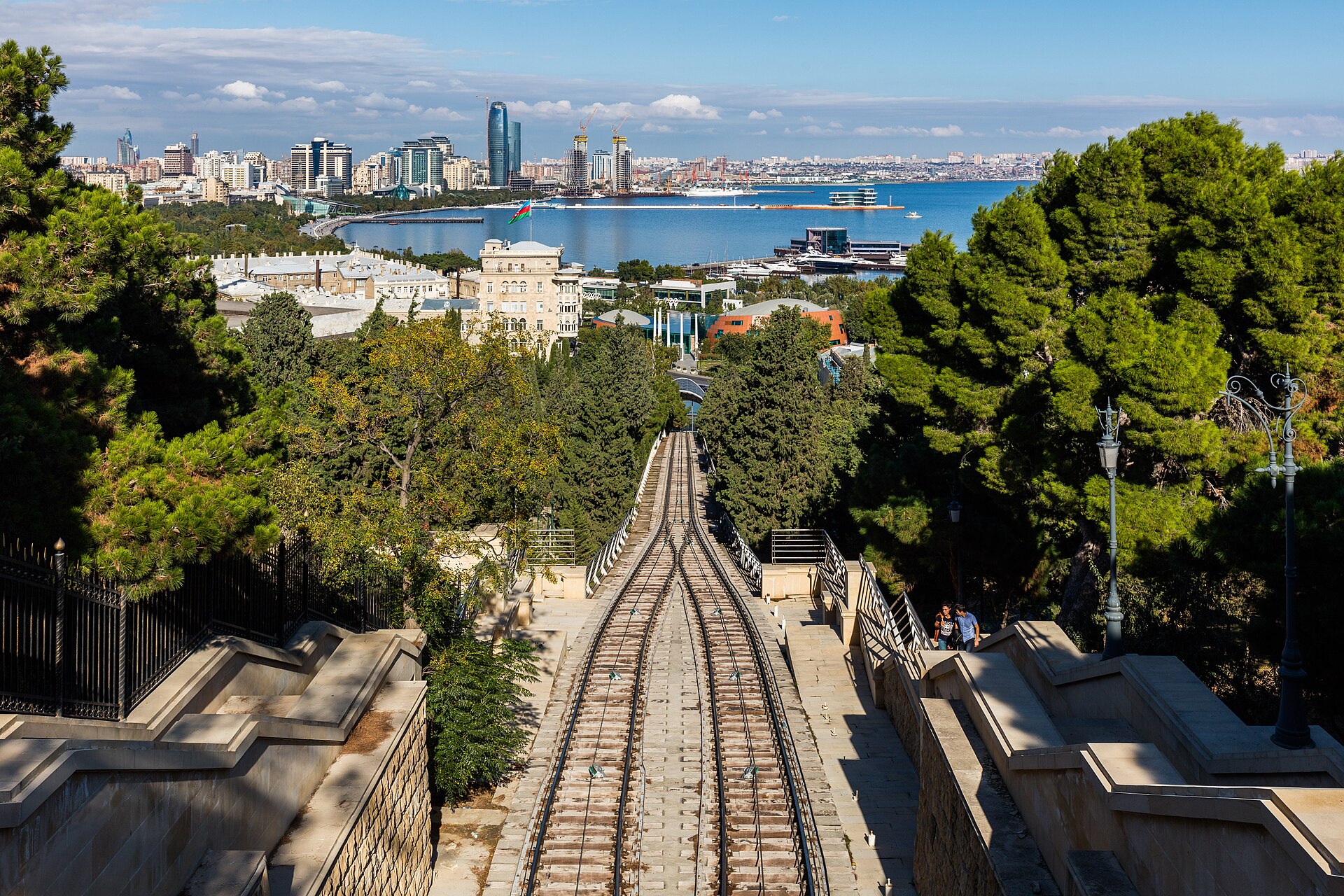
Highland Park, known locally as Dağüstü Park, is Baku's principal elevated viewpoint. It sits on a hill overlooking the Caspian Sea bay, the Boulevard promenade, and the city skyline, with the Flame Towers immediately adjacent.
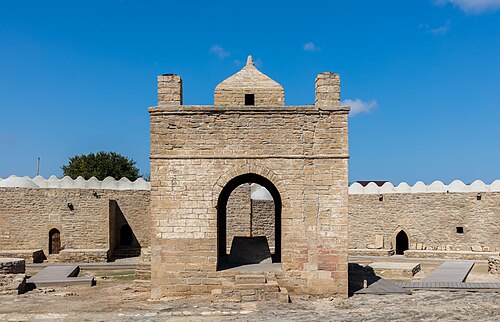
The Ateshgah Fire Temple is a religious-historical complex and museum located in Surakhani, on the outskirts of Baku.
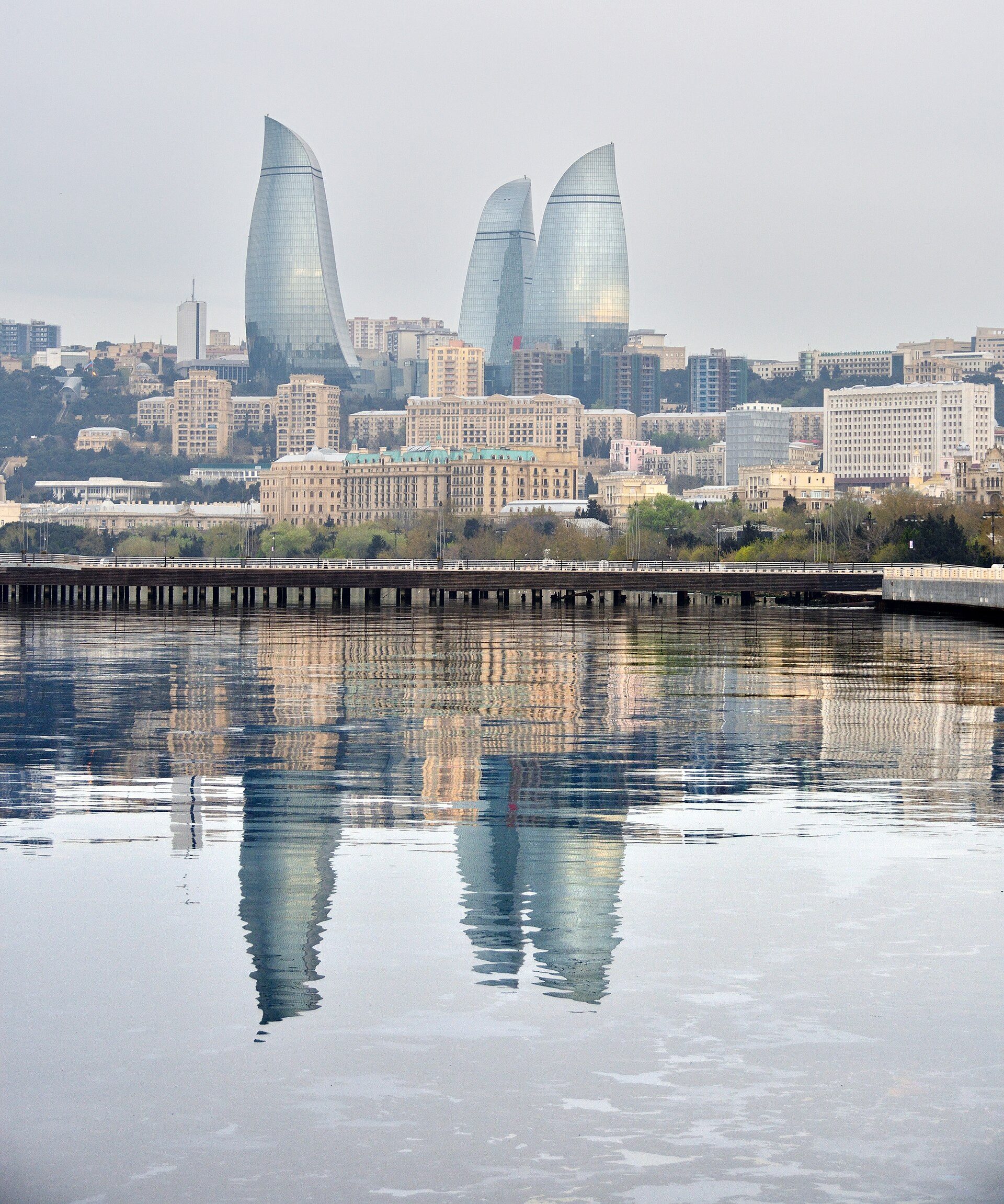
Flame Towers are a trio of skyscrapers in Baku, Azerbaijan, completed as a distinctive modern landmark on the Caspian Sea waterfront. The local name Alov qüllələri reflects their flame-shaped design, which references Azerbaijan's historical identity as the Land of Fire.
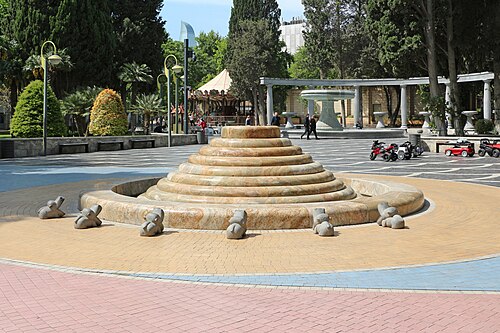
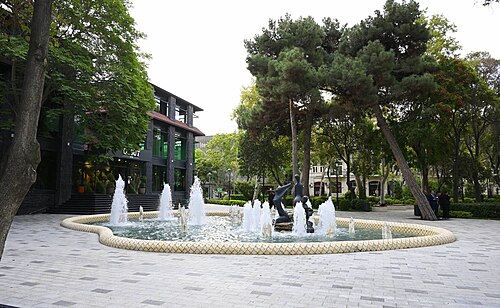
Fountains Square is a central public space in Baku, Azerbaijan, known locally as Fəvvarələr Meydanı. The square functions as a pedestrian gathering point and downtown landmark.
Səadət Sarayı
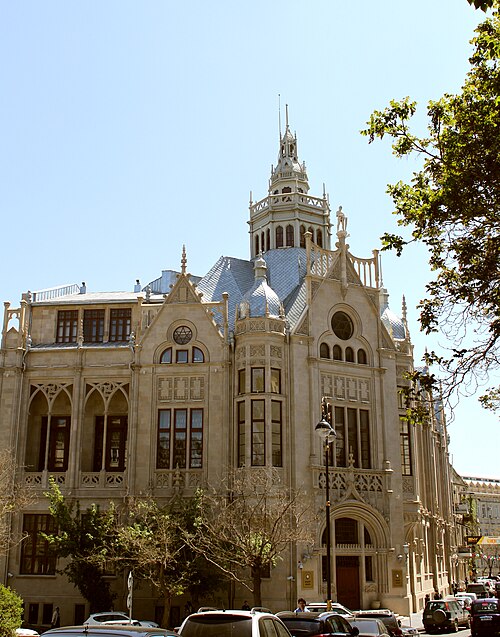
The Palace of Happiness, locally known as Səadət Sarayı, is a Neo-Gothic mansion in Baku, Azerbaijan. Built during the oil boom era, it was originally the Muxtarov mansion.
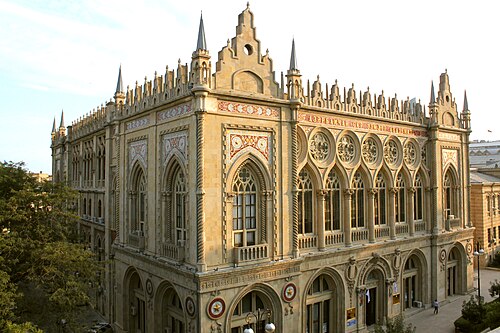
Ismailiyya Palace is a Venetian Gothic building constructed during Baku's oil boom era. The palace was commissioned by Agha Musa Naghiyev in memory of his son Ismail.
Bibi Heybət Məscidi
Bibi-Heybat Mosque is a rebuilt Islamic shrine mosque located on the Caspian Sea coast near Baku, Azerbaijan. Its local name is Bibiheybət məscidi. The site is a major pilgrimage destination associated with a descendant of the Prophet Muhammad.
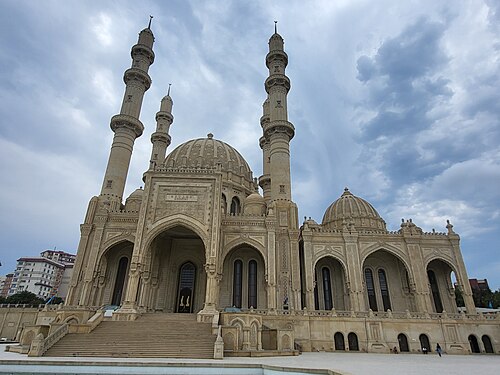
Heydər Məscidi
Heydar Mosque, known locally as Heydər məscidi, is a monumental modern mosque in Baku, Azerbaijan. It stands as one of the city's largest religious buildings and serves as a prominent landmark in the northern part of the city.
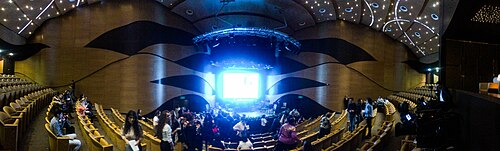
The International Mugham Center of Azerbaijan is a purpose-built performance venue dedicated to mugham, a traditional Azerbaijani musical form recognized by UNESCO as a Masterpiece of the Oral and Intangible Heritage of Humanity.
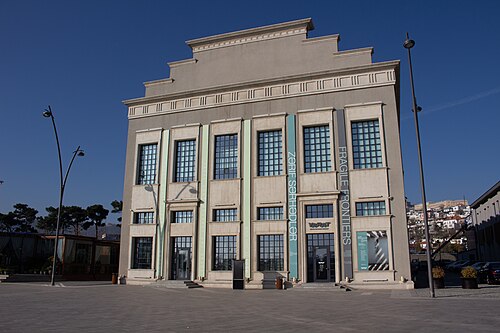
YARAT Contemporary Art Center
YARAT Contemporary Art Space is Baku's leading contemporary-art organisation. Its local name is YARAT Müasir İncəsənət Məkanı. The organisation operates from a converted waterfront industrial building, repurposing former industrial infrastructure for cultural use.
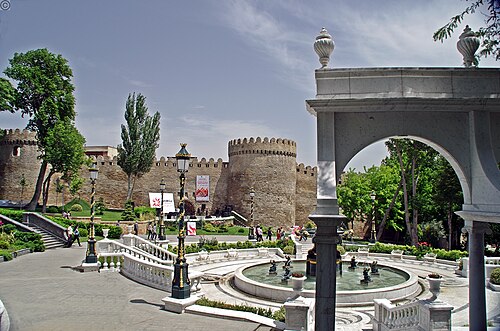
Filarmoniya bağı
Philharmonic Garden, also known as Filarmoniya bağı, is a compact green space beside the Azerbaijan State Philharmonic Hall and the walls of İçərişəhər, Baku’s Old City.
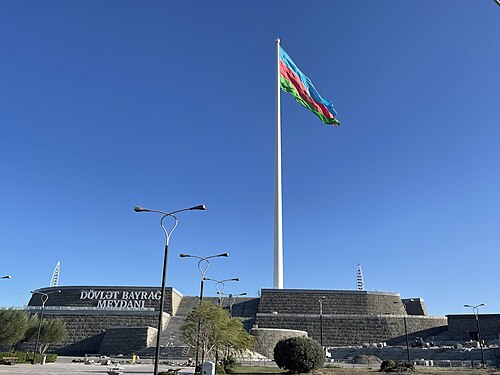
Dövlət Bayrağı Meydanı
National Flag Square is a ceremonial waterfront landmark on Baku’s extended boulevard, where the Caspian shoreline gives the space an unusually broad horizon.
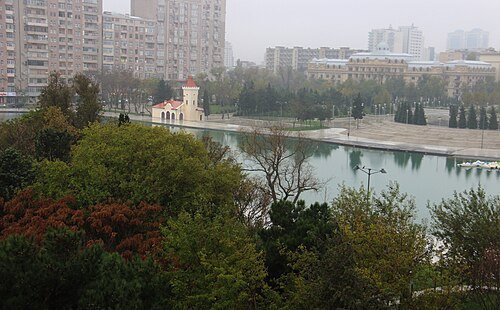
Dədə Qorqud parkı
Dede Gorgud Park, also known as Dədə Qorqud Parkı, is a substantial landscaped public park in Baku centred on an artificial lake. Its name refers to Dədə Qorqud, the revered sage and central figure of the Oghuz epic tradition.
Yaşıl Bazar
Yashil Bazaar, or Yaşıl Bazar, is Baku’s best-known produce market and one of the city’s most concentrated encounters with Azerbaijani food culture.
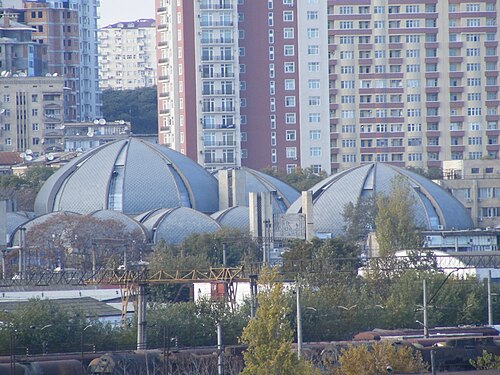
Şərq Bazarı
Sharg Bazaar, also known locally as Şərq Bazarı, is a restored domed market hall in Baku.
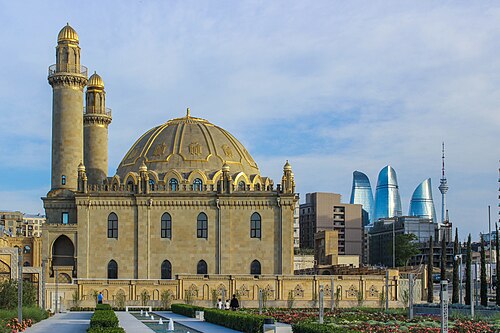
Təzəpir Məscidi
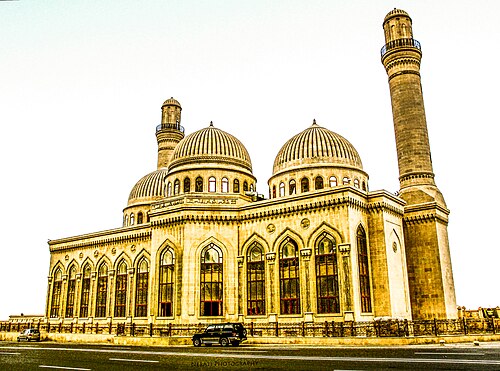
Taza Pir Mosque, also known as Təzəpir məscidi, is a major religious landmark in central Baku. Its pale stone exterior, domes and paired minarets give it a distinctive presence within the cityscape.
Məhəmməd Məscidi
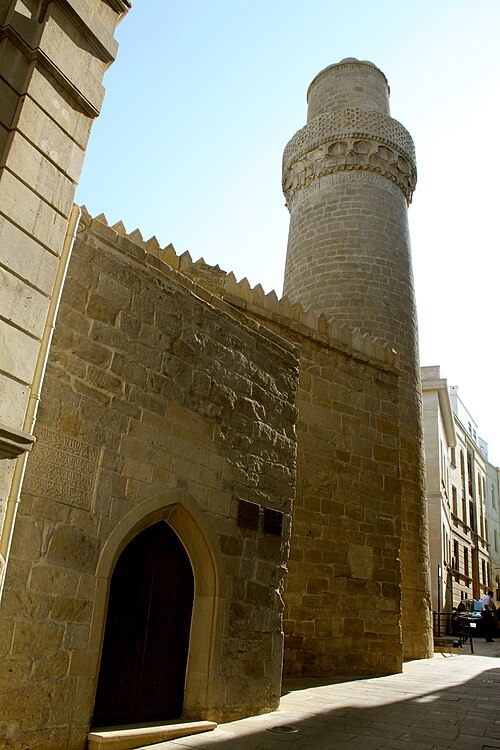
The Muhammad Mosque, locally called Məhəmməd məscidi, is an eleventh-century mosque and minaret located within İçərişəhər, Baku's fortified Old City. Also known as Sınıqqala, it represents one of the oldest securely dated monuments in this UNESCO-listed historic core.
Qoşa Qala Qapısı Bakı
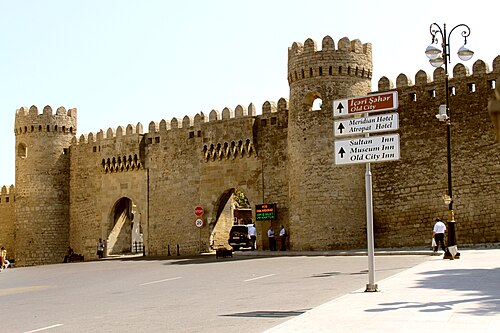
The Paired Fortress Gates, known locally as Qoşa Qala qapısı, constitute the ceremonial main entrance through the preserved Old City walls of Baku, Azerbaijan.
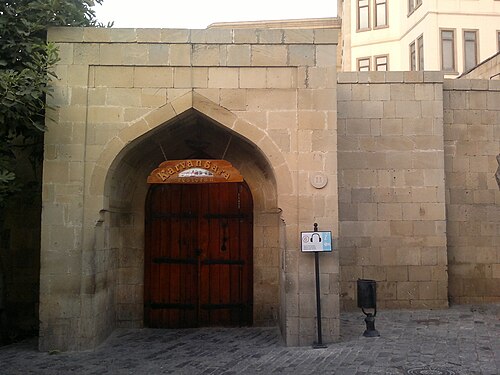
Bukhara Caravanserai is a compact fifteenth-century courtyard inn in Baku’s Old City. Its name connects the building with Bukhara, a major Central Asian trading centre, and with the commercial routes that linked the Caspian region to inland Asia.
Multani Karvansaray
Multani Caravanserai is a medieval caravanserai in Baku's Old City, historically associated with merchants from Multan in present-day Pakistan. Caravanserais served as roadside inns for traveling merchants along trade routes.
Bakı Marionet Teatrı
Baku Marionette Theatre is a specialist puppet-theatre venue in Baku’s Old City, known locally as Bakı Marionet Teatrı.
Opera və Balet Teatrı
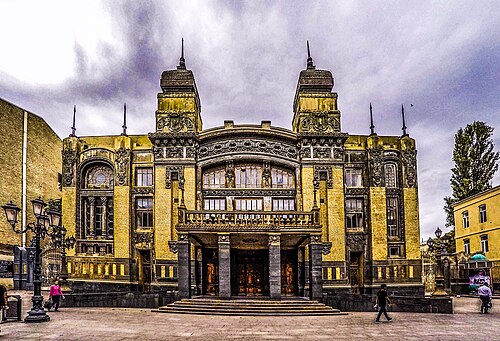
Azerbaijan State Academic Opera and Ballet Theater is one of Baku’s most recognisable performing-arts landmarks, combining an active opera and ballet programme with an ornate historic façade.
Azərbaycan Döylət Akademik Milli Dram Teatri
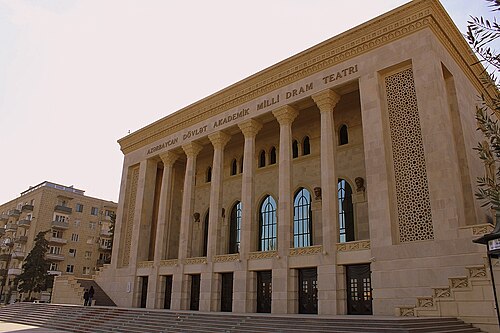
The Azerbaijan State Academic National Drama Theatre is the country’s national dramatic stage and one of central Baku’s important cultural institutions. It presents theatrical works connected with Azerbaijan’s dramatic tradition in a formal performance setting.
Heydər Əliyev Sarayı
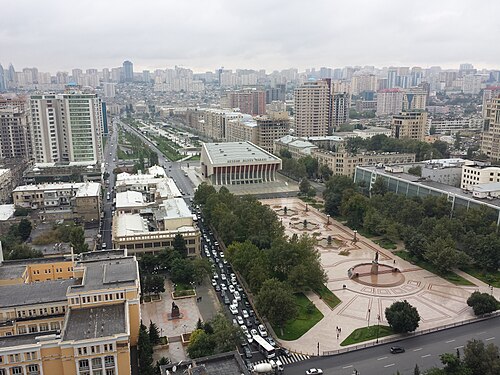
Heydar Aliyev Palace is a major Soviet-era concert palace in central Baku. It remains a prominent cultural venue rather than a museum or ordinary sightseeing interior.
Müqəddəs Mürdaşıyan Zənənlər Başkilsəsi
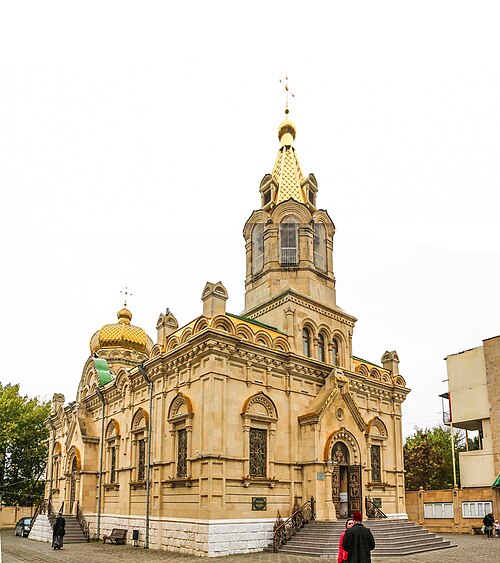
Holy Myrrhbearers Cathedral is a restored Russian Orthodox cathedral in Baku and the seat of the city’s Orthodox diocese. Its early twentieth-century architecture connects the church with the period when Russian imperial influence shaped parts of the Caucasus.
The Synagogue of Mountain Jews represents Baku’s Mountain Jewish community, one of the longstanding Jewish populations of the Caucasus. Mountain Jews, also known as Juhuro, have centuries of presence in Azerbaijan and maintain distinct linguistic and cultural traditions.
Xəqani bağı ( Malakan bağı )
Khagani Garden, known locally as Xaqani bağı, is a compact historic garden in central Baku. It sits among nineteenth-century streets and civic buildings, offering a leafy pause within the urban centre.
Source: OpenStreetMap contributors, Wikidata ·
Six to nine days can cover Baku, Gobustan or Absheron and one overnight route toward Sheki or the mountains. Western Azerbaijan and remote villages add real road time, so do not schedule them as casual extensions from a three-day capital stay.
Check Azerbaijan’s official ASAN Visa portal against your nationality and intended entry date. The service states the applicable electronic-visa process; border access and passport conditions should be confirmed there rather than inferred from a previous Caucasus trip.
Baku has metro and bus services, while rail and coaches connect selected cities. Rural monuments and mountain areas often need a hired driver or car; verify current road and boundary-area access before setting out, since the shortest mapped route may not be open to visitors.
Late spring and early autumn generally balance Baku walking weather with regional travel, but the Caspian coast and highlands do not share one climate. Build dates around the highest or most exposed leg and check official access information for mountain roads.
Prices are recorded in Azerbaijani manat. Keep some AZN for smaller regional businesses and use regulated banking or exchange channels; in Baku, confirm the final manat amount before accepting a card terminal’s optional foreign-currency conversion.
Dial 112 for the recorded emergency service and expect Type C or F plugs at 220 V. Tap-water advice is Not recorded, so ask the accommodation or local utility; also retain current official guidance for any journey near restricted boundary areas.