
3 min walk
Gate
- High
- Historic monument
Language · 11 published
Historic monument · Siem Reap
ប្រាសាទភិមានអាកាស
Reviewed by Elena Voss · Roavina Travel Editor
This place is a Attraction.
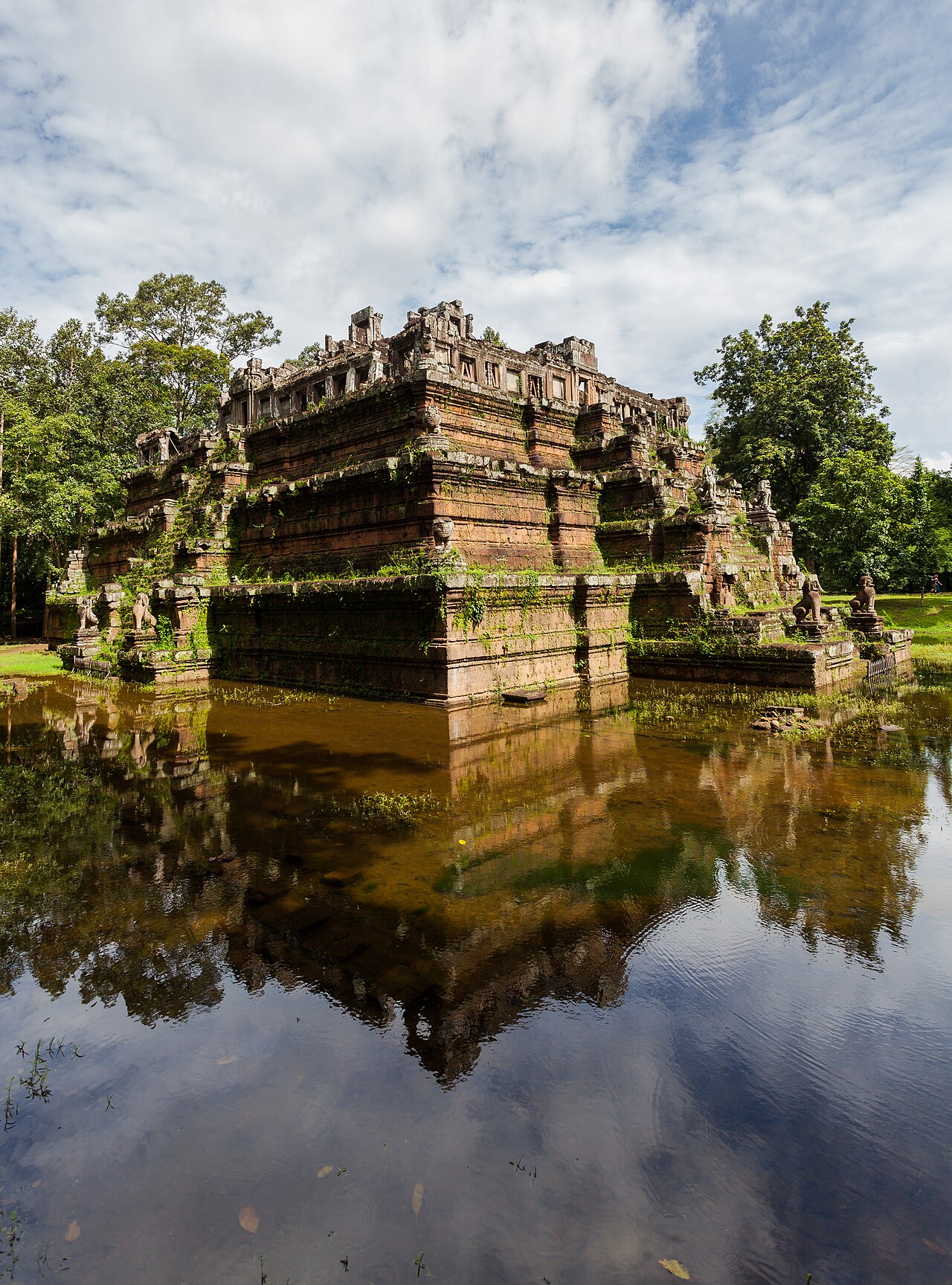
Phimeanakas is a Hindu temple within the Royal Palace enclosure of Angkor Thom, north of Siem Reap. The three-tiered pyramid represents the temple-mountain form associated with Mount Meru in Hindu cosmology. Built mainly in the late tenth and early eleventh centuries, with later modifications, Phimeanakas served as a state temple and royal chapel connected with Khmer kings. Its position within Angkor Thom places a relatively compact monument inside a much larger royal and ceremonial landscape. Phimeanakas is a Hindu temple located within the Angkor Thom complex near Siem Reap, Cambodia. Constructed during the Khmer Empire, it stands as a three-tiered pyramid temple representing Mount Meru in Hindu cosmology. The structure was built primarily in the late 10th and early 11th centuries, with later modifications. It served as a state temple and royal chapel associated with Khmer kings. The temple sits within the Royal Palace enclosure, indicating its significance in religious and political ceremonies of the Angkorian period. No. Phimeanakas is a separate temple located within the Angkor Thom complex, distinct from Angkor Wat which stands several kilometers to the south.
Checked 2026-08-26 · Source
Phimeanakas consists of three diminishing terraces built from laterite and sandstone. At the base, visitors can see galleries, entrance gates and the remains of the ceremonial setting. Stone lions flank the stairways leading upward. The small sanctuary tower once stood on the upper terrace but is now largely ruined. Traces of the Royal Palace complex and associated water features surround the temple, helping explain how Phimeanakas fitted into the wider royal enclosure. The temple features a pyramidal structure with three diminishing terraces constructed from laterite and sandstone. Visitors can observe the remains of galleries and entrance gates at the base.
Checked 2026-08-26 · Source
Allow thirty minutes to one hour for Phimeanakas. That time covers a circuit around the base, a careful look at the stonework and an ascent of the steep stairways where visitors can climb. The temple sits close to the Royal Palace area and the terraces associated with Angkor Thom, so it fits naturally into a longer central-enclosure route. Visitors concentrating on Khmer temple construction or the surrounding royal layout may stay longer.
Checked 2026-08-26 · Source
Early morning and late afternoon bring softer light and lower heat to Phimeanakas. November to March generally offers drier conditions for the steep stairways, while the wet season can leave stone and ground slippery. The tropical climate remains hot and humid through the year. Phimeanakas is best combined with other Angkor Thom monuments rather than treated as an isolated trip, especially because the temple is within the Royal Palace enclosure and close to other central sites.
Checked 2026-08-26 · Source
Phimeanakas is covered by the Angkor Archaeological Park admission pass. The temple has no separate entrance charge beyond the park pass. Park passes include one-day, three-day and seven-day formats, allowing visitors to plan Phimeanakas as part of a wider Angkor visit. Keep the pass with you in the archaeological zone because officials inspect admission at access points. The monument stands inside Angkor Thom, so the same park admission covers both the city and this temple.
Checked 2026-08-26 · Source
Reach Phimeanakas through Angkor Thom, about eight kilometres north of Siem Reap town centre. Tuk-tuks, taxis, bicycles, motorbike taxis and private cars connect the town with the archaeological park. Inside Angkor Thom, continue toward the Royal Palace enclosure from the main gates, using the park's monument signs for orientation. Organised Angkor circuits often include the central enclosure. The final approach combines vehicle travel with walking across archaeological ground and around the surrounding royal complex.
Checked 2026-08-26 · Source
Phimeanakas has exceptionally steep and narrow original stairways. Descend slowly, keep both hands available and judge the climb against your balance and fitness. Weathered stone becomes slippery after rain, and the upper levels have limited modern protection. Sun exposure is strong around the summit, with little shade. Uneven ground, protruding stones and steps continue around the temple. Wear shoes with good grip, carry water and supervise children closely near the stairways and elevated edges.
Checked 2026-08-26 · Source
Ground-level views show the three-tiered pyramid, stone lions and surviving galleries, while elevated viewpoints frame the temple against the surrounding canopy and Angkor Thom landscape. Morning and late afternoon light creates stronger relief across the terraces. Personal photography suits the compact site. Drone operation in the Angkor Archaeological Park is restricted and requires explicit heritage permission. Keep clear of stairways while taking photographs, respect staff instructions and avoid intrusive positions when other visitors are climbing.
Checked 2026-08-26 · Source
Phimeanakas stands inside the Royal Palace enclosure at the centre of Angkor Thom, within the Angkor Archaeological Park north of Siem Reap.
Visitors can climb the steep original stairways, but the steps are narrow and require careful movement, balance and suitable physical fitness.
No. Phimeanakas is included in the Angkor Archaeological Park pass, and the temple has no separate admission charge.
Phimeanakas is a Hindu temple-mountain built mainly in the late tenth and early eleventh centuries, with later changes to the structure.
The temple is surrounded by traces of the Royal Palace complex and water features, and it lies close to other monuments in Angkor Thom's central enclosure.
Most visitors need thirty minutes to one hour for the base, stairways and architectural remains. Add more time when combining the temple with the Royal Palace area.
Loading the interactive map…
The interactive map could not be loaded.

Last updated:
Source: OpenStreetMap contributors, Wikidata ·