
2 min walk
Jewish Museum Munich
- Must see
- Museum
Language · 11 published
Museum · Munich
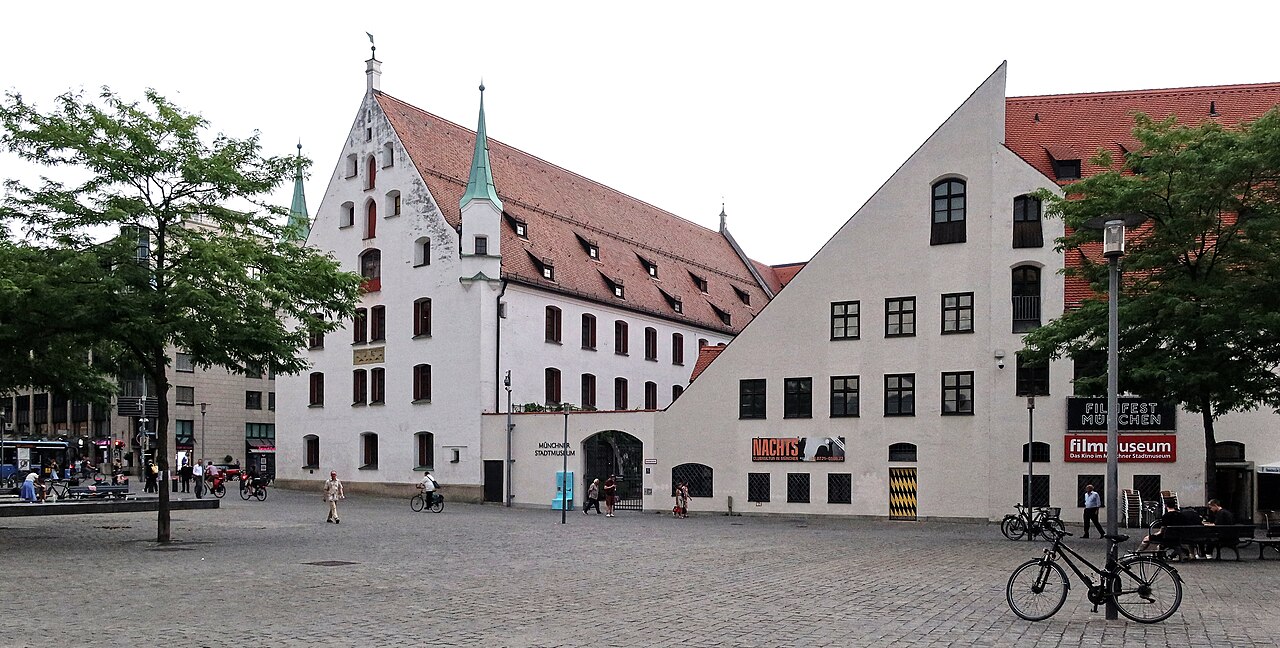
Münchner Stadtmuseum
Reviewed by Elena Voss · Roavina Travel Editor
| Monday | Closed |
|---|---|
| Tuesday | 11:00 – 19:00 |
| Wednesday | 11:00 – 19:00 |
| Thursday | 11:00 – 19:00 |
| Friday | 11:00 – 19:00 |
| Saturday | 11:00 – 19:00 |
| Sunday | 11:00 – 19:00 |
Checked 2026-08-31 · Source
Read from the OpenStreetMap access tags; anything not listed has no tag recorded.
Set the group type to family in the planner and the day window contracts to about three quarters of a solo day.
This place is a Museum. It was established in 1888. It is run by Landeshauptstadt München.
Munich City Museum, or Münchner Stadtmuseum, is devoted to the history and changing identity of Munich. Its focus is the city itself: how people lived, worked, celebrated, built communities, and shaped the Bavarian capital over time. This makes it a useful stop for travellers who want context beyond Munich’s palaces, churches, and famous squares. The museum belongs to the central cultural landscape and offers a locally grounded way to understand the city’s social and urban development. Munich City Museum, known locally as Münchner Stadtmuseum, stands as a cultural institution dedicated to preserving and presenting the history of Munich. Located in the urban fabric of Bavaria's capital, this museum serves as a repository for the city's evolving identity through centuries of development. The institution occupies a notable position within Munich's museum landscape, offering visitors a dedicated space to engage with urban heritage. Its establishment reflects the city's commitment to documenting local narratives and making them accessible to residents and travellers seeking deeper understanding of Munich's past. The museum addresses urban history themes that may engage school-age children with developing interest in local narratives. Younger visitors might find certain displays less immediately accessible without contextual framing. Family suitability depends on individual children's temperaments and prior museum exposure.
Checked 2026-08-26 · Source
The displays draw on objects and themes connected with daily life, civic development, social change, folklore, craft traditions, and the built environment. Rather than presenting a broad survey of world art, the museum keeps Munich at the centre of the story. You can use the collections to connect familiar streets and landmarks with the people and institutions that gave them meaning. Exhibition rooms may address different periods and subjects, so the experience is strongest when you allow time to follow the local details rather than rushing toward a single highlight.
Checked 2026-08-26 · Source
A thorough visit can occupy several hours because the museum’s themes cover many aspects of Munich’s development. Travellers with less time can choose the rooms most relevant to their interests, such as local life, urban growth, or cultural traditions. Plan for a slower pace than at a single-object landmark: the value comes from comparing objects and stories across the displays. The museum works well as a substantial indoor stop before continuing through the historic centre.
Checked 2026-08-26 · Source
The museum is particularly useful when weather makes an outdoor walking day less comfortable, since its subject remains closely tied to the city you are exploring outside. A visit can also add depth after seeing Munich’s historic centre, because familiar streets gain social and historical context. Give yourself enough time to read labels and compare displays. The city-centre setting makes it flexible for morning or afternoon planning and easy to place between other urban sights.
Checked 2026-08-26 · Source
Munich City Museum is a paid cultural attraction, with admission shaped by the museum’s current arrangements and any special displays. It is best treated as a planned museum stop rather than a brief free visit between landmarks. Travellers building a day around municipal or historical collections may find it useful to compare admission choices across the city’s museums. The main reason to visit is the depth of local history, so allow the time needed to make the entry worthwhile.
Checked 2026-08-26 · Source
The museum is located in central Munich, where public transport and pedestrian routes connect the surrounding districts. The city’s U-Bahn, S-Bahn, tram, and bus network gives travellers several ways to reach the centre, while walking is practical when the museum is combined with nearby historic sights. Plan the final approach as part of your central-city route: Munich’s compact core makes it natural to continue toward squares, churches, markets, and other museums after leaving the building.
Checked 2026-08-26 · Source
This is a museum of themes and context, so the experience rewards attention to objects that may be less immediately dramatic than Munich’s grand architecture. Different rooms can vary in atmosphere and physical layout. Keep personal belongings close in busy galleries and move carefully around thresholds or changes in flooring. Temporary displays may alter the balance of the visit. If you are travelling with children, connect objects to streets and stories they have already encountered in Munich.
Checked 2026-08-26 · Source
Photography inside Munich City Museum can vary between galleries and displays, so follow the signs associated with each room. Flash, tripods, or filming may be restricted where objects, loans, or other visitors require greater protection. The most rewarding visual record may be the relationship between the museum and the city outside: use the visit to notice how objects, craft, civic life, and streets fit together. Keep photographs discreet and avoid blocking display cases or circulation routes.
Checked 2026-08-26 · Source
It focuses on Munich’s history and identity through objects and themes connected with daily life, civic development, social change, folklore, crafts, and the built environment.
Yes. The museum provides local context for Munich’s streets, institutions, traditions, and changing urban life, adding depth to visits around the historic centre.
Allow several hours for a broad visit, or choose selected themes for a shorter stop focused on urban history, local life, or cultural traditions.
It stands in central Munich, within a walkable historic area connected to the city’s U-Bahn, S-Bahn, tram, and bus network.
The collections address Munich’s daily life, urban growth, civic development, social change, folklore, craft traditions, and relationship with the built environment.
Yes. Its central location makes it practical to pair with walks through Munich’s historic streets, squares, churches, markets, and nearby museums.
Loading the interactive map…
The interactive map could not be loaded.
Last updated:
Source: OpenStreetMap contributors, Wikidata ·