
2 min walk
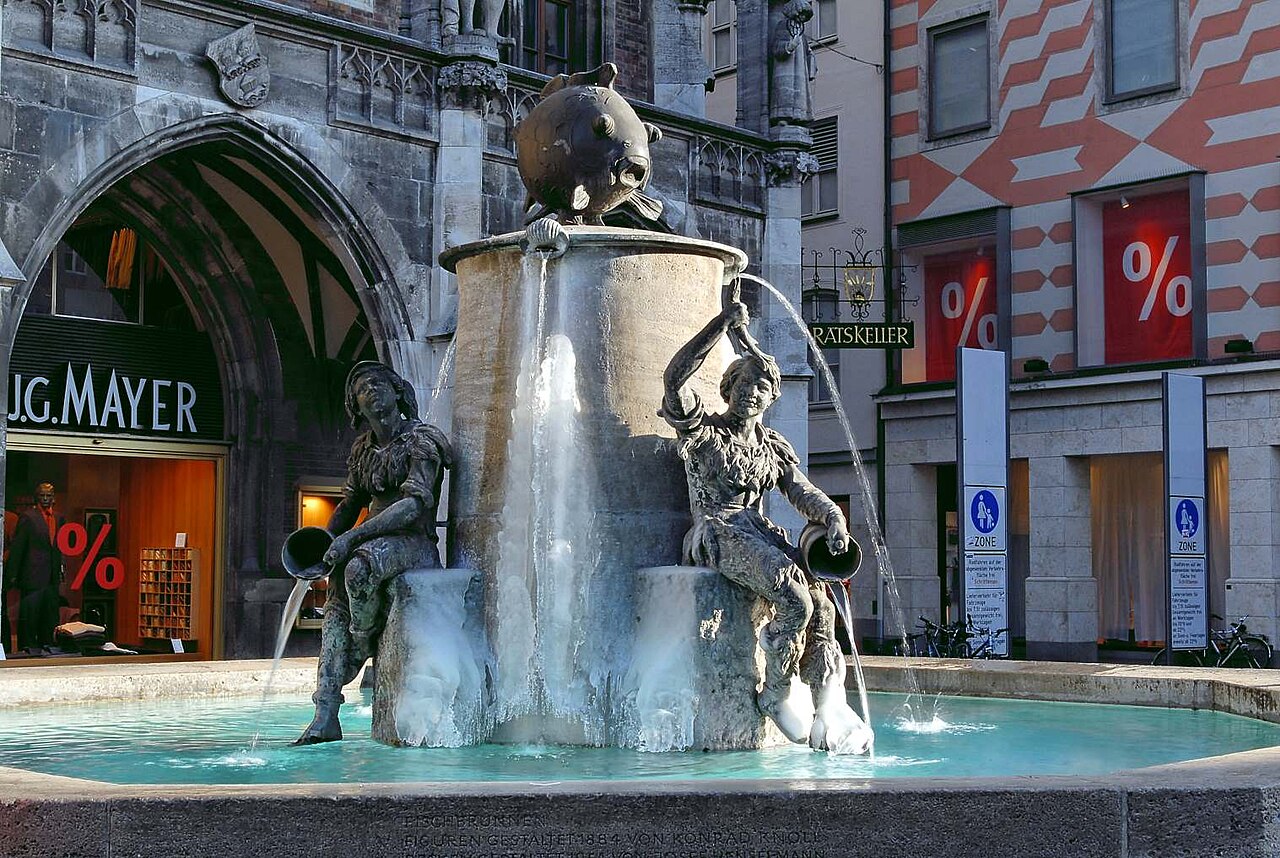
Fischbrunnen
- High · Heritage site
- Historic monument
Language · 11 published
Place of worship · Munich
St. Peter
Reviewed by Elena Voss · Roavina Travel Editor
| Monday | 09:00 – 19:30 |
|---|---|
| Tuesday | 09:00 – 19:30 |
| Wednesday | 09:00 – 19:30 |
| Thursday | 09:00 – 19:30 |
| Friday | 09:00 – 19:30 |
| Saturday | 09:00 – 19:30 |
| Sunday | 09:00 – 19:30 |
Checked 2026-08-31 · Source
Read from the OpenStreetMap access tags; anything not listed has no tag recorded.
Set the group type to family in the planner and the day window contracts to about three quarters of a solo day.
This place is a Attraction. It opened in 1294. It was built in the Gothic architecture style. It was designed by Erwin Schleich. It carries the architectural heritage monument in Bavaria heritage designation.
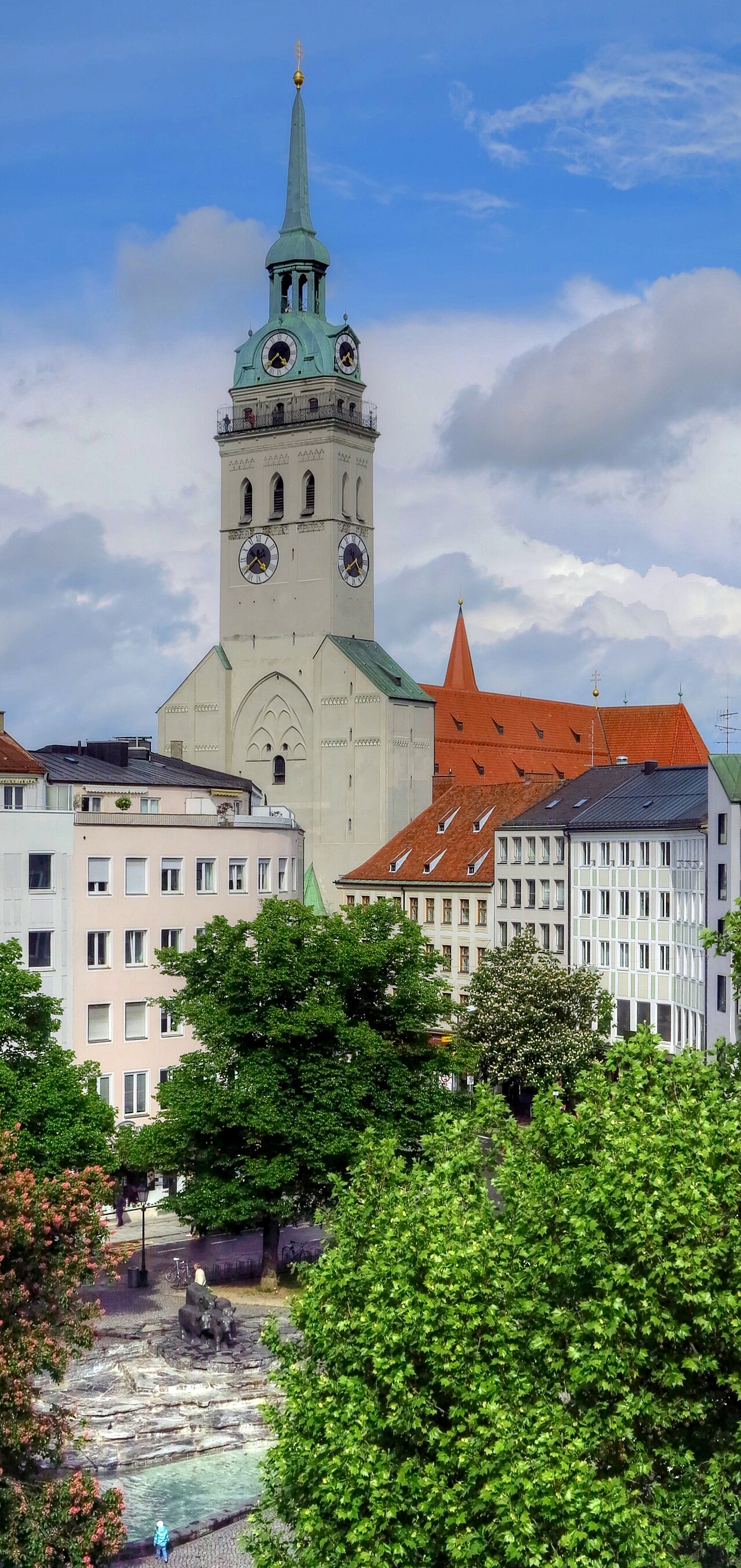
St. Peter’s Church, known locally as St. Peter, is a historic church in Munich’s city centre. The building is one of the city’s notable religious landmarks and forms part of the architectural character of Munich’s historic core. Its urban setting makes it a natural stop while exploring the central district and nearby Marienplatz. The church remains an active place of worship, so a visit combines heritage interest with an operating religious setting. Peter's Church, known locally as St. Peter, is a historic church in Munich. It stands as one of the notable religious buildings in the city center, contributing to Munich's architectural heritage. The church represents an important element of the urban landscape and serves as a landmark for visitors exploring the area. Its position within Munich's historic core makes it a point of interest for those studying the city's development and ecclesiastical history. The building reflects styles and construction periods relevant to Munich's past. Visitors should verify current opening times through official sources before visiting.
Checked 2026-08-26 · Source
The interior contains the visual elements associated with a historic European church: religious artwork, altars and architectural details. Visitors can take in the spatial arrangement and the decorative character of the sacred interior. Memorials, artifacts and commemorative elements may form part of the church’s long community role, while the atmosphere remains appropriate to worship. Keep voices low and leave areas used for private devotion clear during the visit. The interior of St. Peter contains features typical of historic European churches, including religious artwork, altars, and architectural details. Visitors can observe the spatial arrangement and decorative elements that characterize such sacred spaces. The church may contain historical artifacts, memorials, or commemorative installations reflecting its long-standing role in the community. The atmosphere conveys the solemnity expected of an active place of worship, with visitors advised to respect ongoing religious functions and any areas designated for private devotion.
Checked 2026-08-26 · Source
Allow about 15 to 30 minutes for a brief look at the exterior and interior. Visitors interested in religious architecture, art history or Munich’s heritage can spend longer studying the details. Services and private ceremonies can affect access and may change the pace of a visit. The central location also makes St. Peter easy to include alongside other sights in Munich’s historic core. A visit to St. Peter typically requires between fifteen and thirty minutes for a brief observation of the interior and exterior. Those with particular interest in religious architecture, art history, or local heritage may wish to allocate additional time. The duration depends on whether services or private ceremonies are in progress, which may restrict access to certain areas.
Checked 2026-08-26 · Source
St. Peter is best approached as a working church rather than as a timed museum visit. Services, private ceremonies and maintenance can restrict access to parts of the building. Morning or late afternoon can provide a quieter setting for observation, while weekends and religious holidays can bring more activity. The church’s central position lets visitors adjust the rest of a city walk around the time available.
Checked 2026-08-26 · Source
Peter’s Church. General church visits and any special access should therefore be treated separately from the surrounding sightseeing walk. Visitors can focus on the building’s religious art, altars and architecture without planning around a published fare in this guide. Donations, special access and other arrangements are not part of the recorded place information.
Checked 2026-08-26 · Source
St. Peter stands near Marienplatz in central Munich. U-Bahn and S-Bahn services converge at Marienplatz station, and tram and bus routes serve the wider city centre. The church is within walking distance of other central landmarks and many downtown hotels. Visitors arriving by public transport can use Marienplatz as the main orientation point before continuing on foot through the historic core.
Checked 2026-08-26 · Source
St. Peter is an active religious site, so respectful conduct matters. Keep conversation subdued during services and prayer, follow staff directions and wear clothing that covers shoulders and knees. Historic interiors can include steps, uneven flooring and dim areas. Children need supervision, especially in crowded central streets. Photography restrictions may apply, and worshippers and ceremonies take priority over sightseeing or image-making.
Checked 2026-08-26 · Source
Peter’s Church. Treat photography as secondary to worship and observe any notices or staff directions inside. Flash, tripods or photography during services may be restricted. Exterior views provide a separate way to record the church while respecting the interior’s religious use. Keep equipment compact and avoid blocking movement through the building.
Checked 2026-08-26 · Source
St. Peter’s Church stands in Munich’s historic centre near Marienplatz, within walking distance of other central landmarks.
Allow about 15 to 30 minutes for a brief visit, with additional time if you want to study the religious art, altars and historic architectural details.
Marienplatz is the main public-transport orientation point. U-Bahn and S-Bahn services converge there, while tram and bus routes serve the surrounding city centre.
The interior includes religious artwork, altars and historic architectural details. The church’s arrangement and atmosphere reflect its continuing role as a place of worship.
Wear respectful clothing covering the shoulders and knees, and keep conversation subdued during services or prayer.
Observe notices and staff directions, and give priority to worshippers, services and the church’s religious use.
Loading the interactive map…
The interactive map could not be loaded.
Last updated:
Source: OpenStreetMap contributors, Wikidata ·