_Regi51.JPG)
3 min walk
Angel of Peace
- Must see · Heritage site
- Historic monument
Language · 11 published
Museum · Munich
Reviewed by Elena Voss · Roavina Travel Editor
| Monday | 11:00 – 18:00 |
|---|---|
| Tuesday | 11:00 – 20:00 |
| Wednesday | 11:00 – 18:00 |
| Thursday | 11:00 – 18:00 |
| Friday | 11:00 – 18:00 |
| Saturday | 11:00 – 18:00 |
| Sunday | Closed |
Checked 2026-08-31 · Source
Read from the OpenStreetMap access tags; anything not listed has no tag recorded.
Set the group type to family in the planner and the day window contracts to about three quarters of a solo day.
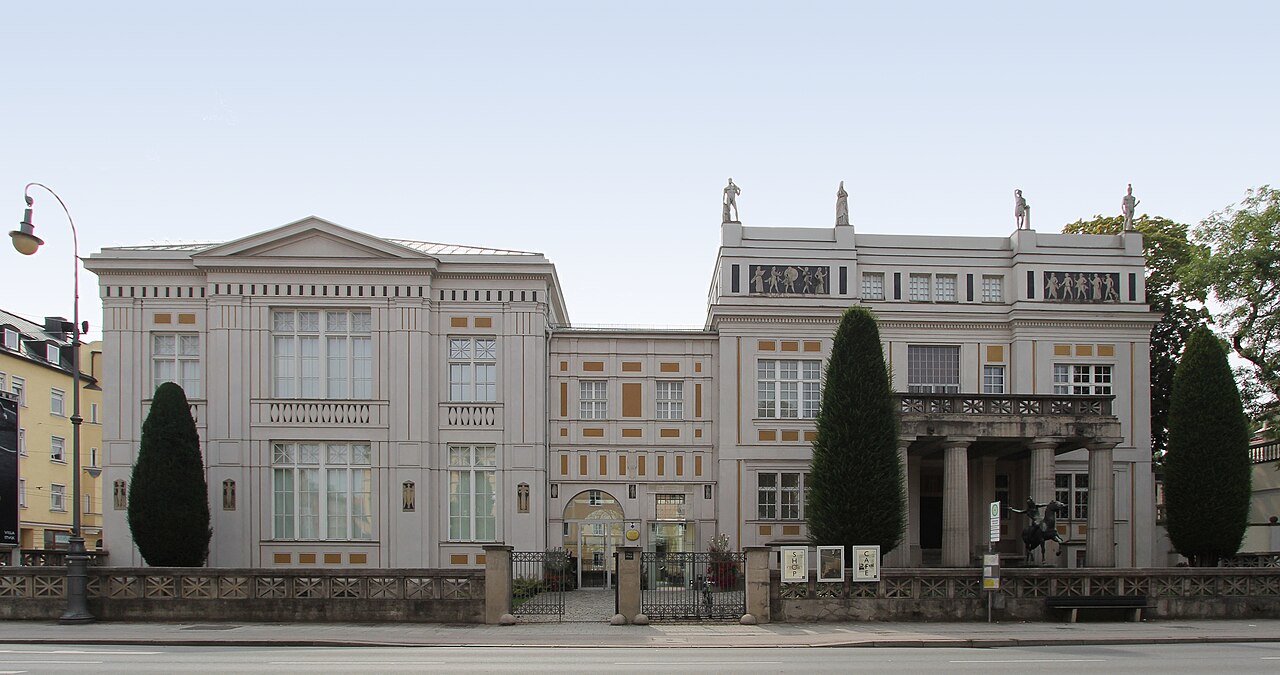
This place is a Museum. It was established in 1898. It was built in the Neoclassicalism style. It carries the architectural heritage monument in Bavaria heritage designation. It is run by Landeshauptstadt München.
Villa Stuck is the former home and studio of painter Franz von Stuck in Munich’s Bogenhausen district. The late nineteenth-century villa now functions as a public museum, preserving the setting in which Stuck lived and worked. Its design reflects Jugendstil and Symbolist interests, while the building itself forms part of the artistic experience. Rooms, furnishings, decorative surfaces, and artworks belong together, making Villa Stuck different from a conventional gallery housed in a neutral modern building. The visit connects Munich art history with an intact domestic and studio environment. Villa Stuck is a historic villa in Munich, Germany, originally built as the residence and studio of the painter Franz von Stuck. The building exemplifies late 19th-century artistic architecture and now functions as a public museum dedicated to the artist's work and period.
Checked 2026-08-26 · Source
The museum includes Franz von Stuck’s atelier, reception rooms, original furnishings, and elaborate decorative interiors. Paintings, sculptures, and graphic works are presented alongside period furniture and applied arts. Look closely at the stuccowork, ceiling paintings, and integrated decoration: the villa demonstrates the Gesamtkunstwerk idea, in which architecture, interior design, and art are conceived as one environment. Temporary exhibitions add changing themes connected with Symbolism, Art Nouveau, and early modernism. The garden extends the artistic setting beyond the rooms and helps explain the villa’s carefully designed character.
Checked 2026-08-26 · Source
Allow one to two hours for Villa Stuck. A concentrated visit can cover the principal historic rooms and permanent displays in about an hour, while a slower visit gives more time for the decorative surfaces, integrated artworks, and individual paintings or sculptures. Visitors especially interested in Symbolism, Jugendstil, or Munich’s Secession movement may want the longer end of the range. Temporary exhibitions can extend the visit. The villa’s compact scale makes it possible to engage closely with the collection without reserving an entire day.
Checked 2026-08-26 · Source
Villa Stuck suits a planned cultural visit because much of the experience takes place indoors among preserved rooms and artworks. Winter can be a comfortable season for concentrating on the interiors, while summer brings longer daylight for combining the museum with a walk through Bogenhausen. Munich’s major festival periods can make the wider city busier, especially around Oktoberfest. A quieter museum experience is easier to appreciate when the historic rooms are not crowded, since small details in the decoration reward patient viewing.
Checked 2026-08-26 · Source
Villa Stuck is visited as a public museum, with the historic villa and its exhibitions forming the main attraction. The practical value of a ticket lies in access to the preserved rooms, studio, collection displays, and any temporary exhibition presented during the visit. Plan enough time to move through both the permanent environment and changing displays rather than treating the building as a quick exterior stop. Museum admission arrangements belong to the visit itself; the surrounding Bogenhausen streets remain part of Munich’s public urban landscape.
Checked 2026-08-26 · Source
Villa Stuck is in Bogenhausen, east of Munich’s historic centre. Reach the district through Munich’s U-Bahn and bus network, then continue on foot through the surrounding residential streets. Cycling is also practical in a city with established bicycle infrastructure. Driving is less convenient because central Munich neighbourhoods can make parking difficult. Set aside navigation time when travelling from the central station or the old town, since Villa Stuck is not in the main cluster around Marienplatz and the central museum quarter.
Checked 2026-08-26 · Source
Villa Stuck contains original furnishings, historic finishes, and artworks that require careful behaviour. Do not touch the decorative surfaces, furniture, or exhibits. The protected historic setting may include architectural features that are less straightforward to navigate than a modern gallery. Photography rules can differ between rooms or exhibitions, so follow the museum’s signs and staff directions. Temporary exhibition spaces may change the route through the building. The villa’s age and preservation status are part of its character, so visitors should move respectfully and protect the quiet atmosphere.
Checked 2026-08-26 · Source
Villa Stuck’s strongest photographic subjects are the interiors themselves: ceiling paintings, stuccowork, furnishings, framed artworks, and the relationship between rooms. Controlled museum lighting can make exposure difficult, especially when photographing dark decorative surfaces beside brighter details. Work slowly and keep equipment unobtrusive in the compact rooms. Follow the museum’s photography signs, including any rules on flash, tripods, or areas where photography is restricted. The exterior and garden provide additional compositions, while the villa’s historic setting gives context to photographs of Franz von Stuck’s work.
Checked 2026-08-26 · Source
Villa Stuck is best known as Franz von Stuck’s former home and studio, with preserved rooms, decorative interiors, furnishings, and artworks presented as one artistic environment.
Allow one to two hours. A focused visit can cover the main rooms in about an hour, while temporary exhibitions and close study of the decoration can extend the visit.
Visitors can see Franz von Stuck’s atelier, reception rooms, original furnishings, paintings, sculptures, graphic works, stuccowork, ceiling paintings, and temporary exhibitions.
No. The museum combines art displays with the preserved home and studio of Franz von Stuck, so the architecture and interior decoration are central parts of the visit.
Villa Stuck is in Munich’s Bogenhausen district, east of the historic city centre and outside the main central museum cluster.
Treat the original furnishings, historic surfaces, and artworks carefully. Do not touch them, and follow the museum’s signs for photography and visitor movement.
Loading the interactive map…
The interactive map could not be loaded.
Last updated:
Source: OpenStreetMap contributors, Wikidata ·