8 min walk
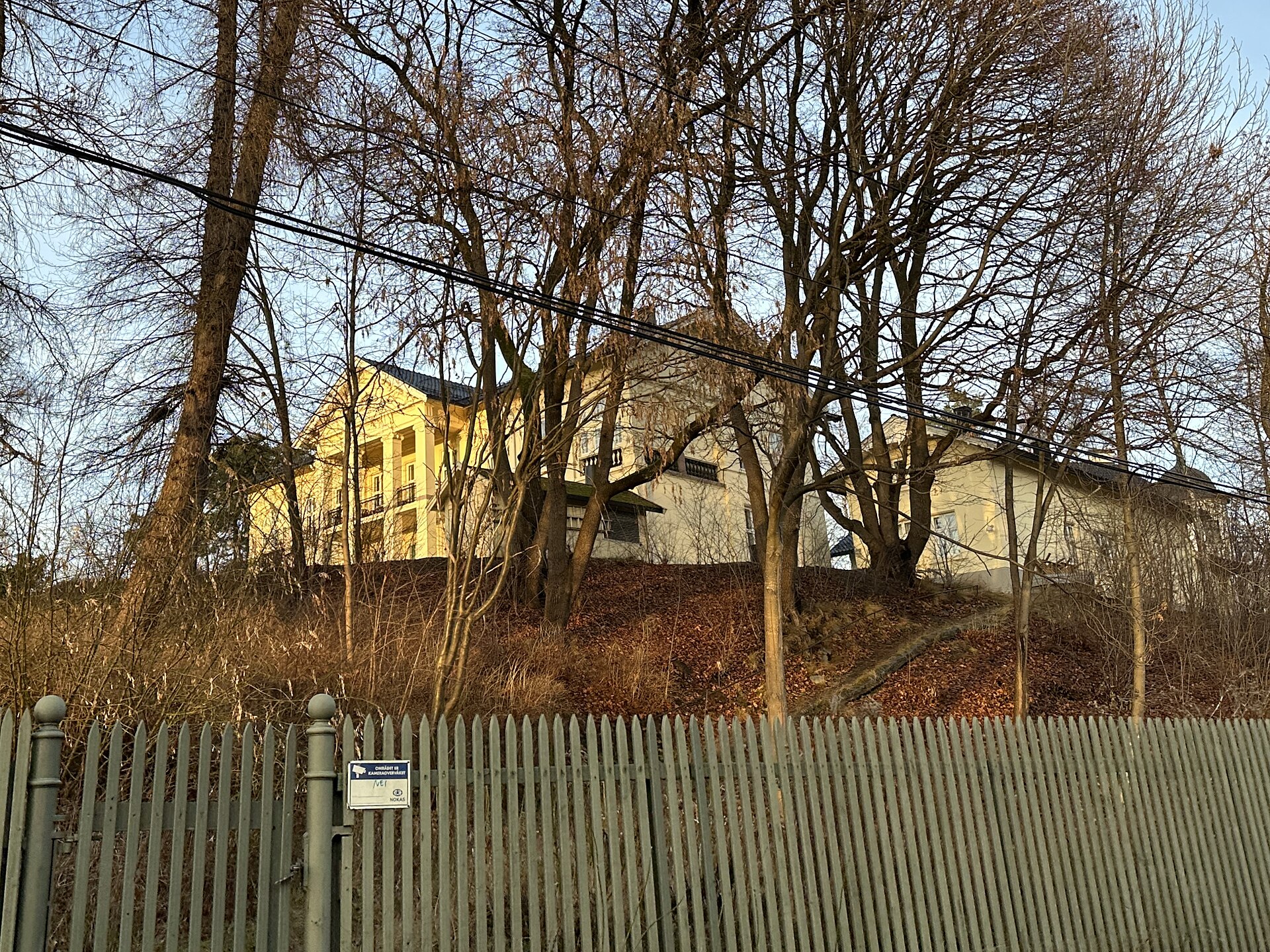
Madserud gård
- High
- Historic site
Art and culture venue · Oslo
Henriette Wegner Pavilion
The Henriette Wegner Pavilion (Wegnerpaviljongen) is a tea pavilion from 1824 and a small art gallery in Frogner Park in Oslo. It was a gift to Henriette Wegner (1805–1875), known as a philanthropist in Christiania and one of Norway's earliest pioneers of women's rights, from her husband Benjamin Wegner, the young director of the Blaafarveværket cobalt works, to mark their wedding in Hamburg on 15 May 1824. First built at Blaafarveværket, it was moved in 1837 to Frogner Manor, which the couple had taken over in 1836. It stands on a small rise called 'Utsikten' beside the manor house and is Frogner Park's oldest heritage site after the manor house itself.
Checked 2026-11-05 · Source
The pavilion is in the Empire style, shaped as a classical octagonal 'round temple' with a colonnade modelled on Greco-Roman buildings but made of Norwegian materials. Its ceiling is a painted miniature copy of the dome of the Pantheon in Rome, which makes the room seem larger than it is, and is registered as a work of art. The pavilion has been used as an art gallery since 2012. It reopened in 2025 after restoration, 150 years after Henriette Wegner's death, and that year received the Frogner local history society's rehabilitation award.
Checked 2026-11-05 · Source
It has been used as an art gallery since 2012.
Loading the interactive map…
The interactive map could not be loaded.
Last updated:
Source: OpenStreetMap contributors, Wikidata ·