
3 min walk
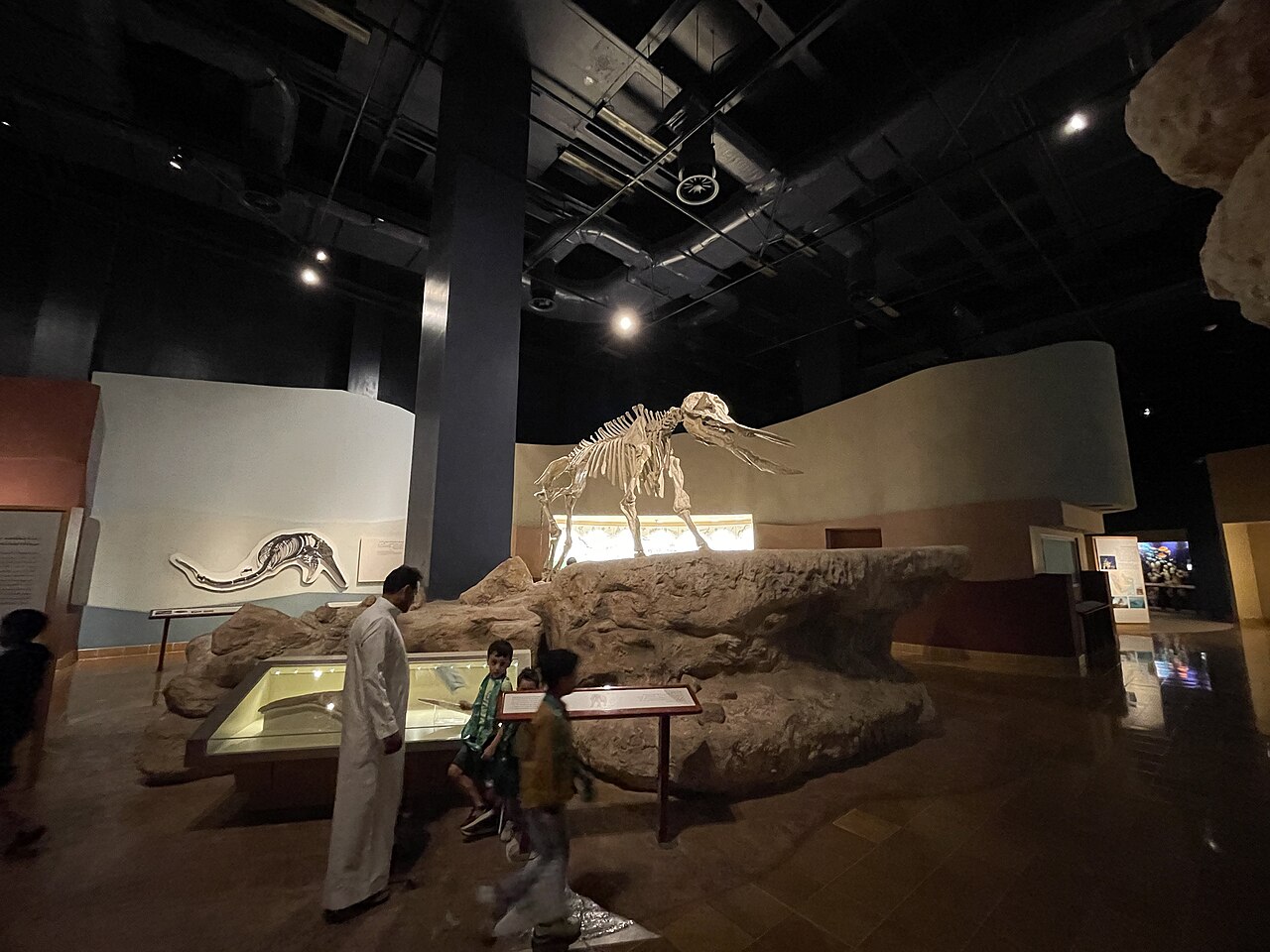
National Museum of Saudi Arabia
- Must see
- Museum
Language · 11 published
Historic monument · Riyadh
قصر المربع
Closed today, Saturday. Next open Sunday at 09:00 — the planner will not place a stop here on a Saturday.
Plan around itReviewed by Elena Voss · Roavina Travel Editor
| Monday | 09:00 – 17:00 |
|---|---|
| Tuesday | 09:00 – 17:00 |
| Wednesday | 09:00 – 17:00 |
| Thursday | 09:00 – 17:00 |
| Friday | 17:00 – 20:00 |
| Saturday | Closed |
| Sunday | 09:00 – 14:00 |
Checked 2026-08-31 · Source
Read from the OpenStreetMap access tags; anything not listed has no tag recorded.
Set the group type to family in the planner and the day window contracts to about three quarters of a solo day.
It was established in 1938.
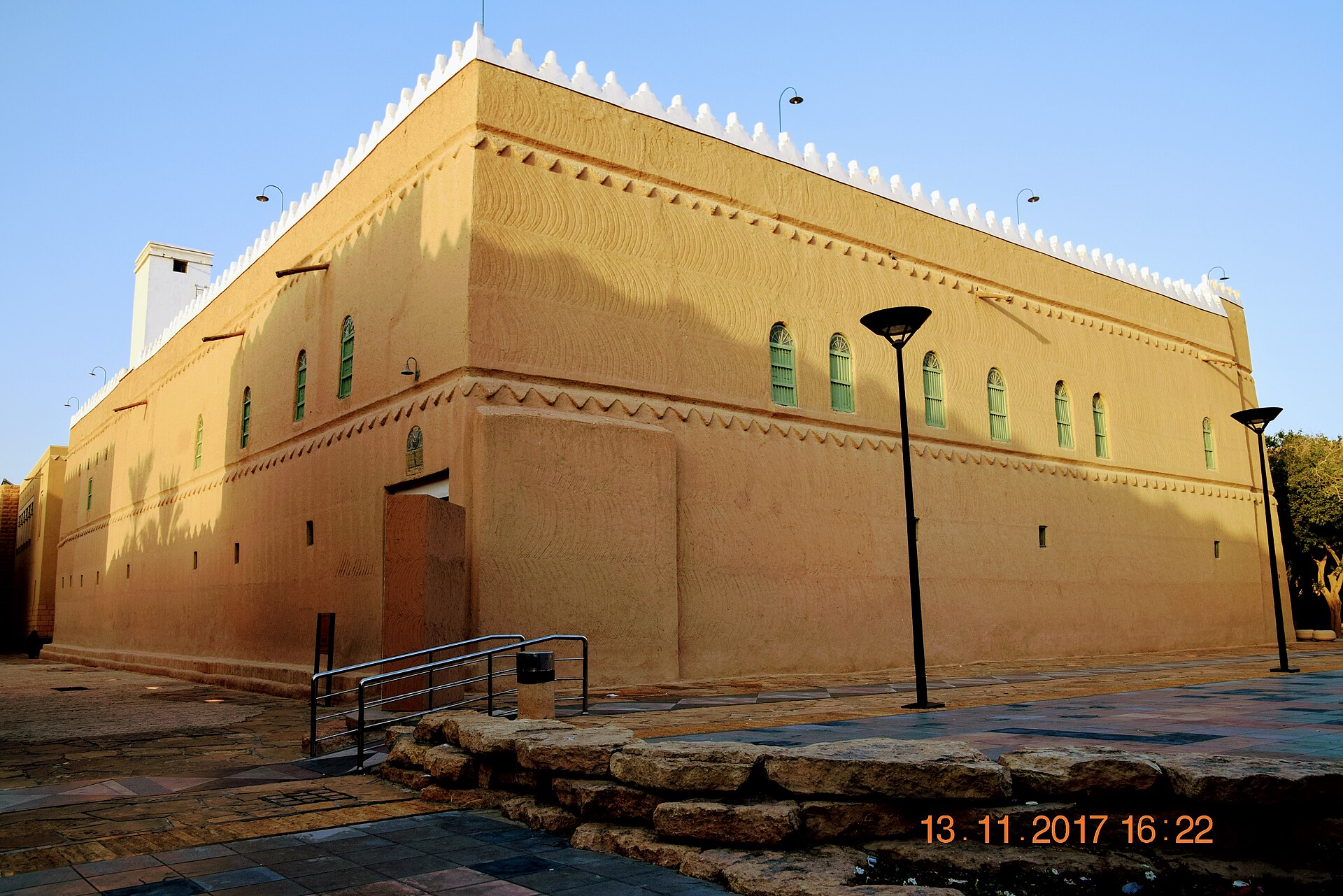
Murabba Historical Palace is a restored royal residence in Riyadh's King Abdulaziz Historical Centre. Built during the early twentieth century, it served as a residence for King Abdulaziz, founder of the modern Saudi state. The square layout gives the palace its name, while the building's mud-brick walls and palm-wood elements reflect traditional Najdi construction. Today the palace presents the early Saudi royal period through rooms, objects, and historical interpretation. Visit it for a close, personal-scale complement to the National Museum. Murabba Historical Palace is a restored royal palace in Riyadh, Saudi Arabia. Built in the early twentieth century, it served as a residence for King Abdulaziz, the founder of the modern Saudi state. The palace stands within the King Abdulaziz Historical Center complex and represents traditional Najdi architecture adapted for royal use. Its name derives from the square layout of the building. Yes, these names refer to the same structure. The full designation Murabba Historical Palace distinguishes it from the surrounding Murabba district.
Checked 2026-08-26 · Source
Inside, the palace preserves or recreates reception rooms, private quarters, and administrative spaces associated with royal domestic and governmental life. Period furniture, historical photographs, documents, and personal effects connect the building to King Abdulaziz and the unification era. Look at the construction as carefully as the displays: thick mud-brick walls, palm wood, traditional flooring, door details, and the palace's compact arrangement reveal how a royal residence worked. Nearby institutions in the historical centre broaden the story with additional collections and cultural displays.
Checked 2026-08-26 · Source
Plan for one to two hours inside Murabba Historical Palace. That is enough time to move through the principal rooms, read labels, examine period objects, and notice the traditional architectural details. The palace is compact, so a focused visit can be completed in about an hour, while visitors with a strong interest in Saudi history may stay longer. Add substantial time if you are also visiting the National Museum or other institutions in the King Abdulaziz Historical Centre.
Checked 2026-08-26 · Source
The cooler months from November through February make outdoor movement around the historical centre more comfortable. Riyadh's summer temperatures can exceed forty degrees Celsius, so plan the palace alongside indoor attractions during the hottest part of the day. Friday, Ramadan, prayer periods, and national holidays can affect the rhythm of public cultural institutions. Morning visits may suit travellers who want to read the displays carefully, while an evening programme can make the surrounding centre more pleasant when available.
Checked 2026-08-26 · Source
Murabba Historical Palace forms part of a wider cultural complex, so entry arrangements can differ between the palace and nearby museums. Include time for entrance procedures and security screening, particularly when visiting during busy periods. The palace works well as a self-contained stop, but its historical context becomes richer when paired with the National Museum. Organise the day around the palace's one-to-two-hour interior visit, then use the surrounding centre for additional history and heritage experiences.
Checked 2026-08-26 · Source
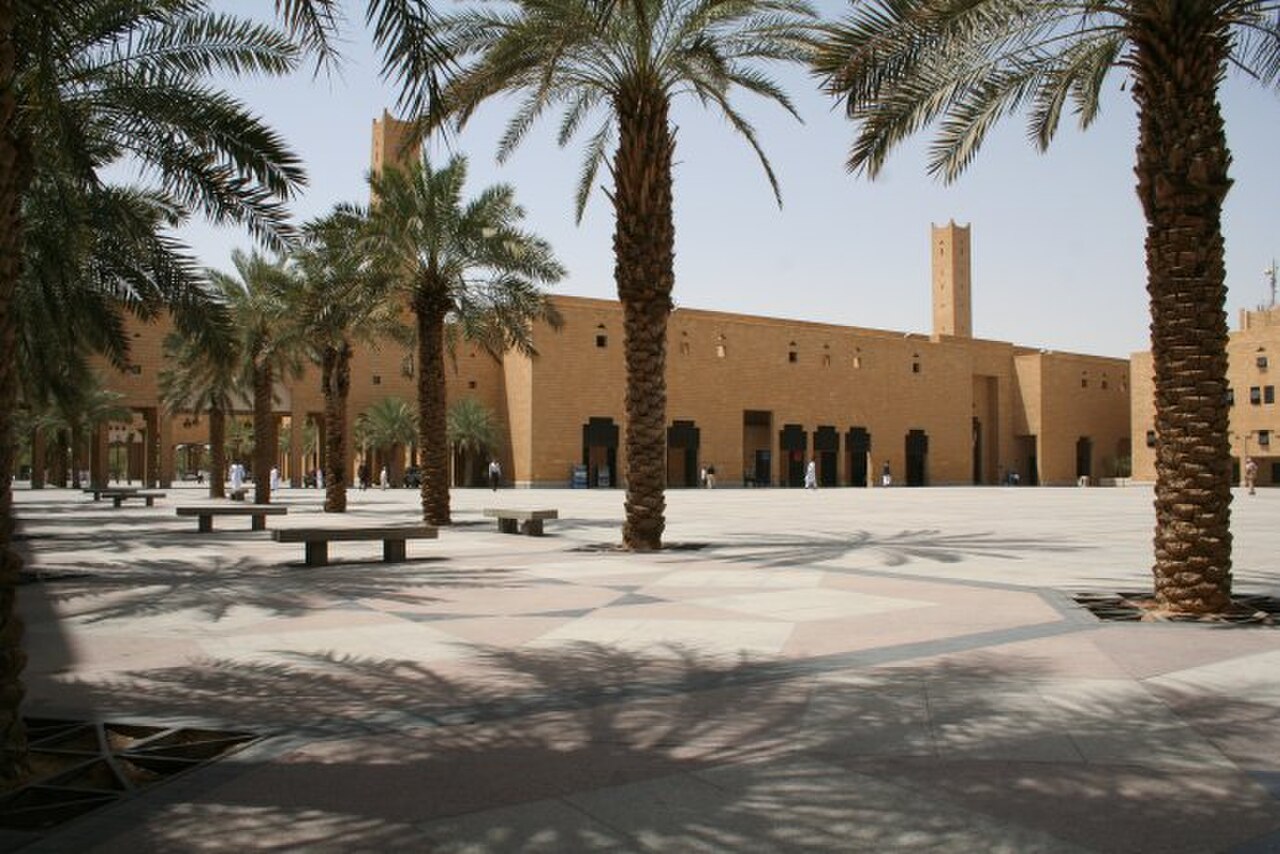
The palace is in central Riyadh's King Abdulaziz Historical Centre, near the National Museum and other cultural landmarks. Private vehicles can reach the complex, and taxis and ride-hailing services serve this well-known destination. The site lies approximately five kilometres north of Riyadh's old city centre. Road signs in Arabic and English support navigation. From a central Riyadh hotel, the journey may take fifteen to thirty minutes depending on traffic, so combine the palace with nearby attractions once you arrive.
Checked 2026-08-26 · Source
Dress conservatively and behave quietly in this royal and historical setting. Traditional flooring, steps, and uneven surfaces can make movement difficult for some visitors. Wear stable shoes and take care during the outdoor portions of the visit, especially in summer. Follow signs and staff directions concerning photography and restricted rooms. Prayer periods may interrupt access. School holidays and weekends can bring more visitors, while some labels may offer less English than others. Security screening is part of the experience at major Saudi cultural institutions.
Checked 2026-08-26 · Source
The palace offers detailed subjects in its mud-brick walls, wooden doors, traditional rooms, period furnishings, documents, and historic photographs. Use the gallery signs and staff instructions as your guide for permitted photography, flash, tripods, and professional equipment. Photographing architecture and objects with care preserves the calm of the rooms. Avoid photographing people without permission. Drone use is heavily restricted in Saudi Arabia and is unsuitable around a sensitive royal heritage site. Focus on the relationship between domestic spaces and the palace's wider historical story.
Checked 2026-08-26 · Source
It is a restored early twentieth-century royal residence associated with King Abdulaziz and now presents the early Saudi royal period as part of the King Abdulaziz Historical Centre.
Allow one to two hours for the main rooms, displays, historical photographs, documents, and architectural details.
The interior includes reception rooms, private quarters, administrative spaces, period furnishings, documents, photographs, and personal effects connected with the early Saudi royal period.
It stands in central Riyadh within the King Abdulaziz Historical Centre, approximately five kilometres north of the old city centre.
Yes. The palace and National Museum are both in the King Abdulaziz Historical Centre, making them practical partners for a history-focused half-day.
The palace uses traditional Najdi features, including mud-brick walls, palm wood, traditional flooring, decorated doors, and a square building layout.
Loading the interactive map…
The interactive map could not be loaded.
Last updated:
Source: OpenStreetMap contributors, Wikidata ·