.jpg)

3 min walk · City of Westminster
Speakers' Corner
- Must see
- Historic monument
Language · 11 published
Historic monument · City of Westminster, London
Reviewed by Elena Voss · Roavina Travel Editor
Read from the OpenStreetMap access tags; anything not listed has no tag recorded.
Set the group type to family in the planner and the day window contracts to about three quarters of a solo day.
This place is a Attraction. It was established in 1828. It was designed by John Nash. It is built of Carrara marble. It carries the Grade I listed building heritage designation.
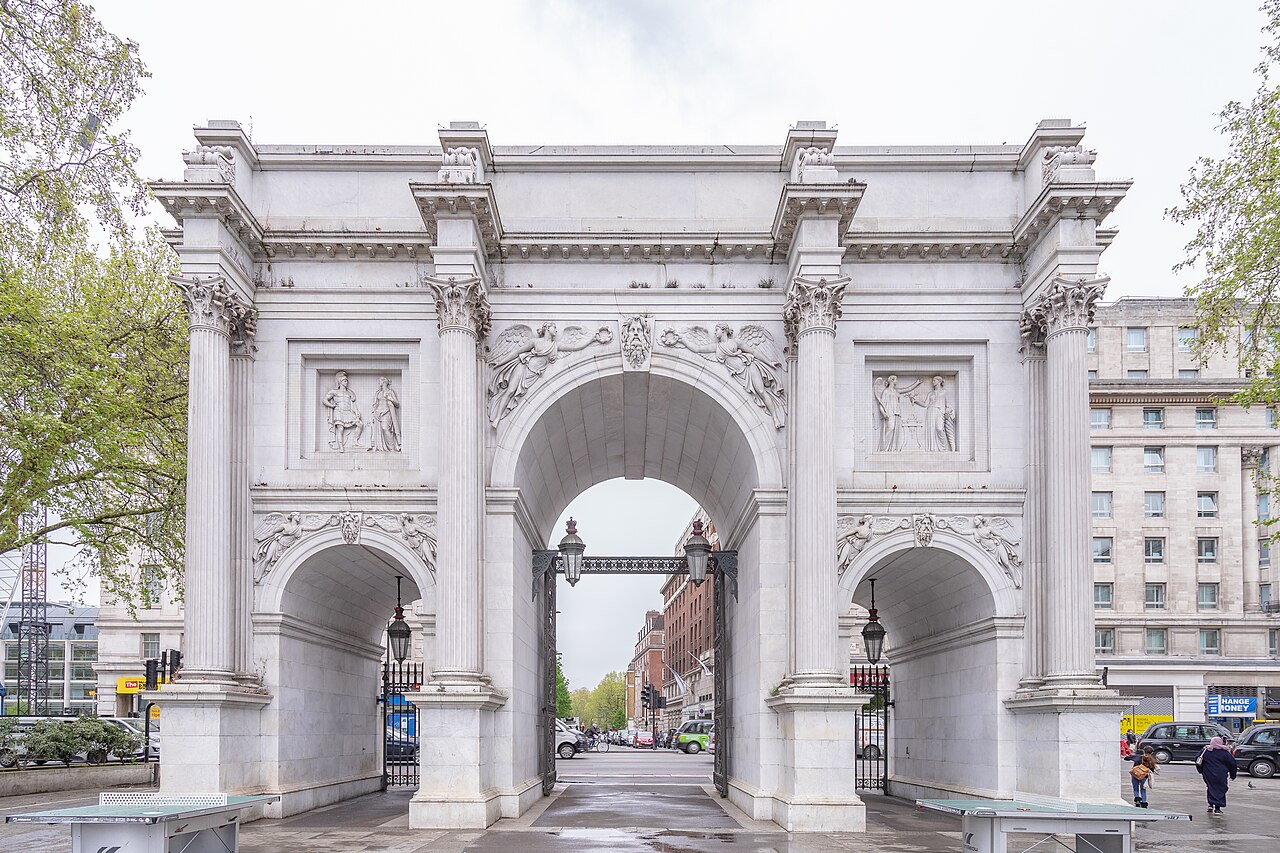
Marble Arch is a white Carrara marble triumphal arch at the north-east corner of Hyde Park, beside the meeting point of Oxford Street, Park Lane and Edgware Road. John Nash designed it in the nineteenth century as a grand gateway for Buckingham Palace. Its present position dates from 1851, when the palace forecourt was extended. Today the arch is an instantly recognisable London landmark experienced from public paths around a busy road junction. Its scale, pale stone and ceremonial design make it a useful short stop between shopping, the park and central London’s royal sights. Regular public access to the interior is not available. The structure contains small rooms historically used for police purposes, but these are only occasionally opened for special events or heritage programmes. Most visitors experience the arch from the exterior only.
Checked 2026-08-26 · Source
The interior is not part of a regular public visit. Marble Arch contains three small rooms that were historically used for police purposes, including a station that remained in operation until 1950. Visitors therefore experience the monument from outside, where the arch’s columns, sculptural decoration and proportions are easier to appreciate from several viewpoints. Walk around the permitted pedestrian areas rather than expecting an exhibition or museum interior. Hyde Park immediately beside the arch provides the natural continuation, while Oxford Street offers a very different urban setting a short walk away.
Checked 2026-08-26 · Source
Allow about five to fifteen minutes for the arch itself. That is enough time to reach a good viewing position, study the carved details and take photographs from more than one angle. Give the stop longer if you are pairing it with Hyde Park, since the park changes the experience from a roadside landmark into a broader walk. Oxford Street, Park Lane and Edgware Road also make the location valuable as a transition point in a central London day. The monument works best as a focused pause rather than a standalone half-day attraction.
Checked 2026-08-26 · Source
Marble Arch can be viewed whenever the surrounding public routes are accessible. Daylight shows the white marble and carved surfaces most clearly, while illumination after dark gives the arch a more dramatic outline. Oxford Street foot traffic is especially noticeable during shopping periods, and the junction remains active into the evening. Choose daylight for detailed architectural photographs and evening for atmosphere. Weather matters because the traffic island is exposed, with little shelter immediately around the monument. A quieter moment may make it easier to look closely and cross without haste.
Checked 2026-08-26 · Source
Exterior viewing of Marble Arch is free and does not involve a ticket, booking or controlled entrance. The arch stands in open public space, so visitors can include it spontaneously while walking between Hyde Park and Oxford Street. There is no regular interior tour described here. Treat unsolicited requests for payment as separate from access to the monument itself. Because the stop takes little time, it fits easily before a park walk, after shopping or on a route towards Park Lane without creating a fixed appointment.
Checked 2026-08-26 · Source
Marble Arch Underground station on the Central line serves the landmark directly, with exits leading towards the junction. Bus routes run along the surrounding major roads. Walking is practical from Bond Street, Oxford Circus and Paddington, although the distance and route depend on your starting point. The arch is surrounded by heavy traffic, so reach the central island only through designated pedestrian crossings. Driving is an awkward choice because congestion and limited stopping options dominate the area. Cycle hire docks can be found in nearby streets.
Checked 2026-08-26 · Source
This is a traffic-island landmark, not a quiet plaza. Several busy roads converge around it, and vehicle movement continues while visitors are looking up at the arch. Use signal-controlled crossings, keep children close and avoid stepping into the road for a better photograph. The open position also leaves you exposed to wind and rain. Crowded pavements around Oxford Street create ordinary city pickpocketing risks, so keep bags closed and valuables secure. Street approaches may be noisy and busy even when the monument itself is quiet.
Checked 2026-08-26 · Source
Photograph Marble Arch from the surrounding pedestrian areas and vary your angle to include the columns, archway and upper sculpture. A wide lens helps when standing close, but step back where possible to avoid making the structure look cramped. Bright midday sun can make the pale marble appear flat or overexposed; softer morning, late-afternoon or evening light separates the details more clearly. Night illumination creates a strong contrast with the traffic and city lights. Avoid tripods or prolonged stops on narrow islands and keep every shot within safe pedestrian areas.
Checked 2026-08-26 · Source
Regular visits are exterior-only. The arch contains small rooms with a former police use, but visitors normally experience the monument from public areas outside.
Yes. Viewing the exterior from public areas is free and has no ticket control or booking requirement.
Marble Arch station on the Central line is the nearest Underground station and leads towards the traffic island.
It was relocated in 1851 when the Buckingham Palace forecourt was extended. The arch had originally been designed as a palace gateway.
Use the signal-controlled pedestrian crossings around the junction. Do not cross between moving vehicles or step into the road for photographs.
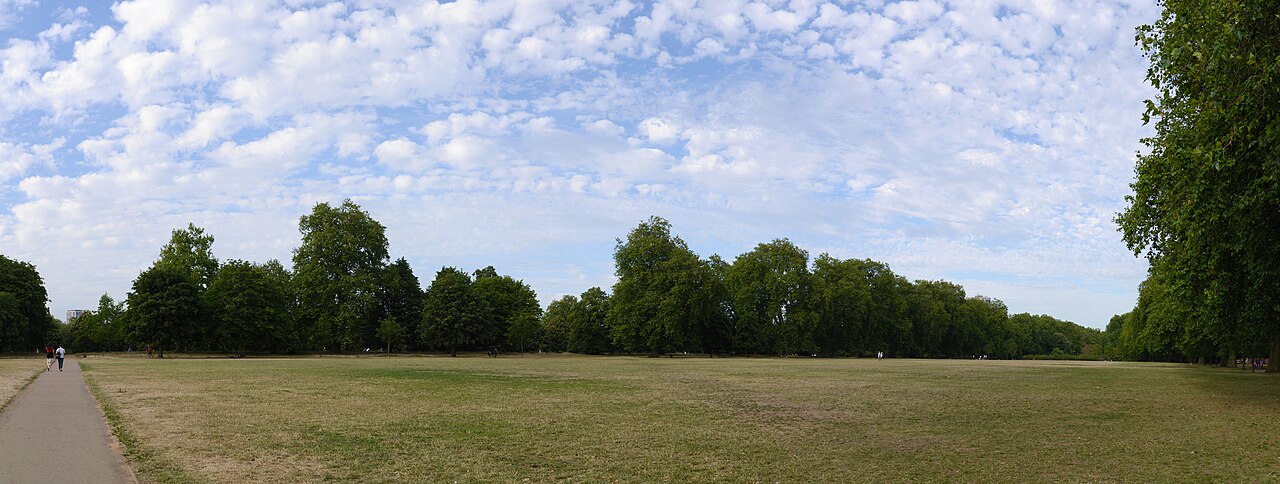
Hyde Park lies immediately beside the arch, while Oxford Street, Park Lane and Edgware Road provide nearby walking routes and city sights.
Loading the interactive map…
The interactive map could not be loaded.
Last updated:
Source: OpenStreetMap contributors, Wikidata ·