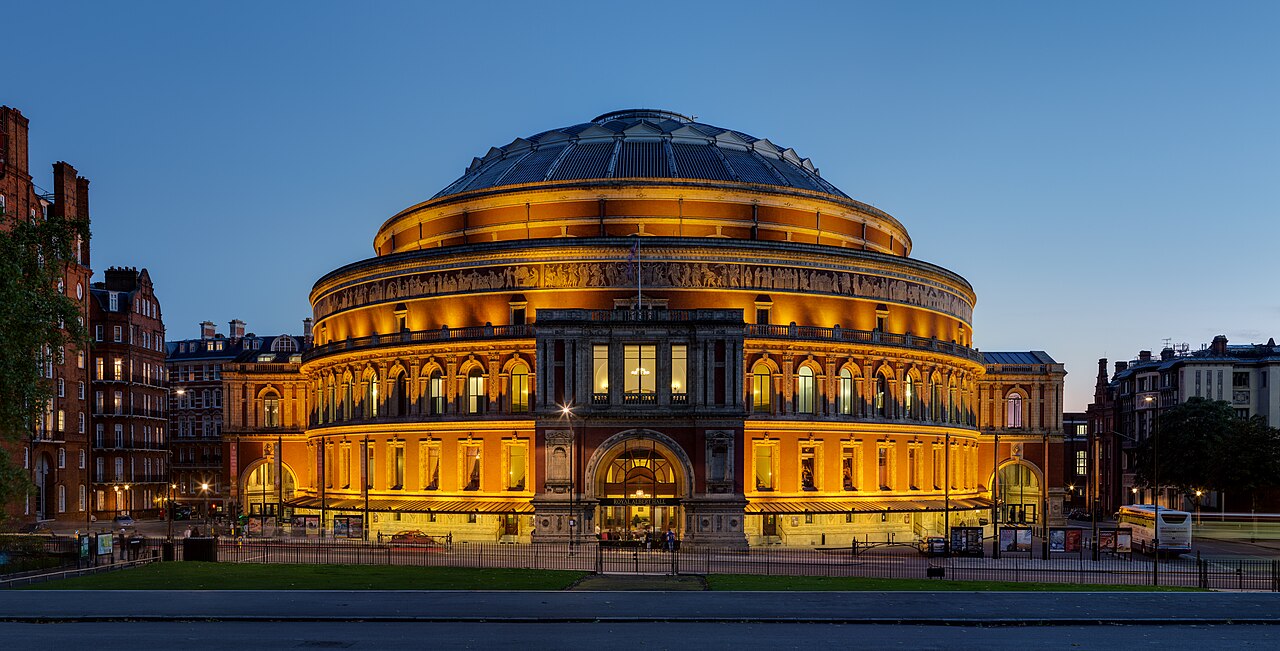
Royal Albert Hall is the circular concert hall on Kensington Gore in South Kensington, London. Queen Victoria opened it in 1871 and named it for Prince Albert. Its red-brick and terracotta exterior, domed roof, and monumental scale make it one of London’s most recognisable cultural buildings. The hall hosts classical concerts, rock and pop performances, opera, ballet, film events with live orchestral accompaniment, and sporting occasions. Its long association with the BBC Proms gives it a special place in British musical life. A visit combines a distinctive building with the anticipation and shared atmosphere of live performance.
The main auditorium rises through several seating levels, including the stalls, circle, and gallery, around the central stage. The interior is known for its richly decorated design and the frieze representing the Triumph of Arts and Sciences. The hall also includes bars, food-service areas, practice rooms, backstage facilities, hospitality suites, and private dining rooms used for events. Its organ, first built for the opening period, has been reconstructed over time. The strongest first impression comes from the auditorium’s scale: look upward through the circular seating arrangement and notice how the architecture keeps the audience connected to the stage.
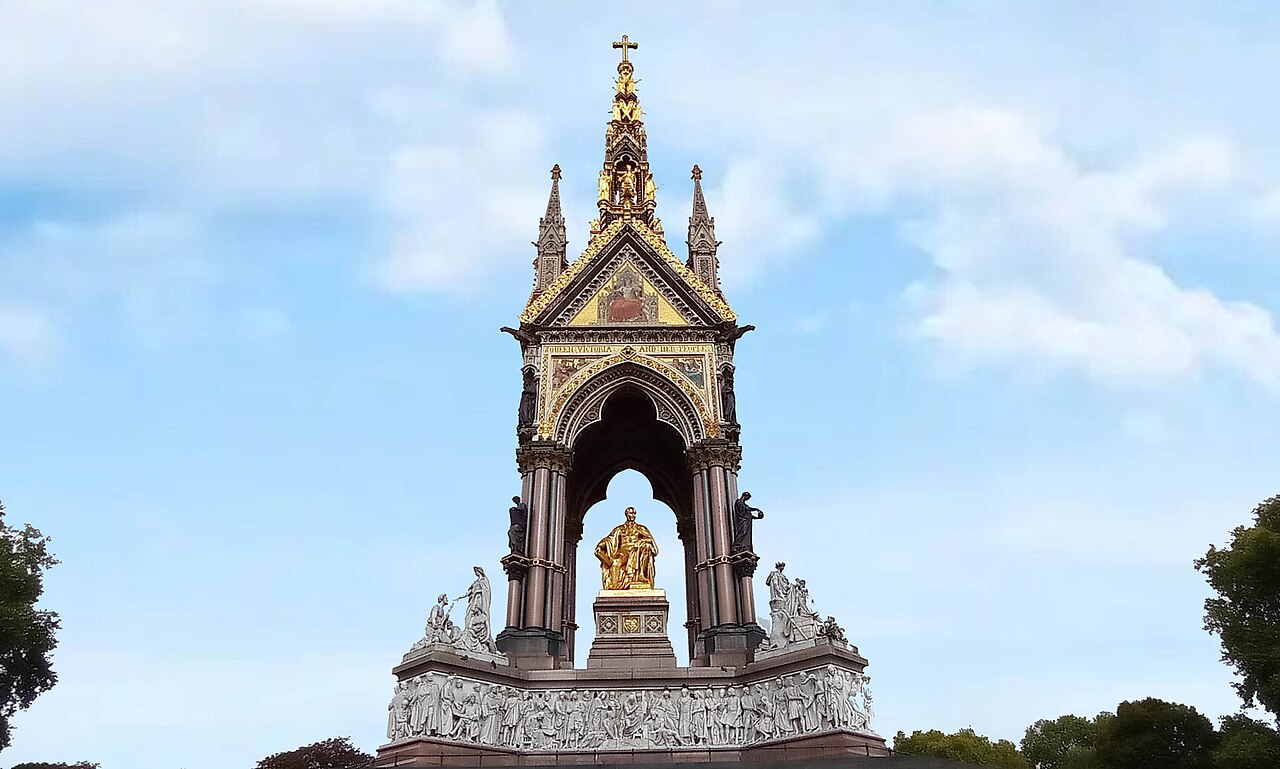
Most concerts and performances last roughly two to three hours and may include an interval. Arrive about thirty minutes before the listed start so you can pass through the entrance, find your seat, and buy refreshments without rushing. Add time after the event if you want to look at the exterior, cross to the Albert Memorial, or walk into Hyde Park. A guided building visit is a separate experience from attending a concert. For itinerary planning, treat the hall as a substantial evening or afternoon commitment, especially when the event includes an interval and a crowded departure.
The hall runs a year-round programme, so the best date depends on the event you want to see. Summer is especially significant because the BBC Proms fill the calendar with classical performances. Evening concerts are common, while matinees and daytime events provide an easier fit for families or visitors with an early finish. Arrive in daylight if you want to study the exterior and the Albert Memorial opposite, then return for the performance. Popular events create heavier crowds around the entrance and nearby Underground stations, so build extra time into your route.
Event tickets are sold through the hall and authorised ticket channels, with prices shaped by the performer, event type, and seat location. Gallery standing places can provide a lower-cost way to experience the building, while premium stalls seats cost more and may offer a closer view. Some seats have restricted sightlines because of the hall’s circular design. Keep purchases within official or authorised channels and read the seating description before paying. Membership can provide priority booking for people attending regularly. Choose the event first, then compare seats according to view, comfort, and budget.
Royal Albert Hall is on Kensington Gore, opposite Hyde Park and the Albert Memorial. South Kensington Underground station is served by the District, Circle, and Piccadilly lines, while High Street Kensington is served by the District and Circle lines. Either station involves a walk of around ten to fifteen minutes. Buses stop in the surrounding streets, and bicycle parking is available nearby. Public transport is more practical than driving because on-street parking is limited. Use Hyde Park and the Albert Memorial as clear orientation points when approaching the hall from the Underground.
Gallery standing places involve substantial stair climbing and may be uncomfortable for visitors with mobility difficulties or vertigo. The circular auditorium means some seats face away from the stage, and restricted-view tickets can obstruct part of the performance. Popular events create queues and crowded corridors, so arrive with time for entry and seating. Food and drinks inside the venue cost more than many nearby alternatives. Keep your phone silent once the event begins and follow staff instructions during security, seating, and departure. Choosing a seat carefully is one of the most important ways to improve the experience.
The exterior offers strong photographic subjects, especially the circular mass, domed roof, terracotta decoration, and the relationship between the hall and Albert Memorial. Inside, event rules control photography and recording. Flash is unsuitable during performances because it distracts artists and audience members, and professional cameras with detachable lenses are generally prohibited. Some events allow photographs before the performance or during an interval. Silence your phone and keep any permitted camera discreet. From across Kensington Gore or Hyde Park, wider compositions show why the hall’s unusual scale and shape are so memorable within London’s cultural quarter.