
9 min walk · London Borough of Brent
Sports Bar
- Notable
- Nightlife venue
Language · 11 published
Historic monument · London Borough of Brent, London
Reviewed by Elena Voss · Roavina Travel Editor
Read from the OpenStreetMap access tags; anything not listed has no tag recorded.
Set the group type to family in the planner and the day window contracts to about three quarters of a solo day.
This place is a Attraction. It opened in 2007. It was designed by Populous. It is run by Foster and Partners.
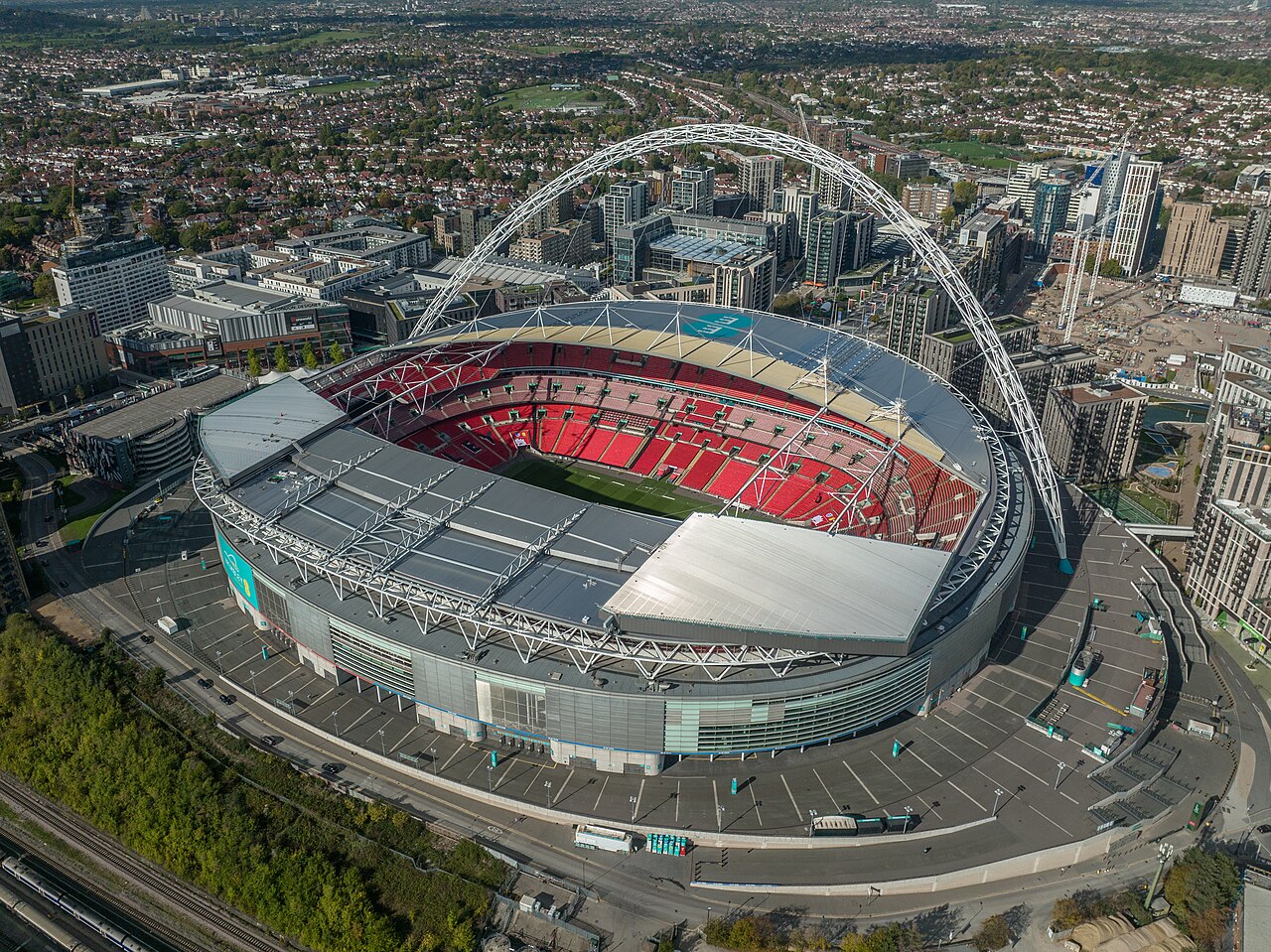
Wembley Stadium is England’s national football stadium in north-west London. The current building opened on the site of the original 1923 stadium after that structure was demolished in 2003. It hosts England matches, domestic cup finals, major sporting fixtures and concerts. The huge Wembley Arch makes the stadium a prominent landmark long before visitors reach the entrances. Wembley Stadium is a major football stadium located in Wembley, north-west London. It serves as the national stadium of England and is owned by the Football Association through its subsidiary Wembley National Stadium Limited. The current stadium opened on the site of the original 1923 Wembley Stadium, which was demolished in 2003. It hosts England national football team home matches, domestic cup finals, and numerous other sporting and entertainment events throughout the year. No. The current Wembley Stadium opened in 2007 on the same site after the original 1923 stadium was demolished in 2003.
Checked 2026-08-26 · Source
The stadium surrounds the pitch with several tiers of seating beneath a partially retractable roof. A 133-metre arch spans the structure and dominates the skyline. Visitor facilities include hospitality suites, conference areas and the Wembley Museum, where football history and artefacts connected with the earlier stadium form part of the experience. Match-day movement follows clearly separated circulation routes. The stadium features a partially retractable roof and a seating capacity that ranks among the largest in Europe. The interior includes multiple tiers of seating arranged in a bowl configuration around the pitch. Facilities incorporate hospitality suites, conference spaces, and the Wembley Museum, which displays historical artefacts from the original stadium. The stadium is also notable for its distinctive 133-metre tall Wembley Arch, which spans over the structure and provides structural support, visible across the London skyline.
Checked 2026-08-26 · Source
A football match takes about two hours including half-time, although the complete outing lasts longer because of queues and crowded transport. Concerts vary with the performer and support acts. A stadium tour generally takes around sixty to ninety minutes and includes areas such as the changing rooms, players’ tunnel and pitchside. Allow extra time when the stadium is hosting a major event. A typical visit to Wembley Stadium depends entirely on the event attended. Football matches generally last approximately two hours including half-time. Concert durations vary by performer and typically extend longer. Stadium tours, when available, generally require between sixty to ninety minutes to complete the standard route through key areas including the changing rooms, players' tunnel, and pitchside. Visitors should consult specific event schedules for accurate timing, as these vary considerably throughout the year.
Checked 2026-08-26 · Source
The football calendar is busiest from August through May, with England fixtures and domestic cup finals among the major occasions. Summer often brings concerts and other large events. On an event day, arrive early enough for the journey from the station, entry screening and seat-finding. The best date is therefore tied to the match, concert or tour that interests you.
Checked 2026-08-26 · Source
Ticket arrangements depend on the event. Football tickets may be distributed through the Football Association or authorised sellers, with different allocations for members and the general public. Concerts use primary ticketing platforms, while stadium tours are booked separately. Seating location and demand affect prices. Keep your booking details accessible and read the permitted-bag information before travelling to the stadium.
Checked 2026-08-26 · Source
Wembley Park station, on the Jubilee and Metropolitan lines, is a principal arrival point. Wembley Central connects with National Rail, London Overground and the Underground, while Wembley Stadium station serves Chiltern Railways. The stadium is in travel zone four. Event crowds can fill platforms and approach roads, so public transport works best when combined with an early departure from central London.
Checked 2026-08-26 · Source
Security screening is required for entry, and bag-size and prohibited-item rules apply. The area becomes extremely busy immediately before and after events, with stewards directing pedestrian flows. Weather can affect seats beneath the partially covered roof. Keep personal belongings secure in dense crowds and follow steward instructions. A journey that is easy on a quiet day may take much longer after a match or concert.
Checked 2026-08-26 · Source
The Wembley Arch is the strongest exterior subject, while the bowl, pitch and players’ tunnel provide memorable tour photographs. Smartphones and personal cameras are allowed at many events, but detachable lenses, tripods and professional equipment may be restricted. Concert performers can impose additional rules. Keep photography personal, respect signs and staff, and never let equipment block another spectator’s view.
Checked 2026-08-26 · Source
No. The current stadium opened in 2007 on the same site after the original stadium was demolished in 2003.
It is a 133-metre structural arch spanning the stadium and forming its most recognisable external landmark.
The England national football team plays its home matches there; Wembley is not the permanent home ground of a club team.
A standard stadium tour generally takes around sixty to ninety minutes and includes the changing rooms, players’ tunnel and pitchside.
Yes. It has a partially retractable roof designed to cover the seated areas.
It is in north-west London, in travel zone four, about eight miles from central London.
Loading the interactive map…
The interactive map could not be loaded.

Last updated:
Source: OpenStreetMap contributors, Wikidata ·