
3 min walk
American Writers Museum
- Must see
- Museum
Art and culture venue · Chicago
| Monday | 10:00 – 17:00 |
|---|---|
| Tuesday | 10:00 – 17:00 |
| Wednesday | 10:00 – 17:00 |
| Thursday | 10:00 – 17:00 |
| Friday | 10:00 – 17:00 |
| Saturday | 10:00 – 17:00 |
| Sunday | 10:00 – 17:00 |
Checked 2026-08-31 · Source
| Per person | $0.00 |
|---|
Checked 2026-08-31 · Source
Read from the OpenStreetMap access tags; anything not listed has no tag recorded.
Set the group type to family in the planner and the day window contracts to about three quarters of a solo day.
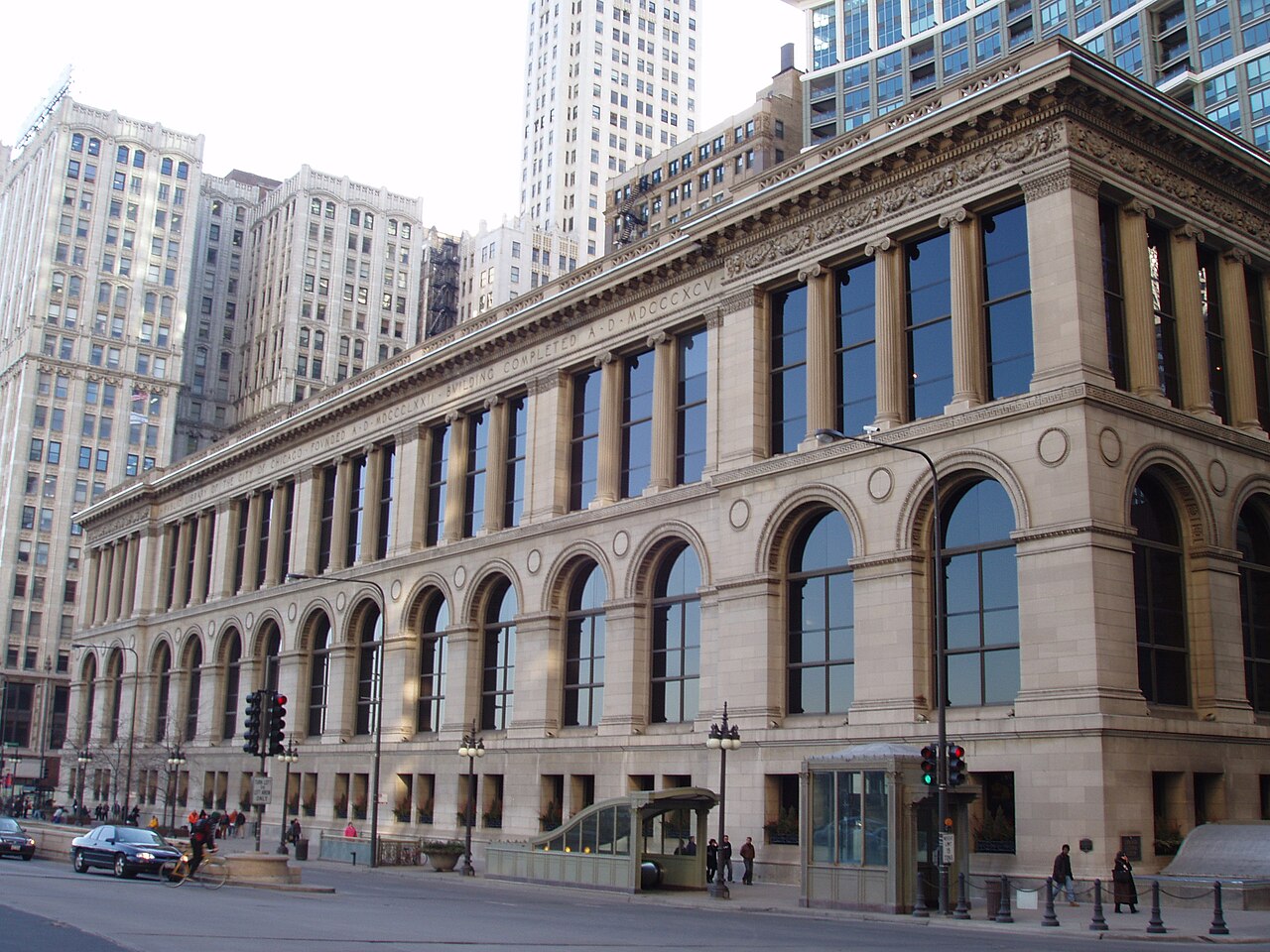
The Chicago Cultural Center is a landmark municipal building in downtown Chicago, Illinois. Opened in 1897 as the city's first central public library, it was converted to an arts and culture venue in 1977. The building stands across from Millennium Park on Michigan Avenue. It serves as a free public arts venue operated by the Chicago Department of Cultural Affairs and Special Events. The structure is notable for its classical architectural design and its role as a gathering space for cultural programming, exhibitions, and public events throughout the year. The landmark occupies the former Chicago Public Library, completed in 1897. Its two stained-glass domes—the Tiffany dome in Preston Bradley Hall and the Healy & Millet dome in the Grand Army of the Republic rooms—make the building itself a primary exhibit. DCASE uses galleries, halls and performance spaces for changing visual art, music, dance, talks and civic programmes, so a free visit combines architecture with whatever is currently scheduled.
Checked 2026-08-31 · Source
The building contains two prominent stained-glass domes. The Preston Bradley Hall dome measures approximately 38 feet in diameter and features Tiffany glass. The Grand Army of the Republic Memorial Hall and Rotunda contains a dome with painted glass. Visitor-accessible spaces include exhibition galleries, performance halls, and the visitor information center for Chicago tourism. The center hosts rotating visual art exhibitions, music performances, film screenings, and literary events. Architectural details include ornate mosaics, marble staircases, and decorative plasterwork throughout the interior corridors and public rooms.
Checked 2026-08-31 · Source
A self-guided visit to observe the architectural features and domes typically requires 45 minutes to 90 minutes depending on individual interest in decorative details and photography. Visitors attending scheduled performances or exhibition openings should allocate additional time corresponding to event duration. Those combining the visit with nearby Millennium Park, the Art Institute of Chicago, or other Loop district attractions may integrate a shorter stop of 30 minutes for the primary highlights. The building's central location supports flexible visit lengths as part of broader downtown exploration.
Checked 2026-08-31 · Source
Open daily 10:00-17:00; exhibitions close 15 minutes before the building. Closed on city holidays, while evening performances and private events can use separate access times. Arrive early enough for security, timed entry and the main route before the final admission period. Weekends, school holidays, games, festivals and special events increase crowds or close individual areas. Chicago weather affects parks, riverfronts and outdoor approaches, while indoor museums remain climate controlled. The dated operator calendar always takes priority over a normal weekly pattern.
Checked 2026-08-31 · Source
Building admission, public exhibitions, the Tiffany domes and most DCASE cultural programmes are free. Selected partner events can require registration or a ticket. Use the official operator and retain the dated confirmation. General entry does not include separately priced tours, performances, temporary exhibitions, parking, rentals, food or events unless the product says so. Free or suggested admission can still require a timed reservation and proof of eligibility. Accessible seating and necessary companion arrangements follow the venue-specific booking process.
Checked 2026-08-31 · Source
The Cultural Center is at 78 E Washington Street opposite Millennium Park. Washington/Wabash L station, Millennium Station and Michigan Avenue buses are within a short walk; underground garages serve Millennium Park. Allow time for the final walk, entrance choice, security or tour meeting point. Use the complete venue name and address because lakefront campuses, university sites and stadiums can have multiple gates. Public transport avoids event traffic and expensive parking, and an admission or tour reservation never guarantees a parking place.
Checked 2026-08-31 · Source
The building is ADA compliant with accessible entrances, elevators and accessible restrooms connecting public galleries and halls. ASL or open-captioning support can be requested for programmes with advance notice. Follow the designated accessible route and staff instructions. Crowds, historic interiors, tours, performance spaces, festivals and temporary installations can apply narrower access or transfer requirements than the main route. Keep bags compact, retain tickets and identification, and leave lifts, ramps, aisles, companion seating and emergency routes clear for other visitors.
Checked 2026-08-31 · Source
The domes and interior architecture are frequently photographed subjects. Natural light varies throughout the day, affecting dome illumination. Tripod use may be restricted or require advance permission. Flash photography may be prohibited in exhibition areas. The most common vantage points include the Preston Bradley Hall dome viewed from the main floor and the Grand Army of the Republic Rotunda dome from beneath. Window light from Michigan Avenue affects exposure conditions in corridors. Visitors should respect other guests and active programming when positioning for shots. Commercial or professional photography may require separate arrangements with building management.
Checked 2026-08-31 · Source
Yes. Entry to the building, domes and public galleries is free.
Yes. The Tiffany dome and Healy and Millet dome are on the public interior route when their halls are open.
Yes. Free architecture tours operate on scheduled days through the DCASE volunteer programme.
Yes. Accessible entrances and elevators connect the main public floors.
They close 15 minutes before the 17:00 building closure.
Yes. Performances, ceremonies and installations can temporarily close individual halls while the building remains open.
Loading the interactive map…
The interactive map could not be loaded.
Last updated:
Source: OpenStreetMap contributors, Wikidata ·