
15 min walk
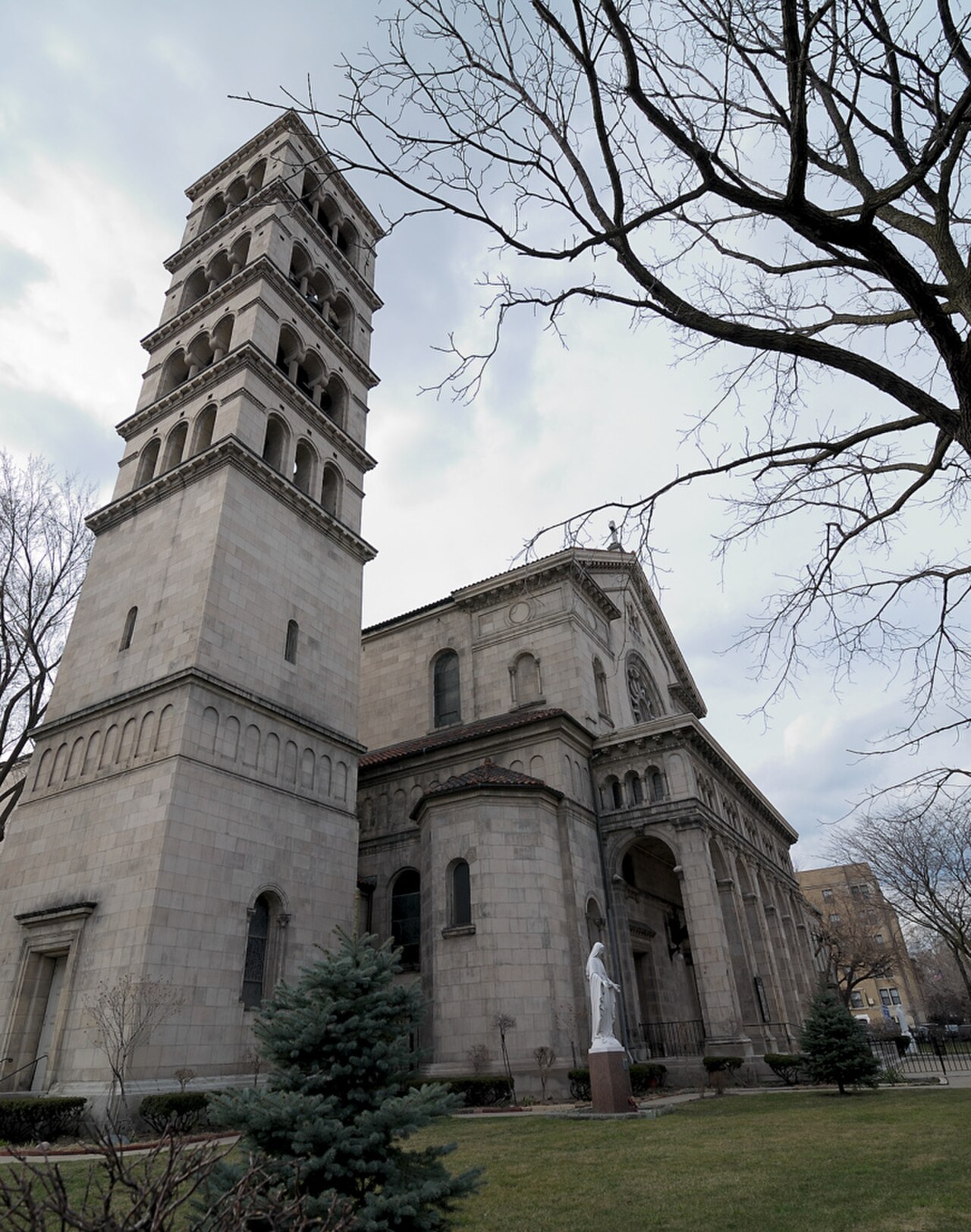
Saint Mary of the Lake Church
- Notable
- Place of worship
Language · 11 published
Entertainment venue · Chicago
Reviewed by Elena Voss · Roavina Travel Editor
Read from the OpenStreetMap access tags; anything not listed has no tag recorded.
Set the group type to family in the planner and the day window contracts to about three quarters of a solo day.
It opened in 1914. It was designed by Zachary Taylor Davis. It carries the Chicago Landmark heritage designation. It is run by Chicago Cubs.
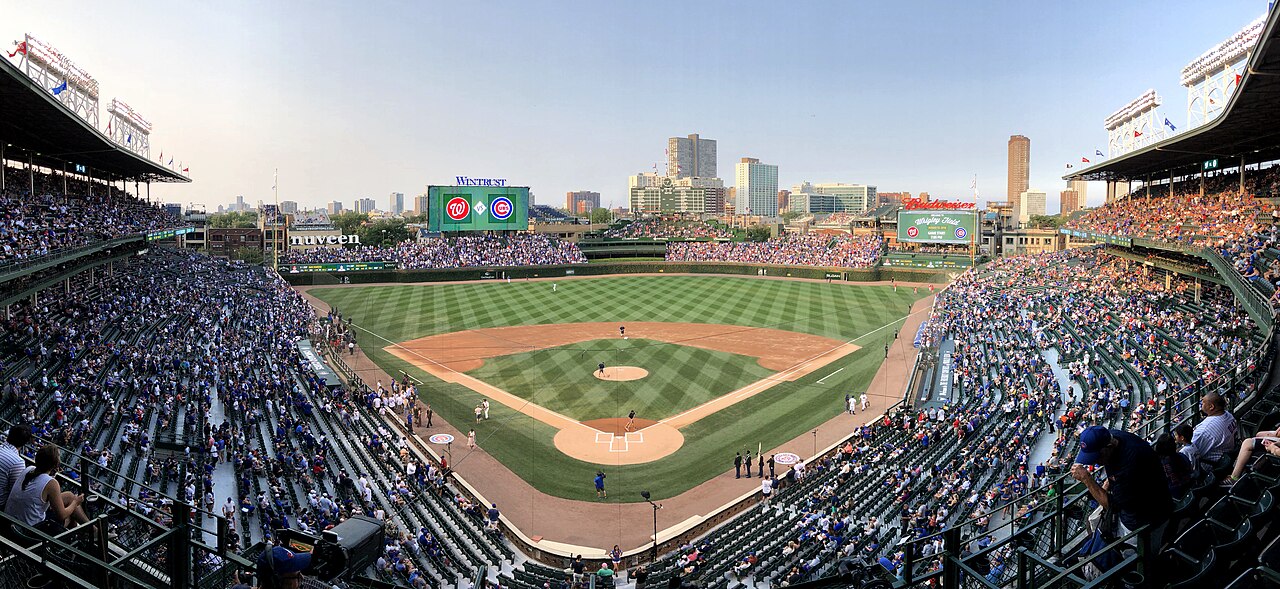
Wrigley Field is a Major League Baseball stadium on Chicago's North Side, serving as home to the Chicago Cubs since 1914. It holds designation as a National Historic Landmark, recognizing its century-long role in American sports architecture. The ballpark retains its original neighborhood-integrated design, with seating stacked above surrounding streets rather than set within expansive parking grounds. Its ivy-covered outfield walls and manually operated scoreboard remain distinctive features among professional sports venues in the United States. Wrigley Field also earns time in a chicago itinerary because WIKIDATA_EDITORIAL reconciliation for the ranked entry; identity and coordinates were verified without a nearby fallback. Its value becomes clearer when the stop is compared with the surrounding streets and the other ranked places nearby.
Checked 2026-08-31 · Source
The stadium contains the playing field, spectator seating across multiple levels, and the iconic manual scoreboard in center field. The famous marquee sign stands at the main entrance intersection. A sportsbook facility operates within the venue. The outfield walls are covered in Boston ivy, a seasonal feature. The structure maintains its early twentieth-century design elements throughout interior and exterior spaces. Concourse areas connect the seating sections. The surrounding Wrigleyville neighborhood forms an extension of the visitor experience with commercial establishments on adjacent streets.
Checked 2026-08-31 · Source
Baseball games typically extend three hours, though duration varies with gameplay. Visitors should allocate additional time for arrival, security procedures, and departure. Non-event tours, when available, require separate scheduling. The surrounding neighborhood rewards extended exploration for those interested in the area's commercial and residential character. First-time visitors often benefit from arriving early to locate seating and observe pre-game activities. The stadium's historic features merit attention beyond the sporting event itself. Evening games conclude after dark for much of the season.
Checked 2026-08-31 · Source
There is no daily sightseeing opening: access follows Cubs games, concerts and scheduled public tours. Public tours run on posted dates from March through the season, last 75-90 minutes and operate rain or shine. Arrive early enough for security, timed entry and the main route before the final admission period. Weekends, school holidays, games and special events increase crowds or change individual areas. Chicago weather affects outdoor approaches and lakefront comfort, while indoor museums remain climate controlled. The dated operator calendar always takes priority over a normal weekly pattern.
Checked 2026-08-31 · Source
Standard public ballpark tours cost approximately USD 30 adult; children two and under join free. Game tickets and private tours are separate, with private groups up to 50 priced at USD 2,000 plus tax. Buy through the official operator and retain the dated confirmation. General entry does not include separately priced exhibitions, shows, tours, encounters, rides, parking, rentals or food unless the selected product says so. Free admission can still require real-name or timed reservations and proof of eligibility. Accessible seating and necessary companion arrangements follow the venue's specific booking process.
Checked 2026-08-31 · Source
Tours begin at Gallagher Way Gate on the west side of Wrigley Field. CTA Red Line Addison station is beside the ballpark; buses 8 Halsted, 22 Clark and 152 Addison serve Wrigleyville. Parking is limited. Allow time for the final walk, entrance choice, security or boarding location. Use the complete venue name and address in navigation because Museum Campus, Navy Pier and Wrigley products can use different doors or meeting points. Public transport avoids event traffic and expensive parking, and an admission reservation never guarantees a parking place.
Checked 2026-08-31 · Source
Public tours are wheelchair accessible with elevator routes and loan wheelchairs, but some behind-the-scenes stops, including the Cubs dugout, have limited or no wheelchair access. ASL interpretation is available with 48-hour notice. Follow the designated accessible route and staff instructions. Crowds, special exhibitions, animal encounters, vessels, rides, historic behind-the-scenes spaces and immersive theaters can apply narrower access or transfer requirements than the main building. Keep bags compact, protect the ticket or ID, and leave lift doors, ramps, aisles and companion seating clear for other visitors.
Checked 2026-08-31 · Source
Personal photography is allowed from ordinary spectator and tour areas for non-commercial use, subject to the current event or tour rules. The red marquee at Clark and Addison, manual scoreboard, ivy-covered outfield walls and neighbourhood rooftops are the defining subjects. Field, dugout and clubhouse angles require the ticketed route and cannot be reached independently. Keep lenses and phones within the permitted size rules for a game, never obstruct aisles or accessible seating, and do not use flash around players. Commercial, media and drone work requires Cubs and league authorisation.
Checked 2026-08-31 · Source
No. Non-gameday tours normally add the press box, clubhouse and dugout; gameday access is reduced for operations.
Public tours last approximately 75-90 minutes.
Yes. Tours operate rain or shine and include outdoor stops.
Yes. Tickets are delivered through the MLB Ballpark app.
No. The tour has an accessible route, but areas such as the Cubs dugout may be unavailable.
No. A non-gameday tour can reach the warning track, but guests must not enter or touch the playing grass or ivy.
Loading the interactive map…
The interactive map could not be loaded.
Last updated:
Source: OpenStreetMap contributors, Wikidata ·