

2 min walk
City Hall
- Must see · Heritage site
- Historic monument
Language · 11 published
Historic monument · New York
Reviewed by Elena Voss · Roavina Travel Editor
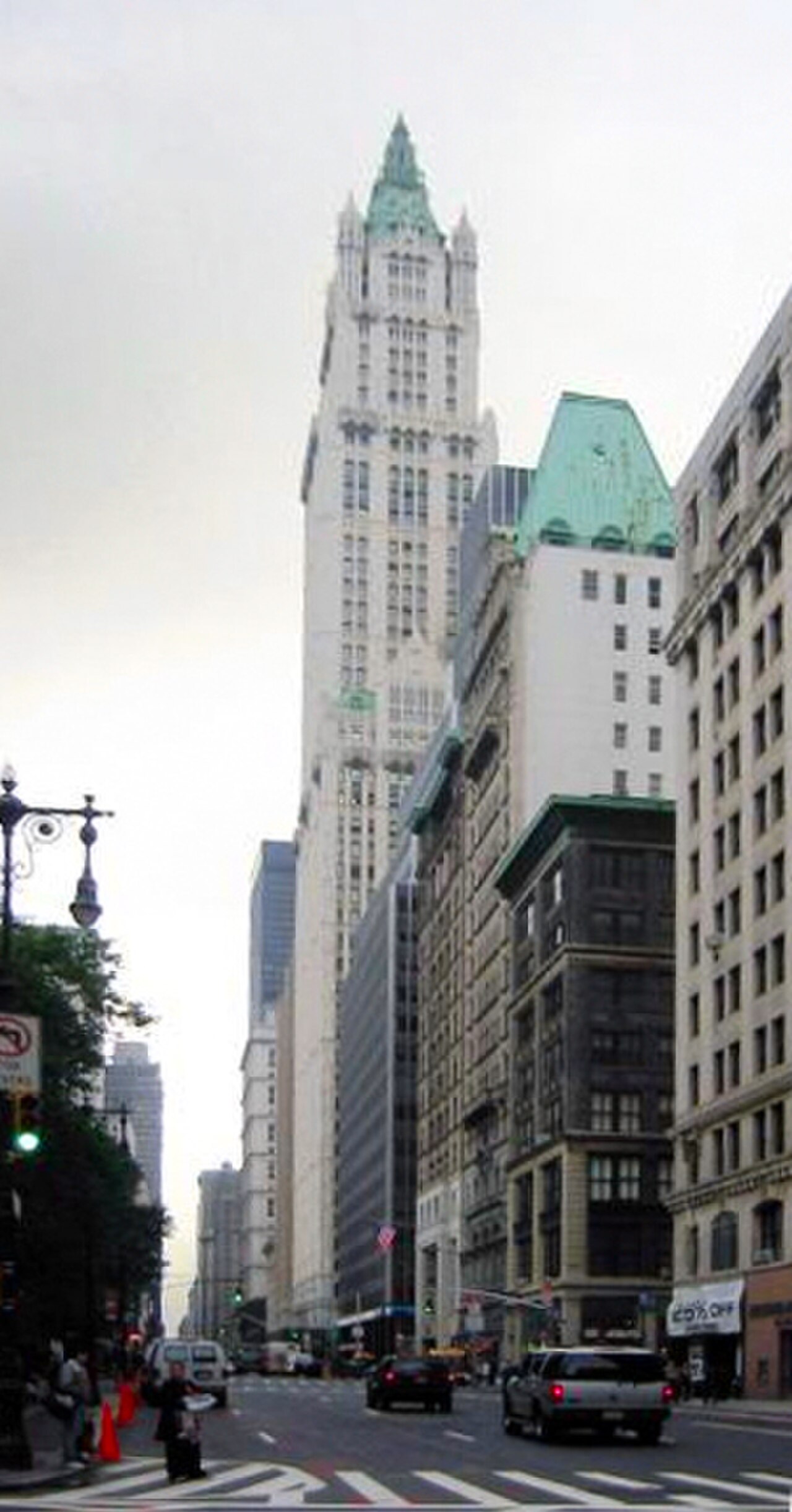
This place is a Attraction. It opened in 1913. It was built in the Gothic Revival style. It was designed by Cass Gilbert. It carries the New York City Landmark heritage designation.
The Woolworth Building is a historic skyscraper in Lower Manhattan, New York City. Designed by architect Cass Gilbert in the neo-Gothic style, it was completed in 1913 and served as the headquarters for the F. W. Woolworth Company. Upon completion, it was the tallest building in the world, a title it held until 1930. The structure rises prominently near City Hall Park and remains one of the most celebrated early skyscrapers in the United States, distinguished by its ornate terra-cotta facade and striking silhouette against the downtown skyline.
Checked 2026-08-28
The building's most celebrated interior space is its lobby, renowned for elaborate Gothic Revival details, vaulted ceilings, mosaic work, and sculptural elements. The ceiling features stained-glass skylights and intricate tile patterns. Marble walls, bronze fittings, and carved stone contribute to the grandeur. Upper floors have historically contained commercial office spaces. The building's crown and tower are visible from exterior vantage points. Public access to interior spaces has been limited in recent decades, with the lobby historically offering restricted viewing opportunities for visitors.
Checked 2026-08-28
A visit to the Woolworth Building depends entirely on accessible areas at the time of arrival. Exterior appreciation requires only brief observation from surrounding streets, perhaps fifteen to thirty minutes to examine facade details and photograph the tower. Any permitted interior access, such as lobby viewing, would extend a visit accordingly. Visitors should not plan extended stays without confirmed entry arrangements. The building functions primarily as commercial property rather than a conventional tourist destination, so unstructured wandering is generally not possible.
Checked 2026-08-28
The Woolworth Building operates as a commercial office building with limited public access rather than as a dedicated tourist attraction with published visiting hours. Exterior viewing is possible at any time from public streets and surrounding areas. Interior access, when available, has historically been subject to restrictions and special arrangements. Visitors should verify current access policies through official channels before planning a specific visit, as policies may change without broad public announcement. A flexible visit to Woolworth Building leaves room to adjust for access conditions without relying on unverified schedules, prices or closure assumptions. Confirm practical details with the operator when available. Check the operator's own site for the travel date before relying on a schedule or fare.
Checked 2026-08-28
The Woolworth Building does not function as a standard ticketed attraction. No general admission fee applies for exterior observation from public thoroughfares. Any interior access programs, historical tours, or special viewing arrangements that may exist would operate under separate terms. Visitors should not expect conventional ticketing infrastructure. Those seeking interior access should contact building management or authorized representatives directly to inquire about any programs, conditions, or associated costs that may apply. Woolworth Building is best treated as a distinct stop rather than a generic example of its category. Focus on the setting, surviving features and visitor route visible on arrival. Check the operator's own site for the travel date before relying on a schedule or fare.
Checked 2026-08-28
The Woolworth Building stands at 233 Broadway in Lower Manhattan, near the intersection with Park Place. Multiple New York City Subway stations serve the vicinity, including Chambers Street with several lines, City Hall station, and Brooklyn Bridge-City Hall. Bus routes operate along Broadway and nearby avenues. The building sits within walking distance of the Brooklyn Bridge pedestrian walkway, City Hall Park, and the Civic Center district. Visitors already exploring downtown Manhattan, the Financial District, or Chinatown will find it readily accessible on foot.
Checked 2026-08-28
Visitors should recognize that the Woolworth Building remains active commercial property, not a public museum. Security personnel and building protocols govern entry. Photography restrictions may apply to interior spaces even when access is granted. The surrounding Civic Center area experiences heavy weekday foot traffic and government activity. Street-level observation requires awareness of pedestrian and vehicle flow on Broadway. Visitors should not attempt unauthorized entry or assume public right of access beyond sidewalk areas. Respect for building operations and occupants is essential.
Checked 2026-08-28
Photography rules are Not recorded pending review. The Woolworth Building's exterior presents exceptional photographic opportunities from surrounding streets, particularly from City Hall Park and Broadway vantage points where the tower rises dramatically. The terra-cotta ornamentation, Gothic detailing, and copper roof elements reward close examination. Interior photography, if access is obtained, would be subject to any building policies in force. Tripod use on sidewalks may require permits under New York City regulations. Optimal exterior lighting occurs during morning and late afternoon hours.
Checked 2026-08-28
No. The Woolworth Building operates primarily as commercial office space with limited public access. Interior entry is not available as a general tourist privilege.
Yes. Upon completion in 1913, it was the tallest building in the world until 1930.
No. Viewing the building from public streets and surrounding areas requires no fee.
Not recorded pending review. Historical tour programs have existed at various times but current availability requires direct verification with building management.
Neo-Gothic, also described as Gothic Revival, with elaborate terra-cotta ornamentation throughout.
Architect Cass Gilbert designed the building.
Loading the interactive map…
The interactive map could not be loaded.

Last updated:
Source: OpenStreetMap contributors, Wikidata ·