
4 min walk
Aragil
- High · Heritage site
- Historic monument
Language · 11 published
Museum · Yerevan
Երևանի Մատենադարան
Reviewed by Elena Voss · Roavina Travel Editor
| Monday | Closed |
|---|---|
| Tuesday | 10:00 – 17:50 |
| Wednesday | 10:00 – 17:50 |
| Thursday | 10:00 – 17:50 |
| Friday | 10:00 – 17:50 |
| Saturday | 10:00 – 17:50 |
| Sunday | Closed |
Checked 2026-08-31 · Source
Read from the OpenStreetMap access tags; anything not listed has no tag recorded.
Set the group type to family in the planner and the day window contracts to about three quarters of a solo day.
This place is a Museum. It opened in 1959. It was designed by Mark Grigorian. It carries the cultural heritage monument in Armenia heritage designation.
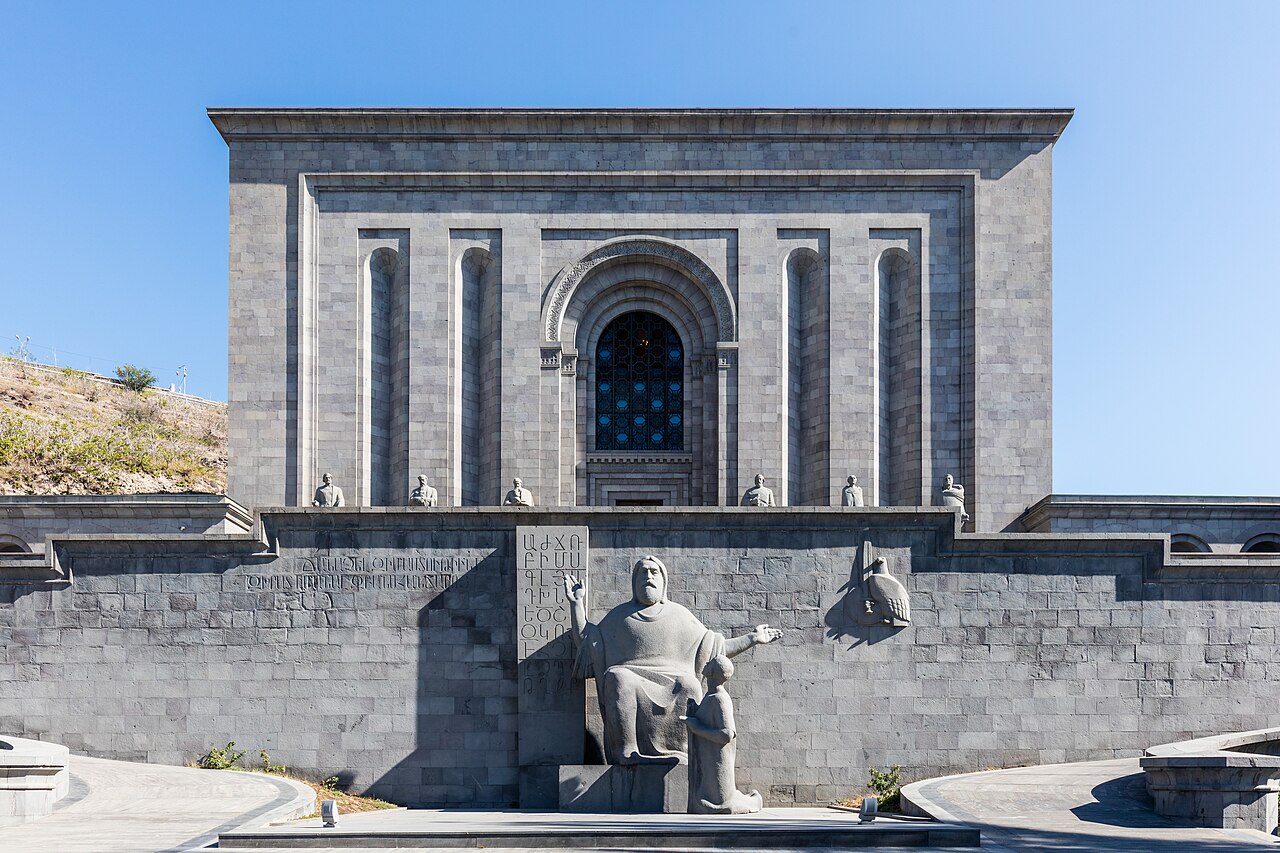
Matenadaran, formally the Mesrop Mashtots Institute of Ancient Manuscripts, is Yerevan's major centre for Armenian manuscript heritage. It functions as both a public museum and an active research institute. The hilltop building is fronted by a large statue of Mesrop Mashtots, associated with the creation of the Armenian alphabet, and looks over central Yerevan. A visit brings together literature, religion, scholarship, art and architecture, making the institute one of the city's most focused cultural experiences. Matenadaran is a major manuscript repository and research institute in Yerevan, Armenia. Its full name translates to the Mesrop Mashtots Institute of Ancient Manuscripts. The institution holds one of the world's largest collections of medieval manuscripts and documents, preserving Armenian literary heritage. The building stands prominently on a hill overlooking central Yerevan, marked by a large statue of Mesrop Mashtots, the creator of the Armenian alphabet. It functions as both. Scholars continue to conduct research using the manuscript collections, while designated exhibition spaces operate as a museum for public visitors.
Checked 2026-08-26 · Source
The museum displays selected manuscripts and documents connected with theology, philosophy, history, medicine, literature and art. Look closely at illuminated pages, calligraphy, decorated bindings and the fine details that make manuscript culture visible as both writing and visual art. The collection also reflects Armenia's historical connections with other languages and traditions. Beyond the exhibits, the building contributes to the experience through monumental stonework, carved details and inscriptions that place the manuscripts within a wider Armenian literary and cultural setting.
Checked 2026-08-26 · Source
Most visitors can experience the exhibition in one to two hours. That allows time to move through the principal displays, examine illuminated pages and pause over the cultural context. Visitors with a strong interest in medieval art, Armenian history or writing systems may want longer, especially if they read labels carefully. The museum is compact enough to visit without physical strain for many travellers, but the hilltop approach adds effort before the galleries begin. Leave time for the exterior facade and statue as well.
Checked 2026-08-26 · Source
Matenadaran is an indoor museum, so it remains a useful Yerevan stop during very hot or cold weather. The hilltop approach is more comfortable in the cooler parts of the day, particularly in summer. Morning light can help with the building, statue and views over the city, while the galleries provide a quieter focus away from the streets. Pair the institute with a central walk if you want the visit to move from Yerevan's public spaces into a concentrated encounter with Armenian manuscript culture.
Checked 2026-08-26 · Source
Matenadaran operates as a museum as well as a research institute, so public visitors should plan the stop around the exhibition areas. The most useful planning distinction is between the public museum experience and the scholarly work carried out elsewhere in the institute. Set aside enough time for the displayed manuscripts, the monumental entrance and the statue outside; the visit is primarily about the collection and its cultural setting.
Checked 2026-08-26 · Source
Matenadaran stands on Mashtots Avenue on a prominent hill above central Yerevan. Walking from the centre is possible, but the uphill approach is noticeable. Taxis and ride services can bring visitors closer to the entrance, while public transport serves the surrounding central area. The monumental facade and Mesrop Mashtots statue make the destination easy to recognise once you reach the hill. Travellers who prefer a gentler arrival can use a vehicle for the ascent and reserve their energy for the museum and exterior views.
Checked 2026-08-26 · Source
The route up the hill includes stairs and slopes, which can be demanding for visitors with limited mobility. Inside, manuscript displays use controlled lighting to protect delicate materials, so some pages may be easier to appreciate slowly than at a glance. Follow barriers and keep a respectful distance from the exhibits. The terrace and hilltop setting provide open views but can feel exposed in wind. Families should take extra care around steps and elevated outdoor areas before entering the quieter museum spaces.
Checked 2026-08-26 · Source
The exterior offers strong subjects: the monumental facade, carved stone details, the Mesrop Mashtots statue and the broad view from the hill above Yerevan. Morning or late-afternoon light gives the stone more depth and can improve cityscape photographs. Inside the exhibition, treat the manuscripts as fragile cultural objects and follow the rules displayed in the galleries; flash is inappropriate around ancient pages. A slower camera pace works best, allowing the details of illumination, binding and calligraphy to remain the centre of the image.
Checked 2026-08-26 · Source
Matenadaran is Yerevan's institute and museum of ancient manuscripts, formally named after Mesrop Mashtots.
Displays include illuminated manuscripts, calligraphy, decorated bindings and documents covering religion, philosophy, history, medicine, literature and art.
Yes. It serves the public through museum exhibitions and supports scholarly research into Armenian and related manuscript traditions.
It stands on a hill along Mashtots Avenue above central Yerevan, in front of the Mesrop Mashtots statue.
Allow one to two hours for the exhibition, with additional time if manuscript art or Armenian history is a major interest.
The monumental building is fronted by a large Mesrop Mashtots statue and offers elevated views over central Yerevan.
Loading the interactive map…
The interactive map could not be loaded.
Last updated:
Source: OpenStreetMap contributors, Wikidata ·