Danube-Auen National Park protects the last long stretch of undammed floodplain forest on the Danube in Austria, running roughly 36 km from the eastern edge of Vienna to the Slovak border at Bratislava.
It was established on 27 October 1996, the outcome of a long conservation fight that began in the 1980s over a hydroelectric dam planned for the Hainburg stretch of the river; the dam was never built, and the protected area followed instead.
The park covers about 9,300 hectares split across two federal states, Vienna and Lower Austria, and is one of the largest continuous floodplain forests left in central Europe.
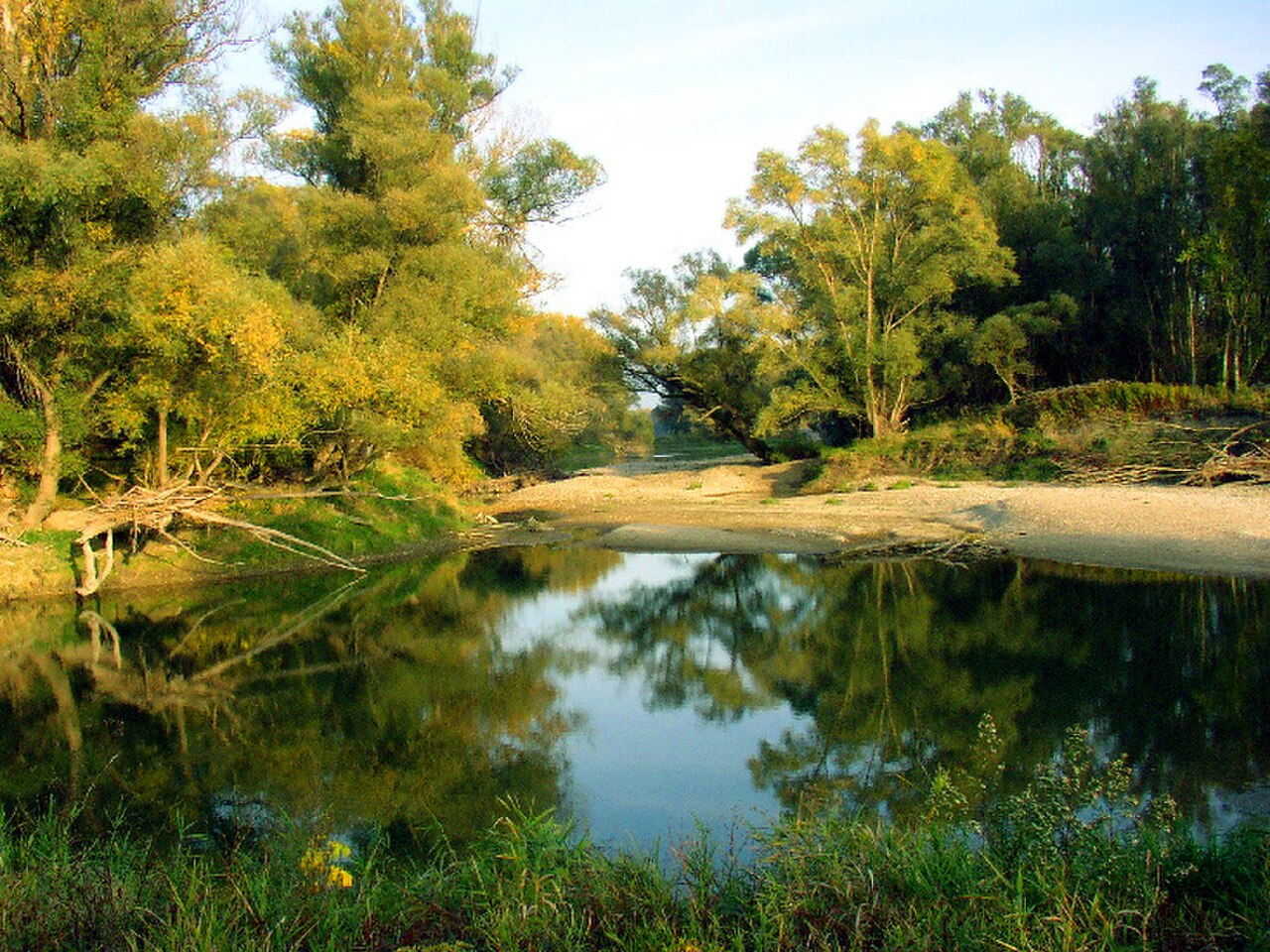
Floodplain forest, side channels, gravel banks and the wildlife that needs an undammed river to survive.
The Danube here still floods its banks seasonally, which keeps the soft-wood forest of willow and poplar regenerating in a way dammed stretches upstream no longer do. Side arms and oxbow lakes off the main channel hold their own slower ecology.
Beavers, reintroduced to Austria in the twentieth century, are established along the park's banks; white-tailed eagles and black storks nest in the older stands. The Marchfeldschlössl and the Schloss Orth visitor centre both sit inside or beside the park and anchor its two main access points.
The stretch nearest Vienna, around Lobau, is the section most visitors reach without a car.
A few hours for a riverside walk from the Vienna edge, a full day for the boat trip or the Schloss Orth section further downstream.
The Lobau section, reached from Vienna's own 22nd district, offers marked walking and cycling paths through the floodplain forest and along the old Danube arm; two to three hours covers a proper loop.
The national park operates guided boat trips on the main river and side channels in season, typically half a day including the approach.
Schloss Orth, the park's information centre near Orth an der Donau, is a separate excursion further from the city and works best as its own half-day trip.
Spring for the floodplain forest in leaf and the birds nesting, autumn for colour and lower water.
The forest floods on the natural cycle of the river rather than a schedule, so paths nearest the water can be impassable after heavy rain upstream; the park's own updates cover closures.
Summer brings mosquitoes in numbers typical of any river floodplain, heaviest at dusk.
Winter keeps the park open but the boat trips run a reduced season; the forest itself, leafless, opens up longer sightlines to the birdlife along the banks.
The Lobau section is inside Vienna's own 22nd district, Donaustadt, reached by tram and bus from Kagran or Donauspital U-Bahn stations.
Schloss Orth and the park's main visitor centre are further out, near Orth an der Donau in Lower Austria, and are more practically reached by car or the regional train to Orth.
The park has no single main gate; access points are spread along its 36 km length, and which one to use depends on which stretch is the target.
Paths near the river can flood without warning after rain far upstream; a dry morning does not guarantee a dry afternoon on the lowest trails.
Mosquitoes are heavy at dusk from late spring through summer; repellent is worth carrying rather than buying on site, since there is nowhere to buy it inside the park.
Bicycles are common on the shared paths and move faster than the walking pace the forest otherwise invites.
The park is a working conservation area, not a landscaped garden — paths are gravel or dirt, and there is no lighting after dark.
The subject is the water itself: side channels, gravel banks and standing dead wood that a dammed river would never leave behind.
Early morning brings the best chance of the white-tailed eagles and herons that a midday crowd of walkers pushes further from the paths.
Autumn colour in the soft-wood floodplain forest, willow and poplar turning together, is a reliable subject that does not depend on wildlife showing up.
A long lens matters more here than anywhere else on this list; the animals the park is known for do not pose close to the trail.
27 October 1996, after a long conservation campaign against a hydroelectric dam that was never built on the same stretch of river.
How big is the park?
About 9,300 hectares, running roughly 36 km along the Danube from Vienna's eastern edge to the Slovak border.
What wildlife lives in the park?
Beavers, white-tailed eagles and black storks are established in the floodplain forest and its side channels.
Can I reach the park without a car?
The Lobau section, inside Vienna's own 22nd district, is reached by tram and bus from Kagran or Donauspital U-Bahn stations; Schloss Orth further out needs a car or regional train.
Is entry to the park free?
Walking and cycling are free; the guided boat trips and the Schloss Orth exhibition are separately ticketed.
What is Schloss Orth?
The national park's information centre and exhibition near Orth an der Donau in Lower Austria, a separate excursion from the Lobau section closer to Vienna.