
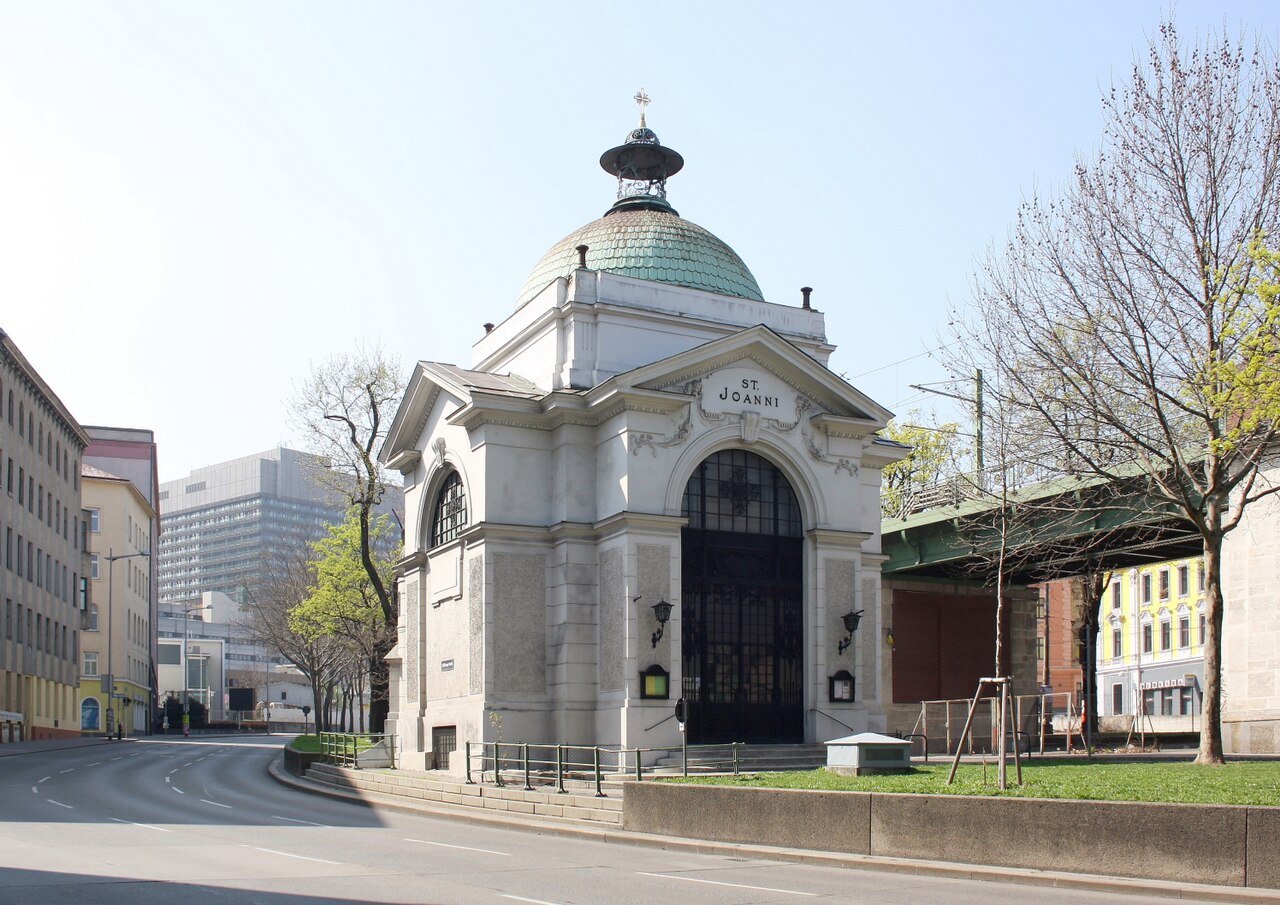
2 min walk · Alsergrund
John of Nepomuk chapel
- High · Heritage site
- Place of worship
Language · 11 published
Art and culture venue · Alsergrund, Vienna
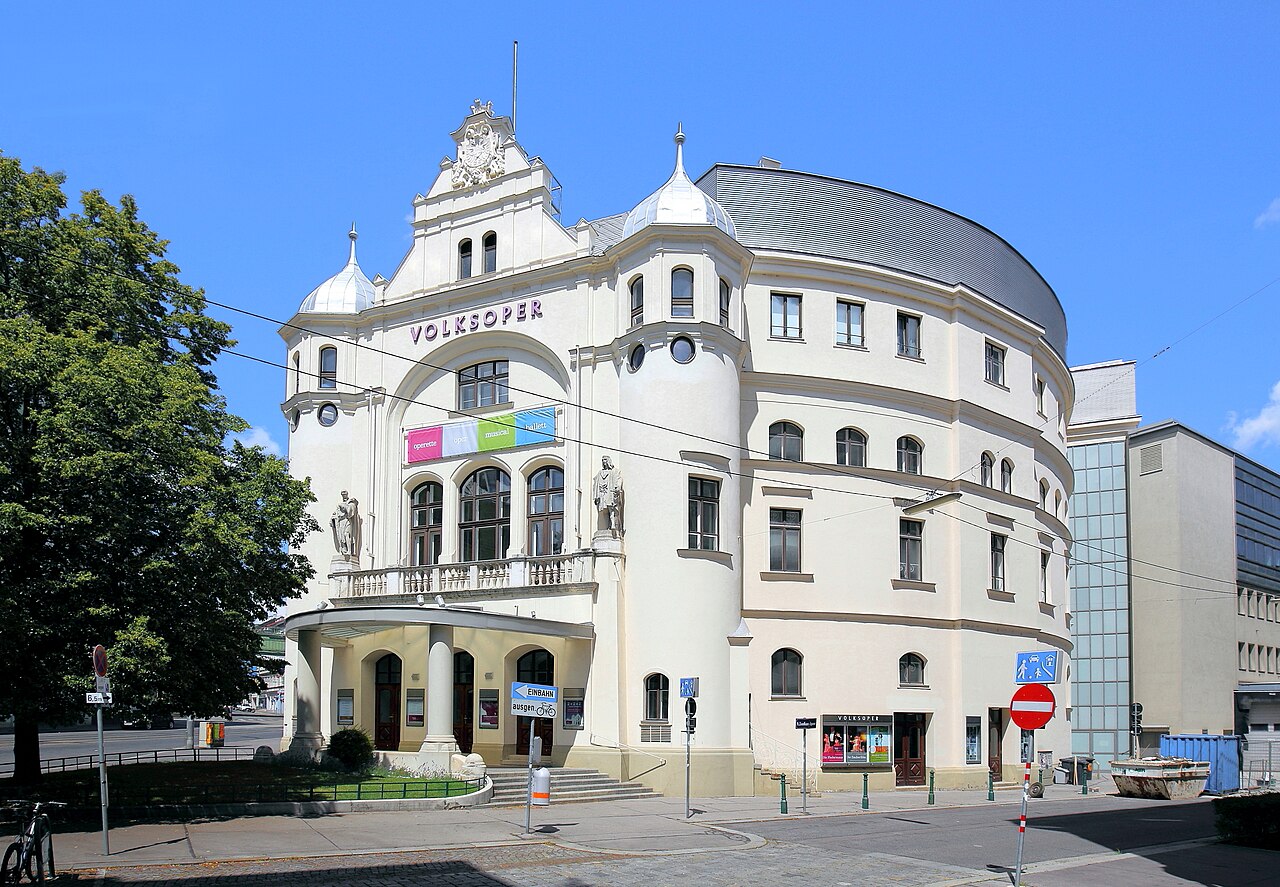
Volksoper
Reviewed by Elena Voss · Roavina Travel Editor
Read from the OpenStreetMap access tags; anything not listed has no tag recorded.
Set the group type to family in the planner and the day window contracts to about three quarters of a solo day.
This place is a Theatre. It was established in 1898. It was designed by Franz von Krauss.
The Volksoper is Vienna's second opera house, in the 9th district, Alsergrund, built for a public that the court-affiliated Hofoper across town did not serve.
It opened on 14 December 1898 as the Kaiser-Jubiläums-Stadttheater, a theatre for Franz Joseph I's fiftieth jubilee, and only took on its present name and its opera-and-operetta programme after the First World War, when the monarchy that had named it no longer existed.
Where the State Opera concentrates on grand opera, the Volksoper's repertoire runs operetta, musicals, opera and ballet side by side, and performs largely in German, including translated works.
Checked 2026-08-24 · Source
A 1898 theatre auditorium seating roughly 1,300, built for a mixed civic programme rather than a single court repertoire.
The house has its own resident opera, operetta and ballet ensembles, distinct from the State Opera's, and stages new productions across all three forms through the season rather than touring a fixed set.
The building itself is a modest late-nineteenth-century theatre rather than a Ringstrasse monument — no grand external staircase, no ceremonial forecourt — reflecting its original brief as a people's theatre rather than an imperial one.
Checked 2026-08-24 · Source
A full evening for a performance, plus the walk from the U-Bahn.
Operetta and musical evenings typically run two and a half to three hours with an interval; opera and ballet programmes vary by work and can run longer.
There is no daytime visit to the building outside of scheduled performances or the occasional guided tour, unlike the State Opera's regular backstage tours.
Arriving thirty minutes before curtain leaves time to find the seat and read the printed programme before the house lights go down.
Checked 2026-08-24
The season runs autumn to early summer, with a break in high summer when the house, like Vienna's other theatres, closes for the season.
Operetta programming leans toward the Christmas and New Year period, when Strauss and Lehár titles are common across Vienna's stages generally.
Booking ahead matters more for popular operetta titles and premieres than for repertoire performances later in a run.
The programme changes from night to night through a repertory season rather than running one title for weeks, so checking the specific date's listing matters more than picking a general month.
Checked 2026-08-24
Tickets are sold by performance and by seating category, with standing-room places sold cheaply on the day at many Viennese houses, the Volksoper included in that tradition.
Current seat prices are not published on the sources this page uses and are not reproduced here.
Dress is smart rather than formal; nothing at the Volksoper requires black tie the way a State Opera premiere sometimes does.
Subscription and season-ticket pricing exists alongside single-performance sales, aimed mainly at Viennese regulars rather than visiting travellers.
Checked 2026-08-24
Währinger Straße–Volksoper, on U-Bahn line U6, sits directly outside the theatre in Alsergrund, about 3 km from the Innere Stadt.
Several tram lines cross the same junction, making the house easy to combine with an evening elsewhere in the 9th or 18th districts.
The U6 is one of the five U-Bahn lines making up the network's 83.9 km and 109 stations.
A cloakroom near the entrance is the usual place to leave coats and bags before finding a seat.
Checked 2026-08-24 · Source
Performances are largely in German, including operas translated for the house's mixed repertoire; surtitles are not guaranteed the way they are at some international houses, worth checking per performance.
Standing-room tickets, where sold, typically go on sale shortly before curtain and require joining a same-day queue rather than booking online in advance.
Latecomers are held until a suitable pause, as at most Viennese theatres, and miss the opening of the act.
Photography and recording during the performance are not permitted at any point in the evening.
Checked 2026-08-24
Photography during performances is not permitted, as at essentially every working opera house; the camera stays away until the curtain call.
The theatre's plain 1898 façade on Währinger Straße is a straightforward daytime shot, better for showing the building's civic rather than imperial character than for drama.
The foyer and auditorium, when accessible before a performance or on a tour, photograph well in the house lighting without flash.
Curtain calls are usually the one moment applause and phones are tolerated together, though flash still is not.
The junction outside, where several tram lines cross beneath the theatre's name in lit letters, is a reliable evening shot on the way in.
Checked 2026-08-24
14 December 1898, as the Kaiser-Jubiläums-Stadttheater for Franz Joseph I's fiftieth jubilee.
Operetta, musicals, opera and ballet side by side, largely in German, unlike the State Opera's grand-opera focus.
Währinger Straße–Volksoper station on U-Bahn line U6, directly outside the theatre in Alsergrund.
No, largely in German, including translated works; surtitles are not guaranteed and vary by performance.
Where sold, standing-room tickets typically go on sale shortly before curtain and require a same-day queue.
Smart dress is normal; nothing at the Volksoper requires the black tie a State Opera premiere sometimes does.
Loading the interactive map…
The interactive map could not be loaded.
Last updated:
Source: OpenStreetMap contributors, Wikidata ·