.JPG)
1 min walk · Alsergrund
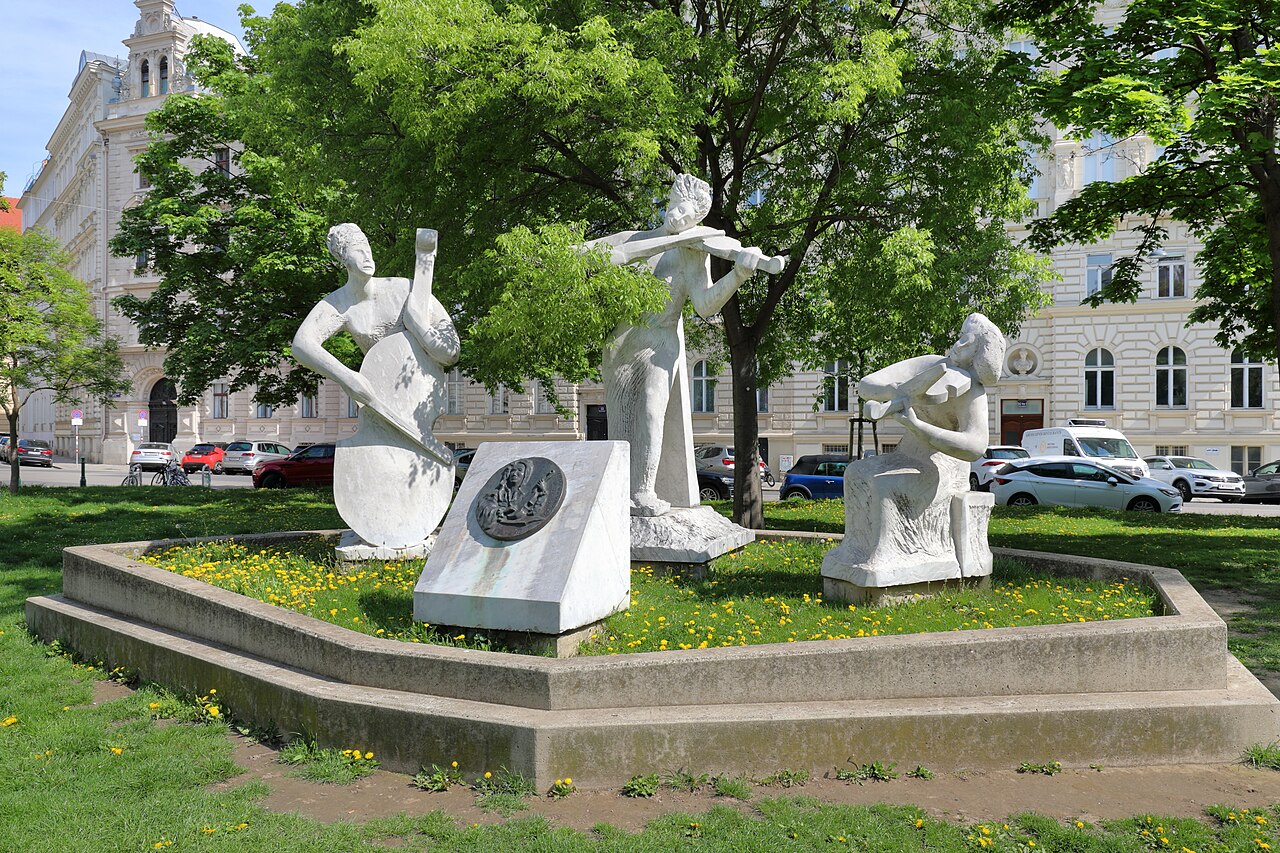
Antonio Vivaldi monument
- Notable
- Historic monument
Language · 11 published
Historic monument · Alsergrund, Vienna
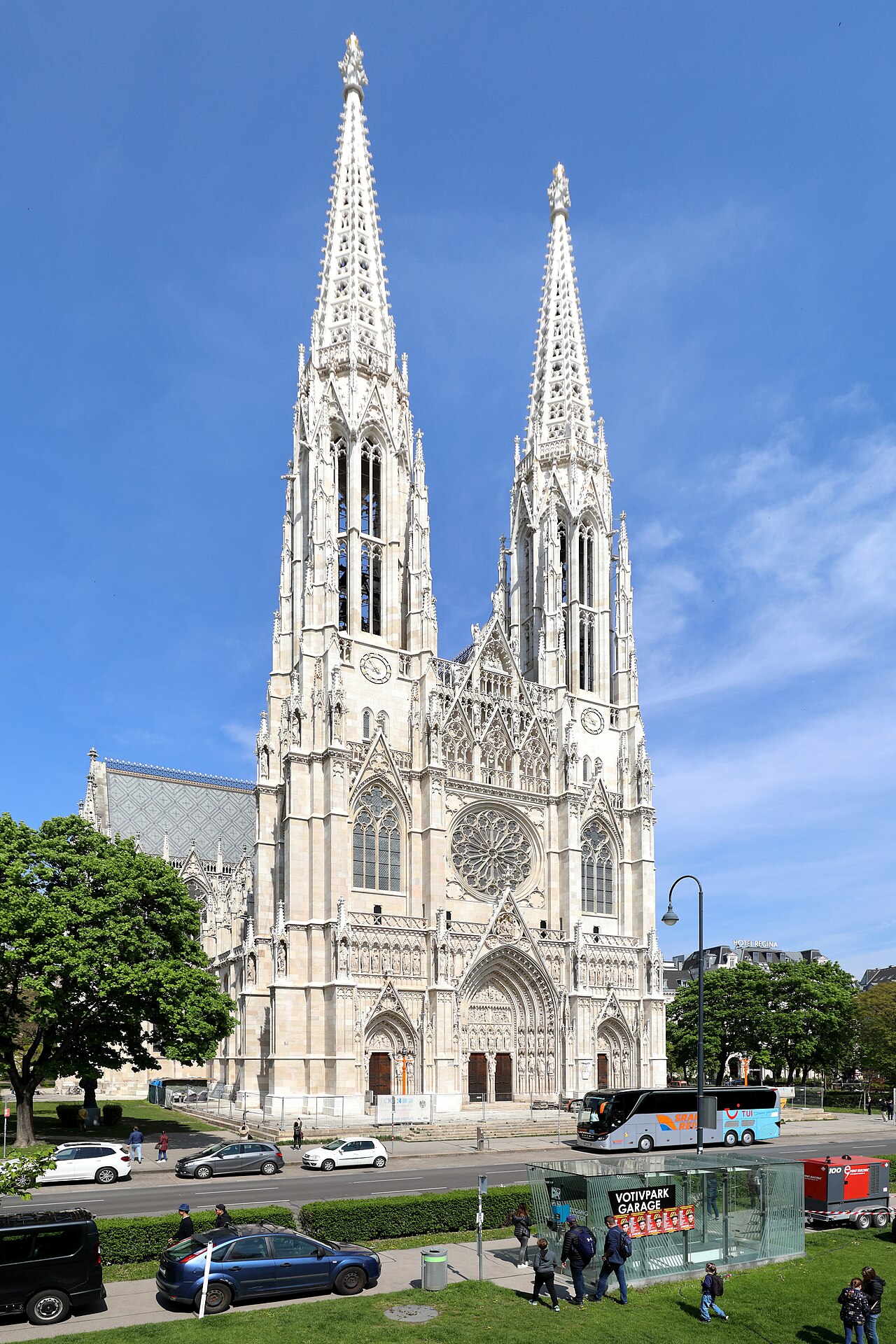
Votivkirche
Reviewed by Elena Voss · Roavina Travel Editor
| Monday | Closed |
|---|---|
| Tuesday | 10:00 – 16:00 |
| Wednesday | 10:00 – 16:00 |
| Thursday | 10:00 – 16:00 |
| Friday | 10:00 – 16:00 |
| Saturday | 11:00 – 19:00 |
| Sunday | 09:00 – 13:00 |
Parsed from OpenStreetMap opening hours on 2026-09-09.
Read from the OpenStreetMap access tags; anything not listed has no tag recorded.
Set the group type to family in the planner and the day window contracts to about three quarters of a solo day.
This place is a Attraction. It was established in 1853. It was built in the Gothic Revival style. It was designed by Heinrich von Ferstel. It is built of Wöllersdorf limestone. It carries the Listed objects in Austria heritage designation.
The Votivkirche exists because somebody tried to kill the emperor and failed.
On 18 February 1853 the Hungarian nationalist János Libényi attacked Franz Joseph with a knife and did not kill him. The emperor's brother, Archduke Ferdinand Maximilian, launched a public subscription for a church to thank God for it.
Heinrich von Ferstel designed it in neo-Gothic on the French cathedral model. Ground was broken in 1856 and it was dedicated on 24 April 1879, twenty-six years later, on the imperial couple's silver wedding anniversary.
It is 85 m long, 55 m wide and 99 m at its highest, with two slim towers, three gabled portals, flying buttresses and a rose window.
Checked 2026-08-23 · Source
A Renaissance tomb, and a great deal of space.
The sarcophagus of Nicholas, Count of Salm — who commanded the defence of Vienna during the Ottoman siege of 1529 — is the most important object in the building and is a Renaissance work several centuries older than the church around it.
A polychrome late-Gothic Antwerp altarpiece of about 1530 stood here until 1986, when it was moved to a museum.
The interior is what a nineteenth-century architect thought a thirteenth-century cathedral should have been: taller, thinner and more regular than any real one. Whether that is a virtue is the argument the Ringstrasse has been having with itself since it was built.
Checked 2026-08-23 · Source
Thirty minutes.
It is one large space with a tomb in it, and the reading is quick.
The Sigmund Freud Park in front is where students from the university across the road sit, and the university's main building — another Ferstel-era Ring building — is two minutes away.
The Freud Museum, in the flat where he lived and worked, is a ten-minute walk north and is a proper hour.
The church works best as a stop on a walk up the northern Ring rather than as a journey on its own account; there is not enough inside it to justify crossing the city.
Checked 2026-08-23 · Source
Daylight, and check that it is open — this church has had long closures for restoration and its hours are shorter than most.
It is an active parish church and services take priority.
The two spires face the Ring to the east, so the front is a morning subject and the west end is lit in the afternoon.
The interior is unheated stone and is cold from October to April.
The rose window on the west front reads from inside only in the afternoon, which is the one timing that changes what the visit shows.
Checked 2026-08-23 · Source
Entry is generally free, as at other Viennese parish churches, though the church has charged for access to parts of the building during restoration periods.
Current arrangements are not published on the sources this page uses and are not reproduced here.
Concerts are held in the church and are ticketed by their organisers.
Checked 2026-08-23 · Source
The 9th district, Alsergrund, on the Rooseveltplatz just outside the Ring beside the university.
Schottentor on U-Bahn line U2 is at the door and is also the main tram interchange for the northern Ring.
The U-Bahn has five lines and 109 stations over 83.9 km, running from about 05:00 to 01:00 and all night at weekends.
Checked 2026-08-23 · Source
Opening hours are short and irregular compared with the other Ring churches, and long restoration closures have happened.
It is a working parish church: shoulders and knees covered, hats off, quiet during services.
The Antwerp altarpiece that older guidebooks describe has not been in the building since 1986.
There is no tower access.
The Sigmund Freud Park in front is a student and demonstration space and is not always quiet.
Checked 2026-08-23 · Source
The two spires need distance and there is not much of it; the far side of the Ring, or the far corner of the Sigmund Freud Park, are where the whole front fits in a frame.
The building faces east, so morning light is on the portals and the towers are backlit after noon.
Inside, the nave is tall, pale and evenly lit through clear glass, which makes it one of the easier church interiors in Vienna to photograph without a support.
The Salm tomb is the object worth a closer frame and is several centuries older than everything around it.
Checked 2026-08-23
As thanks for Franz Joseph surviving an assassination attempt on 18 February 1853. His brother Archduke Ferdinand Maximilian raised the money by public subscription.
Twenty-six years. Ground was broken in 1856 and it was dedicated on 24 April 1879, on the imperial couple's silver wedding anniversary.
99 m at its highest, with the building 85 m long and 55 m wide. Heinrich von Ferstel designed it in neo-Gothic on the French cathedral model.
The Renaissance sarcophagus of Nicholas, Count of Salm, who commanded the defence of Vienna during the Ottoman siege of 1529.
Moved to a museum in 1986. Guidebooks describing it in the church are out of date.
Generally yes, as at other Viennese parish churches, though parts of the building have been charged for during restoration periods.
Loading the interactive map…
The interactive map could not be loaded.
Last updated:
Source: OpenStreetMap contributors, Wikidata ·