.jpg)

1 min walk · Hietzing
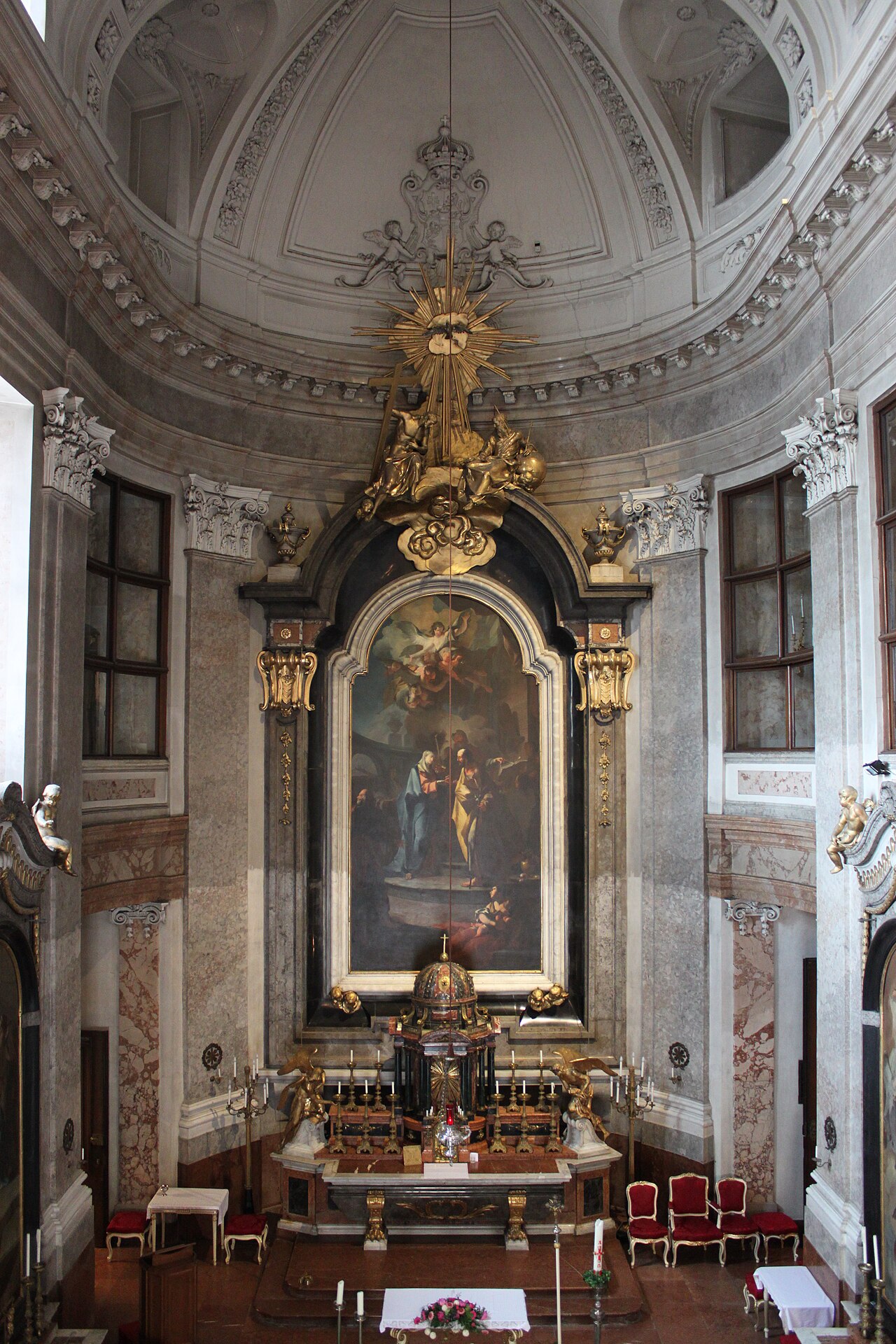
Schlosskapelle Schönbrunn
- High
- Place of worship
Language · 11 published
Historic monument · Hietzing, Vienna
Schloss Schönbrunn
Reviewed by Elena Voss · Roavina Travel Editor
| Monday | 08:30 – 18:00 |
|---|---|
| Tuesday | 08:30 – 18:00 |
| Wednesday | 08:30 – 18:00 |
| Thursday | 08:30 – 18:00 |
| Friday | 08:30 – 18:00 |
| Saturday | 08:30 – 18:00 |
| Sunday | 08:30 – 18:00 |
Checked 2026-08-31 · Source
Read from the OpenStreetMap access tags; anything not listed has no tag recorded.
Set the group type to family in the planner and the day window contracts to about three quarters of a solo day.
This place is a Attraction. It was established in 1638. It was built in the Baroque style. It was designed by Nicolò Pacassi. It carries the part of UNESCO World Heritage Site heritage designation.
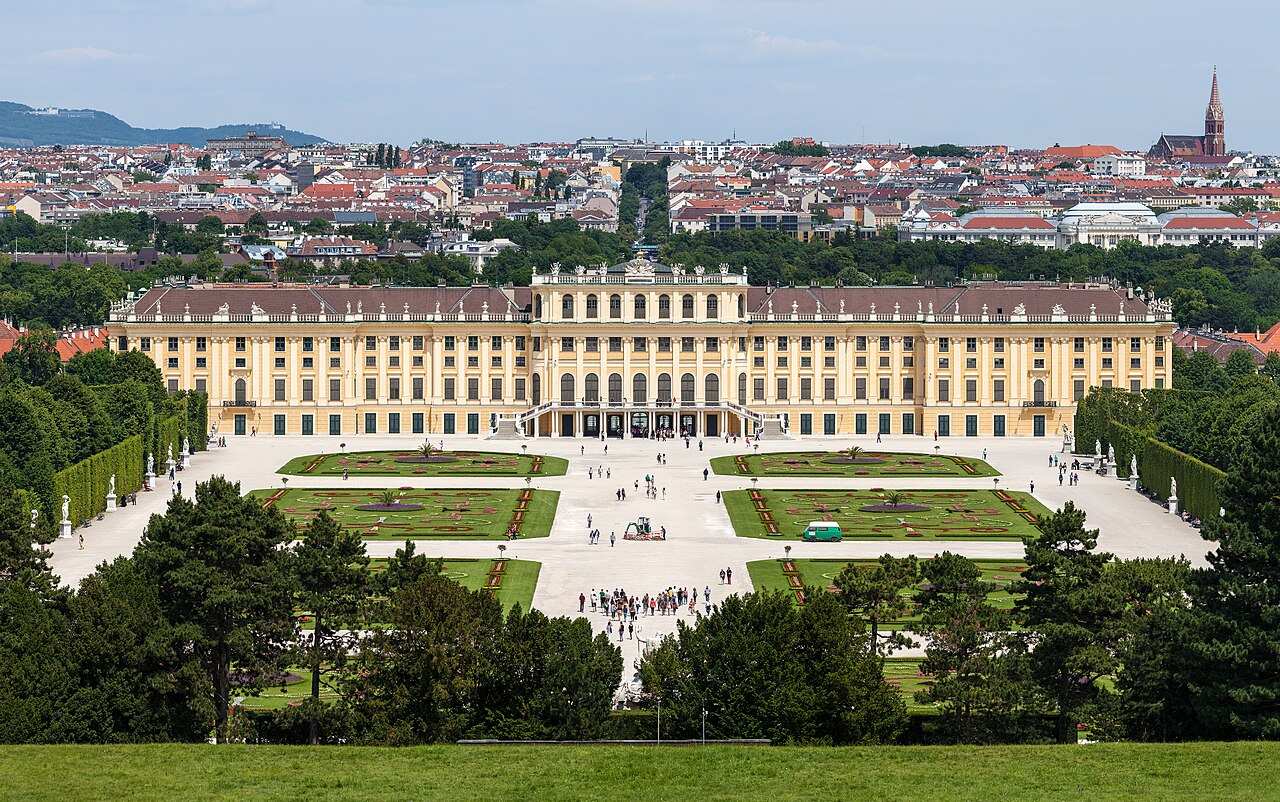
Schönbrunn Palace is Vienna’s former Habsburg summer residence and one of Europe’s great imperial complexes. Its present form was created under Maria Theresa in the 1740s and 1750s, after Maximilian II had acquired the estate as a hunting ground in 1569. The name refers to a beautiful spring associated with the site. Schönbrunn contains 1,441 rooms, but visitors see a selected route through the state apartments rather than the entire building. The palace, formal garden axis and hilltop Gloriette are designed as one composition, which is why the grounds are as important to the experience as the interior. UNESCO listed Schönbrunn as a World Heritage Site in 1996.
Checked 2026-09-02 · Source
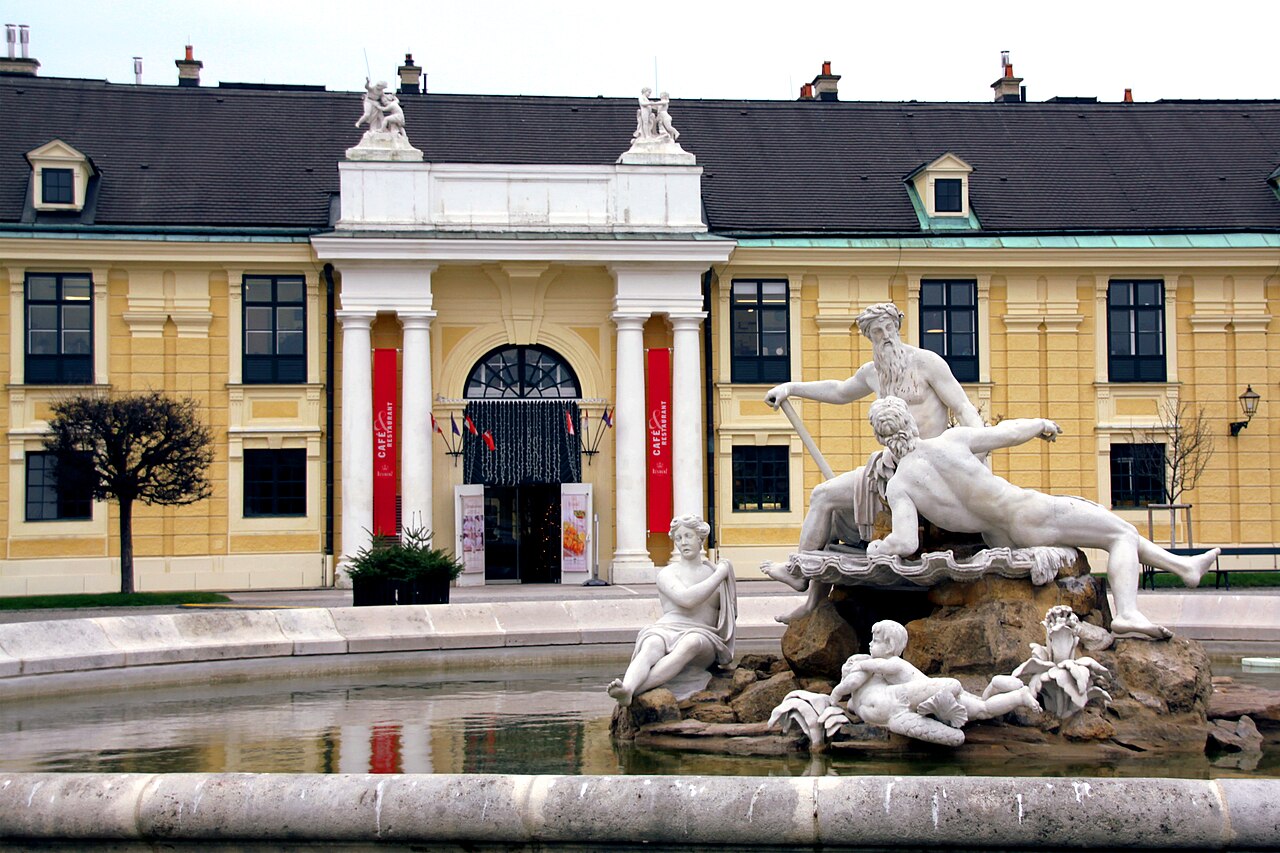
The palace visit follows the state apartments. The Imperial Tour is the shorter route, while the Grand Tour covers more ceremonial and residential rooms, with audio guidance and timed entry. Outside, 160 hectares of gardens extend from the Great Parterre towards the Neptune Fountain and up to the Gloriette, a 60 m monument dating from 1775. The Gloriette terrace, Palm House, maze and Tiergarten Schönbrunn are separate attractions with separate tickets. Founded in 1752, the zoo is still a working zoological garden rather than a historical exhibit.
Checked 2026-09-02 · Source
Allow at least half a day for the palace, parterre, Neptune Fountain and Gloriette. The Imperial Tour takes about forty minutes and the Grand Tour about an hour. Walking from the lower garden to the Gloriette takes roughly twenty minutes uphill, before exploring the viewpoint or side paths. A visit to Tiergarten Schönbrunn needs about two hours and works best as a separate block. A practical sequence is the timed palace visit first, followed by the garden axis and Gloriette. Add the zoo only when the rest of the day has enough space.
Checked 2026-09-02 · Source
Choose an early palace entry when possible. Schönbrunn receives around four million visitors annually, with the strongest concentration usually between 10:00 and 14:00, and popular timed slots can sell out in season. The gardens are more flexible, so use them before or after the fixed palace appointment. The parterre has little shade, making a summer afternoon tiring; April to June and September to October are generally comfortable for walking. Winter offers a different atmosphere and the Christmas market in the forecourt. Separate the timed interior visit from the open-ended garden walk so the day remains manageable.
Checked 2026-09-02 · Source
The recorded operator price for palace admission is €42 per person. Entry is timed, and visitors can choose between the shorter Imperial Tour and longer Grand Tour. The gardens are free, but the Gloriette terrace, Palm House, maze and zoo are separately ticketed. This is not one all-inclusive admission for the estate. Book the palace slot ahead in high season, especially for late morning and midday, and arrive with enough margin to reach the entrance. If adding another attraction, allow separate time and check what that ticket covers.
Checked 2026-09-02 · Source

Schönbrunn is in Vienna’s 13th district, Hietzing, about five kilometres west of the Innere Stadt. U-Bahn line U4 reaches both sides of the complex: Schönbrunn station serves the main gate, while Hietzing is nearer the western gate and Gloriette side. Vienna’s U-Bahn has five lines and 109 stations across 83.9 km, operating approximately from 05:00 to 01:00 and all night at weekends. Choose the station according to your first objective, and allow extra time because the grounds are extensive.
Checked 2026-09-02 · Source
The palace appointment is timed, so lateness can disrupt the interior visit even when the gardens remain accessible. Photography is prohibited inside the state apartments. The Gloriette looks close from the parterre but requires about twenty minutes uphill, and the estate is larger than the palace frontage suggests. Separate tickets apply to the Gloriette terrace, Palm House, maze and zoo. Wear comfortable shoes, and leave enough time for Tiergarten Schönbrunn if combining it with the palace rather than treating it as a quick extra.
Checked 2026-09-02 · Source
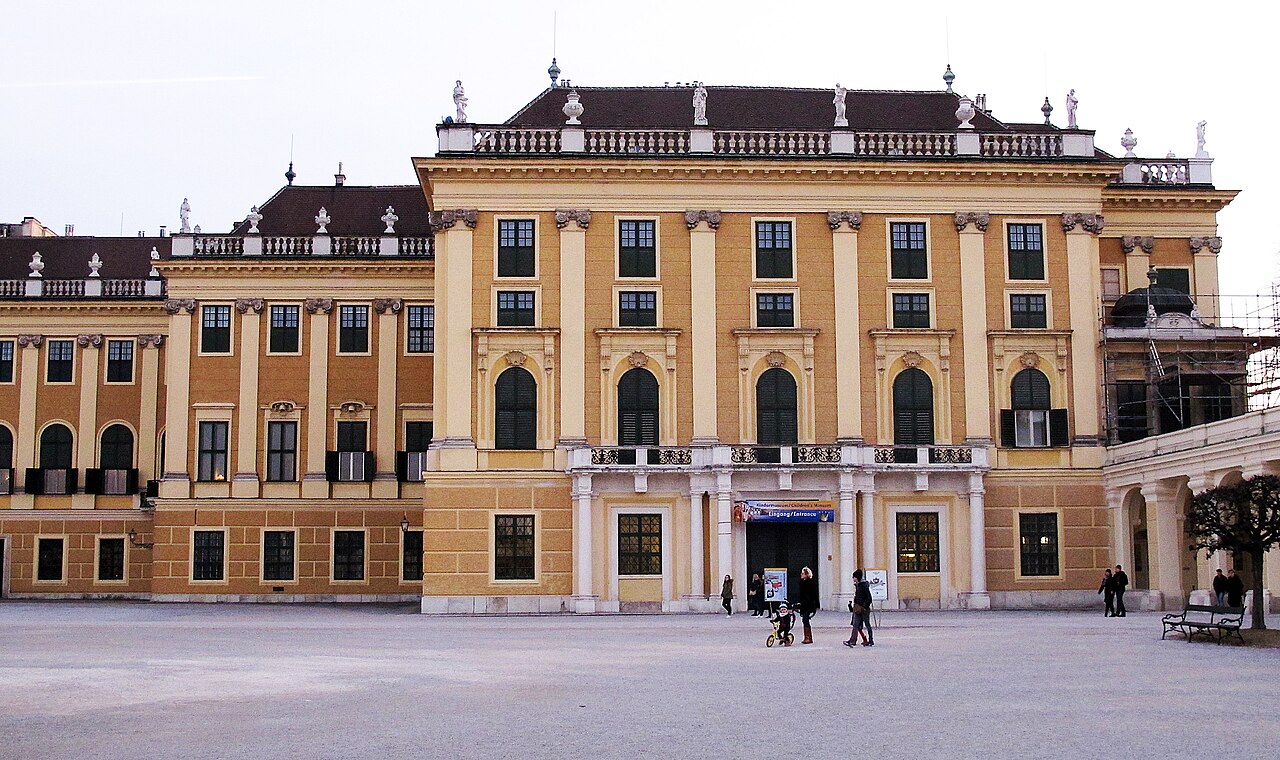
The classic Schönbrunn photograph is taken from the Gloriette, looking back over the formal parterre towards the palace, with Vienna beyond. From the forecourt, the yellow building forms a 175 m façade, so step back or use a wide lens. The Neptune Fountain and Palm House offer contrasting compositions, while overcast light reduces glare on the palace render. Interior photography is prohibited in the state apartments, so plan camera time around the exterior and gardens. A useful sequence is exterior views, timed palace entry, then the Gloriette if light and energy remain.
Checked 2026-09-02 · Source
Schönbrunn has 1,441 rooms. Visitors see a selected route through the state apartments: the Imperial Tour is shorter, while the Grand Tour covers more of the palace.
Yes. The 160 hectares of gardens are free to enter. The Gloriette terrace, Palm House, maze and Tiergarten Schönbrunn are separate, ticketed attractions.
The Gloriette is a 60 m monument crowning the hill behind the palace since 1775. The walk from the lower garden area takes about twenty minutes and leads to the classic view down the parterre.
Allow about two hours. Founded in 1752, Tiergarten Schönbrunn is the world’s oldest zoo and remains a working zoological garden, so it deserves a separate block in the itinerary.
Visitor numbers are around four million a year, with the strongest concentration usually between 10:00 and 14:00. Popular timed palace entries can sell out in season, making early slots safer.
No. Photography inside the state apartments is prohibited. Plan photographs around the palace exterior, formal gardens, Gloriette, Neptune Fountain and Palm House.
Loading the interactive map…
The interactive map could not be loaded.
Last updated:
Source: OpenStreetMap contributors, Wikidata ·