
1 min walk · Innere Stadt
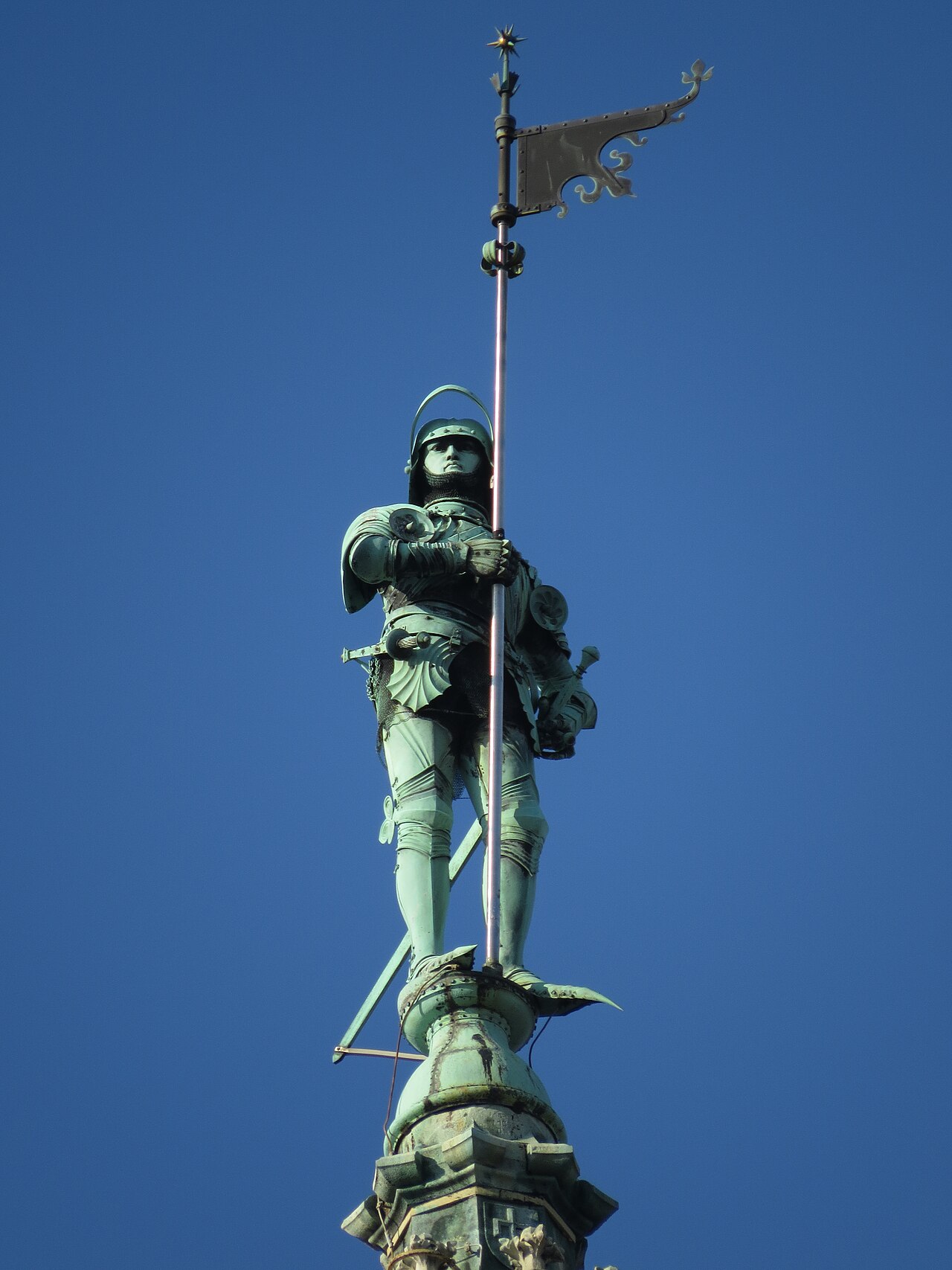
Rathausmann
- High
- Historic monument
Language · 11 published
Historic monument · Innere Stadt, Vienna
Rathaus
Closed today, Sunday. Next open Monday at 13:00 — the planner will not place a stop here on a Sunday.
Plan around itReviewed by Elena Voss · Roavina Travel Editor
| Monday | 13:00 – 13:00 |
|---|---|
| Tuesday | Closed |
| Wednesday | 13:00 – 13:00 |
| Thursday | Closed |
| Friday | 13:00 – 13:00 |
| Saturday | Closed |
| Sunday | Closed |
Checked 2026-08-31 · Source
Read from the OpenStreetMap access tags; anything not listed has no tag recorded.
Set the group type to family in the planner and the day window contracts to about three quarters of a solo day.
This place is a Attraction. It was established in 1872. It was built in the Gothic Revival style. It was designed by Friedrich von Schmidt. It carries the Listed objects in Austria heritage designation.
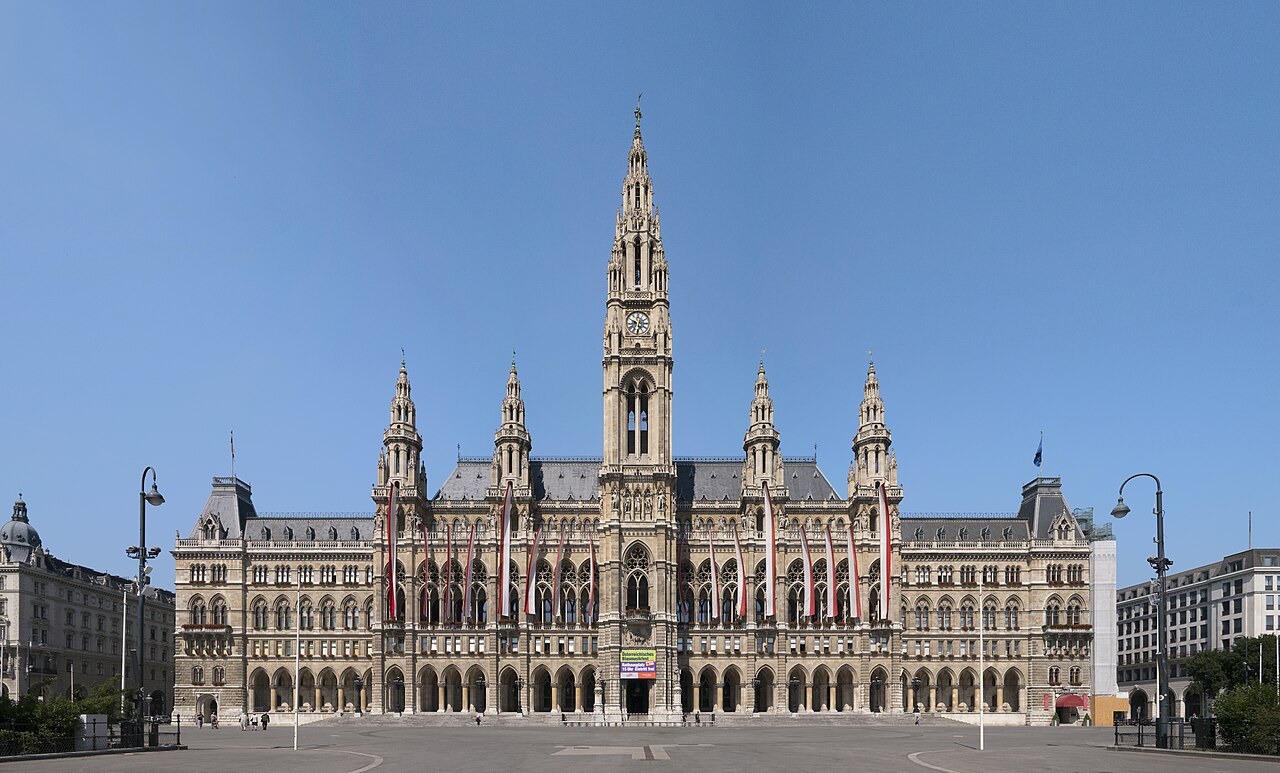
The Rathaus is a Gothic cathedral that turned out to be a town hall, and it is the largest secular building on the Ringstrasse.
Friedrich von Schmidt built it between 1872 and 1883 in neo-Gothic, at a cost of about 14 million florins. He had spent his career restoring medieval churches and it shows in every pinnacle.
It is 152 m long and 127 m wide, with 1,575 rooms and 2,035 windows over six floors. The main tower is 98 m, or 103.3 m counting the Rathausmann on top of it.
It holds the offices of the Mayor of Vienna and the city and state government, and the Vienna City Library.
Checked 2026-08-23 · Source
The largest historic hall in Austria, and a courtyard that is used for everything.
The Festsaal is the ceremonial hall and carries relief portraits of Mozart, Haydn, Gluck and Schubert. It is Austria's largest hall of its kind.
The arcaded courtyard hosts the Vienna Festival, and held the Life Ball — Europe's largest AIDS charity event — from 1993 to 2019.
The façade carries equestrian figures and statues of historical periods and trades; the stone was restored between 2012 and 2023, 40,000 m² of it.
The Rathausplatz in front is the city's main event square: the Christkindlmarkt at Christmas, the ice rink in winter, the film festival with its food stalls all summer.
Checked 2026-08-23 · Source
Twenty minutes outside, an hour if you take the tour.
Guided tours run on set days and cover the Festsaal and the ceremonial rooms; they are free and they are the only way inside.
The Rathausplatz is the reason most visitors are here and what is on it changes completely with the season — a market, a rink, a film screen, or nothing at all.
The Burgtheater is directly opposite across the Ring, the Parliament two minutes south and the university two minutes north; the four together are a half-hour walk that explains the entire Ringstrasse project.
Checked 2026-08-23 · Source
December for the Christkindlmarkt, January and February for the ice rink, July and August for the film festival.
The Rathausplatz is programmed almost year-round and the building is the backdrop rather than the subject for most of the people standing on it.
For the architecture, an empty square in spring or autumn is better, and early morning is when the light comes down the Ring onto the west front.
The tower is floodlit at night, which is when the neo-Gothic reads most clearly.
Checked 2026-08-23 · Source
Free. The guided tours of the Rathaus are free and run on set days at set times.
The Rathausplatz events are free to enter; the ice rink and some festival elements charge for participation rather than for admission.
Current rates for those are not published on the sources this page uses and are not reproduced here.
Checked 2026-08-23 · Source
The Innere Stadt, on the Rathausplatz, on the inner side of the Ring between the university and the Parliament.
Rathaus on U-Bahn line U2 is at the back of the building; Volkstheater on the U2 and U3 is five minutes south. Ring trams 1, 71 and D stop at Rathausplatz.
The U-Bahn has five lines and 109 stations over 83.9 km, running from about 05:00 to 01:00 and all night at weekends.
Checked 2026-08-23 · Source
It is a working seat of city government and there is no walk-in access; the free guided tours are the only way in and they run on set days.
The Rathausplatz is under construction for most of the year — an event is either being built or taken down — so the clear view of the façade is rarer than photographs suggest.
The Christmas market is one of the busiest in Europe and the square is genuinely packed in December evenings.
The Ring in front is a fast multi-lane road with tram tracks; cross at the signals.
Photography is permitted on the tours.
Checked 2026-08-23 · Source
The façade cannot be taken from the square without a wide lens: 152 m of frontage and a 103 m tower need distance, and the Rathauspark opposite is where that distance is.
The building faces east onto the Ring, so morning light is on the front and the tower is backlit in the afternoon.
At night the floodlighting separates the pinnacles from the mass and is the more dramatic picture.
The arcaded courtyard is symmetrical, shaded and even, and is the best interior photograph available without a tour.
Checked 2026-08-23
152 m long and 127 m wide, with 1,575 rooms and 2,035 windows over six floors. The tower is 98 m, or 103.3 m with the Rathausmann on top.
Friedrich von Schmidt, between 1872 and 1883, in neo-Gothic, at a cost of about 14 million florins.
On a free guided tour, on set days at set times, covering the Festsaal and the ceremonial rooms. There is no walk-in access — it is a working seat of city government.
The ceremonial hall, the largest historic hall in Austria, carrying relief portraits of Mozart, Haydn, Gluck and Schubert.
The Christkindlmarkt at Christmas, an ice rink in winter, and the film festival with its food stalls all summer. The square is programmed almost year-round.
Restored. 40,000 m² of natural stone was refurbished between 2012 and 2023.
Loading the interactive map…
The interactive map could not be loaded.
Last updated:
Source: OpenStreetMap contributors, Wikidata ·