
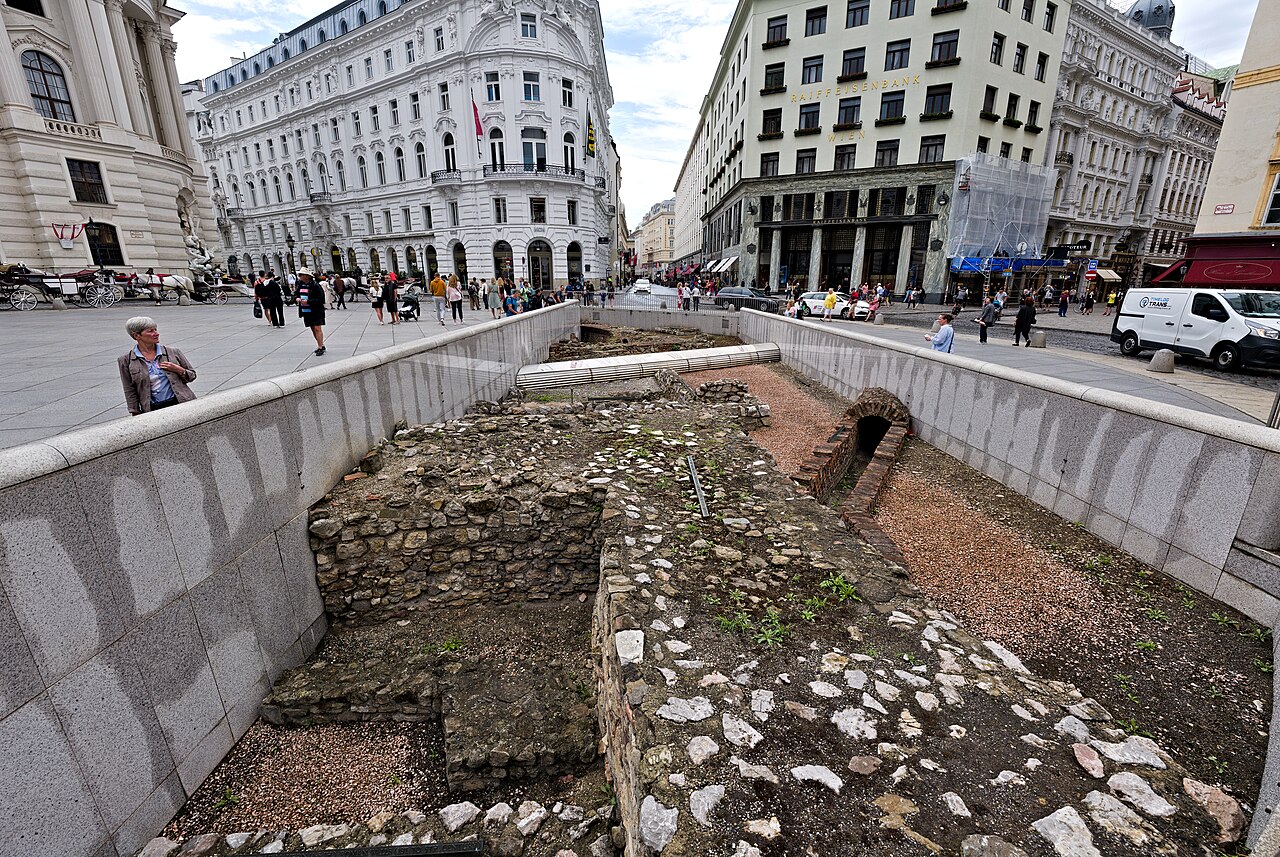
1 min walk · Innere Stadt
Michaelerplatz Archaeological Site
- Notable
- Historic monument
Language · 11 published
Historic monument · Innere Stadt, Vienna
Spanische Hofreitschule
Reviewed by Elena Voss · Roavina Travel Editor
| Monday | 09:00 – 16:00 |
|---|---|
| Tuesday | 09:00 – 16:00 |
| Wednesday | 09:00 – 16:00 |
| Thursday | 09:00 – 16:00 |
| Friday | 09:00 – 16:00 |
| Saturday | 09:00 – 16:00 |
| Sunday | 09:00 – 16:00 |
Checked 2026-08-31 · Source
Read from the OpenStreetMap access tags; anything not listed has no tag recorded.
Set the group type to family in the planner and the day window contracts to about three quarters of a solo day.
This place is a Attraction. It was established in 1572.
The Spanish Riding School is the world's oldest institution still practising classical Baroque horsemanship in its original form, tracing its riding tradition back to 1572 and its Lipizzaner breeding programme to the Habsburgs' interest in Spanish-bred horses.
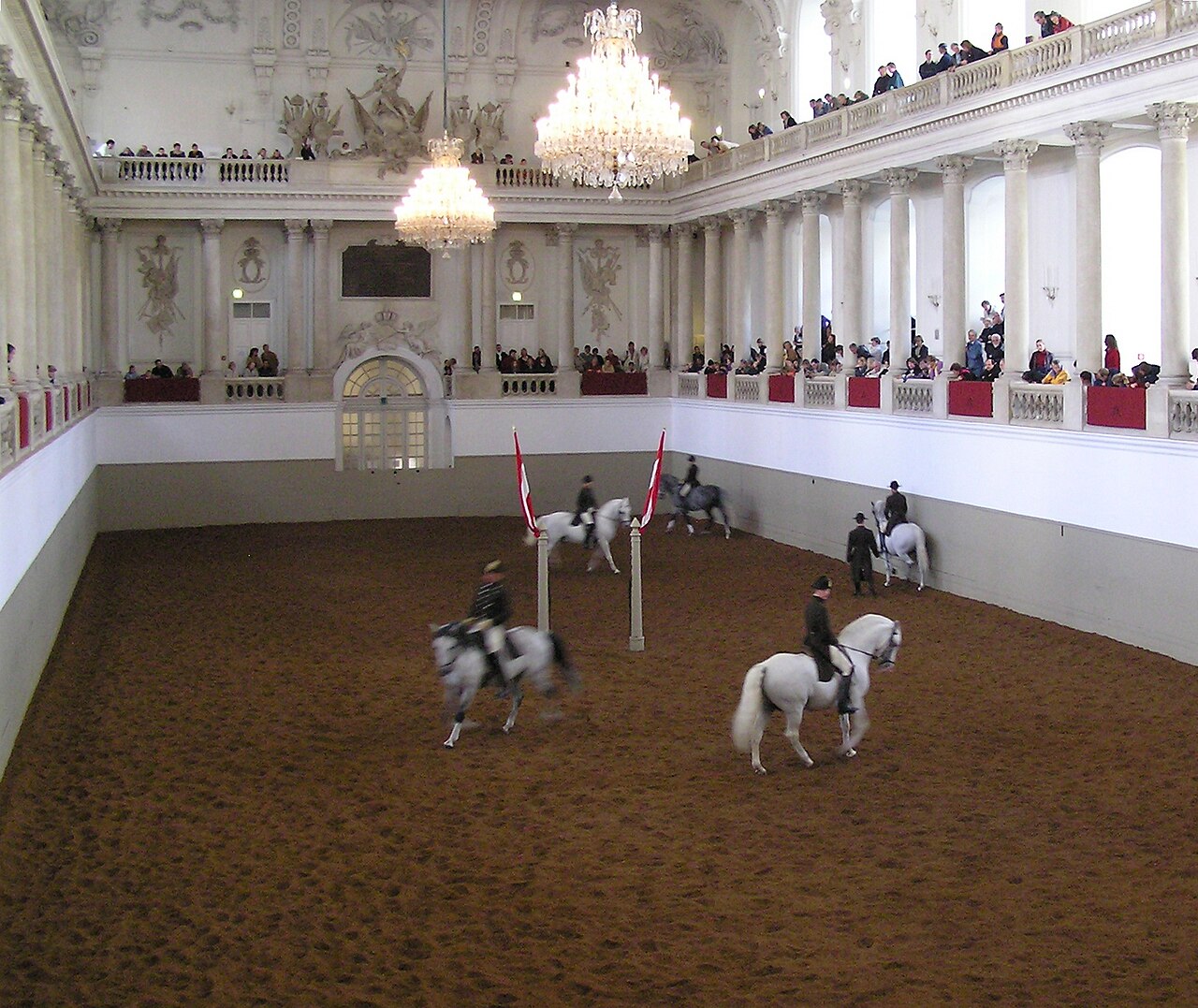
Its performances and daily training take place in the Winter Riding School, a white Baroque hall built between 1729 and 1735 by Joseph Emanuel Fischer von Erlach for Charles VI, lined with a gallery and dominated by a portrait of Charles VI on horseback above the imperial box.
UNESCO added the school's equestrian art to its Representative List of the Intangible Cultural Heritage of Humanity in 2015, recognising it as a living tradition rather than a historical re-enactment, one of very few equestrian traditions to receive that designation anywhere in the world.
Checked 2026-08-24 · Source
The white Lipizzaner stallions are the school's signature, though the breed is actually born dark grey or black and lightens to white over several years.
Visitors can see the horses either at a full performance, set to classical music and including the school quadrille and the demanding "airs above the ground" jumps, or at a Morning Exercise session, an open training rehearsal without music or choreography that shows the horses and riders working through the same movements less formally.
The hall itself, with its white columns, chandeliers and the imperial box beneath Charles VI's portrait, is part of what visitors come to see regardless of which session they attend, and the stable block adjoining the hall is sometimes included on a guided tour of the wider institution.
Checked 2026-08-24 · Source
A Morning Exercise visit runs about an hour to an hour and a half, since visitors can come and go within the session rather than sitting through a fixed programme, and the horses rotate through in groups rather than performing as one continuous block.
A full performance runs roughly 80 to 90 minutes with no interval, following the set structure of the quadrille and individual demonstrations.
Checked 2026-08-24
Morning training sessions and full performances both run on a published seasonal schedule rather than daily; current dates and times are Not recorded here and change through the year, so they should be checked on the school's own site rather than assumed from a previous visit.
Performances during major holidays and the Vienna festival calendar sell out earliest, and the school also closes its public sessions for a summer break most years.
Checked 2026-08-24
Morning Exercise and full performance tickets are sold separately and at different price points, with performance seats typically booked well ahead of the visit date.
Current prices for either are Not recorded here; they should be confirmed on the school's own site, since seat category within the hall affects the price considerably, and standing places are usually cheaper than a seat with an unobstructed view of the centre of the hall, especially for the most in-demand evening dates.
Checked 2026-08-24
The visitor entrance is on Michaelerplatz, at the Hofburg's main street-facing entrance, a short walk from U3 Herrengasse.
Tram lines 1, 2, 71 and D along the Ringstrasse and the Hofburg's Josefsplatz side entrance both reach the same courtyard within a few minutes on foot, and the entrance queue forms directly under the Michaelerplatz dome rather than around a corner.
Checked 2026-08-24 · Source
Popular performance dates sell out well in advance, so a visitor set on a specific evening should book before arriving in Vienna rather than expect to buy at the door.
Flash photography and sudden noise are prohibited near the horses during both training and performances, since a startled Lipizzaner mid-movement is a real safety concern in a hall this size.
Some seating and standing sections have restricted sightlines behind the hall's columns; the ticket category determines which of those a visitor gets, and arriving early gives more choice of where to stand in the general-admission areas.
Checked 2026-08-24
Photography without flash is generally permitted from the visitor galleries during both training and performances, though flash is not allowed near the horses at any time.
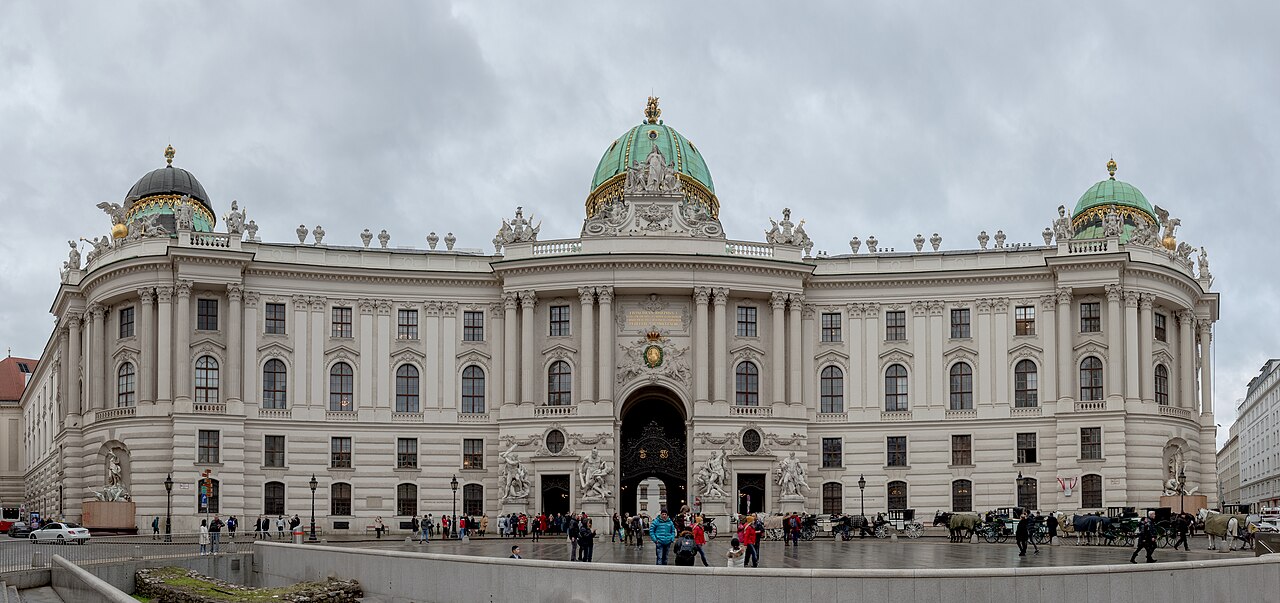
Outside, the Michaelerplatz façade with its curved dome and matching wings, seen straight on from the square, is the strongest exterior shot and works well in the flat light of an overcast morning as well as full sun; the dome catches direct sun for much of the middle of the day.
Checked 2026-08-24
The school traces its classical Baroque riding tradition to 1572, making it the oldest institution still practising the style in its original form.
Lipizzaners are born grey or black and lighten to white over several years as they mature, a coat-colour trait of the breed.
Morning Exercise is an open training rehearsal without music or set choreography; a performance is the full show set to classical music with the quadrille and airs above the ground.
Yes, UNESCO added it to the Representative List of the Intangible Cultural Heritage of Humanity in 2015.
Joseph Emanuel Fischer von Erlach, between 1729 and 1735, for Charles VI.
Popular dates, especially around holidays and festivals, sell out well in advance.
Loading the interactive map…
The interactive map could not be loaded.
Last updated:
Source: OpenStreetMap contributors, Wikidata ·