
2 min walk · Hietzing
Bäckenhäuser, Hietzing
- High · Heritage site
- Historic monument
Language · 11 published
Historic monument · Hietzing, Vienna
Reviewed by Elena Voss · Roavina Travel Editor
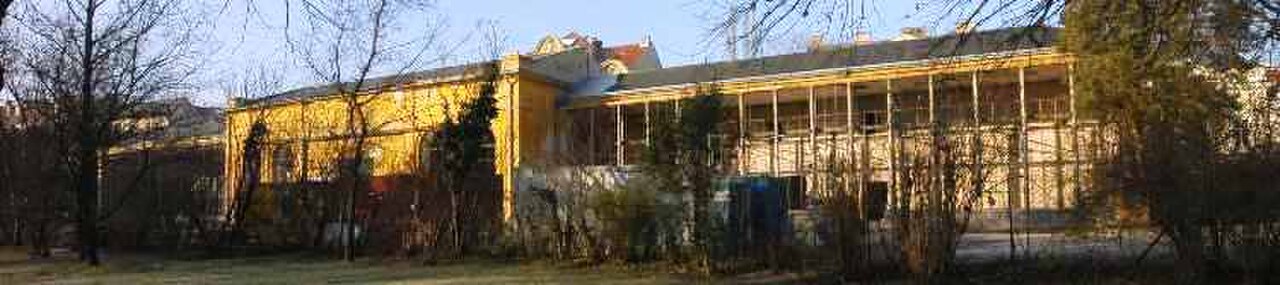
Altes Palmenhaus is a historic palm house in Vienna, a building type created for cultivating tropical and subtropical plants in an urban setting. Its name means “Old Palm House,” linking the structure to Vienna’s tradition of displaying exotic flora. The building also represents nineteenth-century greenhouse architecture, where iron framing and extensive glazing combined practical horticulture with public interest in botanical collections. For a traveller, Altes Palmenhaus offers a focused architectural stop rather than a broad city attraction. The value lies in seeing how glasshouse design shaped the presentation of plants and contributed to Vienna’s cultural landscape. It fits naturally into a walking day devoted to historic buildings, gardens and botanical heritage.
Checked 2026-08-26 · Source
The central experience at Altes Palmenhaus is the relationship between plant cultivation and greenhouse structure. Historic palm houses used tall internal volumes for mature palms and other large tropical specimens, while glass panels admitted the light required for plant growth. Visitors interested in architecture can focus on the iron framework, the proportions of the glazed enclosure and the way the structure creates a distinct climate from the surrounding city. Visitors interested in botany can read the building as a setting designed to make unfamiliar flora visible to an urban audience. The interior should therefore be approached as a combination of horticultural space and architectural heritage, with the building itself forming the main interpretive subject.
Checked 2026-08-26 · Source
Allow a short, focused stop for Altes Palmenhaus, with extra time if historic greenhouse design or tropical horticulture is a major interest. A passerby can appreciate the exterior form in a few minutes, while a visitor studying the glazed walls, iron structure and plant-growing environment will need longer. The site works best as one element in a Vienna walking route rather than as the only activity of the day. Build the visit around close observation: first read the structure from outside, then consider how the height, light and enclosed climate served its botanical purpose. That approach gives the stop a clear shape without requiring a formal tour or extended programme.
Checked 2026-08-26 · Source
Daylight is the most useful condition for appreciating Altes Palmenhaus because the building’s identity depends on glass, light and the contrast between the enclosed growing environment and Vienna’s outdoor streets. Spring, summer, autumn and winter each change the atmosphere around a glazed historic structure, while weather affects the comfort of viewing the exterior. A bright day makes the relationship between ironwork and transparent surfaces easier to read. A cooler day can make the building’s greenhouse purpose more noticeable when compared with the surrounding air. Include Altes Palmenhaus when your route already passes through Vienna’s botanical or architectural sights, and allow enough daylight for photographs and visual study.
Checked 2026-08-26 · Source
Altes Palmenhaus is presented here as a historic palm house and architectural point of interest, so the building itself is the reason to visit. Plan the stop around its heritage and greenhouse character rather than around a specific paid experience. If entry is available, any charge or reservation arrangement belongs to the site’s current visitor operation and is separate from the general cost of travelling through Vienna. The most reliable expectation supported by this guide is that Altes Palmenhaus is a place to see and understand, not a venue with a published price stated here.
Checked 2026-08-26 · Source
Altes Palmenhaus is in Vienna’s urban landscape and can be incorporated into a city route using Vienna’s network of underground trains, trams and buses, followed by walking through the surrounding streets or garden setting. The place name is the key navigation term, while the OpenStreetMap location identifies the mapped structure. Travellers already exploring Vienna’s architectural and botanical heritage can treat the palm house as a linking stop between larger destinations. A walking approach is especially suitable because the building rewards close views of its glass and iron construction. Use the city’s current transport map for the final route, then keep the last part of the journey at pedestrian pace.
Checked 2026-08-26 · Source
Altes Palmenhaus combines historic materials with a greenhouse environment, so visitors should give attention to both footing and temperature while moving around the structure. Wet weather can affect exterior surfaces, and humid conditions inside a palm house can feel different from the Vienna street outside. The iron and glass fabric should be treated as heritage architecture: look closely without touching structural or planted elements. Keep voices low if the space is being used for cultivation or quiet viewing, and follow any signs governing movement. The building is most rewarding when treated as a protected historic environment rather than as an ordinary indoor shortcut.
Checked 2026-08-26 · Source
Altes Palmenhaus is well suited to photographs that pair engineering and vegetation. Frame the iron structure against the transparent roof or walls, then look for vertical compositions that show the height traditionally needed for palms and other large tropical plants. Glass creates reflections, so moving a step to one side can produce a clearer view of the framework. Exterior photographs can place the palm house within Vienna’s wider urban or garden landscape, while interior photographs can emphasize the contrast between regular metal lines and organic foliage. Keep equipment compact in narrow circulation areas and give other visitors space. The building’s strongest images usually explain its greenhouse purpose rather than treating it as a generic façade.
Checked 2026-08-26 · Source
Altes Palmenhaus is a historic palm house whose glass-and-iron design reflects the nineteenth-century tradition of cultivating and displaying tropical and subtropical plants.
It brings together historic greenhouse architecture, botanical heritage and the visual contrast between iron framing, glass surfaces and tropical plant cultivation.
Focus on the tall greenhouse volume, the iron structural framework, the glazed surfaces and the way the enclosed environment was designed for large exotic plants.
Allow a short visit for the exterior and more time when you want to study the greenhouse structure, light and botanical setting in detail.
Yes. The palm house works as a compact architectural and botanical stop within a wider walk through Vienna’s historic urban landscape and garden areas.
Its historic purpose was to provide a tall, light-filled greenhouse environment for palms and other tropical or subtropical plants.
Loading the interactive map…
The interactive map could not be loaded.

Last updated:
Source: OpenStreetMap contributors, Wikidata ·