
4 min walk
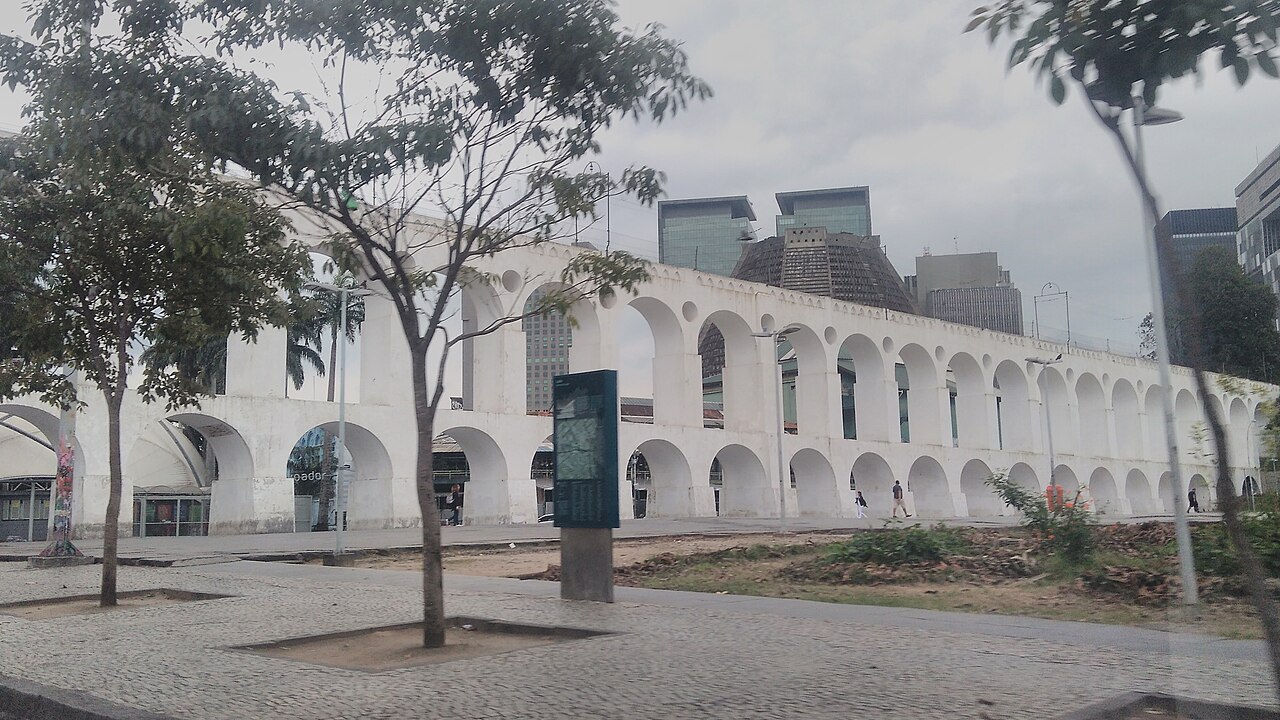
Carioca Aqueduct
- Must see · Heritage site
- Historic monument
Language · 11 published
Art and culture venue · Rio de Janeiro
Reviewed by Elena Voss · Roavina Travel Editor
| Monday | 00:00 – 23:59 |
|---|---|
| Tuesday | 00:00 – 23:59 |
| Wednesday | 00:00 – 23:59 |
| Thursday | 00:00 – 23:59 |
| Friday | 00:00 – 23:59 |
| Saturday | 00:00 – 23:59 |
| Sunday | 00:00 – 23:59 |
Checked 2026-08-31 · Source
Read from the OpenStreetMap access tags; anything not listed has no tag recorded.
Set the group type to family in the planner and the day window contracts to about three quarters of a solo day.
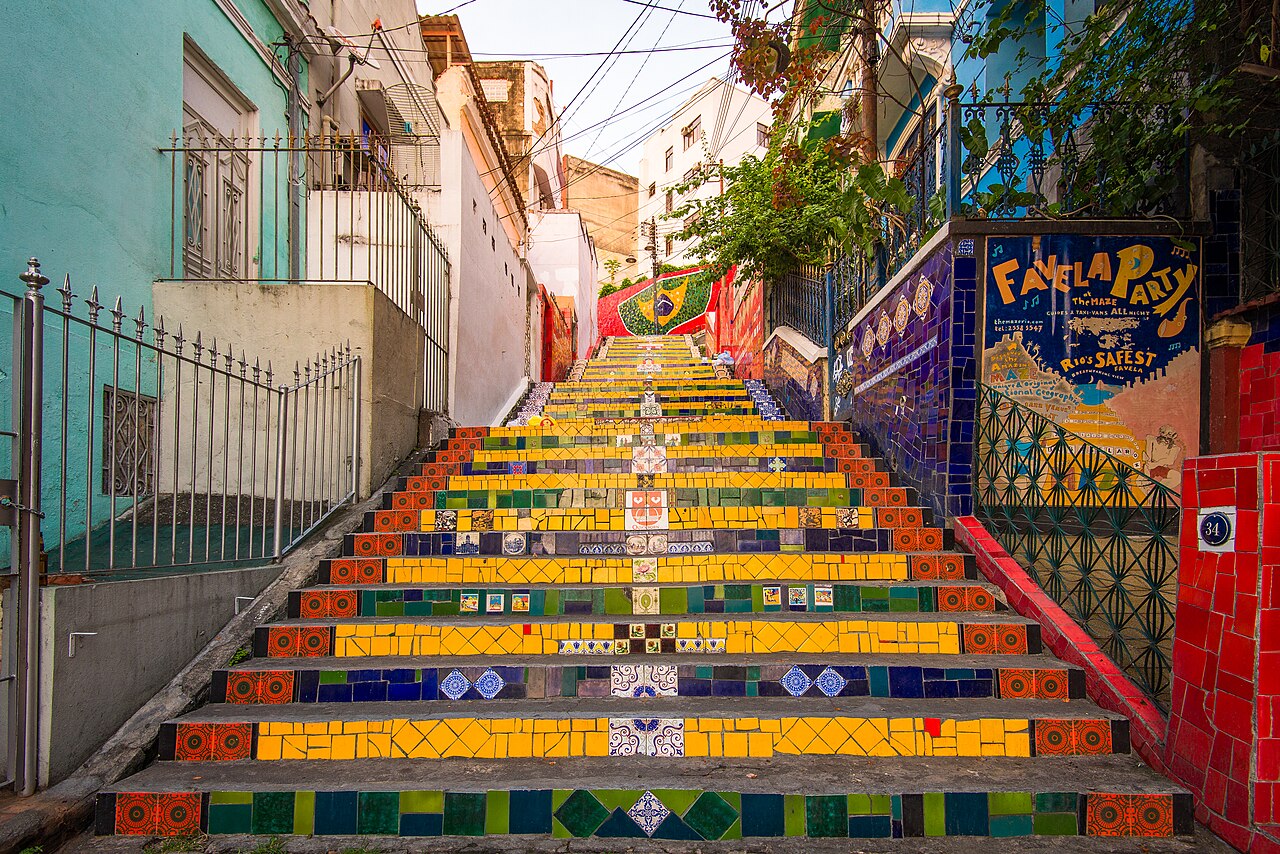
This place is a Artwork. It was designed by Jorge Selarón. It carries the heritage registered by RJ Monuments Inventory heritage designation.
The Selaron Steps, known locally as Escadaria Selarón, comprise a world-famous tiled staircase connecting the Lapa and Santa Teresa neighborhoods of Rio de Janeiro. Chilean-born artist Jorge Selarón created this public artwork over decades, covering the steps with thousands of hand-painted ceramic tiles in red, green, and yellow. The staircase has become an iconic symbol of Rio's artistic heritage and cultural identity, attracting visitors from across the globe who come to experience its vibrant visual impact. Open 24 hours daily; no routine closure days.
Checked 2026-08-31 · Source
The staircase features over two hundred steps adorned with more than two thousand tiles collected from numerous countries worldwide. Selarón's distinctive artistic vision incorporates predominantly red tiles alongside green and yellow accents reflecting Brazilian national colors. The installation includes tiles bearing signatures, messages, and designs from international visitors who contributed to this evolving collaborative artwork. The steps function as both a practical pedestrian thoroughfare between neighborhoods and an immersive outdoor gallery experience, with tile patterns changing along the ascent. Open 24 hours daily; no routine closure days.
Checked 2026-08-31 · Source
Visitors typically spend between thirty minutes to one hour exploring the Selaron Steps, though duration varies considerably based on individual interest in photographic documentation and detailed tile examination. The physical climb itself requires only ten to fifteen minutes at moderate pace. Photography enthusiasts and art admirers frequently extend their visit substantially. The surrounding Lapa and Santa Teresa districts warrant additional exploration time, with numerous cultural attractions, restaurants, and architectural landmarks accessible within walking distance of the staircase base and summit. Free public access; no admission ticket is required.
Checked 2026-08-31 · Source
The Selaron Steps constitute an outdoor public installation accessible at all hours without formal entry restrictions. Early morning visits generally offer reduced crowding and more favorable photographic conditions before peak tourist arrival. Midday periods typically experience highest visitor density. Open 24 hours daily; no routine closure days. Take MetrôRio Line 1 or 2 to Glória station and use Access A on Rua da Glória, then continue on foot to the lower entrance at Rua Joaquim Silva and Rua Manuel Carneiro. Glória station lists disabled access, but the steps themselves are not step-free.
Checked 2026-08-31 · Source
The Selaron Steps remain freely accessible as public infrastructure without admission charges or ticketing requirements. No official guided tour operations are directly affiliated with the artwork itself, though various independent tour operators incorporate the staircase into broader Rio de Janeiro walking itineraries. Visitors should verify any tour pricing independently. Free public access; no admission ticket is required. The visitor route is a stairway with more than 200 steps; there is no step-free route from the bottom to the top. The lower approach is from Rua Joaquim Silva at Rua Manuel Carneiro.
Checked 2026-08-31 · Source
The staircase connects Rua Joaquim Silva in Lapa with Rua Manuel Carneiro in Santa Teresa. The Lapa Arches serve as a prominent nearby landmark for orientation. Multiple bus routes serve surrounding streets. The nearest metro station is Cinelândia on Line 1, requiring subsequent walking or connection. Take MetrôRio Line 1 or 2 to Glória station and use Access A on Rua da Glória, then continue on foot to the lower entrance at Rua Joaquim Silva and Rua Manuel Carneiro. Glória station lists disabled access, but the steps themselves are not step-free.
Checked 2026-08-31 · Source
The tiled step surfaces become slippery when wet, requiring appropriate footwear with adequate traction. The staircase location in densely urban neighborhoods necessitates standard urban awareness regarding personal belongings and surroundings. Crowding at narrow step sections creates congestion points during peak visitation. No permanent security presence or formal visitor services exist on-site. Physical exertion from climbing merits consideration for mobility-limited visitors. The visitor route is a stairway with more than 200 steps; there is no step-free route from the bottom to the top. This is an unstaffed municipal public stairway rather than a gated attraction. The city’s July 2026 Boulevard Selarón project covers the surrounding streets and does not announce a closure of the steps.
Checked 2026-08-31 · Source
The Selaron Steps offer exceptional photographic opportunities with vibrant color compositions and distinctive geometric patterns. Early morning and late afternoon provide optimal natural lighting conditions. Wide-angle lenses accommodate the staircase's vertical extent, while macro capabilities capture individual tile details. Tripod usage may impede pedestrian traffic flow during busy periods. Drone operation would fall under Brazilian aviation regulations requiring appropriate permits. Respectful awareness of other visitors' experience remains essential when positioning for photographs along this active public thoroughfare. Yes. Rio’s municipal tourism plan identifies the staircase as a free attraction, and no ticket is required.
Checked 2026-08-31 · Source
Yes. Rio’s municipal tourism plan identifies the staircase as a free attraction, and no ticket is required.
The steps are a municipal public passage with 24-hour daily access and no routine weekly closure day.
No. The attraction consists of more than 200 steps, and the city’s accessibility works around the lower approach do not bypass the staircase.
The lower entrance is on Rua Joaquim Silva at Rua Manuel Carneiro, between Lapa and Santa Teresa.
Chilean-born artist Jorge Selarón began the tiled work in the early 1990s.
The city began Boulevard Selarón works around the staircase in July 2026, including new paving, wider pavements and accessibility improvements; the notice did not announce closure of the steps.
Loading the interactive map…
The interactive map could not be loaded.
Last updated:
Source: OpenStreetMap contributors, Wikidata ·