
.jpg)
.jpg)
.jpg)
.jpg)
.jpg)
4 min walk
Toronto Music Garden
- Must see
- Nature site
Language · 11 published
Nature site · Toronto
Reviewed by Elena Voss · Roavina Travel Editor

| Monday | 00:00 – 23:59 |
|---|---|
| Tuesday | 00:00 – 23:59 |
| Wednesday | 00:00 – 23:59 |
| Thursday | 00:00 – 23:59 |
| Friday | 00:00 – 23:59 |
| Saturday | 00:00 – 23:59 |
| Sunday | 00:00 – 23:59 |
Parsed from OpenStreetMap opening hours on 2026-09-09.
This place is a Park.
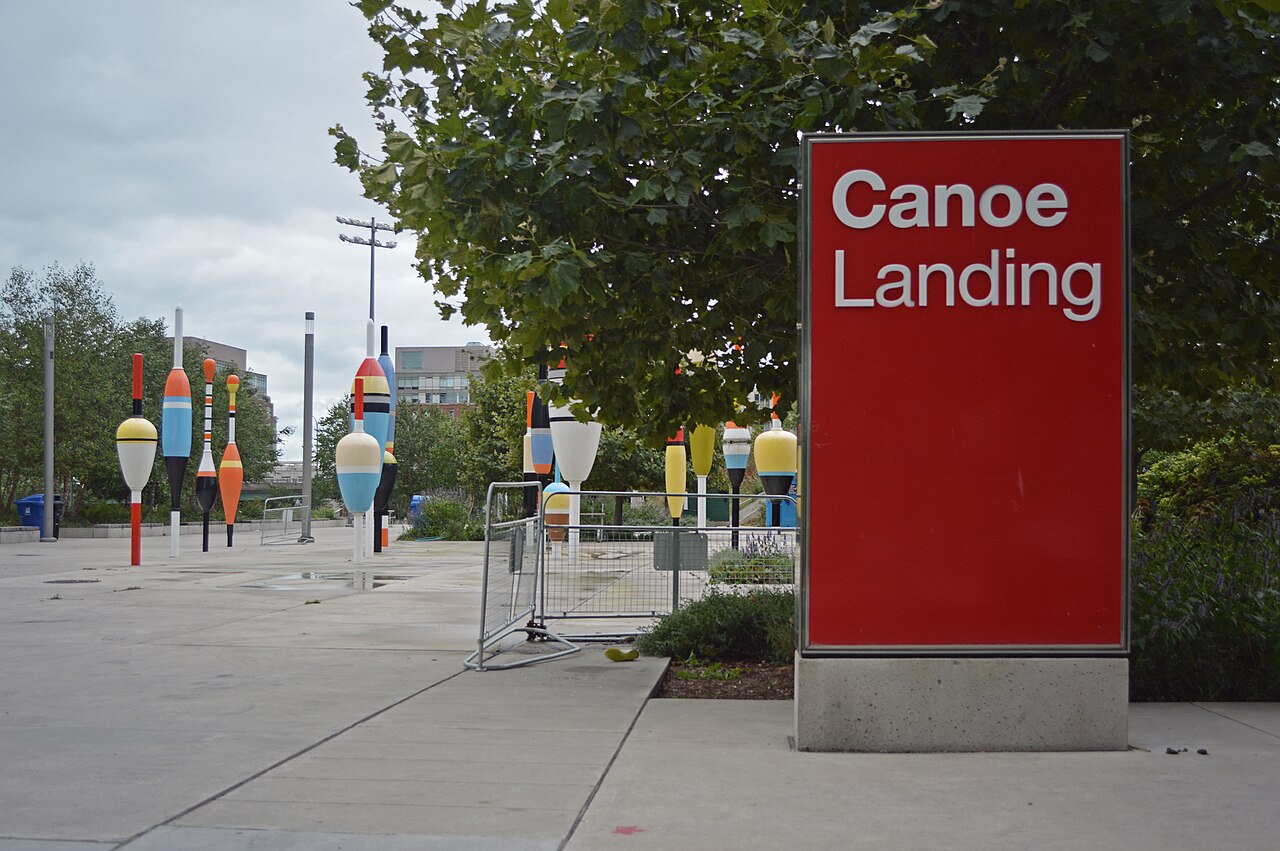
Canoe Landing Park is a public park in Toronto's CityPlace neighbourhood, surrounded by high-rise residential towers and former railway lands. Its identity comes from public art by Canadian artist and author Douglas Coupland, especially the large red canoe. The park gives the dense neighbourhood open lawn, paths, seating, and a contemporary art setting, making it a distinctive urban stop rather than a conventional historic garden. Canoe Landing Park is a public park in Toronto's CityPlace neighbourhood. The park is notable for its public art installations by Canadian artist and author Douglas Coupland, with the red canoe as its central visual element. The park serves as green space for the dense residential community that surrounds it. It represents an example of integrating contemporary art into urban park design, creating a distinctive identity for this relatively new Toronto neighbourhood that emerged from former railway lands. The park contains open lawn areas and pathways that accommodate children. The art installations may interest some children, though the park is not designed as a dedicated children's playground. Parental supervision is appropriate given the urban setting and proximity to roads and cyclist routes.
Checked 2026-08-26 · Source
Douglas Coupland's red canoe is the park's central visual landmark. Other works include the monumental Tom Thomson canoe paddle and additional sculptural elements distributed through the landscape. Open lawns, planted areas, pedestrian paths, benches, and seating support relaxed neighbourhood use. The surrounding towers form an important part of the experience: they show how the park's public art and greenery sit within a dense contemporary district built over former railway land. The park features Douglas Coupland's public art as its defining characteristic. The red canoe sculpture is the most prominent installation, positioned to evoke Canadian cultural imagery. Additional Coupland works include the monumental 'Tom Thomson' canoe paddle and other sculptural elements. The park contains landscaped green areas, pedestrian pathways, and open lawn spaces suitable for passive recreation. Benches and seating areas are provided for visitors.
Checked 2026-08-26 · Source
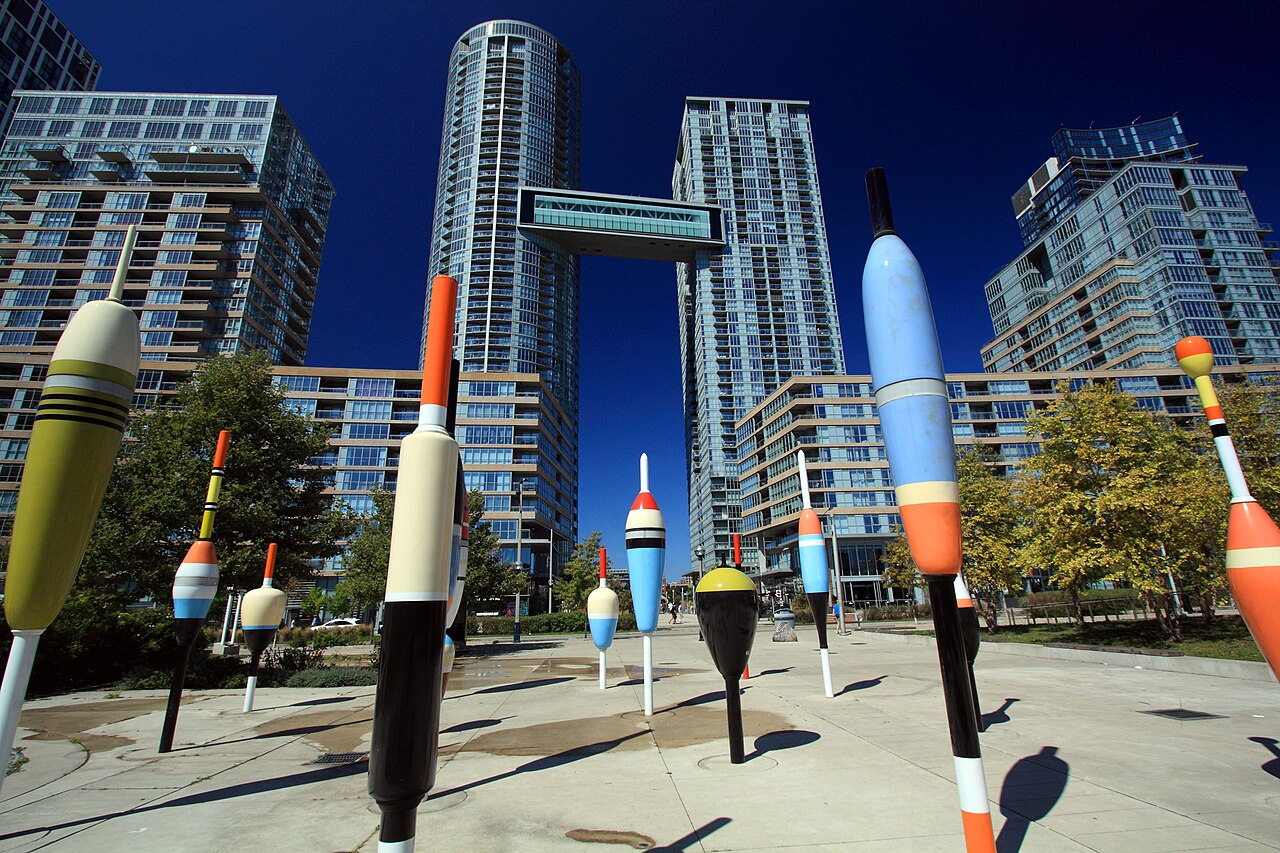
Allow thirty minutes to walk through the park, see the red canoe and paddle, and take a few photographs. One hour gives more room for a relaxed pause, closer inspection of the artworks, and time on the lawn or seating. The site is compact and self-directed, so there is no need to reserve half a day for the park alone. Add extra time only when exploring the broader CityPlace neighbourhood or nearby downtown destinations.
Checked 2026-08-26 · Source
Daylight is the most useful time for seeing the public art, reading the shapes against the towers, and photographing the bold colours. Summer offers warmer conditions and easier use of the lawns, while winter visits bring colder weather, snow, and more limited outdoor comfort. Spring and autumn suit a short art-and-architecture walk. Choose the season according to whether your priority is sitting outdoors, seeing the landscape clearly, or fitting the park into a wider CityPlace route.
Checked 2026-08-26 · Source
Canoe Landing Park is a public municipal park whose ordinary experience consists of outdoor paths, lawns, seating, landscaping, and public art. The visit is not organised around a ticketed entrance. Keep separate funds for transit, parking, food, or attractions elsewhere in Toronto. Its strongest value is the combination of Douglas Coupland's installations and CityPlace's high-rise setting, which can be enjoyed during a straightforward neighbourhood walk.
Checked 2026-08-26 · Source
The park sits in CityPlace south of the railway corridor and northwest of Toronto's downtown core. St. Andrew and Union stations on Line 1 are useful rapid-transit references, followed by a walk or a local connection. Streetcar routes serve the broader central area. The residential district is walkable, and cycling is practical through Toronto's connected routes. Driving is less convenient because nearby parking primarily serves the dense residential environment.
Checked 2026-08-26 · Source
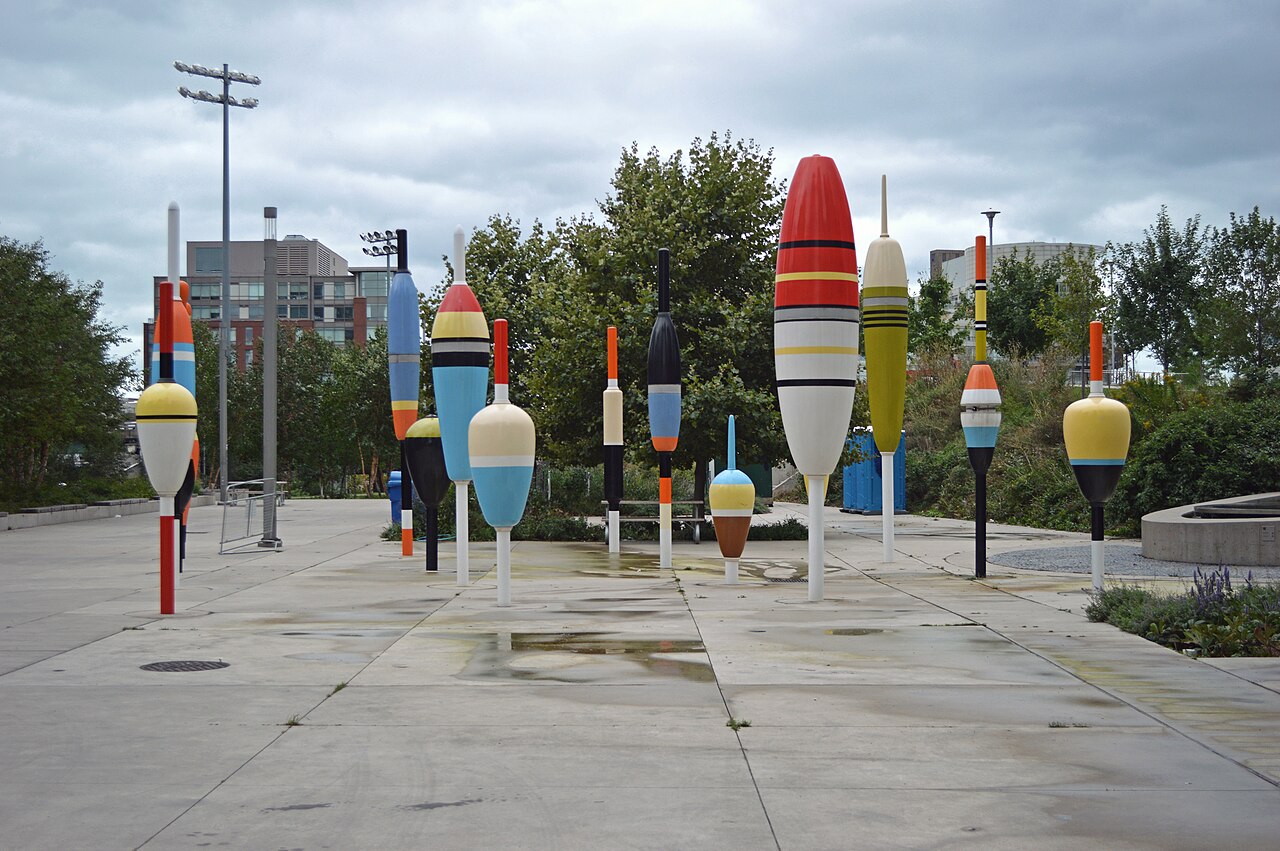
Parts of the park have limited shelter, so summer sun, rain, and winter conditions can affect comfort. High-rise buildings can channel stronger breezes through the open spaces. Residents, pedestrians, and cyclists share the routes, requiring attention near paths and entrances. Seasonal ice or wet surfaces may make walking more difficult. Treat the artworks as public installations rather than climbing structures, keep belongings close, and stay alert to the surrounding urban streets.
Checked 2026-08-26 · Source
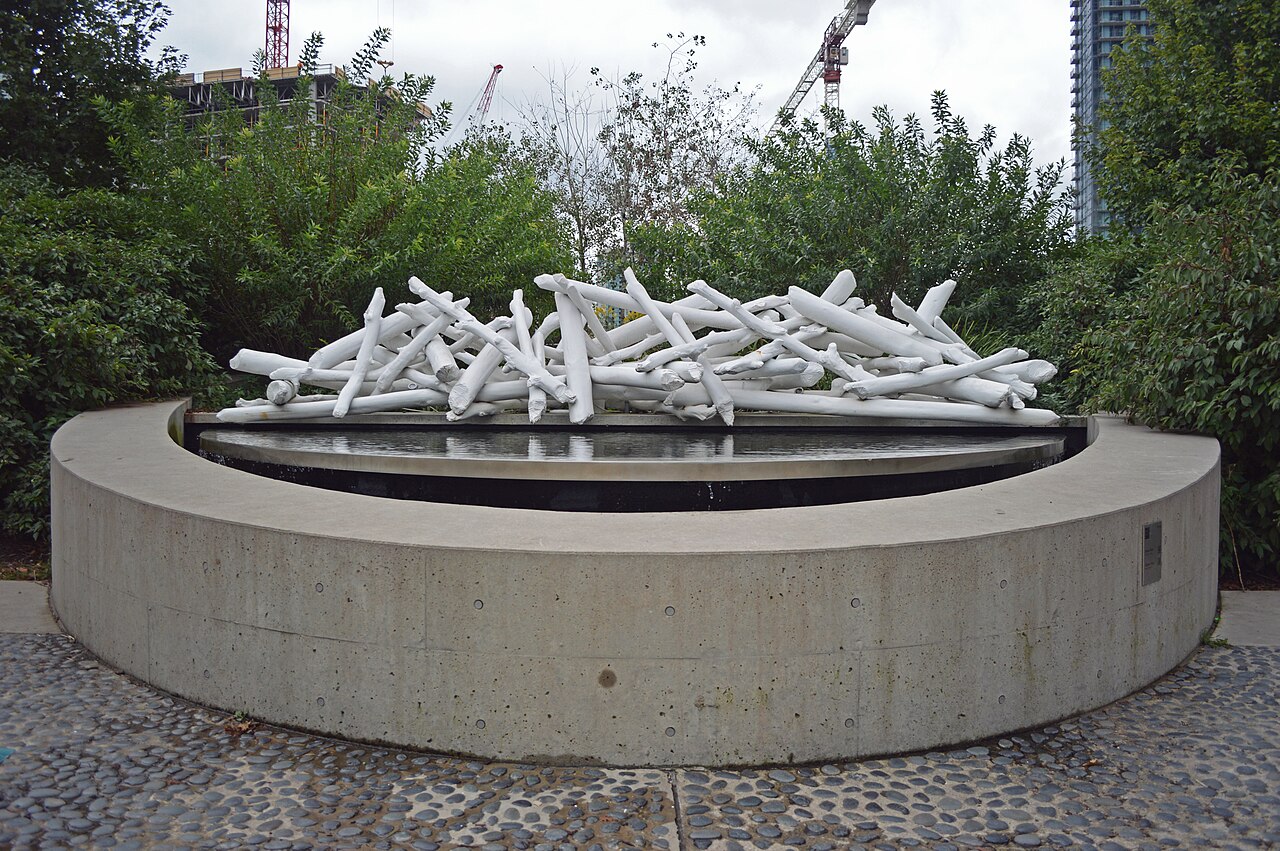
The red canoe creates a strong colour contrast with the surrounding lawns, paths, and glass-and-concrete towers. Include the Tom Thomson canoe paddle for a second Coupland subject, or use a wide composition to show the scale of the public art within CityPlace. Golden-hour light can deepen the canoe's colour and bring warmth to the buildings. The open layout permits several angles, but keep tripods and camera bags clear of pedestrian and cyclist movement.
Checked 2026-08-26 · Source
It is known for Douglas Coupland's public art, especially the large red canoe and the monumental Tom Thomson canoe paddle.
The park is in Toronto's CityPlace neighbourhood, south of the railway corridor and northwest of the downtown core.
Allow thirty minutes for the main artworks and photographs, or up to one hour for a slower neighbourhood pause.
Alongside the red canoe, the park includes the monumental Tom Thomson canoe paddle and other sculptural elements by Douglas Coupland.
St. Andrew and Union stations on Line 1 are the named rapid-transit references for reaching CityPlace and continuing on foot.
The park places contemporary Canadian public art, lawns, and paths among the high-rise towers of CityPlace, a neighbourhood built over former railway lands.
Loading the interactive map…
The interactive map could not be loaded.
Last updated:
Source: OpenStreetMap contributors, Wikidata ·