
4 min walk
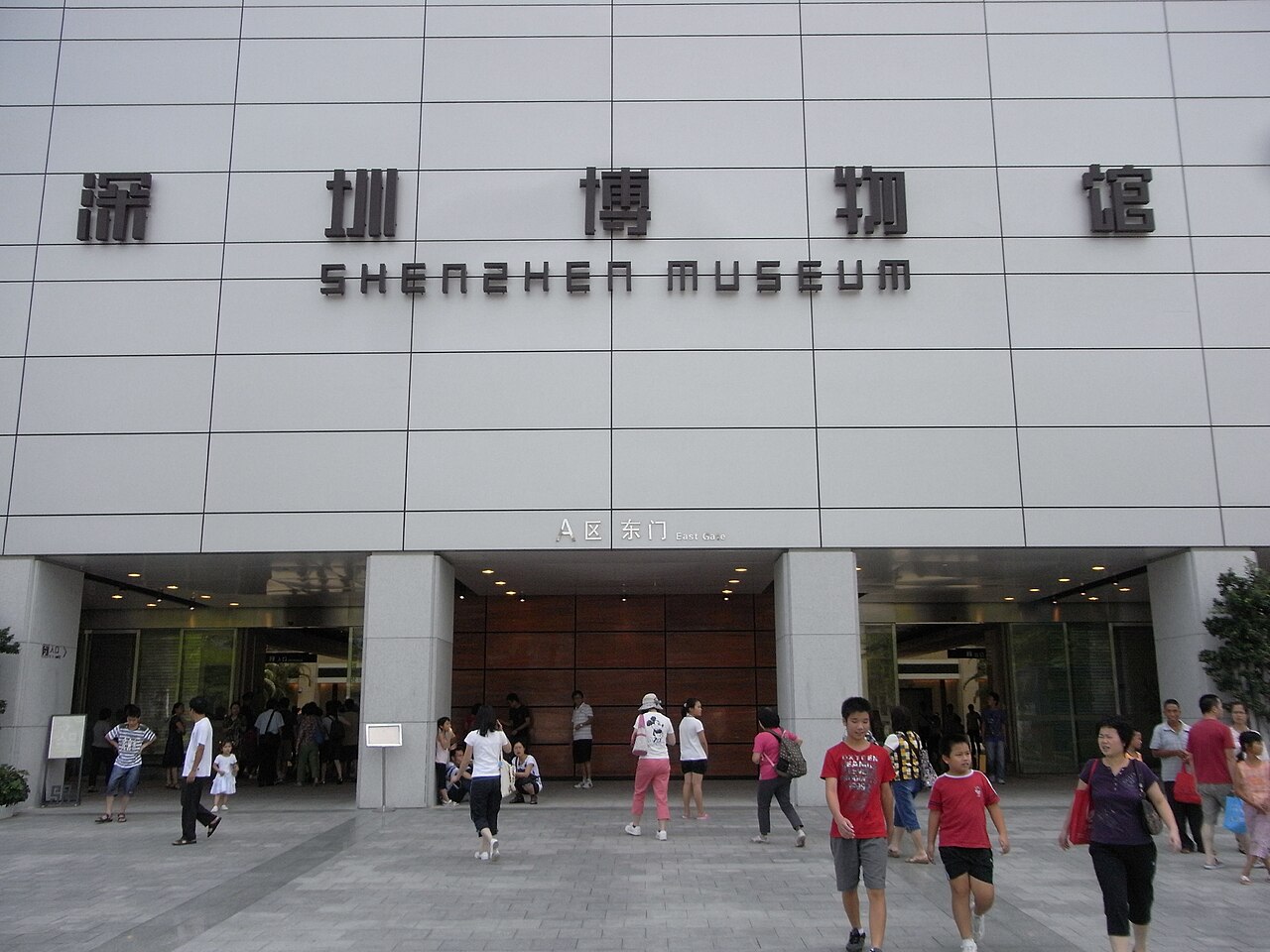
Shenzhen Museum
- Must see
- Museum

Museum · Shenzhen
深圳市当代艺术与城市规划馆
Closed today, Monday. Next open Tuesday at 10:00 — the planner will not place a stop here on a Monday.
Plan around it| Monday | Closed |
|---|---|
| Tuesday | 10:00 – 21:00 |
| Wednesday | 10:00 – 21:00 |
| Thursday | 10:00 – 21:00 |
| Friday | 10:00 – 21:00 |
| Saturday | 10:00 – 21:00 |
| Sunday | 10:00 – 21:00 |
Checked 2026-08-31 · Source
| Per person | Free entry |
|---|
Checked 2026-08-31 · Source
Read from the OpenStreetMap access tags; anything not listed has no tag recorded.
Set the group type to family in the planner and the day window contracts to about three quarters of a solo day.
The Museum of Contemporary Art and Planning Exhibition occupies a prominent position in Shenzhen’s Civic Center area. Designed by Coop Himmelb(l)au, its metallic exterior and angular volumes make the building a landmark in their own right. Inside, contemporary art and urban-planning displays share one institution, linking international exhibition culture with Shenzhen’s rapid transformation. The Museum of Contemporary Art and Planning Exhibition is a major cultural institution in Shenzhen's Futian District, located within the Civic Center area. Its distinctive architectural form, designed by Coop Himmelb(l)au, features a striking metallic facade and complex geometric volumes. The building houses two distinct functions under one roof: contemporary art exhibition spaces and urban planning presentation galleries. It serves as both a venue for international art exhibitions and a showcase for Shenzhen's rapid urban development narrative, reflecting the city's transformation from fishing village to global metropolis. Some components may be free while temporary exhibitions require tickets. Verify directly with official sources.
Checked 2026-08-26 · Source
The museum combines galleries for rotating contemporary art with displays about Shenzhen’s urban planning and spatial development. Planning areas use architectural models, interactive displays and documentation to explain how the city has changed. Exhibition content changes over time, so the balance between art and planning can differ between visits. The atrium and circulation spaces extend the architectural experience beyond the galleries. The museum contains contemporary art galleries hosting rotating exhibitions of Chinese and international artists, alongside permanent and temporary displays related to Shenzhen's urban planning history. The planning exhibition component presents architectural models, interactive displays, and documentation of the city's spatial evolution. Exhibition content varies significantly between visits as programming changes. Visitors should consult the museum directly for present offerings. The building's interior atrium and circulation spaces are themselves notable architectural experiences.
Checked 2026-08-26 · Source
A full visit usually takes two to three hours. Give extra time if you want to study both the art galleries and the planning displays in detail. A focused visit to one component can fit into roughly one hour. The building’s atrium, geometric circulation and large interior spaces also deserve attention, particularly for visitors interested in architecture. A thorough visit typically requires two to three hours, though duration varies considerably based on exhibition density and visitor interest in planning documentation. Art-focused visitors may spend more time in temporary exhibition galleries, while those interested in urban development may engage extensively with the planning displays. The architectural experience of the building itself warrants additional time. Visitors with limited schedules could prioritize either the art or planning component for a shorter visit of approximately one hour. Peak periods may extend waiting times.
Checked 2026-08-26 · Source
Morning visits generally offer calmer conditions. Weekdays bring business activity around the Civic Center, while weekends attract leisure visitors. National Day Golden Week and Spring Festival are especially busy periods for major Shenzhen cultural venues. The museum also provides a useful indoor stop during the city’s hot, humid summers and a comfortable cultural activity during milder winter weather. Visitors should verify current opening schedules directly with the museum before planning visits.
Checked 2026-08-26 · Source
Admission can differ between the contemporary-art galleries and the planning-exhibition areas. Temporary art exhibitions may have separate tickets, while some areas may be free. Treat the art programme as the part most associated with changing admission arrangements. The museum’s Civic Center setting makes it easy to combine the visit with a wider walk through central Shenzhen.
Checked 2026-08-26 · Source
Civic Center metro station, served by Lines 2 and 4, provides the clearest public-transport connection. The museum sits within walking distance in Shenzhen’s central Civic Center district. Buses serve nearby roads, and taxis or ride-hailing services can reach the complex directly. Allow additional travel time from distant districts because Shenzhen is a large, spread-out metropolis.
Checked 2026-08-26 · Source
Security screening is part of visiting a major Chinese cultural institution. Photography rules can differ between permanent displays and temporary exhibitions, so follow gallery signs and staff directions. The building includes dramatic vertical circulation and open atrium spaces. English support may vary, and the Civic Center plaza has limited immediate dining, making a meal plan useful.
Checked 2026-08-26 · Source
The metallic exterior is well suited to architectural photographs, especially when framed against Shenzhen’s sky. Inside, the atrium and circulation routes create strong geometric compositions. The Civic Center plaza provides wider views that place the museum within the city’s administrative centre. Gallery photography depends on exhibition rules; temporary contemporary-art shows may restrict image capture, and tripods or professional equipment may need permission.
Checked 2026-08-26 · Source
It combines contemporary-art galleries with urban-planning exhibitions about Shenzhen’s spatial development.
A thorough visit generally takes two to three hours; focusing on one component can take about one hour.
Civic Center station, served by Shenzhen Metro Lines 2 and 4, is within walking distance.
Architectural interior photography is possible, but exhibition rules differ and temporary shows may restrict photography.
The building was designed by Coop Himmelb(l)au and has a metallic facade with complex geometric volumes.
Expect security screening, changing exhibition content and different admission arrangements between art and planning areas.
Loading the interactive map…
The interactive map could not be loaded.
Last updated:
Source: OpenStreetMap contributors, Wikidata ·