
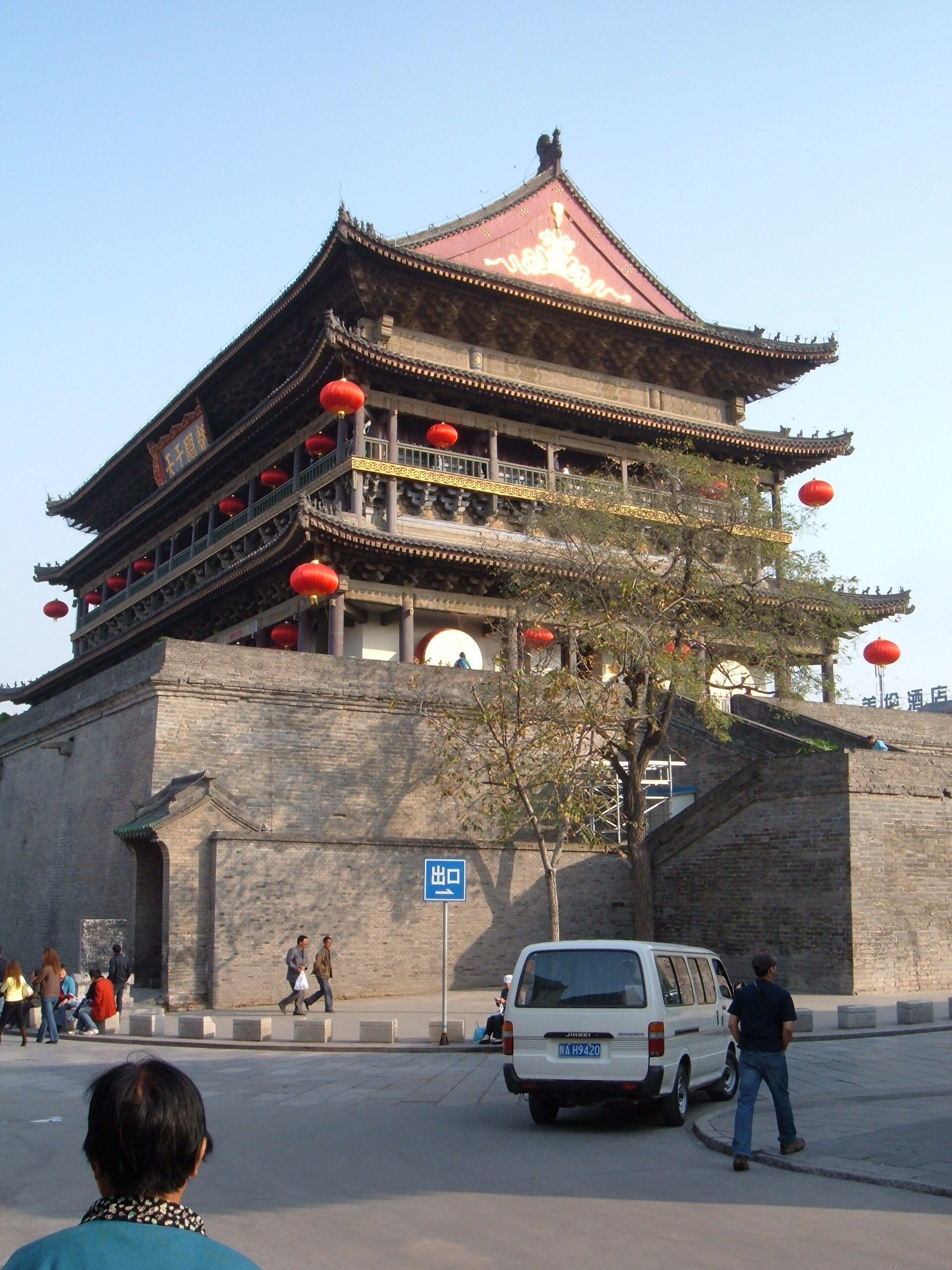
5 min walk
Drum Tower of Xi'an
- Must see · Heritage site
- Museum
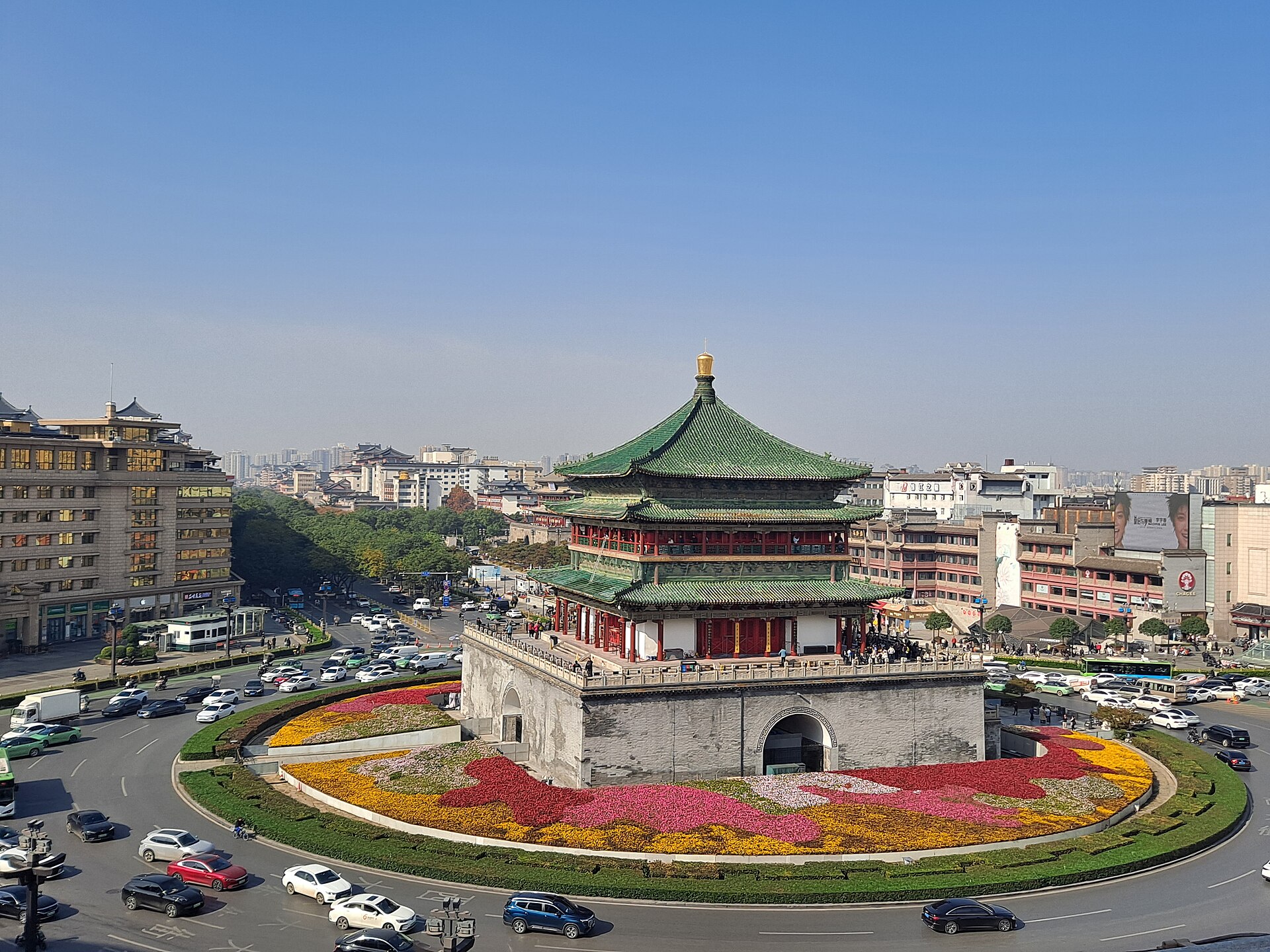
Historic monument · Xi'an
钟楼
| Monday | 08:30 – 21:30 |
|---|---|
| Tuesday | 08:30 – 21:30 |
| Wednesday | 08:30 – 21:30 |
| Thursday | 08:30 – 21:30 |
| Friday | 08:30 – 21:30 |
| Saturday | 08:30 – 21:30 |
| Sunday | 08:30 – 21:30 |
Checked 2026-08-31 · Source
| Per person | CN¥30.00 |
|---|
Checked 2026-08-31 · Source
Read from the OpenStreetMap access tags; anything not listed has no tag recorded.
Set the group type to family in the planner and the day window contracts to about three quarters of a solo day.
Xi'an Bell Tower stands at the symbolic center of the old city, where the main north-south and east-west axes meet. The Ming-dynasty landmark combines a monumental upper structure with tiered roofs and traditional decorative details. It is both a heritage monument and a useful orientation point for travelers moving through central Xi'an's historic urban core. The Xi'an Bell Tower is a historic landmark at the center of Xi'an, Shaanxi Province. It stands where the north-south and east-west axes of the old city walls intersect, marking the symbolic heart of ancient Chang'an. The structure dates to the Ming dynasty, with later reconstructions preserving its monumental character. As one of China's most prominent remaining bell towers, it embodies traditional architectural conventions and urban planning principles. The tower's elevated position and tiered roof construction remain visually dominant in the modern cityscape, serving as both heritage monument and orienting landmark for visitors navigating central Xi'an. The structure's traditional design with steep staircases suggests significant barriers, but specific current accommodations are unverified.
Checked 2026-08-26 · Source
The tower contains a large bronze bell associated with the traditional marking of time. Interior displays explain aspects of its construction and civic role, while upper levels provide views toward the surrounding streets and traffic circle. Visitors can also study painted brackets, ceiling decoration, and timber details that express the architectural character of an imperial-era public building. The interior contains a large bronze bell, historically used to mark time and signal daily rhythms. Exhibition materials relate the tower's construction history and its role in Ming and Qing dynasty civic life. Visitors may ascend to upper levels via interior staircases. The upper platforms offer circumferential viewing opportunities over the surrounding streets and traffic circle. Architectural details include painted brackets, ceiling panels, and structural carpentry typical of imperial-era public buildings. The specific arrangement of displays and interpretive content may vary. Current exhibition scope and access to all levels should be verified on arrival, as interior configurations can change without extensive advance notice.
Checked 2026-08-26 · Source
Allow roughly forty-five to ninety minutes for the tower, depending on whether you enter, climb through the interior, and spend time at the viewing levels. Exterior appreciation from the surrounding pedestrian areas takes less time. An evening visit can last longer because illumination changes the landmark's presence. Pairing the tower with the nearby Drum Tower creates a fuller historic-center stop. A typical visit spans forty-five to ninety minutes, depending on interest in architectural examination and exterior photography.
Checked 2026-08-26 · Source
The tower's exterior can be appreciated from public areas around the central junction, while interior exploration belongs to a planned sightseeing visit. Spring and autumn bring comfortable walking conditions, summer can be hot and hazy, and winter brings cold with shorter daylight. Evening illumination offers a different visual experience. Weekends and holidays usually make the central viewpoint busier than a morning visit.
Checked 2026-08-26 · Source
Entry relates to access beyond the exterior views, so distinguish the free visual experience around the landmark from any interior visit. The Bell Tower and nearby Drum Tower are often treated as a connected heritage pairing. Build the tower into your Xi'an sightseeing budget and route as one central stop, leaving room for the entrance process and the time needed to explore the vertical interior.
Checked 2026-08-26 · Source
Xi'an Bell Tower occupies a busy central traffic circle. Metro and surface transport serve the surrounding area, and many old-city hotels are close enough for a walk. Do not treat the circle as an ordinary road crossing: approach through designated pedestrian routes or underground passages. Taxi and ride-hailing vehicles may stop nearby rather than directly at the structure, so expect a short final walk.
Checked 2026-08-26 · Source
Traffic is the main practical feature of the setting. Use pedestrian passages and designated crossings, especially at busy times. Inside, stairs are steep and narrow, so the climb requires care and may be demanding for visitors with limited mobility or young children. Platforms can become crowded, and the elevated structure exposes visitors to weather. Keep belongings secure and follow any instructions governing movement and photography.
Checked 2026-08-26 · Source
The Bell Tower is one of central Xi'an's strongest architectural photography subjects. The surrounding circle offers changing angles, while evening lighting emphasizes the rooflines and silhouette. Upper levels add views over the city when interior access is available. Use wide framing for the structure and wait for clear traffic gaps when composing from nearby areas. Keep equipment and tripods from obstructing pedestrian movement.
Checked 2026-08-26 · Source
It stands at the center of Xi'an's old city, where the principal north-south and east-west axes meet.
The interior contains a large bronze bell, historical displays, architectural details, and upper viewing levels reached by stairs.
Plan approximately forty-five to ninety minutes for an interior visit, or less for exterior views alone.
Yes. The nearby Drum Tower is a natural companion stop in Xi'an's historic center.
The traffic circle requires a careful approach through designated pedestrian routes, and the tower interior involves steep, narrow staircases.
Evening illumination gives the Ming-dynasty structure a distinctive appearance and highlights its tiered roofs and decorative details.
Loading the interactive map…
The interactive map could not be loaded.

Last updated:
Source: OpenStreetMap contributors, Wikidata ·