.jpg)
07
2 hours
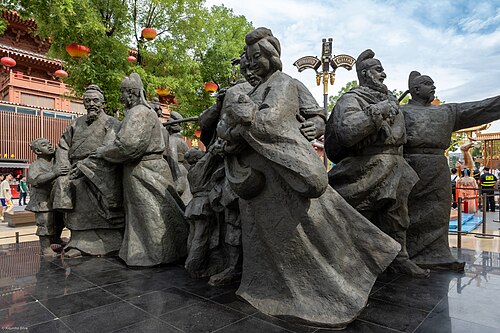
Grand Tang Mall
Grand Tang Mall is a large-scale pedestrian cultural and commercial district in Xi'an, developed as a flagship project celebrating Tang dynasty heritage.
- Must see
- Activity
City guide · China
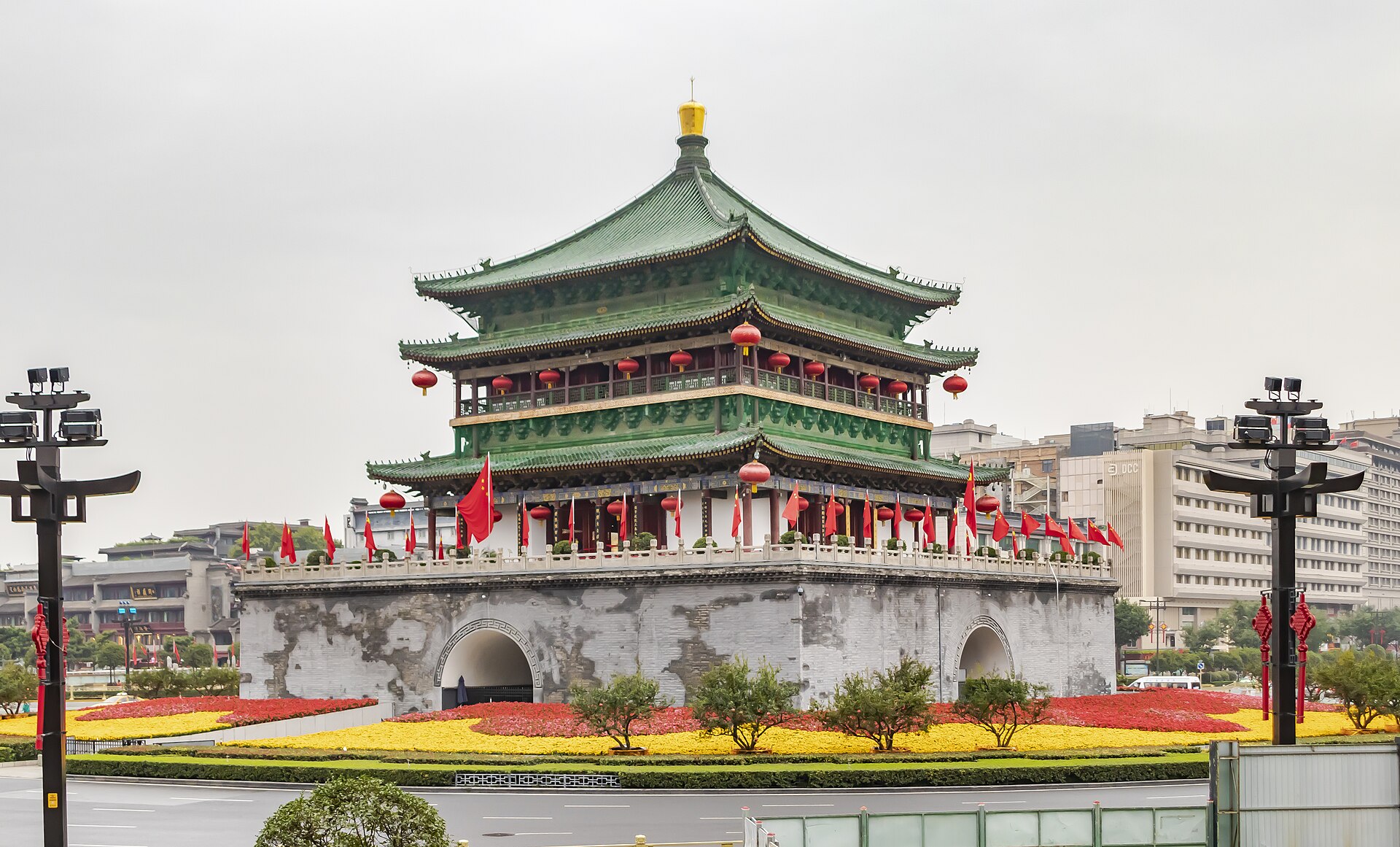
Xi'an has a legible historic centre enclosed by the City Wall, with the Bell Tower, Drum Tower and Muslim Quarter close together. The Giant Wild Goose Pagoda an...
Photograph · ScareCriterion12 · CC BY-SA 4.0
Set your days, your pace and the hours you actually want to be out. The planner works around closing days and travel time, and leaves room to eat.
Reviewed by Elena Voss · Roavina Travel Editor
Xi'an has a legible historic centre enclosed by the City Wall, with the Bell Tower, Drum Tower and Muslim Quarter close together. The Giant Wild Goose Pagoda and major museums form a southern cultural cluster. The Terracotta Army, Huaqing Palace and other Lintong sites lie well east of the centre and require a separate excursion.
Checked 2026-08-26
September · September cools Xi'an to a 24.7°C mean high, although precipitation peaks at 108.0 mm.
Ranked by importance — sitelinks, pageviews and heritage status, not editor preference.
15 places match
Category
Typical visit duration
Interests
Grand Tang Mall is a large-scale pedestrian cultural and commercial district in Xi'an, developed as a flagship project celebrating Tang dynasty heritage.
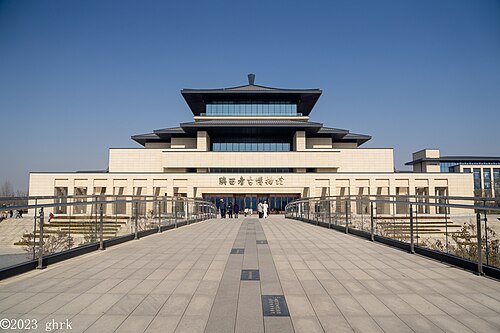
陕西考古博物馆
Shaanxi Archaeological Museum introduces the archaeology of Shaanxi through objects, excavation contexts, and the long sequence of cultures that shaped the region.
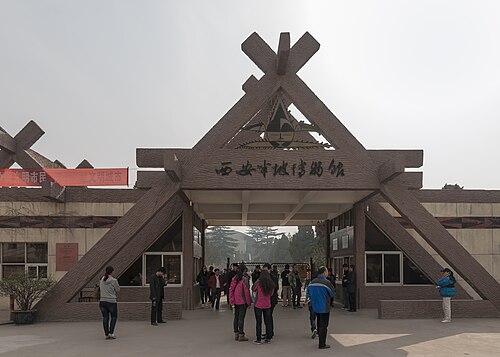
The Banpo Museum is an archaeological site museum in eastern Xi'an preserving the remains of a Neolithic Yangshao culture settlement. The site was excavated beginning in 1953 and opened to the public as one of China's first site museums.
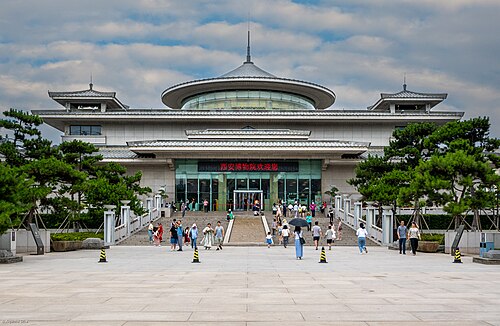
西安博物院
Xi'an Museum is a cultural institution in Xi'an, Shaanxi Province, China, located near the Small Wild Goose Pagoda in the Beilin District. The museum complex integrates the historic pagoda, ancient architectural structures, and modern exhibition facilities.
曲江海洋极地公园
Qujiang Polar Ocean Park is a marine-themed family attraction in Xi'an's Qujiang New District, known locally as 曲江海洋极地公园. It offers an alternative to the city's archaeological and dynastic landmarks, with a visit centred on aquatic displays and polar wildlife.
西安曲江艺术博物馆
The Xi'an Qujiang Museum of Fine Arts is a cultural institution in Xi'an, Shaanxi Province, China. Located in the Qujiang New District area, it forms part of the city's expanding cultural infrastructure.
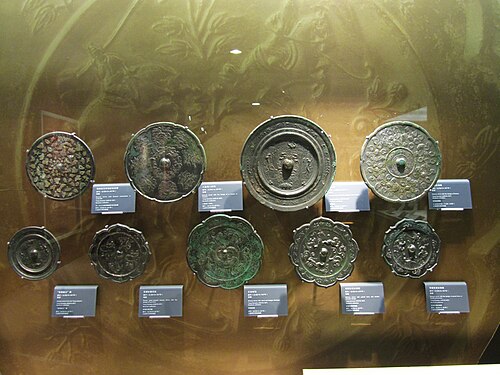
Tang West Market Museum, 大唐西市博物馆, stands at the site of Xi'an's historic Tang Dynasty western market. The ancient market was part of Chang'an's international commercial life and connected the city with Silk Road exchange.
西安事变纪念馆
Xi'an Incident Memorial Hall commemorates the 1936 Xi'an Incident, a turning point in modern Chinese history. Nationalist general Zhang Xueliang detained Chiang Kai-shek and pressed for cooperation with the Communists against Japanese invasion.
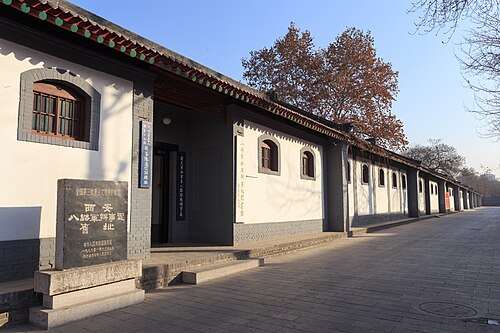
八路军西安办事处纪念馆
The Eighth Route Army Xi'an Office Memorial Hall preserves the wartime office associated with the Eighth Route Army during the Second Sino-Japanese War. It presents Xi'an as an important setting for liaison, organization, and supply work.
Use the City Wall as the central reference: the Bell and Drum towers sit near its middle, the Muslim Quarter lies to the northwest, and the gates define practical entry points. Group the southern pagoda and museum district separately. Lintong is not a quick addition to a wall walk; reserve a substantial block for the eastern archaeological sites.
Checked 2026-08-26
Walk inside the walled centre and use the metro between the rail stations, southern cultural district and other urban zones. Xi'an's official English portal groups transportation with its visitor information. Confirm the current operator map for the final connection to Lintong sites, since the metro does not remove every road transfer between the city and individual archaeological entrances.
Checked 2026-08-26
A fixed stay length is not recorded. Build the visit around the walled centre and southern cultural district, then add Lintong and the eastern archaeological sites only when the available time supports a separate journey.
Group places by district instead of crossing the city repeatedly. Start with the walled centre and southern cultural district; treat Lintong and the eastern archaeological sites as separate routes with their own travel allowance.
Use Walking, metro and city bus. Walk within compact clusters and consult the linked official transport information before making longer transfers or relying on a particular route.
Only within individual neighbourhood clusters. The main visitor areas are separated by distances, waterways, major roads or regional approaches, so longer links normally need public transport or a licensed vehicle.
Plan Lintong and the eastern archaeological sites separately from the walled centre and southern cultural district. Check the current route, return connection and any access requirements on the official source before departure.