City guide · Czechia
Prague
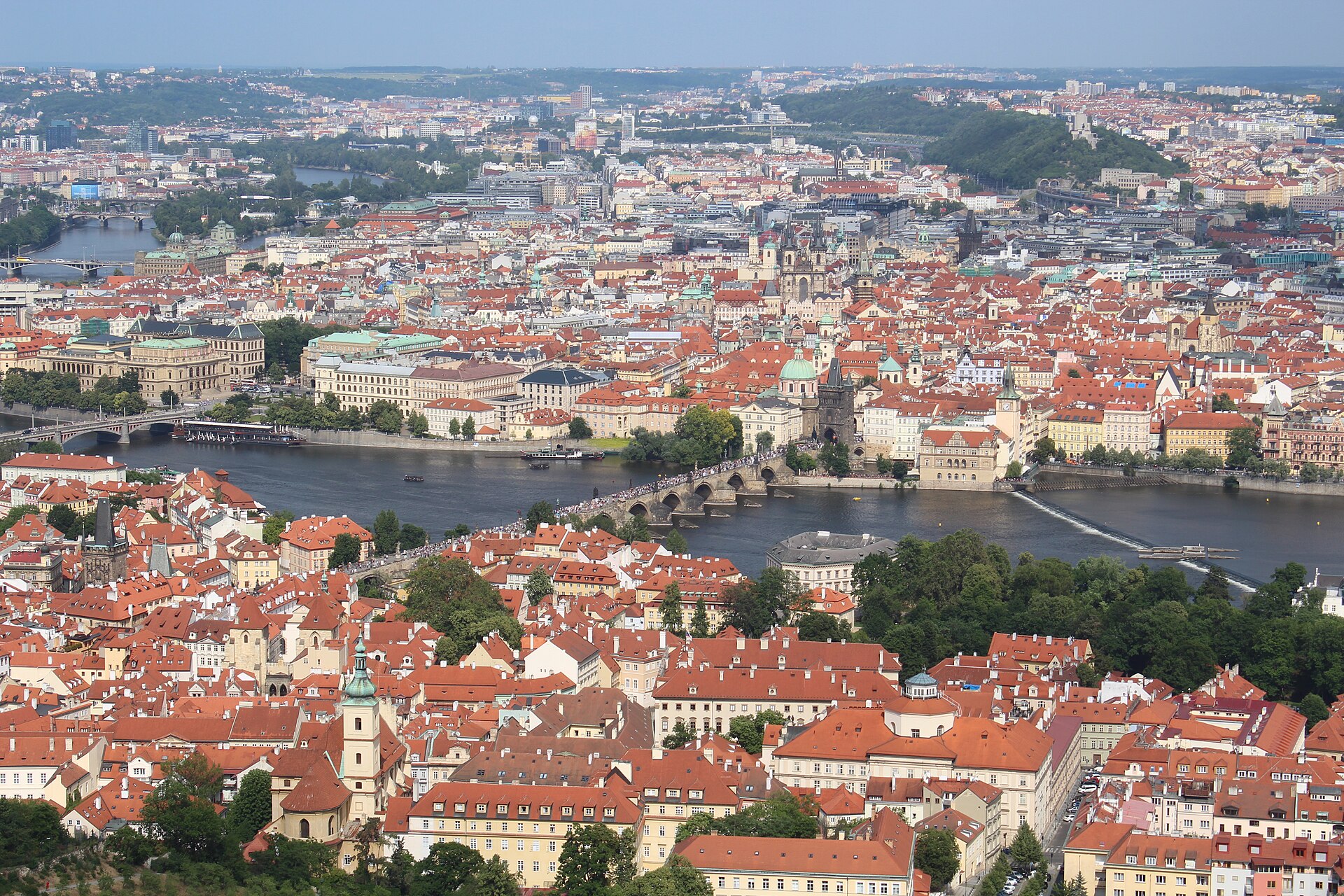

Prague is Czechia's capital, built on both banks of the Vltava. Its historic visitor core links Old Town and New Town on the east bank with Malá Strana and Prague Castle on the west through a sequence of squares, bridges and steep streets. The preserved centre carries medieval, Renaissance, Baroque and later architecture in close succession, while districts such as Holešovice, Karlín and Žižkov reveal the industrial and residential city beyond the postcard core. Most first visits combine walking in the centre with public transport to outer districts.
Reviewed by Elena Voss · Roavina Travel Editor
Practical information
Practical information
- Language spoken
- Czech
- National practical orientation; regional and minority languages may also be used
- Dialling code
- +420
- International calling code; local area and mobile prefixes still apply
- Currency
- Czech koruna (CZK)
- Use the official local currency; card acceptance varies by place
- Emergency number
- 112
- Use only for an emergency; tourist assistance may use a separate number
- Plug type
- Type C and E · 230 V
- Check that chargers support the recorded voltage before using an adapter
- Tap water
- Not recorded
- No verified nationwide visitor statement was recorded
Turn this list into a plan
Set your days, your pace and the hours you actually want to be out. The planner works around closing days and travel time, and leaves room to eat.
Planning a visit
- Suggested stay
- Not recorded
- Getting around
- Walk, tram and metro
- January: viable with meaningful trade-offs
- February: viable with meaningful trade-offs
- March: good time to visit
- April: best time to visit
- May: best time to visit
- June: good time to visit
- July: good time to visit
- August: good time to visit
- September: best time to visit — current month
- October: good time to visit
- November: viable with meaningful trade-offs
- December: viable with meaningful trade-offs
- Best time
- Good time
- Viable with trade-offs
- Difficult conditions
Sources
- worldweather.wmo.int Checked 2026-08-28
Top things to see
Ranked by importance — sitelinks, pageviews and heritage status, not editor preference.
Filter the list
0 places match
0 places match
Category
Typical visit duration
Interests
Nothing in Prague matches all of those filters
The list is built from real place data, so an empty result means the combination genuinely has no match — not that the page failed. Loosen one filter and the ranking returns.
Clear all filtersSource: OpenStreetMap contributors, Wikidata ·
How the city is laid out
The Vltava and the ridge below Prague Castle organise the centre. Old Town Square, the Jewish Quarter and Wenceslas Square sit east of the river; Charles Bridge crosses to Malá Strana, where streets climb toward the castle. New Town wraps around the medieval core rather than forming a separate modern centre. Beyond it, Holešovice lies north, Karlín northeast and Žižkov east of the central station. These outer districts are best treated as individual routes, while Old Town, Charles Bridge and Malá Strana can be joined on foot if steep sections are manageable.
Checked 2026-08-26
Getting around
Walk through the historic centre and use Prague Integrated Transport for longer or steeper journeys. Metro, trams, buses, trains and ferries operate within the integrated system; the three colour-coded metro lines form its backbone and trams are especially useful across the central districts. Ticket validity is time-based and transfers are allowed within the ticket period. Paper tickets that require validation must be stamped once at the start, not again during transfers. Consult PID or Prague City Tourism for current fares, disruptions and accessibility details.
Checked 2026-08-26
Common questions
How many days should I spend in Prague?
A fixed stay length is not recorded. Divide the visit between Old Town and New Town, the west-bank castle and Malá Strana, then an outer district such as Holešovice, Karlín or Žižkov.
Which side of the river holds Prague Castle?
Prague Castle and Malá Strana are on the west bank of the Vltava. Old Town, the Jewish Quarter, New Town and the main railway station are on the east side.
Should I use trams or the metro?
Use the metro for longer cross-city links and trams for many central and hillside routes. Walking remains the best way to connect sights inside the historic core.
How do Prague transport tickets work?
Ticket validity is based on time rather than the number of transfers. A paper ticket that requires validation is stamped once at the beginning and not stamped again when changing services.
Is the historic centre flat?
No. Old Town is comparatively level, but routes through Malá Strana toward Prague Castle climb. Use a tram when steep streets or mobility constraints make the full walk unsuitable.