Roavina

Country guide

Denmark

A photograph of Denmark
Photograph · Moahim · CC BY-SA 4.0

Denmark is the southernmost of the Scandinavian countries: the northern Jutland peninsula, which shares a short land border with Germany, plus an archipelago of 406 islands lying between the North Sea and the Baltic. Its population passed 6 million in May 2025, and roughly 40 per cent of that lives on Zealand alone — the largest island, and the one carrying Copenhagen. The land is flat and mostly arable, low, with sandy coasts, so a Danish route is measured in water crossings rather than in altitude. Beyond continental Denmark, the Kingdom also includes the Faroe Islands and Greenland.

Reviewed by Elena Voss · Roavina Travel Editor

Cities

Every city catalogued in this country so far, ranked by how much there is to see.

Practical information

Language spoken
Danish
National practical orientation; regional and minority languages may also be used
Dialling code
+45
International calling code; local area and mobile prefixes still apply
Currency
Danish krone (DKK)
Use the official local currency; card acceptance varies by place
Emergency number
112
Use only for an emergency; tourist assistance may use a separate number
Plug type
Type C, E, F and K · 230 V
Check that chargers support the recorded voltage before using an adapter
Tap water
Safe from the mains
Public drinking water is monitored by Danish authorities

Planning a visit

  1. January: seasonal closure recorded
  2. February: seasonal closure recorded
  3. March: seasonal closure recorded
  4. April: seasonal closure recorded
  5. May: seasonal closure recorded
  6. June: seasonal closure recorded
  7. July: seasonal closure recorded
  8. August: seasonal closure recorded
  9. September: seasonal closure recorded — this month
  10. October: no seasonality data recorded
  11. November: no seasonality data recorded
  12. December: seasonal closure recorded

Top things to see

Ranked by importance — sitelinks, pageviews and heritage status, not editor preference.

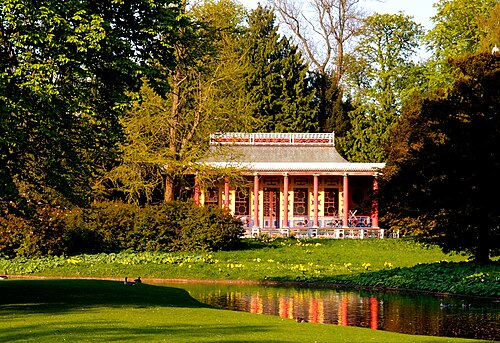
  1. Frederiksberg Park Frederiksberg Park
    02 1 hour

    Frederiksberg Park

    Frederiksberg Have

    Frederiksberg Have is a historic landscape garden in Frederiksberg, an independent municipality enclosed by Copenhagen. The park was originally laid out in the early 18th century as a Baroque garden for Frederiksberg Palace.

    • Must see
    • Nature site
    • Copenhagen
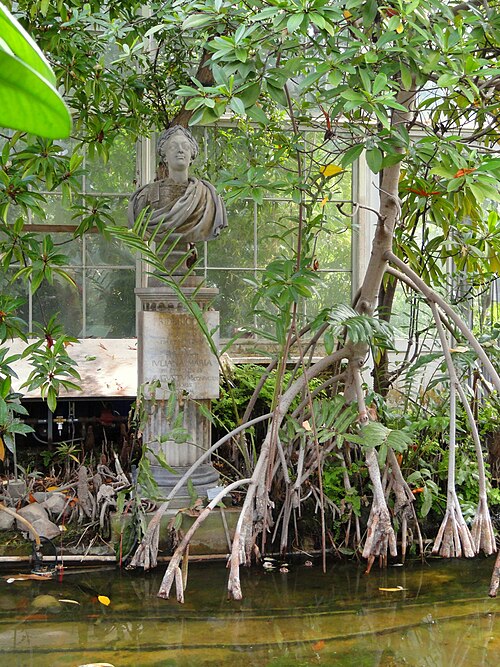
  2. Botanisk Have Botanisk Have
    03 1 hour

    Botanisk Have

    Copenhagen Botanical Garden is the living plant collection of the Natural History Museum Denmark in the centre of Copenhagen.

    • Must see
    • Nature site
    • Copenhagen
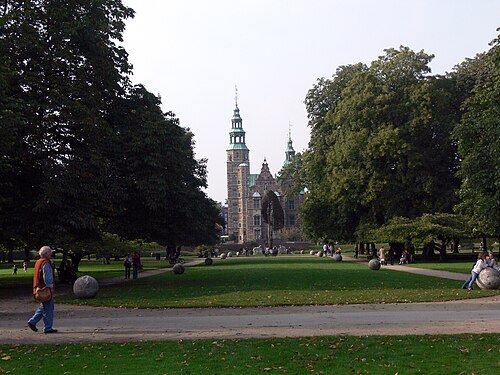
  3. Rosenborg Castle Gardens Rosenborg Castle Gardens
    04 1 hour

    Rosenborg Castle Gardens

    Kongens Have

    Rosenborg Castle Gardens, known locally as Kongens Have, is a historic public park in central Copenhagen. Established in the early 17th century as the private gardens of King Christian IV's Rosenborg Castle, it represents the oldest royal garden in Denmark.

    • Must see
    • Nature site
    • Copenhagen
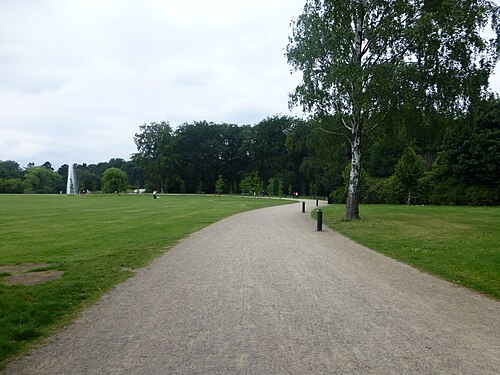
  4. Fælledparken Fælledparken
    05 1 hour

    Fælledparken

    Fælledparken is one of Copenhagen’s major urban parks, occupying a broad area in the Østerbro district.

    • Must see
    • Nature site
    • Copenhagen
  5. Ørstedsparken Ørstedsparken
    06 1 hour

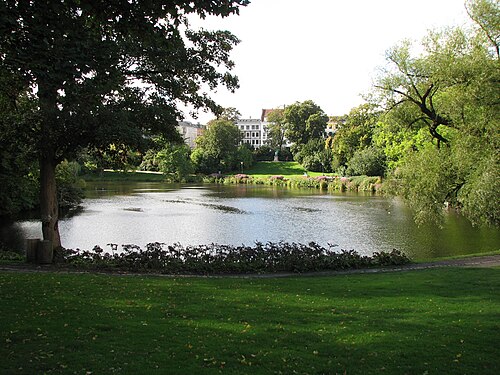
    Ørstedsparken

    Ørstedsparken is a compact public park in central Copenhagen, arranged around a lake rather than a single monument or indoor collection.

    • Must see
    • Nature site
    • Copenhagen
  6. Østre Anlæg Østre Anlæg
    07 1 hour

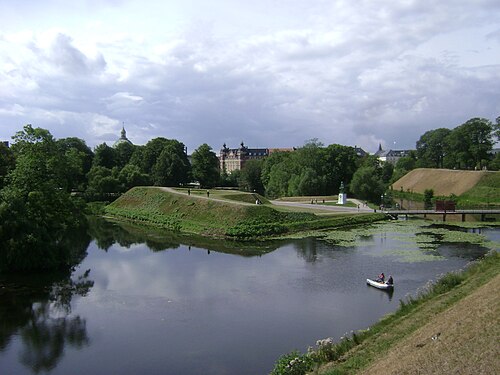
    Østre Anlæg

    Østre Anlæg is a public park in Copenhagen developed on part of the city’s former fortification ring.

    • Must see
    • Nature site
    • Copenhagen
  7. Utterslev Mose Utterslev Mose
    08 1 hour

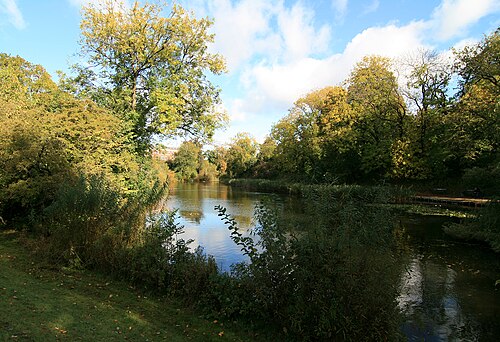
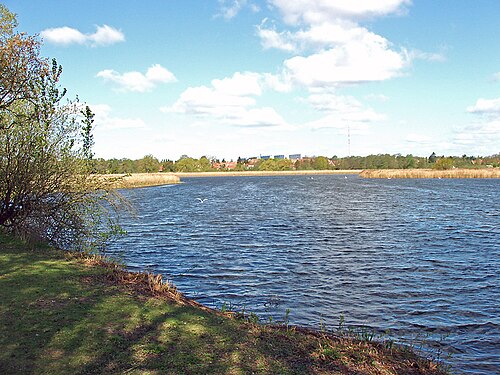
    Utterslev Mose

    Utterslev Mose is a large wetland and nature area located in the northern part of Copenhagen, Denmark. It represents one of the significant green spaces within the urban environment of the Danish capital.

    • High
    • Nature site
    • Copenhagen
  8. Churchillparken Churchillparken
    09 1 hour

    Churchillparken

    Churchillparken is a public park in Copenhagen, Denmark, situated in the Østerbro district near Kastellet and the Little Mermaid statue. The park is named after Sir Winston Churchill, the former British Prime Minister.

    • High
    • Nature site
    • Copenhagen
  9. Havneparken Havneparken
    10 1 hour

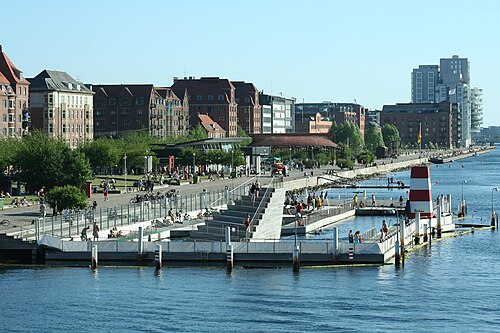
    Havneparken

    Havneparken is a public waterfront park in Copenhagen, set beside the city’s harbour. The park belongs to the everyday recreational landscape of the capital, offering open space and a place to pause beside the water.

    • High
    • Nature site
    • Copenhagen
  10. Amaliehaven Amaliehaven
    11 1 hour

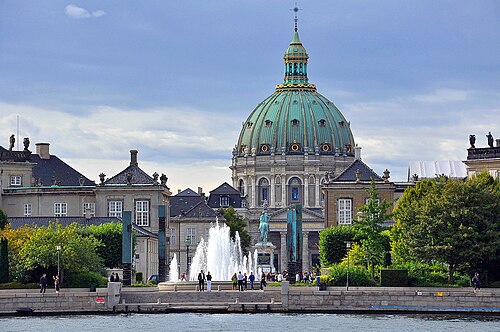
    Amaliehaven

    Amaliehaven is a formal public garden on Copenhagen’s waterfront beside the Amalienborg Palace complex.

    • Notable
    • Nature site
    • Copenhagen
  11. Superkilen Superkilen
    12 1 hour

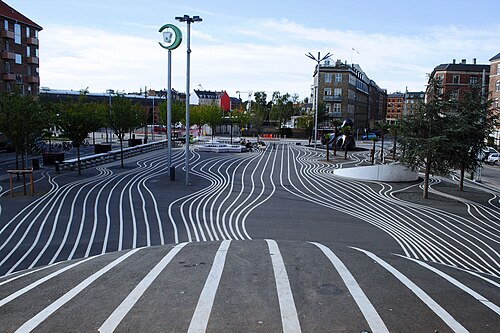
    Superkilen

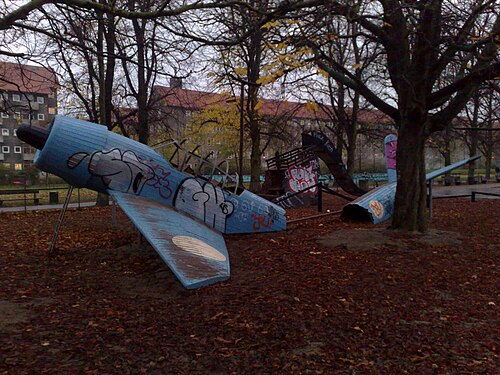
    Superkilen is a public urban park in Copenhagen's Nørrebro district, created by Superflex with Bjarke Ingels Group and Topotek1. Opened in 2012, the linear park extends for about one kilometre through a neighbourhood known for its ethnic diversity.

    • Notable
    • Nature site
    • Copenhagen
  12. Svanemølle Beach Svanemølle Beach
    13 1 hour

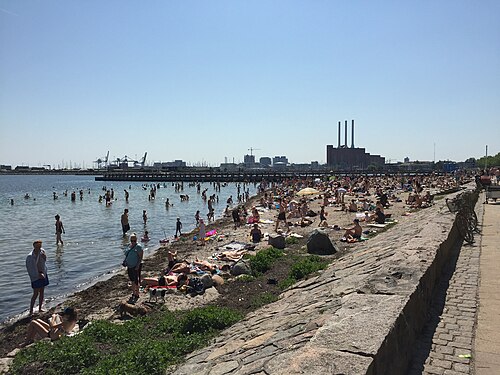
    Svanemølle Beach

    Svanemølle Strand

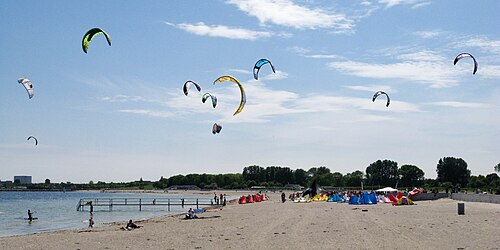
    Svanemølle Beach, locally known as Svanemølle Strand, is a coastal bathing area in Copenhagen. The beach gives visitors access to the Øresund for swimming and seaside leisure within the capital.

    • Notable
    • Nature site
    • Copenhagen
  13. Nørrebroparken Nørrebroparken
    14 1 hour

    Nørrebroparken

    Nørrebroparken is a public green space in Copenhagen’s Nørrebro district. The park brings open ground and everyday outdoor life into a densely built neighbourhood, making it useful for a relaxed break between cafés, shops, and city walks.

    • Notable
    • Nature site
    • Copenhagen

Source: OpenStreetMap contributors, Wikidata ·

Common questions

How long should a first trip to Denmark be?

Five to seven days allows three or four days in Copenhagen and time for one rail-linked extension such as Odense, Aarhus or North Zealand. Adding Jutland and several islands requires extra nights rather than longer day trips.

What entry documents are needed for Denmark?

Denmark’s New to Denmark portal is the official short-stay visa reference. Check the passport-specific rule and Schengen conditions there, including which country is responsible for an application on a multi-country trip.

What is the best way to travel around Denmark?

Copenhagen Airport has direct metro and rail connections. Intercity trains link Copenhagen, Odense, Aarhus and Aalborg, while Rejseplanen combines train, bus and ferry options even when fares remain operator-specific.

When is a practical time to visit Denmark?

May through August provides Denmark’s longest days and the broadest seasonal opening pattern. Coastal weather can still change quickly, and island ferry frequency should be checked outside the main summer period.

What money and payment basics apply in Denmark?

Denmark prices goods in Danish kroner (DKK), not euros. Payment conditions are not recorded here; keep an alternative available for any terminal or small operator that does not accept the preferred card.

What practical safety details should I save for Denmark?

Use 112 for emergencies in Denmark. The supply is 230 V across Type C, E, F and K sockets, and mains tap water is recorded as safe.