
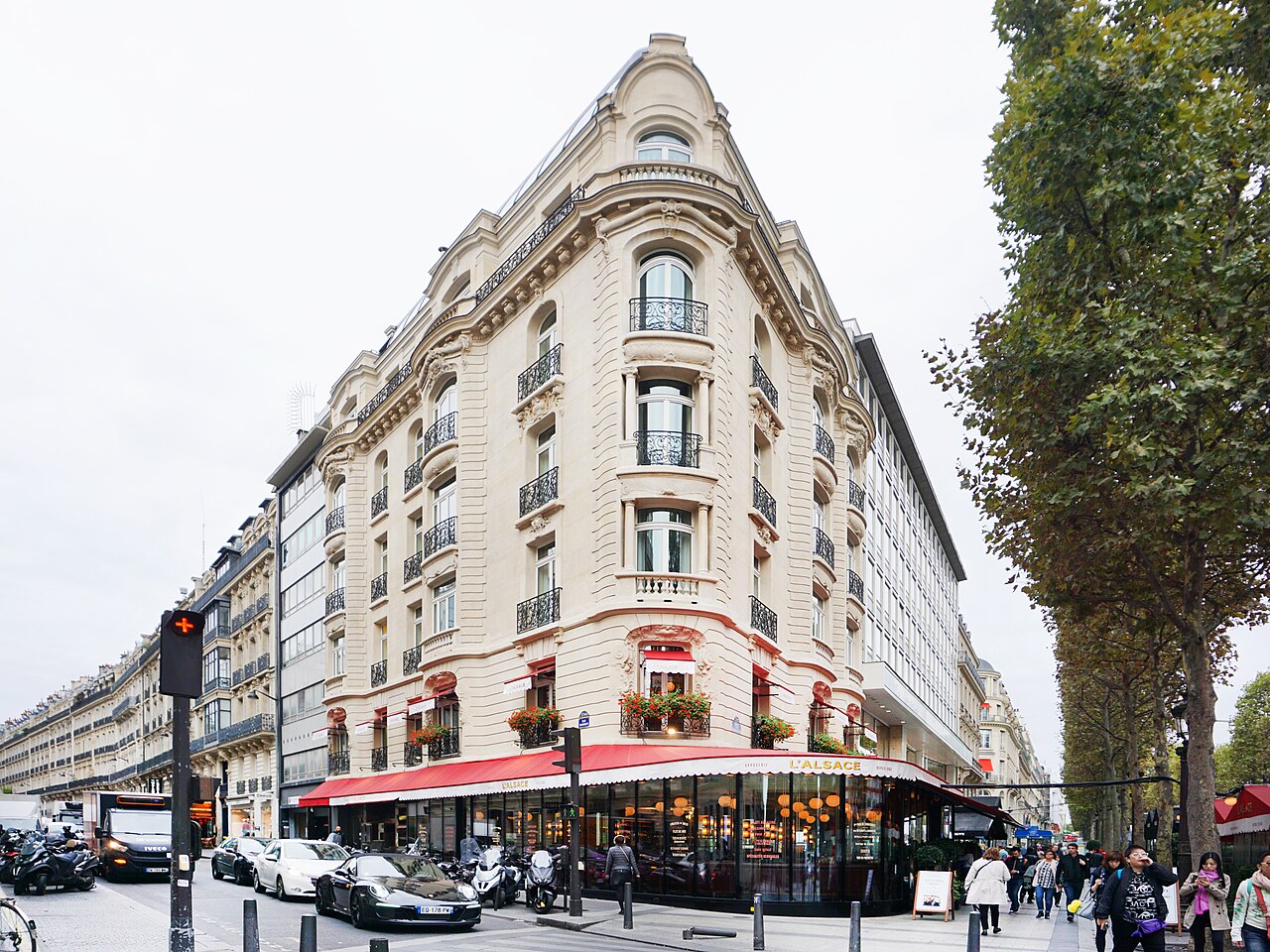
2 min walk · Paris 8e Arrondissement
Maison de l'Alsace
- High
- Restaurant or café
Language · 11 published
Historic monument · Paris 8e Arrondissement, Paris
Champs Élysées
Reviewed by Elena Voss · Roavina Travel Editor
| Monday | 00:00 – 23:59 |
|---|---|
| Tuesday | 00:00 – 23:59 |
| Wednesday | 00:00 – 23:59 |
| Thursday | 00:00 – 23:59 |
| Friday | 00:00 – 23:59 |
| Saturday | 00:00 – 23:59 |
| Sunday | 00:00 – 23:59 |
Checked 2026-08-31 · Source
Read from the OpenStreetMap access tags; anything not listed has no tag recorded.
Set the group type to family in the planner and the day window contracts to about three quarters of a solo day.
This place is a Attraction. It was established in 1670.
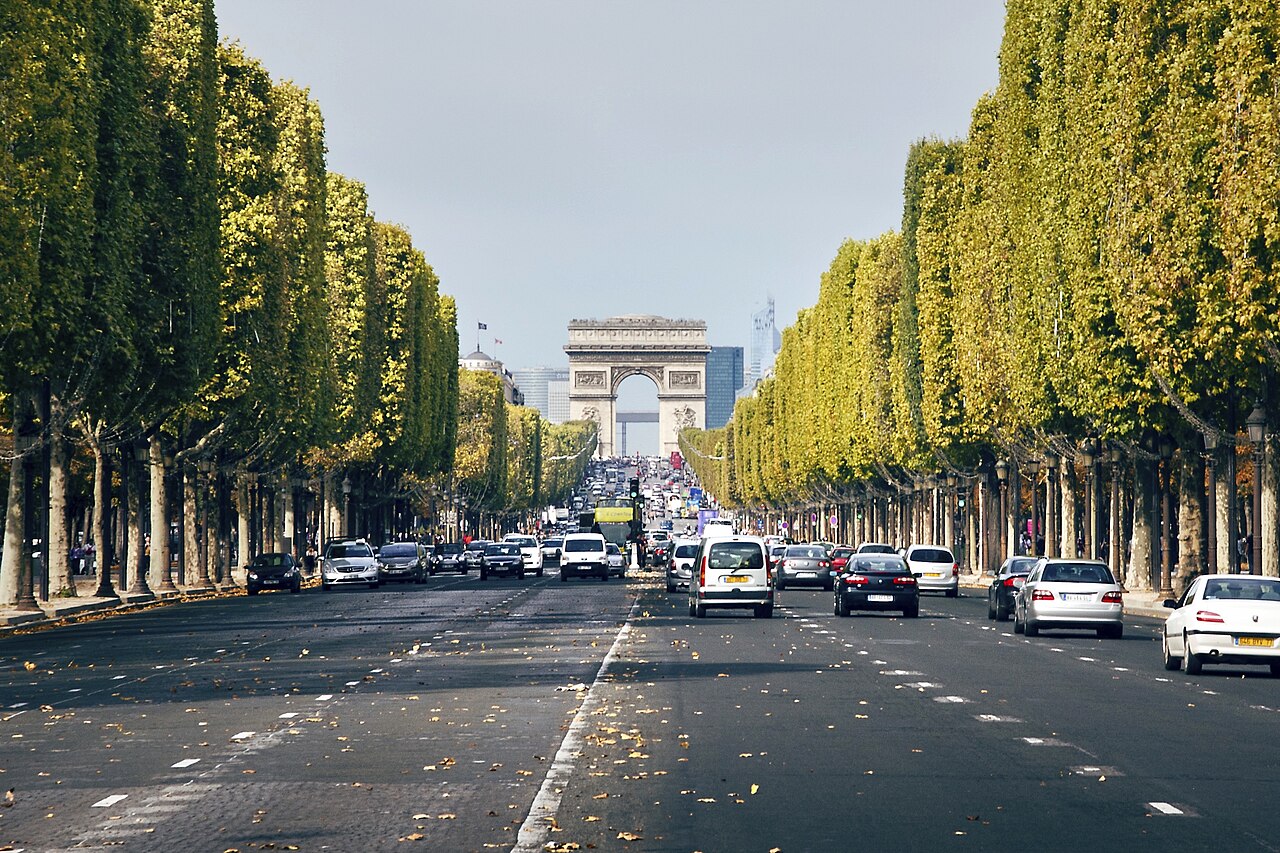
The Champs-Élysées is 1.91 km long, 70 m wide, and it is a garden path that became a shopping street. André Le Nôtre laid it out in 1667 as an extension of the Tuileries. It took its present name in 1709 and was carried up to what is now the Place Charles de Gaulle by 1710. It runs through the 8th arrondissement from the Place de la Concorde to the Arc de Triomphe, uphill the whole way, which is why the view from the bottom works and the view from the top works better. The public avenue and pavements are accessible 24 hours daily; shops, cinemas and attractions keep separate hours. Step-free entrances or public approaches, lifts where required, and accessible toilets serve principal visitor areas. The public avenue and pavements are accessible 24 hours daily; shops, cinemas and attractions keep separate hours. Walking the avenue is free; attractions, cinemas, shops and tours cost separately. Step-free entrances or public approaches, lifts where required, and accessible toilets serve principal visitor areas. Metro/RER Charles de Gaulle-Étoile at the west end and Franklin D. Roosevelt or Concorde eastward. Yes. Worship, events, maintenance, weather and security can change ordinary access. No. Special tours, exhibitions and upgrades use separate tickets. The public avenue and pavements are accessible 24 hours daily; shops, cinemas and attractions keep separate hours.
Checked 2026-08-31 · Source
Two different streets that happen to share a name. The lower half, from the Concorde to the Rond-Point, is gardens — chestnut trees, gravel walks, the Grand and Petit Palais on the south side, and almost no shops. This is the part Le Nôtre would recognise and the part visitors skip. The upper half, from the Rond-Point to the Étoile, is the retail avenue: flagship stores, cinemas, car showrooms and cafés, on some of the most expensive commercial frontage in Europe. Europe's largest military parade runs down it every 14 July. Walking the avenue is free; attractions, cinemas, shops and tours cost separately. Metro/RER Charles de Gaulle-Étoile at the west end and Franklin D. Roosevelt or Concorde eastward.
Checked 2026-08-31 · Source
Forty-five minutes to walk it end to end, and walk it downhill. From the Arc de Triomphe to the Concorde is 1.91 km with the slope in your favour and the obelisk in front of you the whole way. In the other direction it is a climb with the shops on both sides. The gardens in the lower half take twenty minutes if you leave the roadway and walk under the trees, which almost nobody does. Step-free entrances or public approaches, lifts where required, and accessible toilets serve principal visitor areas.
Checked 2026-08-31 · Source
The public avenue and pavements are accessible 24 hours daily; shops, cinemas and attractions keep separate hours. Worship, weather, restoration and events can replace ordinary access. Metro/RER Charles de Gaulle-Étoile at the west end and Franklin D. Roosevelt or Concorde eastward.
Checked 2026-08-31 · Source
Walking the avenue is free; attractions, cinemas, shops and tours cost separately. The base amount and currency follow the operator tariff; premium products and separate institutions remain excluded unless named. Yes. Worship, events, maintenance, weather and security can change ordinary access.
Checked 2026-08-31 · Source
Metro/RER Charles de Gaulle-Étoile at the west end and Franklin D. Roosevelt or Concorde eastward. Step-free entrances or public approaches, lifts where required, and accessible toilets serve principal visitor areas. The public avenue and pavements are accessible 24 hours daily; shops, cinemas and attractions keep separate hours.
Checked 2026-08-31 · Source
Step-free entrances or public approaches, lifts where required, and accessible toilets serve principal visitor areas. The public avenue and pavements are accessible 24 hours daily; shops, cinemas and attractions keep separate hours. Walking the avenue is free; attractions, cinemas, shops and tours cost separately. Step-free entrances or public approaches, lifts where required, and accessible toilets serve principal visitor areas. Historic surfaces, crowds and security remain relevant.
Checked 2026-08-31 · Source
The avenue photographs as a line, and the line only reads with the Arc at the end of it. From the Rond-Point pavement looking up, at sunset, is the shot — the sun sets along the axis behind the Arc twice a year. Standing in the central reservation for the axial view means standing in eight lanes of traffic. The pavement gives nearly the same line and all of the survival. The lower gardens, under the chestnuts with the Grand Palais through the trees, are the pictures nobody takes here. Walking the avenue is free; attractions, cinemas, shops and tours cost separately.
Checked 2026-08-31 · Source
The public avenue and pavements are accessible 24 hours daily; shops, cinemas and attractions keep separate hours.
Walking the avenue is free; attractions, cinemas, shops and tours cost separately.
Step-free entrances or public approaches, lifts where required, and accessible toilets serve principal visitor areas.
Metro/RER Charles de Gaulle-Étoile at the west end and Franklin D. Roosevelt or Concorde eastward.
Yes. Worship, events, maintenance, weather and security can change ordinary access.
No. Special tours, exhibitions and upgrades use separate tickets.
Loading the interactive map…
The interactive map could not be loaded.
Last updated:
Source: OpenStreetMap contributors, Wikidata ·