
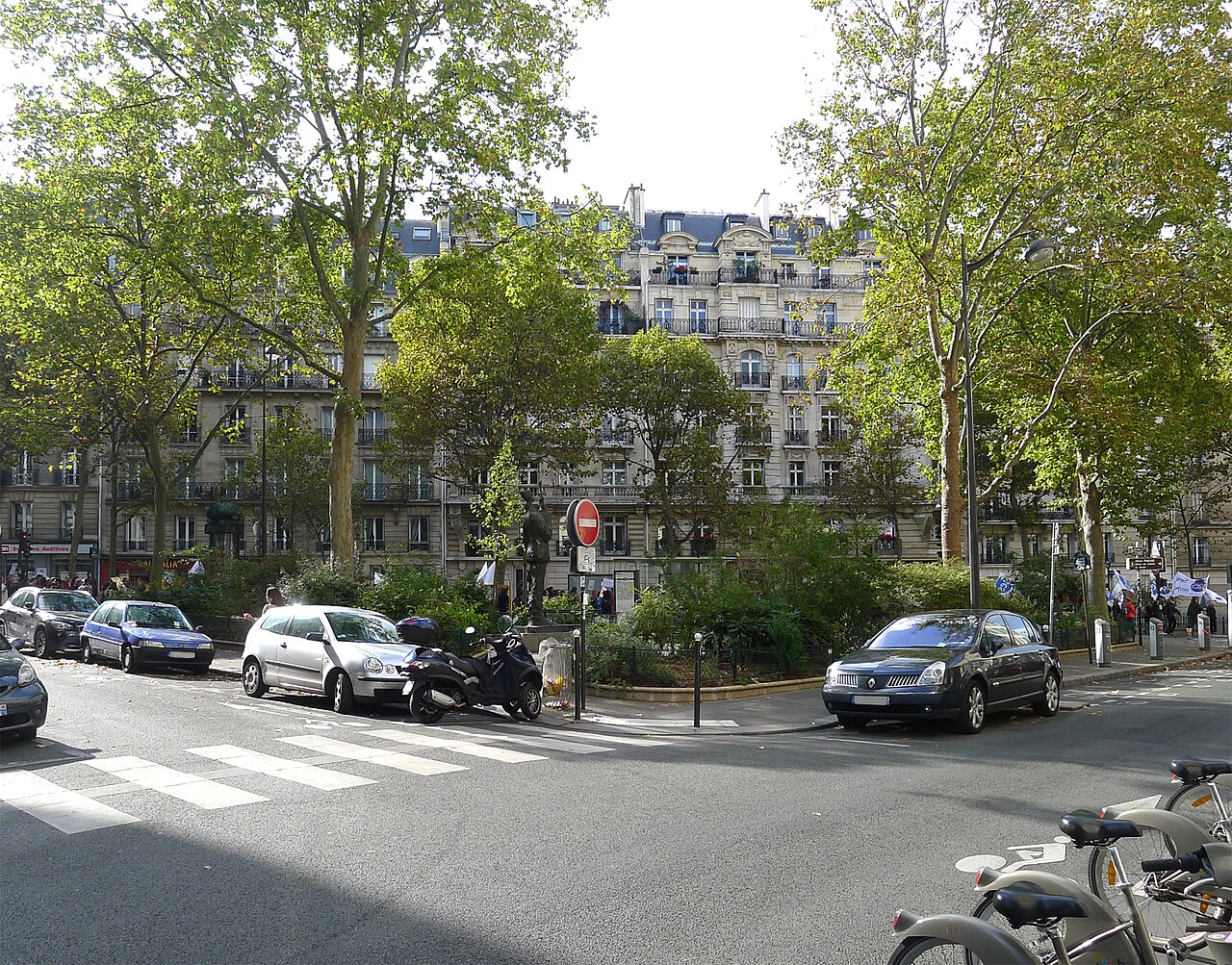
1 min walk · Paris 1er Arrondissement
Hommage au capitaine Dreyfus
- High
- Art and culture venue
Language · 11 published
Nature site · Paris 1er Arrondissement, Paris
Place Dauphine
Reviewed by Elena Voss · Roavina Travel Editor

This place is a Park. It was established in 1607. It carries the monument historique inscrit heritage designation.
Place Dauphine is a triangular square at the western tip of the Ile de la Cite, laid out from 1607 on the orders of Henri IV as the second of his two Paris square projects, after the Place Royale — now Place des Vosges.
Henri IV granted roughly three acres of land to Achille de Harlay on 10 March 1607 with instructions to build houses to a single repeating facade around a triangular plan, and he named the square for his son, the Dauphin and future Louis XIII, born in 1601. The last house was finished in 1616. From its eastern point the square opens onto the middle of the Pont Neuf, completed the year before construction began.
It was renamed Place Thionville during the Revolution, from 1792 to 1814, and the eastern range of houses was badly damaged by fire during the fighting of the Paris Commune in 1871 and cleared away, opening the view toward the Palais de Justice that the square has today.
Before the square existed, the site was a trapezoidal plot called the King's Orchard, part of the walled royal enclave of the Palais de la Cite; the land the square now covers was reclaimed from two riverine islets that the construction of the Pont Neuf, finished in 1606, had filled and extended.
Checked 2026-08-24 · Source
Only two houses still carry their original 1607-1616 facade, the pair flanking the western entrance that faces the Pont Neuf; the rest of the square has been rebuilt, raised or refaced over four centuries, though the triangular plan and the arcaded ground-floor shopfronts survive on most of them.
A fountain and a statue of General Desaix, commissioned by Napoleon Bonaparte after the Battle of Marengo, stood in the square from 1802 to 1874 — the first Paris statue honouring a man who was never a monarch — before being removed.
Chestnut trees and gravel now fill the centre of the triangle, and the square functions today as a quiet residential and legal-district space, since several ground-floor units house lawyers' offices serving the nearby Palais de Justice.
Each repeating house unit was built with two arcaded ground-floor shopfronts dressed in stone, a narrow passage to an interior courtyard, and two residential floors above faced in brick with limestone quoins, finished under a single continuous slate roof with dormers rather than separate rooflines per house — a detail that reads, from the square, as one long facade rather than a row of individual buildings.
Checked 2026-08-24 · Source
Fifteen to twenty minutes to walk the triangle and read the facades; longer with a coffee at one of the square's small cafes, a common way to rest partway through a walk across the Ile de la Cite.
Most visitors pass through on the way between the Pont Neuf and Sainte-Chapelle or the Conciergerie, so it rarely stands alone as the destination for a whole trip across the island.
Checked 2026-08-24 · Source
Early morning or evening, when the square is at its quietest and the gravel and benches under the chestnut trees are free; daytime brings a steady flow of visitors crossing between the Pont Neuf and Sainte-Chapelle or the Conciergerie nearby.
Checked 2026-08-24 · Source
Free. Place Dauphine is a public square with houses in private and commercial use; there is no admission charge and no gate.
The two street entrances, one facing the Pont Neuf and one on rue Henri-Robert toward the Palais de Justice, stay open at all hours, since the square is a public right of way rather than a gated park.
Checked 2026-08-24 · Source
Western tip of the Ile de la Cite, 1st arrondissement, opening onto the middle of the Pont Neuf.
Pont Neuf station, line 7, sits just across the bridge on the Right Bank; Cite station, line 4, is a five-minute walk across the island.
Checked 2026-08-24 · Source
Only two houses keep their original facade; a visitor expecting a uniformly seventeenth-century square, the way Place des Vosges reads, will find most of the surrounding buildings rebuilt or refaced.
Traffic and tour groups moving between the Pont Neuf and the Palais de Justice pass through constantly; it is not a sealed-off pedestrian space.
Checked 2026-08-24 · Source
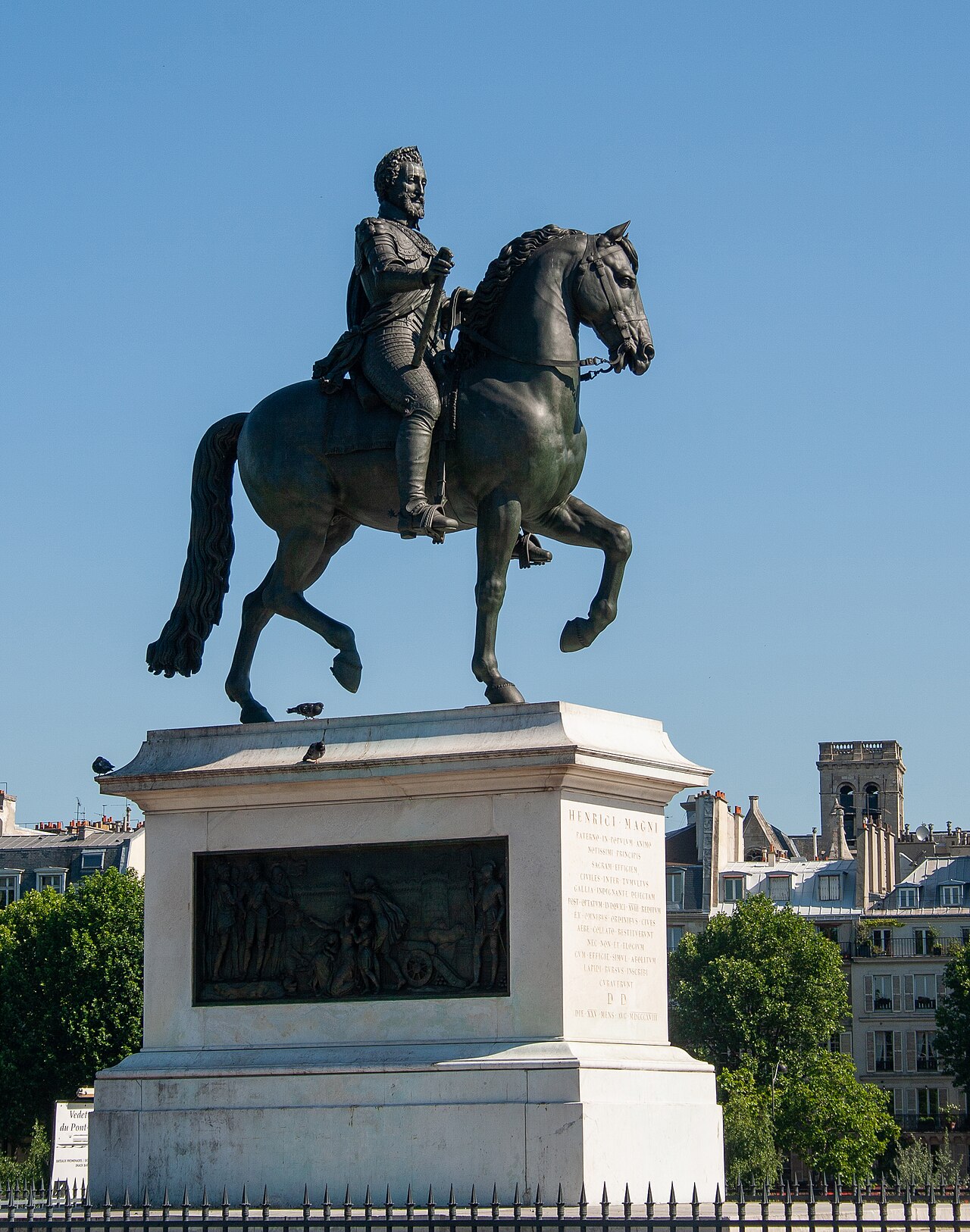
The western gateway framing the Pont Neuf and the statue of Henri IV beyond it, shot from just inside the square looking out, is the classic composition and works in any light.
The two surviving original facades either side of that same gateway are the clearest subject for anyone specifically after the 1607 architecture.
Checked 2026-08-24 · Source
No. Place des Vosges is a different square in the Marais district, also initiated under Henri IV. Place Dauphine is on Île de la Cité and has a triangular form rather than the square plan of Place des Vosges.
Henri IV ordered it in 1607, granting the land to Achille de Harlay; the last house was finished in 1616.
Henri IV's son, the Dauphin and future Louis XIII, born in 1601.
Only two, flanking the western entrance facing the Pont Neuf; the rest have been rebuilt or refaced over four centuries.
Yes, it is a public square with no admission charge.
Pont Neuf, on line 7, just across the bridge.
Loading the interactive map…
The interactive map could not be loaded.

Last updated:
Source: OpenStreetMap contributors, Wikidata ·