
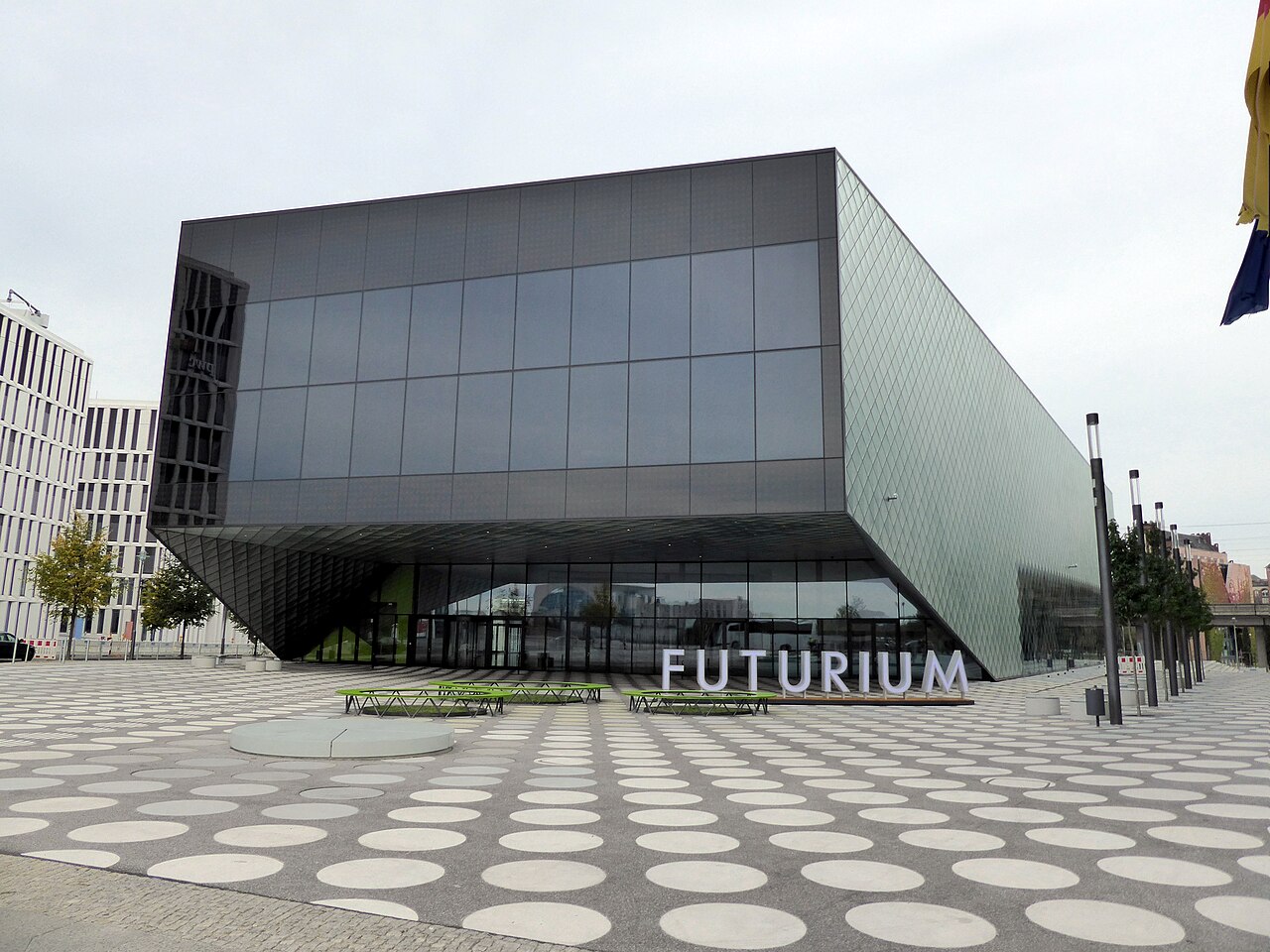
5 min walk
Futurium
- Must see
- Museum
Language · 11 published
Historic monument · Berlin
Berlin Hauptbahnhof
Reviewed by Elena Voss · Roavina Travel Editor

This place is a Attraction. It opened in 2006. It was designed by Gerkan, Marg and Partners. It is run by DB InfraGO.
Berlin Central Station, known locally as Berlin Hauptbahnhof, is the city’s principal railway hub and one of Berlin’s most striking modern buildings. Opened in 2006, the station brings regional, national and international rail services together in a large glass-and-steel complex near the Spree. Tracks occupy different levels, giving the station a dramatic vertical arrangement. Berlin Central Station is both a practical arrival point and an architectural landmark. Its position places visitors close to the Reichstag, government quarter, Spree river paths and the route toward Brandenburg Gate.
Checked 2026-08-26 · Source
The station contains platforms, ticketing points, passenger information, waiting areas, shops, food outlets and service businesses spread across several levels. Escalators, lifts and stairs connect the concourses with the rail platforms, while large digital boards show departures and arrivals. The building’s transparent façades bring daylight deep into the complex and make the vertical scale easy to appreciate from the central spaces. Travellers can use the station as a place to change trains, orient themselves after arrival or take a short architectural detour. Underground connections link the rail complex with Berlin’s urban transport network.
Checked 2026-08-26 · Source
Allow thirty minutes to orient yourself between the entrance, departure board and platform when changing trains. A visitor exploring the main concourse and its stacked rail levels can spend about forty-five minutes there, while a long connection may extend the stay to two hours. The station’s size rewards a little extra time on a first visit because platforms and exits are distributed vertically. Add more time during commuter peaks, holidays or busy travel periods, when escalators and concourses carry heavier pedestrian flows. The visit is flexible and can be fitted around the train journey.
Checked 2026-08-26 · Source
Berlin Central Station is most useful when it matches your route into or across Berlin, but the building can also be visited for its architecture during a quieter part of the day. Weekday mornings and late afternoons are often the busiest periods because commuters share the station with travellers. The complex remains active from early morning into the evening, while individual shops and food outlets follow their own schedules. A connection outside peak periods gives more room to look up at the glass structure and move between levels without slowing other passengers.
Checked 2026-08-26 · Source
A valid ticket is required for the train or local transport service you use through Berlin Central Station. Regional and long-distance rail tickets follow the conditions of the selected operator and route, while S-Bahn and other city services use Berlin’s public transport tariff. Buy or validate the correct ticket before boarding where the service requires it. Departure boards and station information help you identify the right platform, but the ticket remains tied to the journey rather than to the building itself. The station does not require a general sightseeing admission ticket.
Checked 2026-08-26 · Source
Berlin Central Station sits north of the Spree and is connected directly to the U-Bahn by U5. S-Bahn lines S3, S5, S7 and S9 also serve the station, with buses and nearby tram services extending the connections. The Reichstag and government quarter are within walking distance, and Brandenburg Gate can be reached on foot for a longer central-city walk. Taxis use designated areas outside the building. Follow the signs for the correct entrance and platform, especially when changing between the upper and lower rail levels.
Checked 2026-08-26 · Source
Read the departure board carefully: Berlin Central Station’s stacked layout means that the correct platform may be several levels away from the entrance. Allow time for lifts, escalators and crowded passages when carrying luggage. Keep bags closed and close to you in busy concourses, especially during commuter peaks. Stay behind platform safety lines and keep clear of doors while trains arrive or depart. If you are meeting someone, choose a precise level and entrance because the building has several natural meeting points. The station is navigable, but rushing through it can turn a comfortable connection into a stressful one.
Checked 2026-08-26 · Source
The station’s glass façades, steel framework and multiple rail levels create strong subjects for architectural photography. The central concourse offers views upward through the structure, while the platforms show the depth and vertical layering of the building. Keep cameras and phones out of the way of passengers, and avoid standing in a narrow passage while composing an image. Personal photography in public areas fits naturally into a connection, but operational areas and other travellers’ privacy deserve care. A short stop on an upper level can reveal the station’s geometry without requiring a separate excursion.
Checked 2026-08-26 · Source
It is Berlin’s main railway hub for regional, national and international trains, with direct connections to city transport.
U5 serves Berlin Central Station directly, alongside S-Bahn lines S3, S5, S7 and S9.
Yes. Brandenburg Gate is within walking distance through Berlin’s central government quarter, although the walk takes longer than a brief station transfer.
Yes. Berlin Central Station contains shops and food outlets distributed through its multi-level complex.
Allow at least thirty minutes for orientation, with extra time when carrying luggage or travelling during a busy period.
Its glass-and-steel structure stacks rail platforms at different levels and fills the central concourse with natural light.
Loading the interactive map…
The interactive map could not be loaded.
Last updated:
Source: OpenStreetMap contributors, Wikidata ·