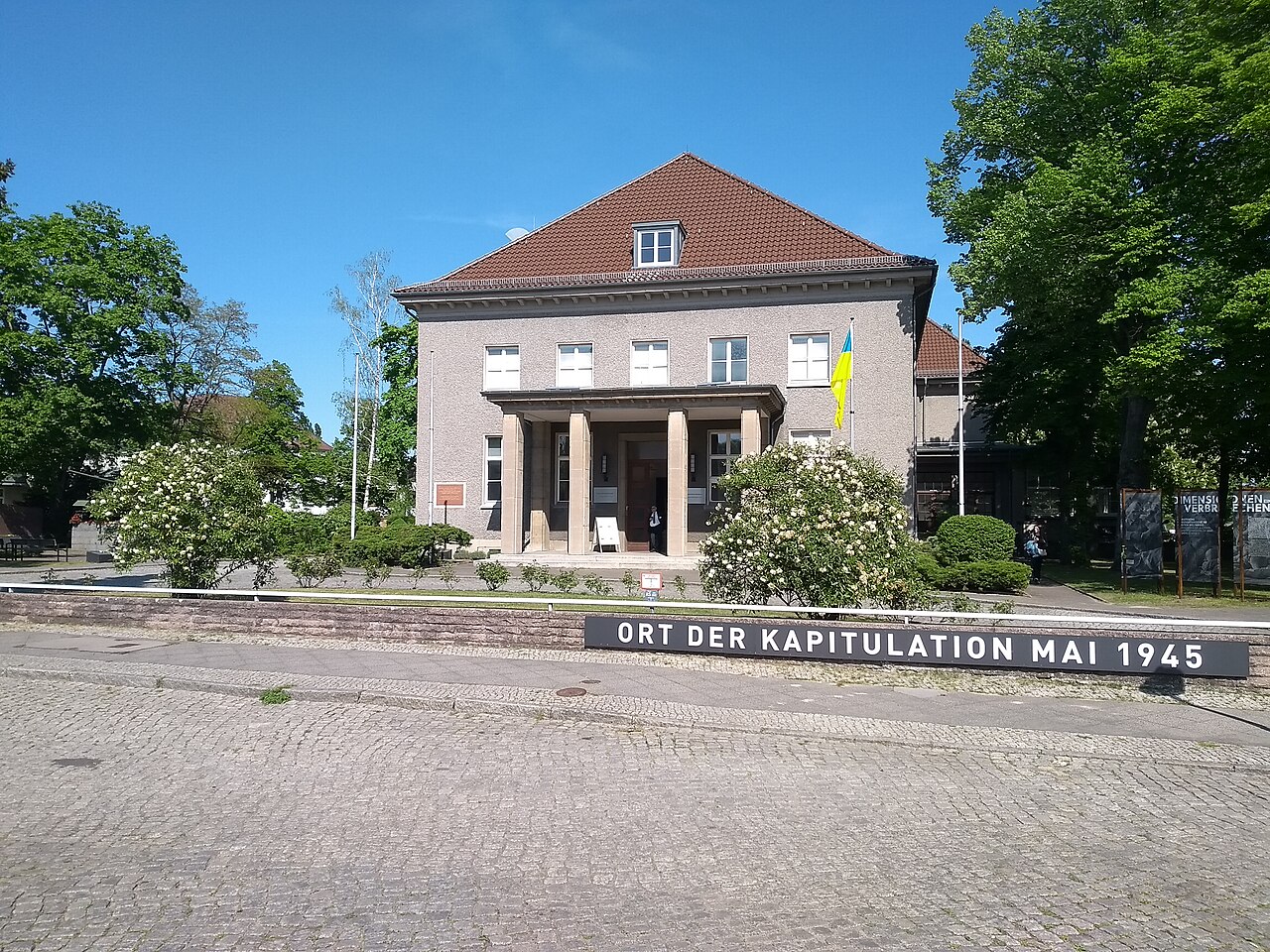
Museum Berlin-Karlshorst is a memorial and historical museum in Berlin’s eastern Karlshorst district. It occupies the building where German armed forces signed the unconditional surrender on 8 May 1945, bringing the Second World War in Europe to its end. The place is valuable because the building is part of the story, not merely a container for displays. The museum explores the final phase of the war, the surrender ceremony, the Soviet military presence in Germany, and the difficult historical relationship between Germany and the Soviet Union. The atmosphere is solemn and documentary rather than entertainment-oriented, making this a meaningful stop for travelers interested in twentieth-century history, military history, memory culture, and Berlin’s divided past.
The permanent exhibition combines documents, photographs, military objects, personal belongings, and multimedia material about the war’s final period and its aftermath. The surrender hall is the central room and gives the visit its strongest sense of place: the ceremony happened in this building, and the room remains the key point for understanding the museum. Other displays address the Soviet occupation, everyday life under military administration, and the ways German and Russian memories of the war have developed. Read the captions carefully, since the museum’s strength lies in primary evidence and context. The visit works best when you move slowly through the material and connect the objects with the events described around them.
Allow around ninety minutes to two hours for a substantial visit. The building is manageable in size, but the written material and documentary photographs reward an unhurried pace. Spend time in the surrender hall first, then return to the exhibition rooms with the ceremony’s setting in mind. Travelers with a strong interest in military history, the Soviet occupation, or German-Soviet relations may want longer for close reading. A quick visit can establish the site’s significance in less time, but rushing through the galleries weakens the connection between the preserved room, the objects, and the wider historical narrative.
This is an indoor museum, so it remains a useful Berlin stop in every season. Weekday mornings generally suit visitors who prefer a quieter atmosphere for reading and reflection. Karlshorst is outside the city’s most concentrated sightseeing area, which makes the museum easier to pair with a neighborhood-focused day than with a rapid circuit of central landmarks. Leave enough time for the journey from central Berlin and avoid placing it between appointments with tight timing. The memorial character is especially apparent when the galleries are calm, while busy periods can make the surrender hall feel less contemplative.
Treat Museum Berlin-Karlshorst as a focused memorial visit rather than a ticketed entertainment attraction. The museum’s importance comes from the historic building and its evidence-rich exhibitions, not from a large complex of paid attractions. Set aside time for the displays themselves and for the emotional weight of the surrender hall. If you are planning a group or educational visit, the museum’s institutional setting makes advance coordination sensible, especially around commemorative events.
The museum is in Karlshorst, in Berlin’s Lichtenberg district. S-Bahn line S3 serves Karlshorst station, after which the museum requires a walk through the surrounding urban area. Tram and regional connections can also form part of a route depending on where you begin. From central Berlin, plan a dedicated public-transport journey rather than expecting the museum to sit within a short walk of Museum Island or the Brandenburg Gate. The outlying location is part of the visit’s character: you leave the central tourist core and reach a residential district containing one of Berlin’s most important sites connected with the war’s end.
The museum presents defeat, occupation, destruction, and wartime suffering through direct documentary material. Some photographs and personal accounts may be difficult to view, particularly for visitors sensitive to violence or military history. Give yourself space to pause in the surrender hall and keep the room’s memorial importance in mind. The museum sits in a residential district, so the surroundings feel quieter and less visitor-oriented than central Berlin. The exhibition contains dense historical information, and visitors who do not read German may find the experience more demanding if translations are limited. Behave with the restraint appropriate to a memorial site.
The surrender hall and exhibition rooms deserve attention before photography. Use the museum’s posted instructions and staff guidance inside the building, particularly around historic documents, personal objects, and commemorative spaces. Avoid photographing other visitors or treating the ceremony room as a casual backdrop. If photography is permitted in a particular gallery, quiet and non-disruptive use is the respectful approach. The museum’s value lies in understanding what happened there, so a short pause without a camera can be as important as any image. Exterior photographs can place the memorial building within the Karlshorst neighborhood and help preserve the sense of arrival.
Nothing non-essential is set before you choose, in regions where consent is required. If you decline, ads still appear and analytics is switched off entirely.