
4 min walk
Fernsehturm Berlin
- Must see · Heritage site
- Historic monument
Language · 11 published
Historic monument · Berlin
Urania-Weltzeituhr
Reviewed by Elena Voss · Roavina Travel Editor
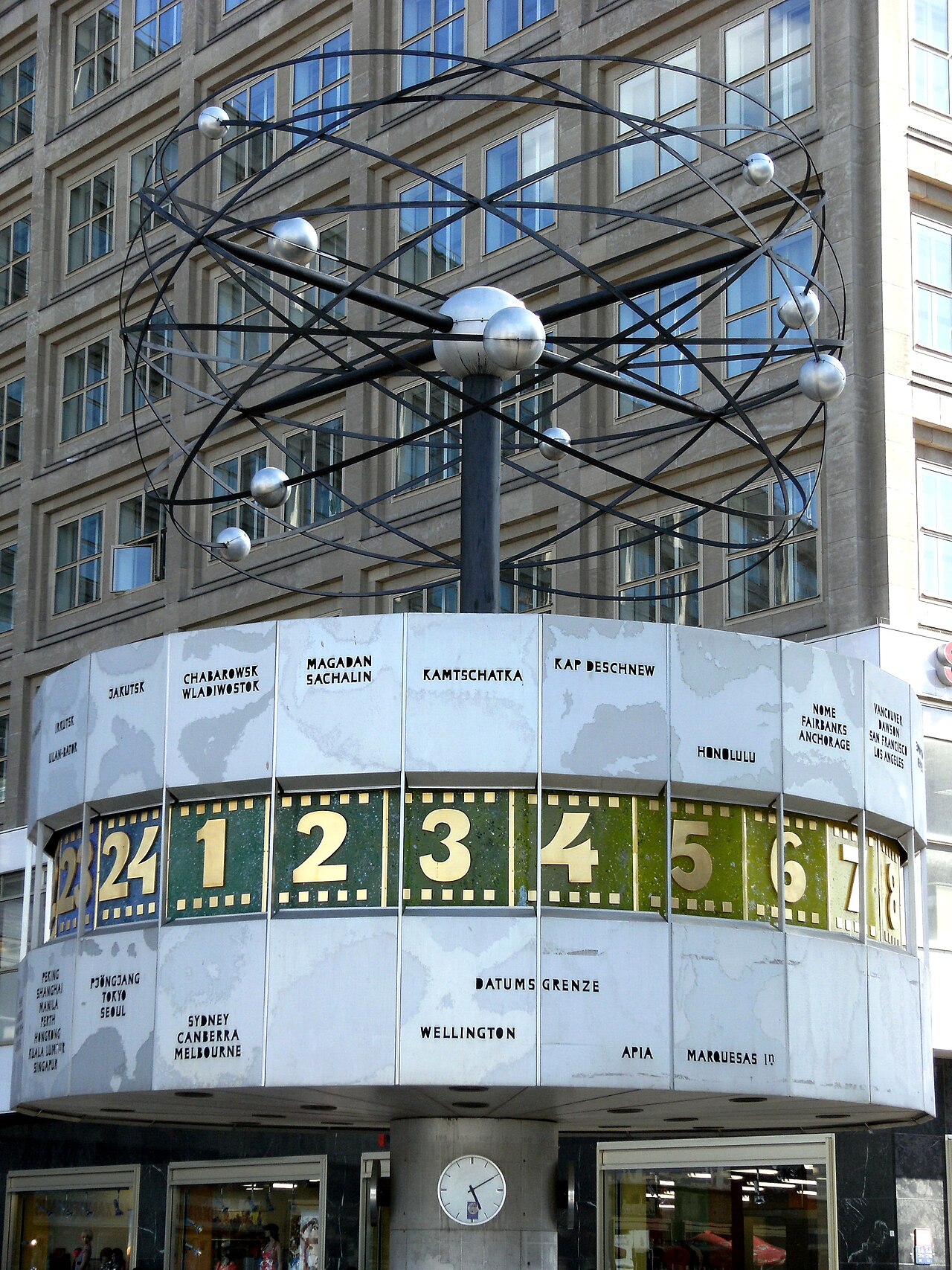
This place is a Attraction. It was established in 1969. It is built of aluminium. It carries the cultural heritage monument in Berlin heritage designation.
The World Clock, or Urania-Weltzeituhr, is a public landmark on Alexanderplatz in Berlin’s Mitte district. Its rotating display presents the time for twenty-four world cities and international time zones. The structure dates from the German Democratic Republic period and remains one of the square’s most recognisable meeting points. It is a compact urban monument rather than an indoor attraction, rewarding travellers who enjoy design, public history and the visual energy of a major Berlin plaza. The Urania-Weltzeituhr, or World Clock, is a prominent public clock installation in Berlin. Located at Alexanderplatz in the Mitte district, this landmark serves as a meeting point and timekeeping monument. The structure displays times across multiple global time zones simultaneously, reflecting Berlin's historical position during the Cold War era when the city was a focal point of international attention. The clock was erected in the former German Democratic Republic period and remains a recognizable feature of the square's urban landscape, contributing to the area's distinctive socialist-era architectural character. No. These are separate landmarks both located at Alexanderplatz. The television tower is a tall observation structure with entry fees, while the World Clock is a ground-level time monument without admission.
Checked 2026-08-26 · Source
There is no interior visitor space inside the World Clock. The attraction is the external mechanism: a cylindrical structure marked with world cities, time zones, a simplified map and solar indicators. Visitors read and photograph it from the surrounding Alexanderplatz plaza. Its meaning comes from the combination of practical time display, public meeting place and East German urban design. Walk around it to see the different faces of the cylinder and how the information changes with the rotating mechanism. The World Clock is an external public monument without interior spaces accessible to visitors.
Checked 2026-08-26 · Source
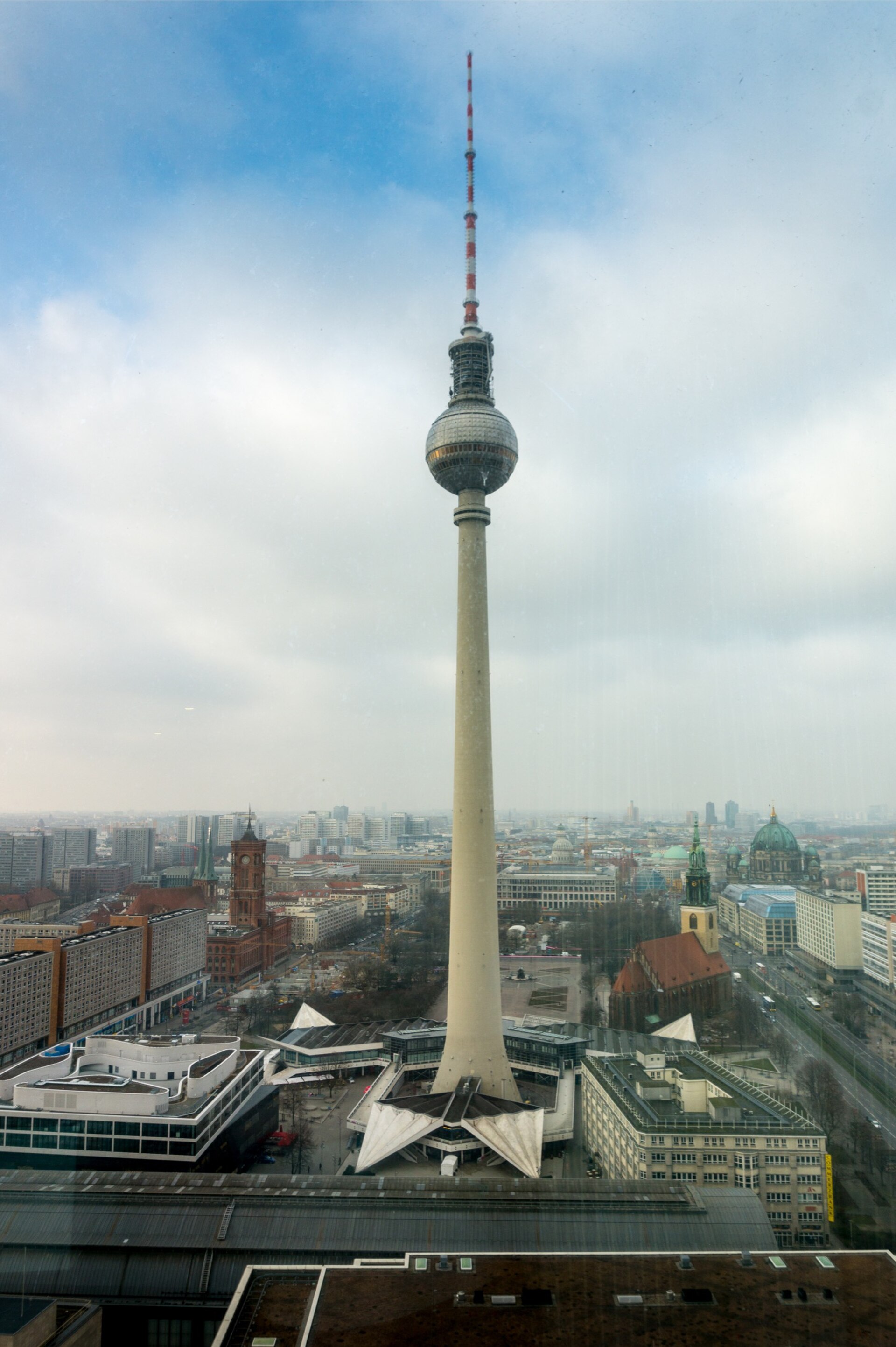
Allow five to fifteen minutes for the World Clock itself. That is enough time to inspect the cities and time zones, walk around the structure and take photographs. Most travellers combine it with a wider Alexanderplatz visit, including the nearby television tower and central Mitte streets. As a meeting point, the clock can also be useful before a longer day of sightseeing. Its compact scale makes it easy to add without disrupting a detailed itinerary.
Checked 2026-08-26 · Source
The World Clock stands in an open public plaza and can be viewed at any hour. Daylight makes the city names and time markings easiest to read, while evening illumination changes the atmosphere and places the monument within Alexanderplatz’s night scene. Crowd levels vary, and the square can be busy around transport, shopping and entertainment activity. Choose a quieter moment if you want an unobstructed photograph, or visit at a busy time to experience its role as a meeting point.
Checked 2026-08-26 · Source
Viewing the World Clock is free because it is a public monument in Alexanderplatz rather than a controlled-entry attraction. You do not need a ticket to stand around it, read the time zones or photograph the structure. Transport to Alexanderplatz requires the normal Berlin transit fare, and nearby attractions such as the television tower have their own admission arrangements. Keep those experiences separate when planning costs: the clock itself has no entry charge.
Checked 2026-08-26 · Source
Alexanderplatz is one of Berlin’s principal transport hubs. U-Bahn lines U2, U5 and U8, S-Bahn services including S3, S5, S7 and S9, and numerous tram and bus routes serve the station and square. From the station complex, follow signs towards the open plaza and continue on foot to the clock. The central location also makes it easy to arrive by bicycle or walk from other Mitte landmarks during a city-centre route.
Checked 2026-08-26 · Source
Alexanderplatz is busy, open and exposed to Berlin weather. Watch the flow of pedestrians, trams and cyclists when approaching the monument, and keep personal belongings secure in dense crowds. Construction or temporary street arrangements can change the easiest walking line across the square. At night, the clock is part of a lively urban setting rather than a quiet garden monument. Give other people room when meeting friends or composing a photograph around the base.
Checked 2026-08-26 · Source
The World Clock can be photographed freely from the surrounding public plaza. Daylight gives the clearest record of the city names and time zones, while evening illumination creates a stronger urban mood. Walk around the cylinder for different angles, and include Alexanderplatz or the television tower when you want a sense of place. The square is busy, so wait for a gap in pedestrian traffic and avoid placing a tripod where it obstructs people moving through the plaza.
Checked 2026-08-26 · Source
No. They are separate Alexanderplatz landmarks: the World Clock is a ground-level public monument, while the television tower is an observation attraction.
Yes. Its rotating cylinder displays time for twenty-four world cities and international time zones.
No. It has no interior visitor space and is viewed from the surrounding Alexanderplatz plaza.
Five to fifteen minutes is enough for reading the display, walking around the structure and taking photographs.
Urania refers to the classical muse associated with astronomy, while Weltzeituhr means world time clock in German.
It stands on Alexanderplatz in Berlin’s Mitte district, close to U-Bahn, S-Bahn, tram and bus connections.
Loading the interactive map…
The interactive map could not be loaded.
Last updated:
Source: OpenStreetMap contributors, Wikidata ·