
2 min walk
Haus der Kunst
- Must see · Heritage site
- Museum
Language · 11 published
Historic monument · Munich
Reviewed by Elena Voss · Roavina Travel Editor
Read from the OpenStreetMap access tags; anything not listed has no tag recorded.
Set the group type to family in the planner and the day window contracts to about three quarters of a solo day.
This place is a Attraction.
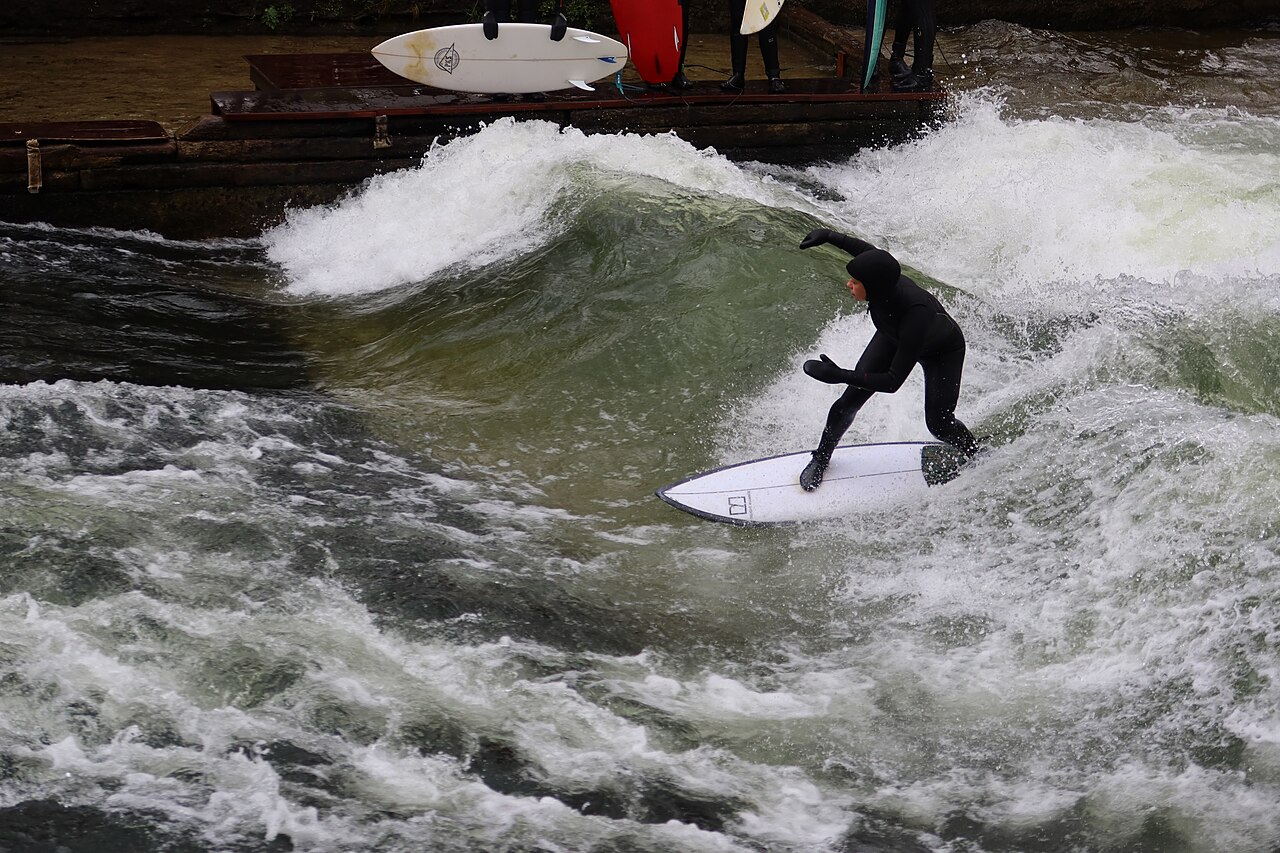
Eisbachwelle is a standing river wave on the Eisbach, a small man-made stream flowing through Munich’s Englischer Garten. Water surges over a submerged concrete shelf and forms a continuous break where river surfers ride the current. The wave is unusually accessible as an urban spectacle: visitors can watch from the nearby bridge and park paths while Munich’s cityscape remains close at hand. It is neither a conventional swimming site nor a museum attraction. Its appeal lies in the striking meeting of fast-moving water, expert surfing and one of Munich’s best-known public parks.
Checked 2026-08-26 · Source
The attraction is the wave itself and the immediate river environment. Surfers enter from the bank, attempt to hold the standing wave and are carried downstream by the current. Spectators gather on the adjacent bridge and paths to watch the short rides, the water movement and the unusual engineered shape of the channel. There is no interior exhibition or dedicated visitor building at the wave. Englischer Garten supplies the wider park setting, so this stop works well alongside a walk through the gardens. The experience changes constantly with the surfers present, the light and the flow of the Eisbach.
Checked 2026-08-26 · Source
Most visitors can understand the Eisbachwelle in fifteen to forty minutes, watching repeated rides and photographing the water from the bridge. Stay longer if river surfing interests you or if several skilled surfers are taking turns. The wave also makes a natural pause during a longer walk through Englischer Garten, rather than demanding a separate half-day visit. Surfers need additional time for preparation, attempts and recovery, while spectators can leave as soon as they have enjoyed the action. Keep your schedule flexible because the viewing experience depends on what is happening when you arrive.
Checked 2026-08-26 · Source
The wave is a water feature rather than a venue with scheduled opening times. Surfing activity can be seen across seasons, while water levels influenced by rainfall and snowmelt affect the character of the wave. Winter surfers face very cold water, and summer evenings often bring larger groups of spectators. Early morning can provide a calmer viewing experience. There is no guarantee that a surfer will be riding at the precise moment you arrive, so treat the wave as an ongoing public spectacle and allow time to watch the changing flow and wait for activity.
Checked 2026-08-26 · Source
Viewing the Eisbachwelle from the bridge or nearby park paths does not require an admission ticket. The wave is part of the public Englischer Garten setting, and no payment is described for watching or photographing it. Surfing itself is an advanced activity on the river rather than a visitor service with a ticket counter at the site. Budget for your journey through Munich and for any personal equipment you bring, but treat the wave as a free public viewing stop within the park.
Checked 2026-08-26 · Source
Eisbachwelle is inside Englischer Garten near the bridge on Prinzregentenstraße at the park’s southeastern edge. Lehel and Universität are nearby U-Bahn options on lines U3 and U6, followed by a walk through park paths. Bus routes serve the surrounding streets, and cycling is a practical approach in Munich. Parking close to the park core is limited, so public transport, walking or a bicycle keeps the final approach simple. Look for the bridge and gathered spectators; when surfers are active, the location is easy to recognise from the movement around the riverbank.
Checked 2026-08-26 · Source
The Eisbachwelle is hazardous water, not a place for casual swimming or wading. The current is strong, the riverbed is shallow and concrete-lined, and the banks can be slippery. Only experienced river surfers should enter the wave; cold water creates a serious risk of hypothermia in every season. Stay clear of entry and exit paths, keep children close to you and remain behind the edge of the riverbank. There are no lifeguards or safety barriers at the wave. Respect the surfers’ space and never step into the channel to get closer.
Checked 2026-08-26 · Source
The bridge offers strong views of surfers riding the standing wave, water texture and the contrast between an urban stream and the greenery of Englischer Garten. Use a fast shutter speed to freeze the short rides and watch the edges of the frame for spectators and passing pedestrians. Keep tripods and bags from narrowing the bridge or blocking the paths. Photograph from a stable viewing position and give surfers space during entry and exit. Morning and evening light can change the look of the water, while overcast conditions often reveal its texture without harsh reflections.
Checked 2026-08-26 · Source
No. The strong current, shallow concrete-lined riverbed and technical standing wave make it suitable only for experienced river surfers.
Surfing depends on the water flow, while rainfall and snowmelt can affect water levels and the character of the wave.
Spectators watch from the nearby bridge and paths beside the Eisbach in Englischer Garten.
Yes. The Eisbach remains cold year-round, and cold-water exposure can create a hypothermia risk.
Yes, provided they remain under close supervision and away from the unprotected river edges, slippery banks and swift current.
Fifteen to forty minutes suits most spectators, with longer stays for repeated surfing, photography or a walk through Englischer Garten.
Loading the interactive map…
The interactive map could not be loaded.
Last updated:
Source: OpenStreetMap contributors ·