.jpg)
1 min walk
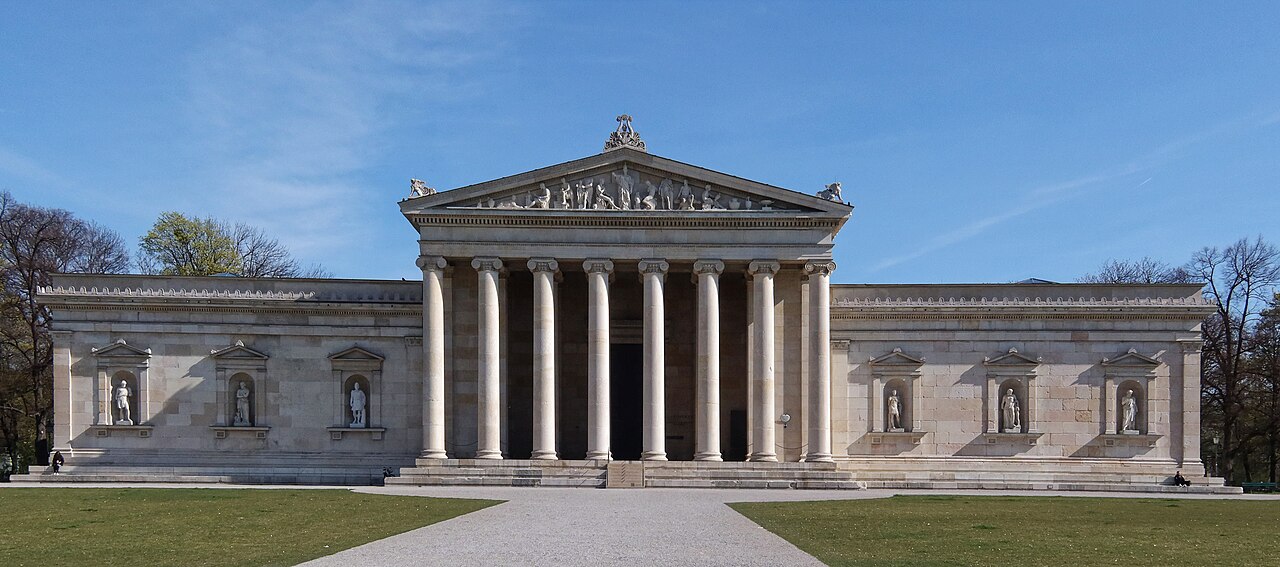
Glyptothek
- Must see · Heritage site
- Museum
Language · 11 published
Nature site · Munich
Reviewed by Elena Voss · Roavina Travel Editor

| Monday | 00:00 – 23:59 |
|---|---|
| Tuesday | 00:00 – 23:59 |
| Wednesday | 00:00 – 23:59 |
| Thursday | 00:00 – 23:59 |
| Friday | 00:00 – 23:59 |
| Saturday | 00:00 – 23:59 |
| Sunday | 00:00 – 23:59 |
Checked 2026-08-31 · Source
Read from the OpenStreetMap access tags; anything not listed has no tag recorded.
Set the group type to family in the planner and the day window contracts to about three quarters of a solo day.
This place is a Park. It was built in the Greek Revival architecture style. It was designed by Leo von Klenze. It carries the architectural heritage monument in Bavaria heritage designation.
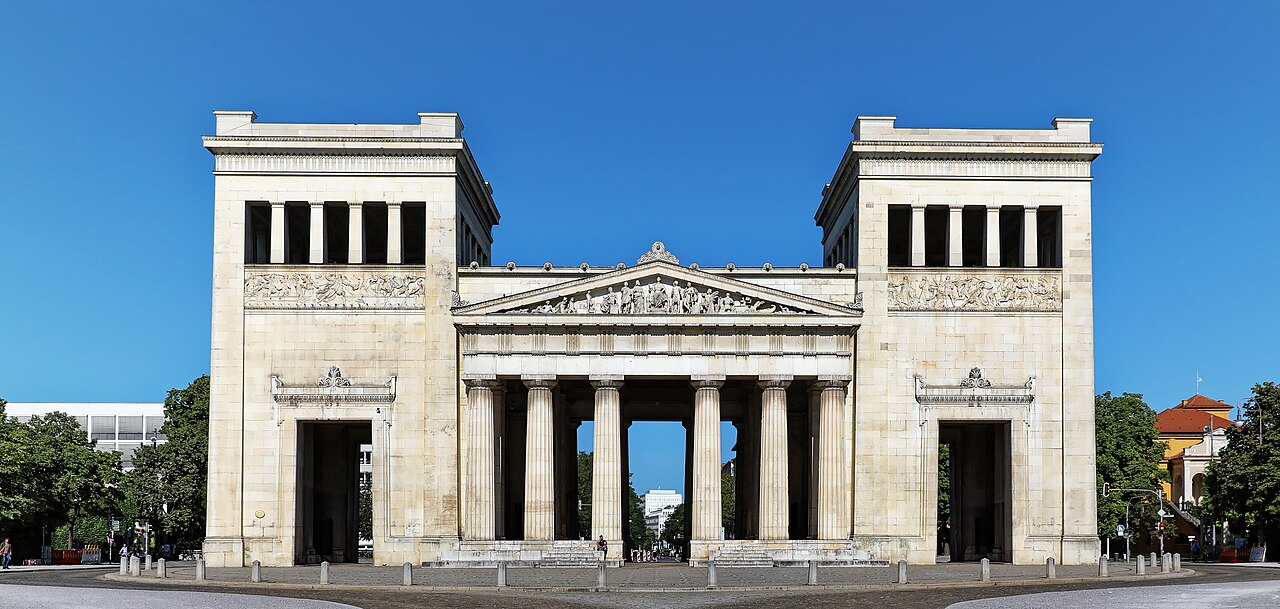
Königsplatz is a historic square in Munich's Maxvorstadt district, designed in the early 19th century as part of King Ludwig I's vision for a monumental arts district. The neoclassical ensemble features three Doric temples: the Propylaea gateway, the Glyptothek, and the Staatliche Antikensammlungen. The square served as a parade ground and political rallying space during the Nazi era, when it was redesigned as the Party Forum. Today it functions as a public plaza hosting cultural events, open-air concerts, and political demonstrations, surrounded by museums that form part of Munich's Kunstareal museum quarter.
Checked 2026-08-26
The square itself contains no enclosed interior but is framed by significant cultural institutions. The Propylaea stands as a monumental gateway inspired by the Acropolis. The Glyptothek houses ancient Greek and Roman sculpture. The Staatliche Antikensammlungen displays Greek vases, Etruscan bronzes, and antique jewellery. Subterranean structures include the Munich Documentation Centre for the History of National Socialism, located nearby rather than directly beneath. The open plaza accommodates temporary installations, memorials, and seasonal programming. The surrounding area encompasses additional museums and academic buildings associated with Ludwig-Maximilians-Universität.
Checked 2026-08-26
Visitors typically spend thirty minutes to one hour circulating the square's perimeter and appreciating the architectural ensemble. Those entering the Glyptothek or Staatliche Antikensammlungen should allocate additional time proportionate to museum engagement. The Documentation Centre nearby requires separate scheduling. The plaza rewards brief contemplative visits equally well as extended stays during events. Photography and architectural study extend duration naturally. Combined visits with adjacent museum attractions in the Kunstareal can occupy half a day or longer. Evening illumination of the Propylaea columns creates atmospheric conditions warranting return visits.
Checked 2026-08-26
Summer months bring open-air cinema, opera screenings, and cultural festivals utilising the plaza. Winter sees reduced programmed activity. Morning light illuminates the Propylaea facade favourably for photography. Evening hours offer dramatic column lighting and diminished crowds. Museum opening times for surrounding institutions operate independently. Weather considerations apply given the entirely exposed nature of the space. Visitors should verify current conditions before dedicated journeys. Check the operator's own site for the travel date before relying on a schedule or fare.
Checked 2026-08-26
Access to Königsplatz itself requires no admission fee as public urban space. The Glyptothek and Staatliche Antikensammlungen maintain separate admission policies with potential combination tickets available through the Bavarian State Painting Collections. The Munich Documentation Centre for the History of National Socialism charges independent admission. Visitors should consult official museum websites for current pricing structures. Free admission days for state museums may apply on specific occasions though these are not confirmed here. Check the operator's own site for the travel date before relying on a schedule or fare.
Checked 2026-08-26
Königsplatz sits centrally in Maxvorstadt with U-Bahn connectivity via the Königsplatz station on lines U2 and U3. Tram line 27 serves nearby Karolinenplatz within walking distance. Multiple bus routes traverse the surrounding street network. The square lies approximately northwest of the Hauptbahnhof main railway station, achievable by foot for able pedestrians through the city centre. Cycling infrastructure exists on adjacent streets. Limited on-street parking applies to surrounding roads. The square's open boundaries permit approach from multiple directions on foot. Signage from major nearby attractions including the Alte and Neue Pinakothek museums directs visitors through the Kunstareal.
Checked 2026-08-26
The square's exposed granite surface becomes slippery in wet conditions and reflects intense sunlight in summer. Large-scale events may restrict access or create crowding. Political demonstrations occur periodically given the location's historical significance. The Documentation Centre's presence nearby may confront visitors with challenging historical content. Evening lighting, while atmospheric, reduces visibility of uneven surfaces. The area's museum concentration attracts pickpockets during peak tourist periods. Some visitors may find the Nazi-era history of the space emotionally affecting. Temporary construction or restoration work on the classical buildings may obscure views or create noise disruption without advance notification.
Checked 2026-08-26
The symmetrical classical architecture permits strong central compositions of the Propylaea from the square's centre. Wide-angle lenses accommodate the full ensemble breadth. Morning and late afternoon light models the Doric columns with dimensional shadow. Night photography benefits from architectural illumination though tripod use may attract security attention. The Glyptothek and Staatliche Antikensammlungen facades present complementary framing opportunities. Elevated perspectives from the Documentation Centre or nearby buildings offer alternative viewpoints not publicly accessible. The square's scale challenges human-scale reference inclusion. Drone operation requires specific German aviation authority compliance and is not assumed permissible. Museum interior photography follows institution-specific policies.
Checked 2026-08-26
Yes, the square itself is public open space with no admission charge. Surrounding museums charge separate fees.
The Glyptothek and Staatliche Antikensammlungen frame the square. The Munich Documentation Centre for the History of National Socialism is located nearby.
The public square remains accessible after dark with architectural illumination, though visitors should exercise standard urban caution.
The 19th-century neoclassical ensemble was repurposed as the Nazi Party Forum during the Third Reich, creating layered historical meaning.
U-Bahn lines U2 and U3 serve Königsplatz station directly beneath the square's eastern edge.
Visitors should consult official sources for current offerings. Check the operator's own site for the travel date before relying on a schedule or fare.
Loading the interactive map…
The interactive map could not be loaded.
Last updated:
Source: OpenStreetMap contributors, Wikidata ·