
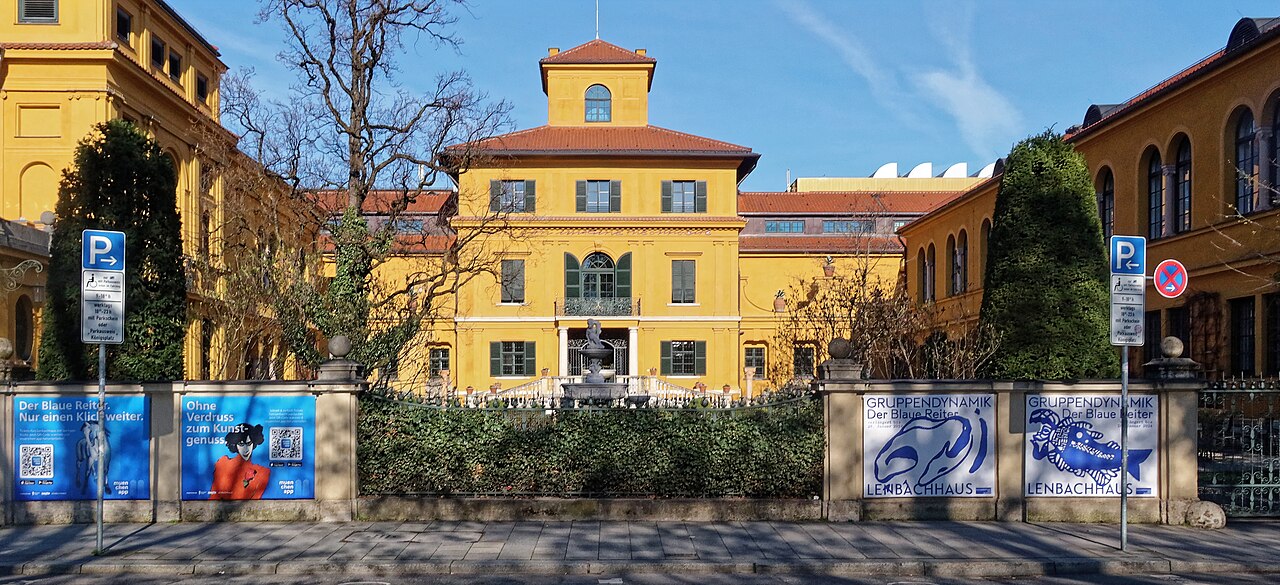
1 min walk
Lenbachhaus
- Must see · Heritage site
- Museum
Language · 11 published
Museum · Munich
Paläontologisches Museum
Closed today, Saturday. Next open Monday at 08:00 — the planner will not place a stop here on a Saturday.
Plan around itReviewed by Elena Voss · Roavina Travel Editor
| Monday | 08:00 – 16:00 |
|---|---|
| Tuesday | 08:00 – 16:00 |
| Wednesday | 08:00 – 16:00 |
| Thursday | 08:00 – 16:00 |
| Friday | 08:00 – 14:00 |
| Saturday | Closed |
| Sunday | Closed |
Checked 2026-08-31 · Source
Read from the OpenStreetMap access tags; anything not listed has no tag recorded.
Set the group type to family in the planner and the day window contracts to about three quarters of a solo day.
This place is a Museum. It was built in the eclectic architecture style. It was designed by Leonhard Romeis. It carries the architectural heritage monument in Bavaria heritage designation.
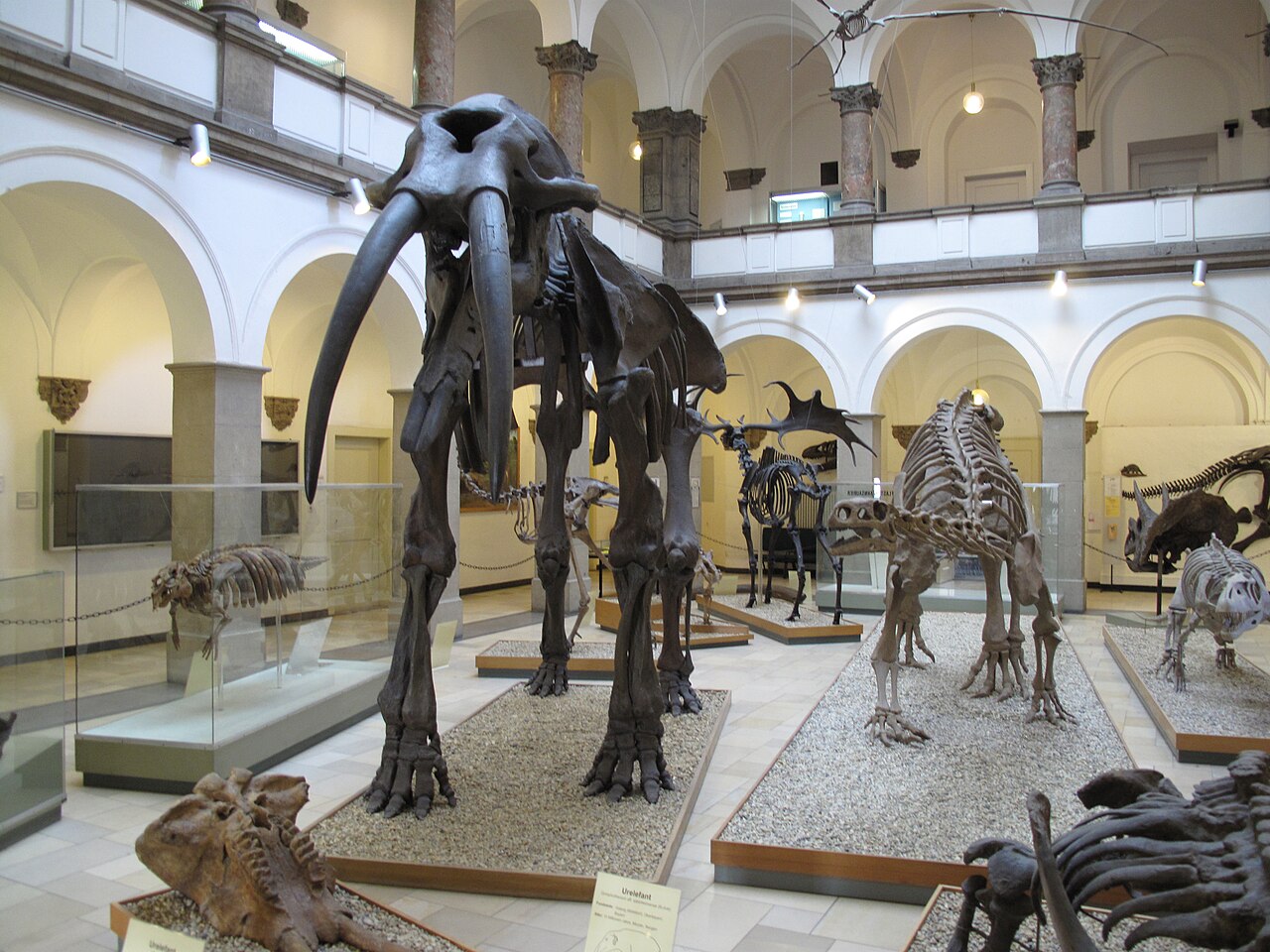
The Palaeontological Museum in Munich is a specialized natural-history museum devoted to fossils, ancient life and the geological story of evolution. It forms part of the Bavarian State Collection for Palaeontology and Geology, connecting public display with scientific research. Travelers who prefer authentic specimens and focused interpretation will find a more concentrated experience here than in a large all-purpose natural-history museum. The setting gives deep time a distinctly academic Munich address. The Palaeontological Museum Munich is a natural history museum dedicated to fossils and ancient life forms. It operates as part of the Bavarian State Collection for Palaeontology and Geology. The institution serves scientific research and public education, displaying specimens that document prehistoric biodiversity. Housed in historic premises, it represents one of Munich's specialized museum offerings alongside larger institutions. The museum contributes to the city's cultural landscape through its focus on deep time and evolutionary history rather than conventional art or general history exhibitions. The museum's scholarly focus on fossils and evolutionary history may engage children with existing interest in dinosaurs or natural science. Younger visitors or those expecting interactive displays might find the experience less accessible. Parental discretion advised based on individual child temperament and interests.
Checked 2026-08-26 · Source
The collection presents fossil evidence from different geological periods, including remains of ancient animals, marine organisms and other traces of prehistoric life. Skeletal forms and geological specimens show how scientists reconstruct vanished environments and evolutionary change. Look for contrasts between familiar vertebrate fossils and less immediately recognizable organisms from earlier seas and landscapes. The museum favors scientific material over spectacle, making close observation and attention to labels central parts of the visit. The museum collections encompass fossil specimens spanning multiple geological eras. Exhibits typically include skeletal remains, preserved organisms, and geological samples that illustrate evolutionary development. The displays draw from the extensive holdings of the Bavarian State Collection, one of Germany's significant palaeontological repositories.
Checked 2026-08-26 · Source
Plan for about sixty to ninety minutes. That is enough time for a steady circuit through the displays while allowing pauses for fossil details, geological explanations and comparisons between different forms of ancient life. Visitors with a strong interest in palaeontology or geology may stay longer. Families can shorten the route around the specimens that interest children most. The museum’s focused scale makes it easy to add another cultural stop afterward.
Checked 2026-08-26 · Source
The museum suits a year-round indoor itinerary, especially on a day when you want science and history rather than Munich’s major art collections. Its specialized subject can reward a calm visit, since the experience depends on studying specimens and interpreting their geological context. Go when your group has enough time for attentive looking instead of rushing between landmarks. Pairing it with another nearby museum creates a useful contrast between natural history and human culture.
Checked 2026-08-26 · Source
This guide does not include an admission price. Treat the museum as a compact specialist stop within a broader Munich plan, and give the visit its own time rather than judging it by the scale of the building. The strongest reason to come is access to a focused palaeontological collection connected with a Bavarian scientific institution. That setting makes the museum valuable for travelers who want specimens and research context instead of a general family attraction.
Checked 2026-08-26 · Source
The museum lies within Munich’s urban network, so it can be placed into a day of central cultural visits. Travel by the city’s U-Bahn, S-Bahn, tram or bus system, or walk from another nearby attraction when the route is practical. Search for “Palaeontological Museum Munich” in your map application for the entrance and current walking route. Allow a little orientation time before entering, particularly when combining several university or museum-area destinations.
Checked 2026-08-26 · Source
This is an academic museum, so the displays may feel more specialized and less theatrical than large natural-history institutions. Fossils reward curiosity, but visitors looking mainly for interactive entertainment may prefer a broader family attraction. Read the labels that explain geological time, since the scale of the subject is part of the experience. Children interested in dinosaurs, rocks or evolution may engage well when adults turn the specimens into questions about habitat, movement and extinction.
Checked 2026-08-26 · Source
Use quiet, considerate photography in the exhibition areas. Fossil specimens are durable compared with paintings, but displays still benefit from careful handling and unobstructed viewing. Keep the flash off unless the museum explicitly permits it, and follow any signs around individual objects. A few well-composed images of distinctive specimens are more useful than photographing every case. Keep tripods and bulky equipment out of circulation areas so that other visitors can study the collection comfortably.
Checked 2026-08-26 · Source
You can see fossils, skeletal remains and geological specimens representing ancient organisms, environments and evolutionary change across geological time.
Most visitors should allow about sixty to ninety minutes for a measured circuit with time to study specimens and labels.
Children interested in dinosaurs, fossils, rocks or natural science may enjoy it, although the presentation is more scholarly than highly interactive.
It concentrates on palaeontology and geology, offering a narrower scientific experience rather than a broad survey of animals, ecology and human culture.
The museum operates as part of the Bavarian State Collection for Palaeontology and Geology, linking the displays with a scientific collection.
Pay attention to how fossils reveal ancient environments and evolutionary development, not only to the most visually impressive skeletons.
Loading the interactive map…
The interactive map could not be loaded.
Last updated:
Source: OpenStreetMap contributors, Wikidata ·