
2 min walk
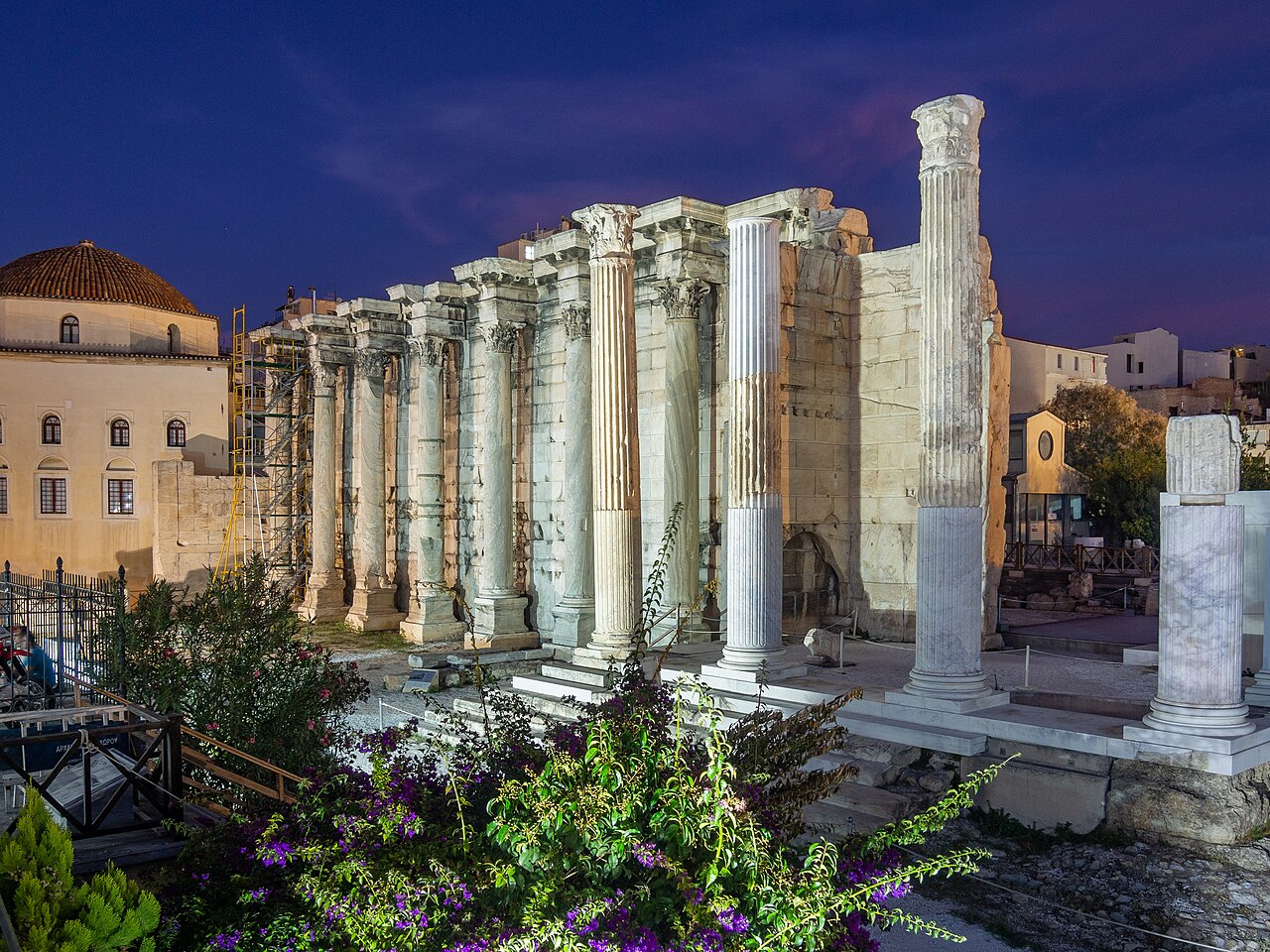
Hadrian's Library
- Must see · Heritage site
- Historic monument
Language · 11 published
Historic monument · Athens
Reviewed by Elena Voss · Roavina Travel Editor
| Monday | 00:00 – 23:59 |
|---|---|
| Tuesday | 00:00 – 23:59 |
| Wednesday | 00:00 – 23:59 |
| Thursday | 00:00 – 23:59 |
| Friday | 00:00 – 23:59 |
| Saturday | 00:00 – 23:59 |
| Sunday | 00:00 – 23:59 |
Checked 2026-08-31 · Source
Read from the OpenStreetMap access tags; anything not listed has no tag recorded.
Set the group type to family in the planner and the day window contracts to about three quarters of a solo day.
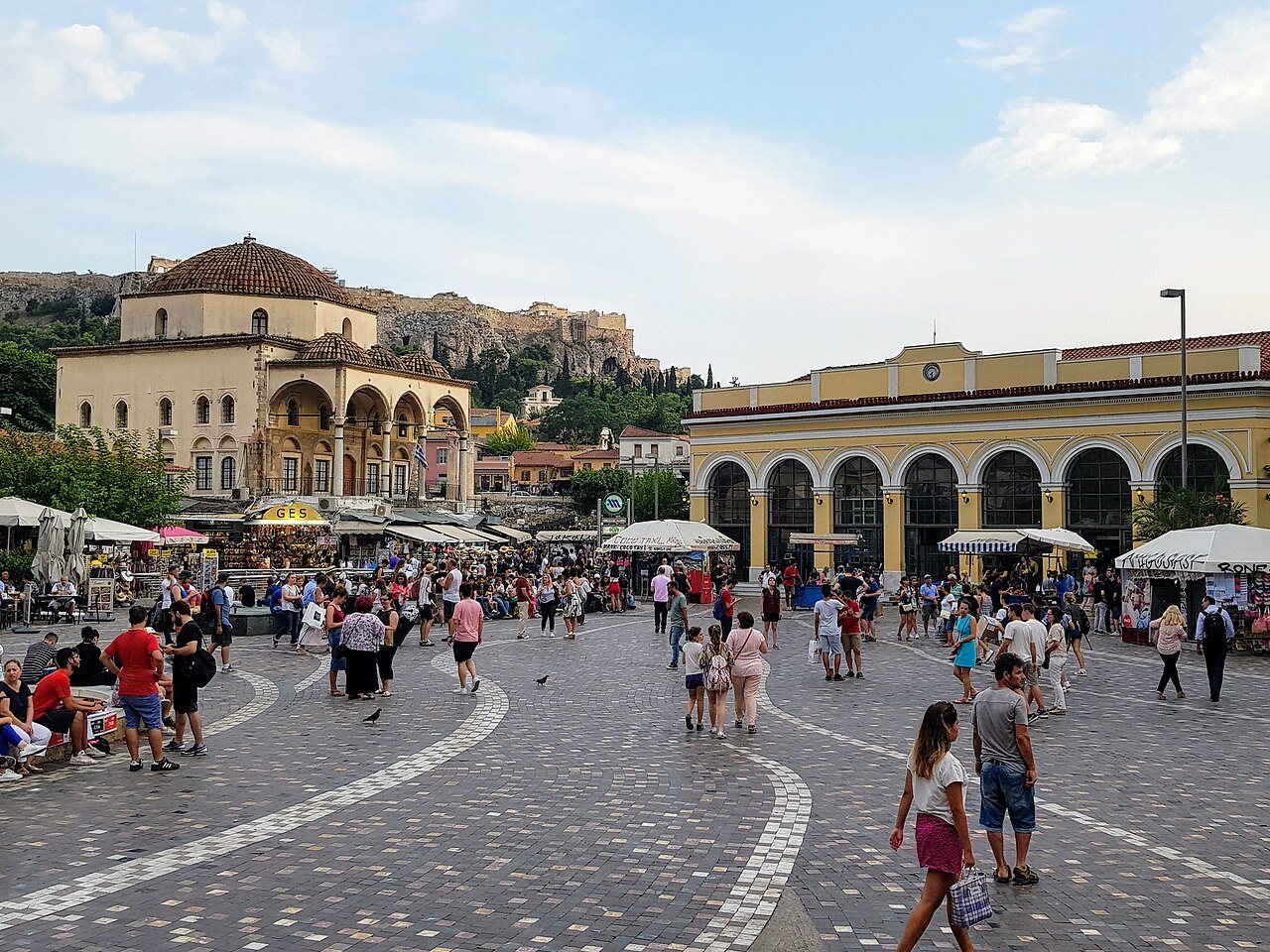
Monastiraki Square is a public square in central Athens, Greece. It serves as a meeting point between the old city and the modern commercial district. The square takes its name from the Pantanassa Church, formerly a monastery, which stands on its eastern side. The area functions as a transport hub and gateway to the Plaka neighborhood and the Ancient Agora. It is known for its flea market activity and surrounding commercial streets. Daily, day and night. Monastiraki Square is an open public square with no weekly closure day. Nearby shops, markets, churches, and archaeological sites keep separate hours.
Checked 2026-08-31 · Source
The square contains the Pantanassa Church, a surviving Byzantine structure. The Athens Flea Market extends through the adjacent streets, with vendors selling various goods including antiques, clothing, and souvenirs. Surrounding the square are numerous shops, restaurants, and cafes. The Monastiraki Metro Station sits beneath the square, with visible archaeological remains in its station complex. The Tzistarakis Mosque, now part of the Museum of Greek Folk Musical Instruments, stands nearby. Street performers and vendors are regularly present. Monastiraki Square is an open public square with no weekly closure day. Nearby shops, markets, churches, and archaeological sites keep separate hours.
Checked 2026-08-31 · Source
Most visitors pass through Monastiraki Square as part of broader exploration of central Athens rather than treating it as a dedicated destination. Time spent varies considerably depending on shopping interests, dining plans, and whether visiting nearby attractions. The surrounding flea market streets reward extended browsing for those seeking vintage items or souvenirs. Transit connections make the square efficient for brief stops. Combined with the adjacent Ancient Agora and Plaka district, visitors typically allocate several hours to the wider area. Free; no ticket or admission charge applies to the public square itself.
Checked 2026-08-31 · Source
Monastiraki Square operates as a public open space without controlled access. The surrounding shops and restaurants maintain individual schedules. The flea market is traditionally associated with Sunday mornings, though commercial activity occurs throughout the week. Seasonal variations in crowds and weather affect visitor experience. Visitors should verify current conditions before planning dedicated visits. Daily, day and night. Use Monastiraki station, the interchange between Metro Line 1 (green, Piraeus–Kifisia) and Line 3 (blue, Dimotiko Theatro–Doukissis Plakentias/Airport). Follow signs for the named Monastiraki Square exit; the station's two accessible exits have elevators, and the square-serving accessible entrance is on the left side of the station.
Checked 2026-08-31 · Source
No admission fee applies to Monastiraki Square itself as a public space. Individual attractions in the vicinity set their own pricing policies. The Monastiraki Metro Station requires standard Athens public transport fare. Shops, restaurants, and cafes operate as commercial establishments with variable pricing. Any guided tours incorporating the square are priced separately by their operators. Free; no ticket or admission charge applies to the public square itself. The square is mostly paved with tiles. The official accessible route reaches the square without steps, although the paving can be uneven enough to feel uncomfortable for wheelchair users.
Checked 2026-08-31 · Source
Monastiraki Metro Station on Lines 1 and 3 serves the square directly. The station connects to Piraeus port and Athens International Airport via line changes. Multiple bus routes serve surrounding streets. Walking from Syntagma Square takes approximately fifteen minutes through the commercial Ermou Street. Use Monastiraki station, the interchange between Metro Line 1 (green, Piraeus–Kifisia) and Line 3 (blue, Dimotiko Theatro–Doukissis Plakentias/Airport). Follow signs for the named Monastiraki Square exit; the station's two accessible exits have elevators, and the square-serving accessible entrance is on the left side of the station.
Checked 2026-08-31 · Source
Crowd density increases substantially during peak tourist seasons and Sunday flea market hours. Pickpocketing risk exists in congested areas and requires standard urban vigilance. Street vendors may approach visitors aggressively. Uneven pavement and cobblestones in adjacent streets present trip hazards, particularly in wet conditions. Traffic in surrounding streets moves irregularly; pedestrian priority is not consistently observed. Validate metro tickets to avoid fines. The square is mostly paved with tiles. Monastiraki station has elevators and an adapted toilet available on request. For Line 1, wheelchair users should ask station staff for a movable ramp because the platform-to-train gap is large.
Checked 2026-08-31 · Source
The square offers views of the Acropolis rising to the southeast, particularly effective during golden hour lighting. The Pantanassa Church provides architectural interest with its domed profile. The Tzistarakis Mosque presents Ottoman-era architectural features. Street photography opportunities arise from the mix of commerce, transit activity, and historical structures. The metro station entrance incorporates visible archaeological elements. Early morning yields cleaner compositions before crowds accumulate. Evening illumination of the Acropolis creates backdrop possibilities. No photography restrictions apply to the public square itself. For Line 1, wheelchair users should ask station staff for a movable ramp because the platform-to-train gap is large.
Checked 2026-08-31 · Source
Yes. The City of Athens guide describes the square as active day and night; the public square has no nightly closing time.
It means “little monastery” and refers to a monastic compound that once occupied the site.
The small Pantanassa basilica, dating from the 10th century, is the surviving part of the former monastic compound.
The square faces the Acropolis and is bordered by the Tzistarakis Mosque, Pantanassa basilica, and Hadrian’s Library.
Turn right from Monastiraki station into Ifaistou Street; the official accessible route describes approximately 200 metres of flat paving with a slight downward slope.
Yes. The station permanently displays archaeological finds in its interior.
Loading the interactive map…
The interactive map could not be loaded.

Last updated:
Source: OpenStreetMap contributors, Wikidata ·