
3 min walk
Πρώην Στέκι του Μάριου (Ρεμπετοσυναντήσεις) Ίωνος 10
- High
- Historic monument

Art and culture venue · Athens
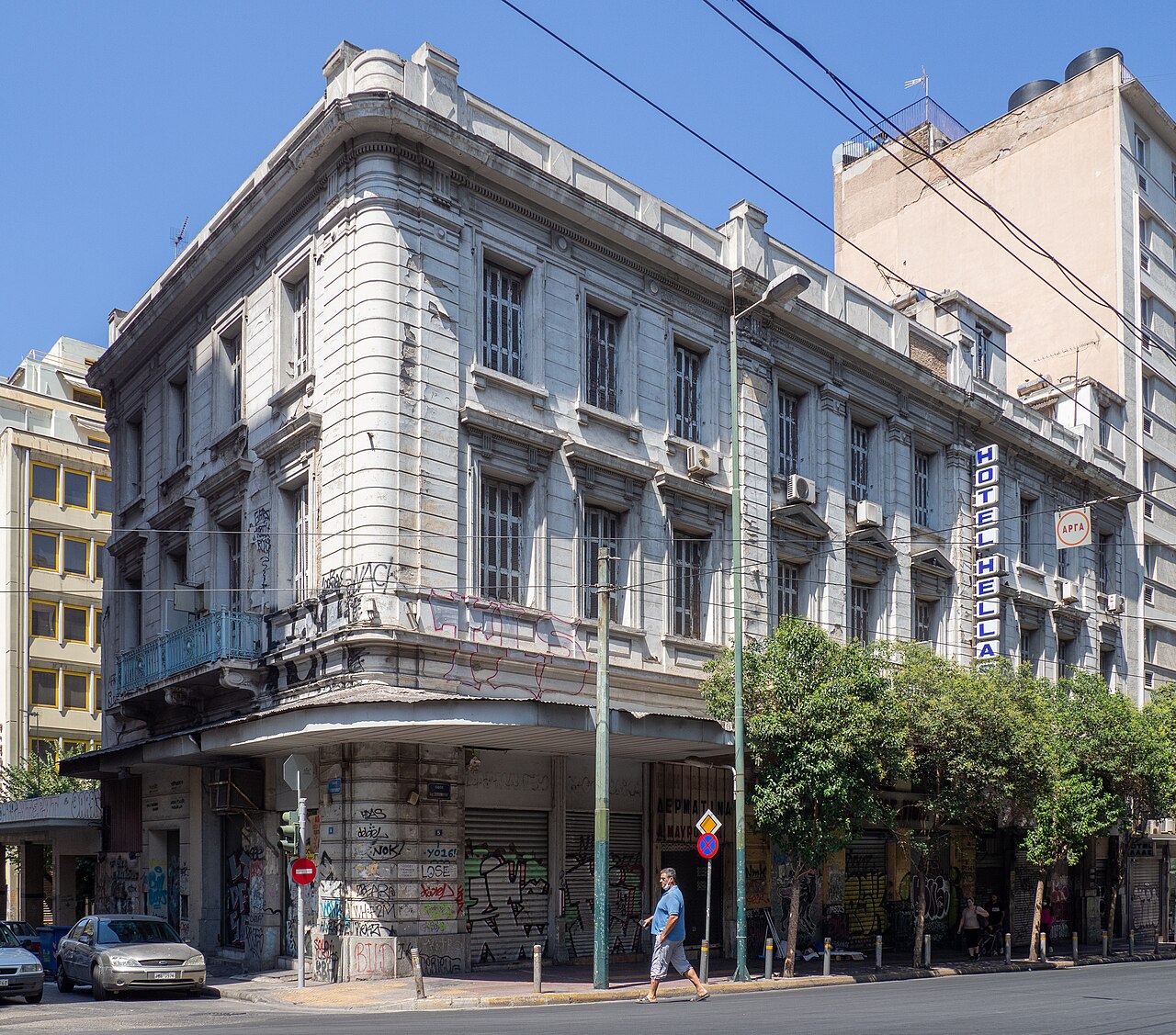
The National Theatre of Greece is the country’s leading state theatrical institution and one of Athens’s major places for live performance. Its principal building near Omonia Square occupies a historic structure designed by Ernst Ziller, an architect associated with many important Athenian buildings. The institution presents classical Greek drama, contemporary theatre, and international work across its main complex and other venues, making it a strong choice for travelers who want to experience Athens through performance rather than only through museums and monuments. The National Theatre of Greece stands as the country's premier state-funded theatrical institution, occupying a prominent position within Athens' cultural landscape. Established to cultivate and promote dramatic arts, it serves as a cornerstone of Greek performing heritage. The main building resides near Omonia Square in a historic structure designed by Ernst Ziller, the German-born architect who shaped numerous Athenian landmarks.
Checked 2026-08-26 · Source
The historic complex contains performance spaces of different sizes, including a Main Stage and smaller experimental venues. Public-facing areas retain the character of a nineteenth-century theatre building, while backstage rooms, rehearsal spaces, costume and prop facilities, and technical areas support modern productions. For most visitors, the important interior experience is the auditorium, foyer, and atmosphere surrounding a performance. The wider National Theatre organization also operates venues elsewhere in Athens, so the exact building associated with a production matters when planning an evening.
Checked 2026-08-26 · Source
A performance usually occupies the central part of an evening and may last roughly two to four hours when an interval is included. The exact commitment depends on the production and venue. If you only want to see the Ziller building from outside, a brief stop of around fifteen to thirty minutes is enough for the façade and surrounding streets. Those attending a performance should add time for arrival, seating, and departure, especially when combining the theatre with dinner or another central Athens activity.
Checked 2026-08-26 · Source
The National Theatre follows a seasonal performance calendar rather than functioning as a conventional museum with continuous daily access. Evening performances are central to the experience, with some productions offering daytime presentations. Autumn through spring is traditionally the busiest period for theatre programming, while summer activity can include presentations at other venues and festival-related events. Build your Athens evening around the chosen production, allowing time to reach Omonia and settle before the curtain rather than arriving immediately before the start.
Checked 2026-08-26 · Source
Admission is tied to the performance you choose, with prices varying by production, venue, and seat location. The practical way to experience the National Theatre is to select a specific event and reserve through an authorized channel. A popular production can fill its strongest seating areas, so include the theatre in your planning before the evening of the performance. If you are comparing seats, remember that the building, production scale, and sightline can matter as much as the basic ticket category.
Checked 2026-08-26 · Source
The main building is near Omonia Square, one of central Athens’s important transport areas. Omonia station connects with Metro Lines 1 and 2, and buses and trolleybuses serve the surrounding streets. The central location also makes walking practical from nearby accommodation and attractions. Because the district is busy and parking is difficult, public transport or walking is a more convenient choice for most visitors. Leave a margin for city traffic if you are arriving by taxi.
Checked 2026-08-26 · Source
Arrive with enough time to find the correct venue, enter, and take your seat before the performance begins. Central Athens is crowded, particularly around transport hubs and at the end of an evening, so keep personal belongings close. Productions may be performed in Greek, and the language experience differs from one event to another. Seating and sightlines depend on the selected venue and seat. Silence your phone, respect the audience around you, and treat the theatre as a live performance space.
Checked 2026-08-26 · Source
The exterior of the historic Ziller building gives you a useful photographic subject in central Athens, especially when you want to place the theatre within its urban surroundings. During a performance, concentrate on the stage and the shared experience rather than taking photographs or recording. Theatre etiquette protects performers and fellow audience members from distraction. A wide exterior view, architectural details, and the atmosphere of the surrounding streets will tell the story of the visit without interrupting the production.
Checked 2026-08-26 · Source
It is Greece’s leading state theatrical institution, presenting classical, contemporary, and international theatre in Athens venues.
The main building is near Omonia Square in central Athens, in a historic structure designed by Ernst Ziller.
Allow roughly two to four hours when the production includes an interval, plus time for arrival and departure.
Omonia station on Metro Lines 1 and 2 is nearby, with buses and trolleybuses serving the surrounding central streets.
The programme includes classical Greek drama, contemporary works, and international productions across the institution’s venues.
Yes. A performance can anchor an evening in central Athens, with Omonia’s transport links making the venue easy to combine with nearby activities.
Loading the interactive map…
The interactive map could not be loaded.
Last updated:
Source: OpenStreetMap contributors, Wikidata ·