


1 min walk
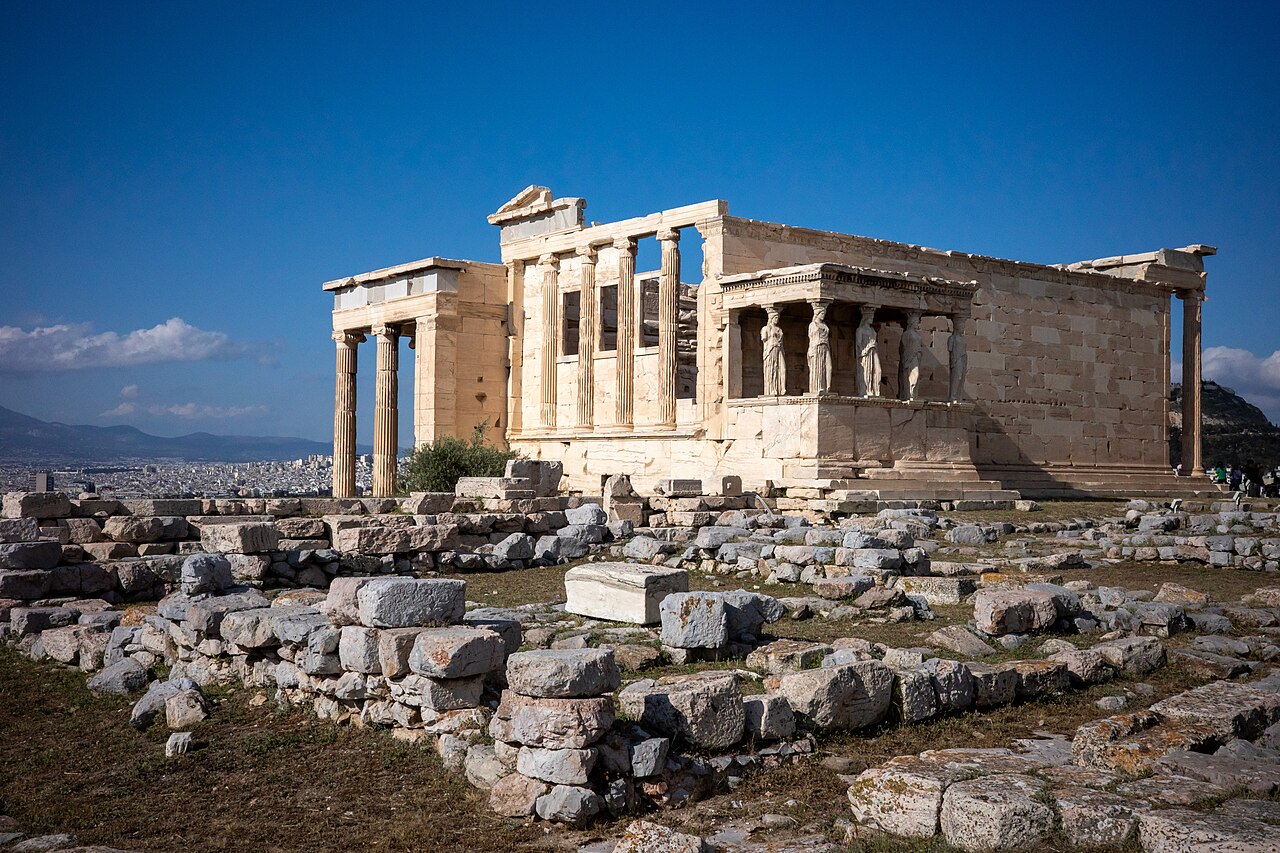
Erechtheion
- Must see · Heritage site
- Historic site
Historic site · Athens
Παρθενών
| Monday |
08:00 – 18:30
Last entry 18:10 |
|---|---|
| Tuesday |
08:00 – 18:30
Last entry 18:10 |
| Wednesday |
08:00 – 18:30
Last entry 18:10 |
| Thursday |
08:00 – 18:30
Last entry 18:10 |
| Friday |
08:00 – 18:30
Last entry 18:10 |
| Saturday |
08:00 – 18:30
Last entry 18:10 |
| Sunday |
08:00 – 18:30
Last entry 18:10 |
| Monday |
08:00 – 18:00
Last entry 17:40 |
|---|---|
| Tuesday |
08:00 – 18:00
Last entry 17:40 |
| Wednesday |
08:00 – 18:00
Last entry 17:40 |
| Thursday |
08:00 – 18:00
Last entry 17:40 |
| Friday |
08:00 – 18:00
Last entry 17:40 |
| Saturday |
08:00 – 18:00
Last entry 17:40 |
| Sunday |
08:00 – 18:00
Last entry 17:40 |
| Monday |
08:00 – 17:00
Last entry 16:40 |
|---|---|
| Tuesday |
08:00 – 17:00
Last entry 16:40 |
| Wednesday |
08:00 – 17:00
Last entry 16:40 |
| Thursday |
08:00 – 17:00
Last entry 16:40 |
| Friday |
08:00 – 17:00
Last entry 16:40 |
| Saturday |
08:00 – 17:00
Last entry 16:40 |
| Sunday |
08:00 – 17:00
Last entry 16:40 |
| Friday | Closed |
|---|---|
| Saturday | Closed |
| Friday | Closed |
|---|
| Thursday | Closed |
|---|
Only the listed days are confirmed. Hours on other days have not been recorded.
Checked 2026-10-07 · Source
Not recorded
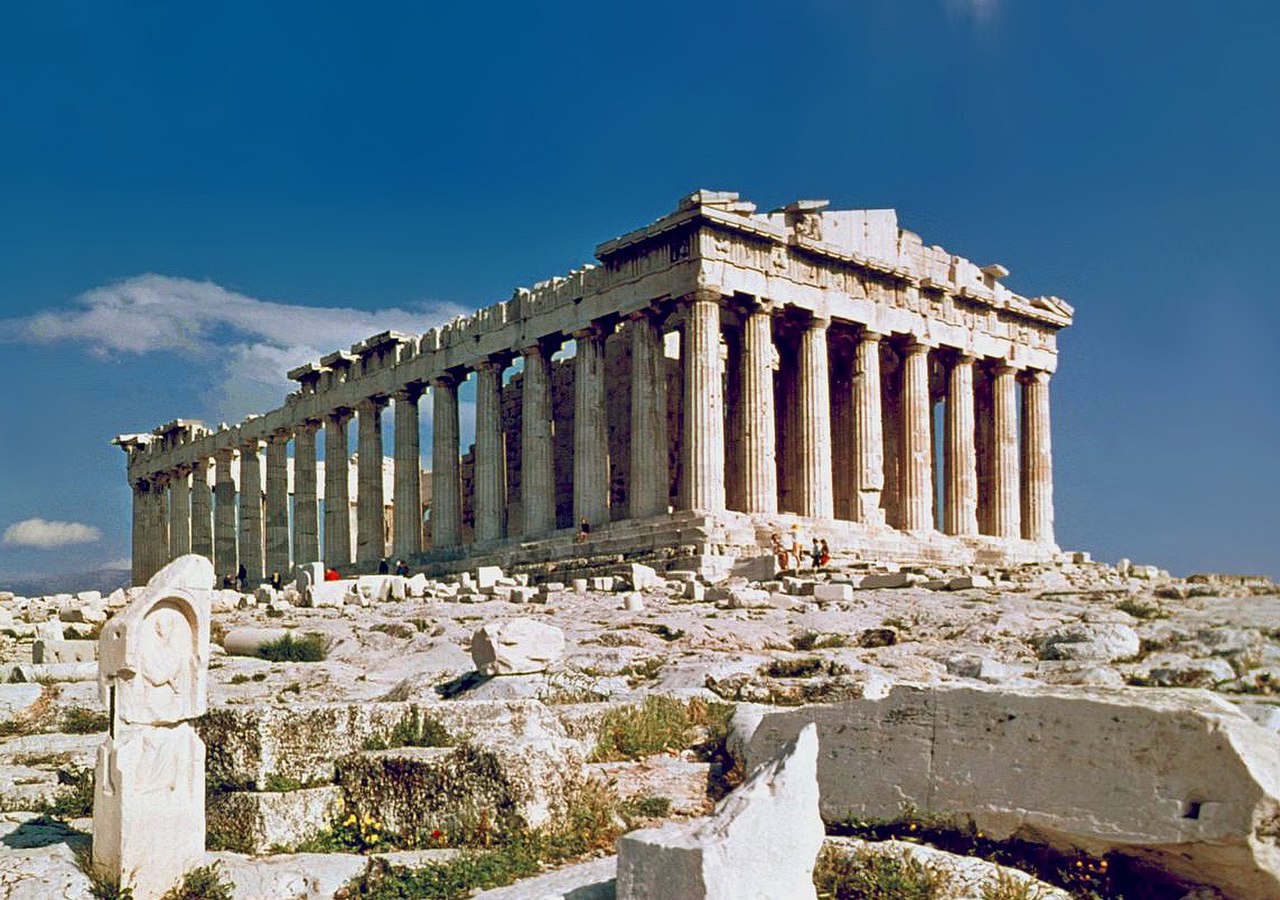
The Parthenon is the fifth-century BCE temple dedicated to Athena Parthenos on the Acropolis of Athens. It was the centrepiece of the building programme launched under Pericles after the Persian sack of 480 BCE. The Ministry of Culture’s Hellenic Heritage account dates the earlier predecessor, the Pre-Parthenon, to the period after the Athenian victory at Marathon in 490 BCE; Persian forces destroyed it before the present temple was built.
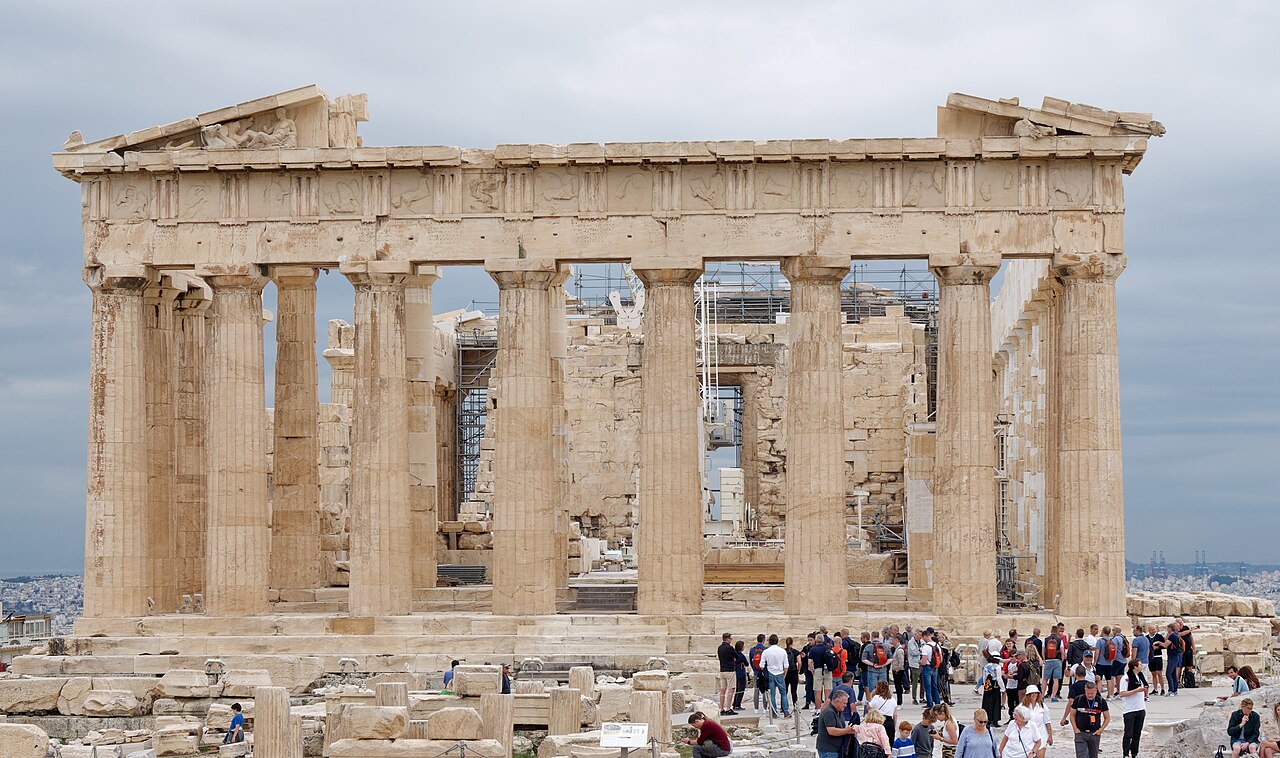
Architects Iktinos and Kallikrates designed the surviving temple, and the sculptor Phidias supervised its sculptural programme. A monumental image of Athena made of gold and ivory once stood inside. The Parthenon was therefore both a sanctuary to the city’s patron goddess and a conspicuous statement of Athenian civic power. Its Doric colonnade and carefully proportioned structure still dominate the summit, and the Acropolis Museum’s Parthenon Gallery presents its sculptures in a space designed around the temple’s dimensions.
The Acropolis is the rocky archaeological precinct; the Parthenon is one monument within it. Hellenic Heritage lists a ticket for the Acropolis archaeological site, and the official visitor guide shows the route passing by the Parthenon. Hours, ticket price, access routes and facilities in this guide describe the wider Acropolis site. The visitor guide places the temple along its uphill route.
Checked 2026-10-07 · Source

The official visitor guide presents the Parthenon along the Acropolis route. After passing the Propylaia, its described route reaches a view of the Parthenon, walks by the monument toward the Greek flag and later returns past the temple on the way toward the exit. This is a guide to the archaeological site's walking route, not a promise that every path or viewpoint will be open on a particular day. Follow current ropes, signs and staff directions.
For the sculpture and layout, the Acropolis Museum’s Parthenon Gallery is the detailed official companion. The museum explains that the gallery’s central chamber matches the orientation and dimensions of the temple’s original cella. It places the Ionic frieze blocks in their corresponding position, presents metopes between columns, and shows pediment figures at the east and west ends. The museum describes a combination of original marble sculpture and plaster copies of pieces held by the British Museum or other foreign museums.
The route and ticket apply to the Acropolis archaeological site. The visitor guide identifies other monuments along the route, including the Propylaia and Erechtheion, and the current Hellenic Heritage ticket is for the Acropolis of Athens. Treat the Parthenon as one monument encountered during the site visit, and the museum gallery as a separate place to study the sculptures.
Checked 2026-10-07 · Source
Allow about two hours for the Acropolis archaeological site if you want to climb to the summit, walk past the Parthenon, see the neighbouring monuments and descend without rushing. This is an editorial planning estimate, not a visit duration published by the operator. It describes time for the precinct visit and the route past the Parthenon, not a published duration for the monument itself.
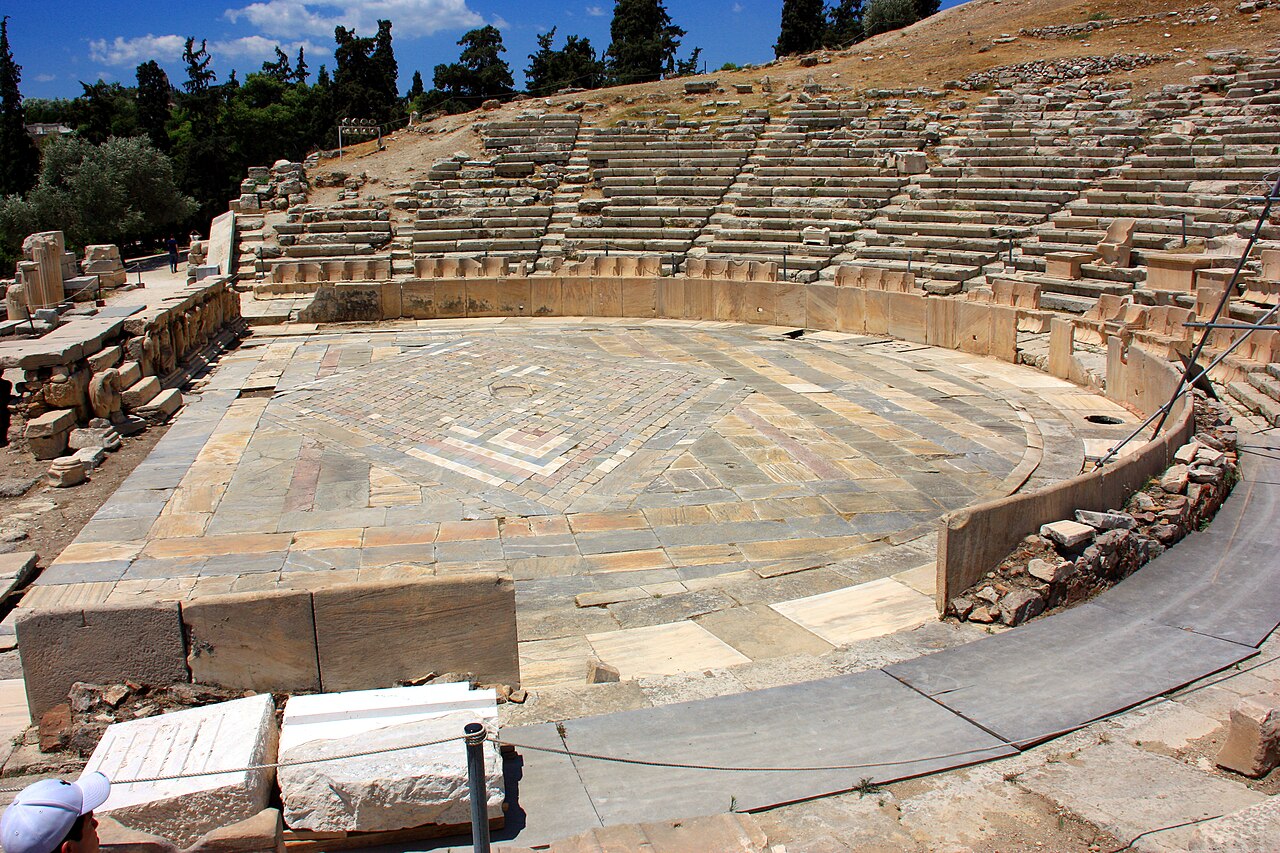
The time depends on the approach, queues, heat, mobility and how long you pause at the viewpoints. The uphill approach and the Propylaia are part of the effort; once on the plateau, leave time to view the Parthenon from more than one side and to continue to the Erechtheion. Add time for the slopes if you also want the Theatre of Dionysos or other areas included in the Acropolis and Slopes ticket. A single circuit focused on the Parthenon can be shorter, but it still includes the walk to and from the summit.
Check the operator’s current closing time before choosing an arrival time. The Acropolis page says last admission is twenty minutes before closing, so a late ticket entry does not leave enough time for the full two-hour visit. The Acropolis site schedule is the practical limit for the whole visit. Visitors who need the slope lift should check its status with the guardhouse before setting out: the latest located notice reported a temporary technical suspension.
Checked 2026-10-07
The Acropolis archaeological site is listed as open daily, with opening and closing times that change through the year. The operator’s posted schedule is 08:00–20:00 from April 1 to August 31; 08:00–19:30 from September 1 to 15; 08:00–19:00 from September 16 to 30; 08:00–18:30 from October 1 to 15; 08:00–18:00 from October 16 to 31; and 08:00–17:00 from November 1 to March 31. Last admission is twenty minutes before closing. These are the operating hours for the Acropolis archaeological site. Check the live operator notice before travel in case of a temporary change.
The operator page also lists closures on January 1, March 25, May 1, Easter Sunday, December 25 and December 26. The operator lists free admission on March 6, April 18, May 18, the last weekend of September and October 28; the Ministry’s free-admission policy also covers the first and third Sunday of each month from November 1 to March 31. These free dates apply to the state-managed archaeological site.
For a quieter-feeling visit, an early arrival gives more time before the closing deadline and lets you approach the summit before the hottest part of a summer day. This is practical advice, not an operator-published crowd forecast. The plateau has limited shade; carry water for the walk, while observing the site’s current visitor rules.
Checked 2026-10-07 · Source
The current Hellenic Heritage page lists an Acropolis of Athens ticket at €30 full price and €15 reduced price. The Ministry describes this ticket as admission to the Acropolis archaeological site and its slopes. The HH page links to online ticket purchase; the Ministry page lists ticket offices and online sales. Check the selected date and entry terms when booking.
Hellenic Heritage lists free admission on five annual dates: March 6, April 18, May 18, the last weekend of September and October 28. It also lists free entry on the first and third Sunday of each month from November 1 through March 31. Eligibility categories for free or reduced admission may have their own conditions and proof requirements; check the Ministry’s current policy rather than relying on an old list copied into a guide.
The ticket covers the precinct, where the official visitor route passes by the Parthenon. The Ministry describes the ticket as single-use: leaving the Acropolis or South Slope site ends that visit, and the same ticket cannot be used to re-enter either area. Plan toilets, food and any exit before passing through the gate. The Ministry’s current page says the digital guide is available free; confirm its current format and language options on the official service before depending on it.
Checked 2026-10-07 · Source

The Hellenic Heritage directions identify the Acropolis Metro station on Line 2 and Monastiraki on Lines 1 and 3. The operator describes the walk from Acropolis station as about twelve minutes and lists bus 230 to the Acropolis stop. These directions reach the Acropolis archaeological site; the Parthenon is on the summit, so the visit continues uphill from an entrance and is not a step-free street-level stop. Check public transport service with the operator.
The main archaeological-site entrance is on the west side of the rock. The Ministry page also describes an accessible entrance route for the north slope and a south-slope entrance at the junction of Dionysiou Areopagitou and Thrasyllou streets. The Acropolis ticket is single-use across the site: leaving the Acropolis or South Slope area does not permit re-entry on that ticket. Choose the entrance with the whole visit in mind.
A slope lift serves the plateau north of the Erechtheion when operational. The most recent located Hellenic Heritage notice, dated July 25, 2026, says the lift was temporarily out of service because of a technical issue; no later restoration notice was found in this review. Its status on October 7 is therefore unverified. Contact the Acropolis guardhouse before travel if you need the lift, and note that the operator page says service can also stop in severe weather or strong winds. The plateau routes and ancient surfaces can be uneven; ask site staff which route suits your needs.
Checked 2026-10-07 · Source
The Parthenon stands within a protected archaeological precinct, and the official visitor guide describes a route that passes by the monument. Barriers or temporary closures may affect viewpoints, so follow signs and staff instructions rather than stepping onto protected stone or marked work areas. Plan water and sun protection for an exposed outdoor visit; this is practical advice, not a site amenity claim. The operator’s rules apply to the archaeological site as a whole.
A visit is not a simple ground-level stroll. The climb, worn stone and uneven ancient paths can be difficult for some visitors. The operator describes accessible routes and a slope lift, but the lift’s current status was not verified: its July 25, 2026 announcement reported a technical suspension. Ask the guardhouse before relying on the lift. The operator also cautions that severe weather or strong winds can interrupt the service. The visitor guide describes the walking route through the precinct and past the monument.
The Ministry page currently warns that toilets within the archaeological site are under renovation and asks visitors to use facilities beside the central entrance before entering. This is a time-sensitive notice; recheck it before travel. The Ministry describes the combined ticket as single-use, with no re-entry after leaving either the Acropolis or South Slope area. The Ministry page also lists visitor rules; check the posted rules at the entrance for current requirements. Avoid making an extra trip outside the gate once admitted.
Checked 2026-10-07 · Source
Photograph the Parthenon along the route described in the official visitor guide and use the changing distance to show its scale. A wide view from the south or north can include the long colonnade; closer views make the column capitals, fluting and the contrast between standing columns and surviving fragments easier to notice. The viewpoint changes along the visitor route, so leave room for several short pauses rather than stopping in the middle of a narrow route. Stay within the ropes marking route boundaries, as shown in the visitor guide.
The low-angle light of early morning or late afternoon can bring out the relief of the stone, while strong midday sun can leave pale marble with less visible surface detail in a photograph. These are general photography observations, not operator-provided opening or crowd information. Work around other visitors and any temporary restrictions. If conservation work, barriers or equipment affect a view on the day, follow the route and instructions posted by the site staff.
For a wider image that places the temple in its landscape, use a lawful public viewpoint outside the ticketed site rather than leaving through a gate and expecting to re-enter on the same ticket. The Ministry describes the Acropolis ticket as single-use. Current photography permissions and any commercial filming requirements should be checked with the site operator before a planned shoot; this guide does not infer a blanket commercial-use permission from the fact that ordinary visitors take photographs.
Checked 2026-10-07
The [official visitor guide](https://efaathculture.gr/wp-content/uploads/2024/07/GAS_Acropolis_EnBl_Release3.0.pdf) describes a route past the Parthenon after the Propylaia, then onward toward the Greek flag before returning past the temple on the way to the exit. Follow the current marked route and staff instructions.
The site opens daily at 08:00, but closing varies seasonally: 20:00 Apr 1–Aug 31; 19:30 Sep 1–15; 19:00 Sep 16–30; 18:30 Oct 1–15; 18:00 Oct 16–31; and 17:00 Nov 1–Mar 31. Last admission is 20 minutes before closing. Check the operator page for temporary notices.
The [operator lists](https://www.hh.gr/en/destinations/acropolis-of-athens/) €30 full price and €15 reduced price; the [Ministry identifies the ticket](https://odysseus.culture.gr/h/3/gh355.jsp?obj_id=28548) as admission to the Acropolis archaeological site and its slopes. The [official visitor guide](https://efaathculture.gr/wp-content/uploads/2024/07/GAS_Acropolis_EnBl_Release3.0.pdf) describes the route past the Parthenon.
[Hellenic Heritage lists](https://www.hh.gr/en/destinations/acropolis-of-athens/) March 6, April 18, May 18, the last weekend of September and October 28, plus the first and third Sunday of each month from November 1 through March 31. Check the current operator notice before planning around a free-admission date.
Its status is unverified. The latest located Hellenic Heritage notice, dated July 25, 2026, says the slope lift was temporarily out of service because of a technical issue. Contact the Acropolis guardhouse before travelling if you need it; [Severe weather or strong winds can also interrupt service](https://odysseus.culture.gr/h/3/gh355.jsp?obj_id=28548).
No. The [Ministry describes the Acropolis and Slopes ticket](https://odysseus.culture.gr/h/3/gh355.jsp?obj_id=28548) as single-use; after leaving either site area, the same ticket cannot be used to re-enter. Plan facilities and breaks before passing through the entrance.
Loading the interactive map…
The interactive map could not be loaded.
Last updated:
Source: OpenStreetMap contributors, Wikidata ·