.jpg)
3 min walk
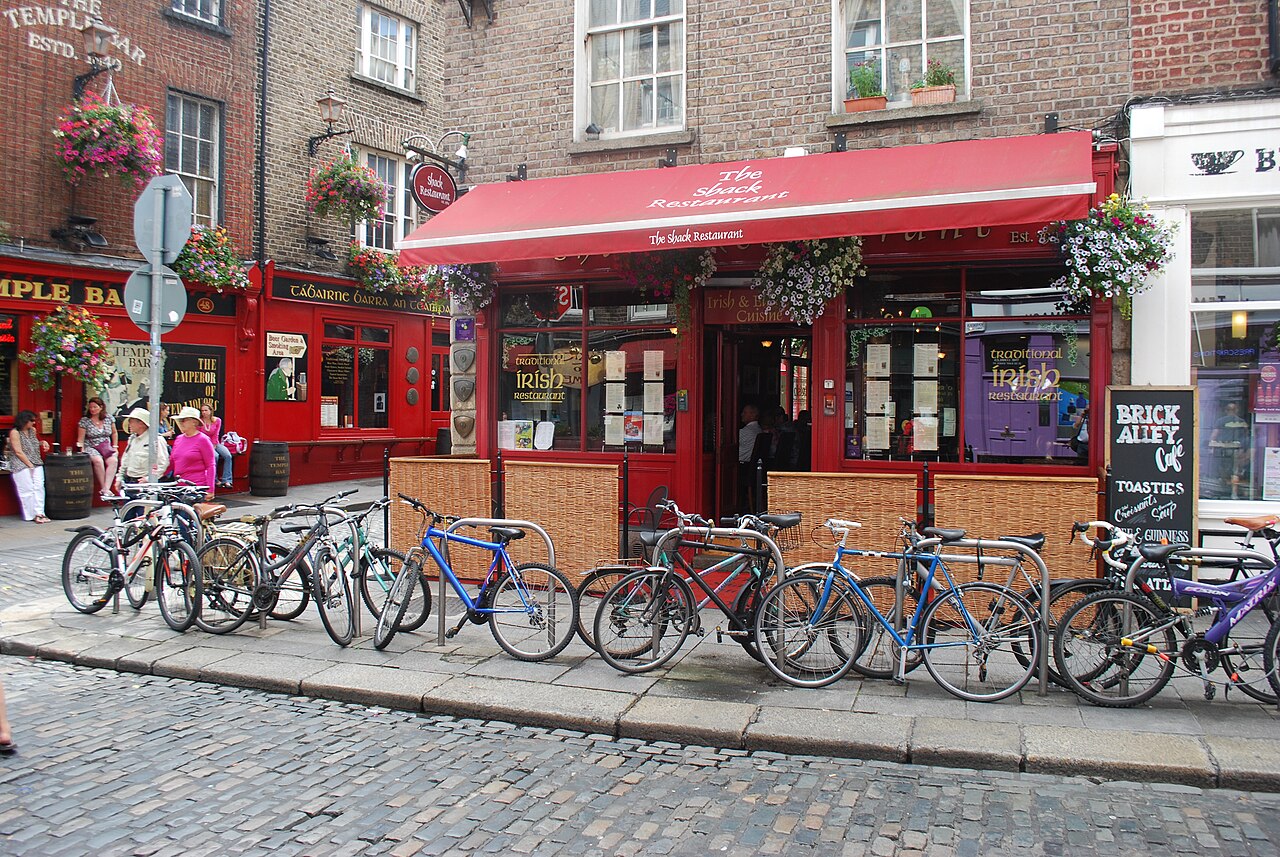
Temple Bar
- Must see
- Historic monument
Language · 11 published
Historic monument · Dublin
Reviewed by Elena Voss · Roavina Travel Editor
| Monday | 00:00 – 23:59 |
|---|---|
| Tuesday | 00:00 – 23:59 |
| Wednesday | 00:00 – 23:59 |
| Thursday | 00:00 – 23:59 |
| Friday | 00:00 – 23:59 |
| Saturday | 00:00 – 23:59 |
| Sunday | 00:00 – 23:59 |
Checked 2026-08-31 · Source
Read from the OpenStreetMap access tags; anything not listed has no tag recorded.
Set the group type to family in the planner and the day window contracts to about three quarters of a solo day.
This place is a Attraction. It opened in 1816. It is built of cast iron.
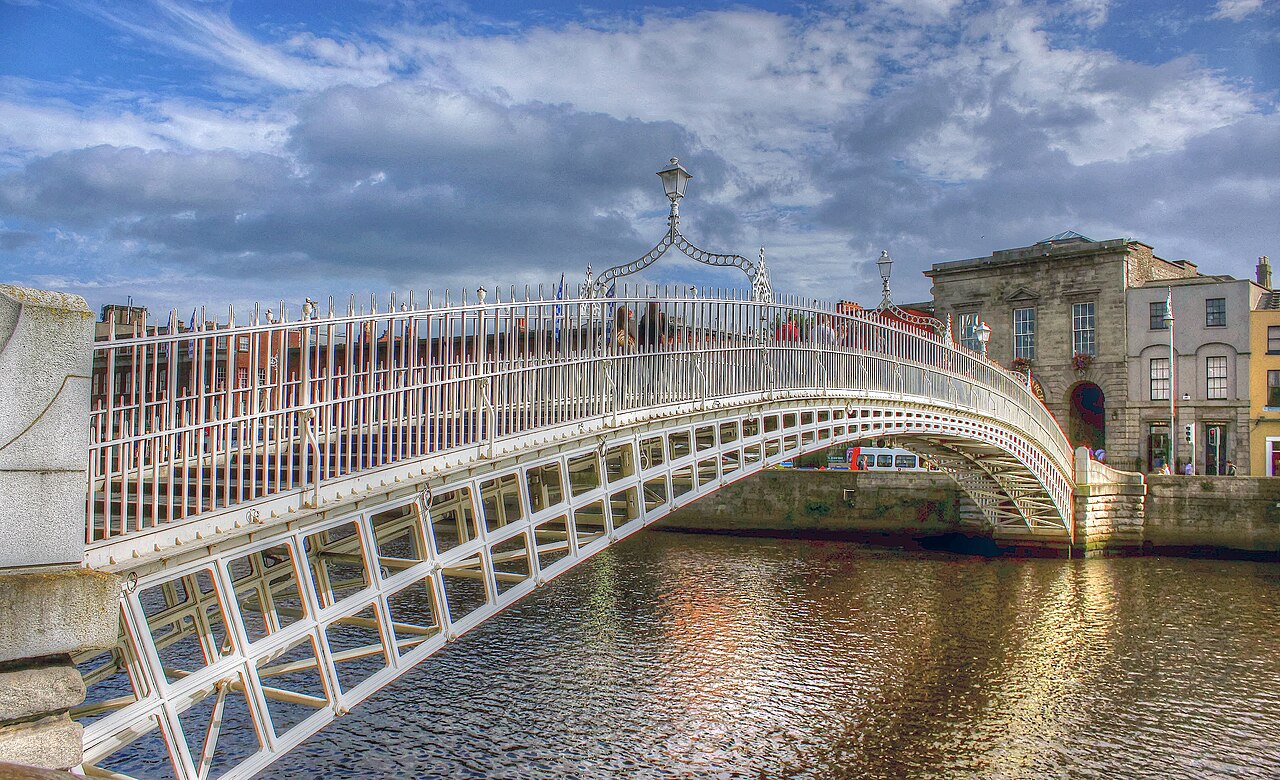
Ha'penny Bridge is a historic pedestrian bridge spanning the River Liffey in Dublin city centre. Its local name and common name are identical: Ha'penny Bridge. It holds a curated rank of 14 among 99 Dublin points of interest. The category is HISTORICAL. Stored production names and coordinates were copied without approximation from the entry-specific source identifying this visitor POI. The entry-specific source identifies this exact visitor POI. Open continuously, daily. This is an active public pedestrian crossing rather than a staffed attraction; it has no routine closure day or visitor-hours schedule.
Checked 2026-08-31 · Source
The bridge itself is a pedestrian crossing without enclosed interior spaces. Visitors experience the open walkway, iron railings, and views of the River Liffey. The structure's historical character derives from its cast-iron construction and continuous function as a footbridge. No additional attractions, exhibitions, or facilities are situated on the bridge. The surrounding area includes Dublin city centre streets, river embankments, and nearby commercial and cultural establishments accessible on foot from either end of the crossing. This is an active public pedestrian crossing rather than a staffed attraction; it has no routine closure day or visitor-hours schedule.
Checked 2026-08-31 · Source
A crossing of Ha'penny Bridge requires only a few minutes at walking pace. Many visitors incorporate the bridge into broader explorations of Dublin city centre, spending additional time observing the structure, photographing, or pausing at the midpoint. The duration of engagement depends entirely on individual preference. No guided tours, timed visits, or structured programmes are associated with this POI. Visitors typically allocate between five and twenty minutes for direct experience, with longer stays common for those integrating it into extended riverside walks. Free. The historic halfpenny pedestrian toll ended in 1919; no admission ticket is required.
Checked 2026-08-31 · Source
The bridge functions as a public pedestrian thoroughfare without controlled access points. Seasonal variations in daylight, weather conditions, and surrounding commercial activity influence visitor experience. Early mornings may offer reduced pedestrian traffic. Evenings present illuminated city surroundings. No source-verified information exists regarding restricted access periods, maintenance closures, or special opening arrangements. Open continuously, daily. Flights of granite steps provide access at both ends of the bridge. The 2001 restoration added a slip-resistant deck and widened the entrances, but no wheelchair or buggy ramps were installed because suitable ramps would have been too steep.
Checked 2026-08-31 · Source
No admission mechanism exists for this public pedestrian bridge. Historical context indicates the name derives from a former half-penny toll, long discontinued. Current crossing requires no payment. No source-verified information confirms whether commercial photography permits, filming licences, or special access fees apply in any circumstances. The bridge operates as unrestricted civic infrastructure. Free. The historic halfpenny pedestrian toll ended in 1919; no admission ticket is required. Flights of granite steps provide access at both ends of the bridge. The 2001 restoration added a slip-resistant deck and widened the entrances, but no wheelchair or buggy ramps were installed because suitable ramps would have been too steep.
Checked 2026-08-31 · Source
Ha'penny Bridge connects the north and south quays of the River Liffey in central Dublin. Multiple public transport routes serve the surrounding area, including bus services and the Luas tram system with nearby stops. Jervis is the nearest named Luas stop on the Red Line. From Jervis, head south to Lower Liffey Street and continue to the bridge's north entrance at Bachelor's Walk. The south entrance leads through Merchant's Arch into Temple Bar. Tara Street station is another central arrival option and serves DART and commuter trains.
Checked 2026-08-31 · Source
Pedestrian congestion occurs frequently given the bridge's narrow width and popularity. Cyclists occasionally use the crossing despite its pedestrian designation. Slippery conditions may develop in wet weather on the iron walkway. The open structure offers no shelter from precipitation or strong winds. River parapet height requires standard caution. No source-verified information exists regarding security patrols, emergency facilities, or lighting maintenance schedules. Flights of granite steps provide access at both ends of the bridge. Millennium Bridge, a short distance upstream, provides the nearby step-free alternative across the River Liffey.
Checked 2026-08-31 · Source
The bridge offers river-level perspectives of Dublin architecture, water traffic, and sky. Midpoint positioning captures symmetrical views along the Liffey. Lighting conditions vary seasonally and diurnally. No source-verified information confirms photography restrictions, tripod prohibitions, or commercial permit requirements. The narrow walkway complicates stationary positioning during busy periods. Dawn and dusk may provide favourable illumination of surrounding structures. No designated viewpoints or photography facilities are recorded. It is a pedestrian bridge across the River Liffey, linking Lower Liffey Street on the north bank with Temple Bar on the south bank.
Checked 2026-08-31 · Source
It is a pedestrian bridge across the River Liffey, linking Lower Liffey Street on the north bank with Temple Bar on the south bank.
The bridge was erected in 1816 and opened on 19 May that year.
Its official name is Liffey Bridge; it was originally called Wellington Bridge.
Pedestrians formerly paid a halfpenny toll to cross, creating the nickname that remained after the toll ended in 1919.
Dublin City Council identifies it as Dublin's first dedicated footbridge over the Liffey and Ireland's first iron bridge.
Dublin City Council removed love locks from Ha'penny Bridge in 2012 because their weight and fixings posed maintenance and damage risks.
Loading the interactive map…
The interactive map could not be loaded.
Last updated:
Source: OpenStreetMap contributors, Wikidata ·