Neve Tzedek
נווה צדק
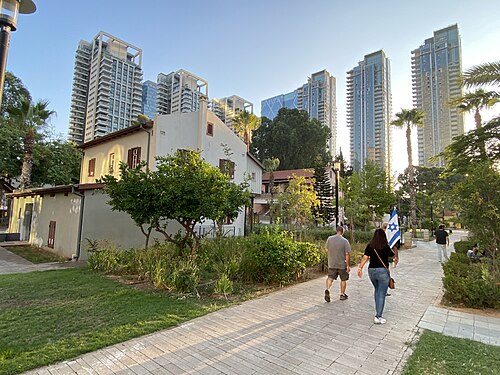
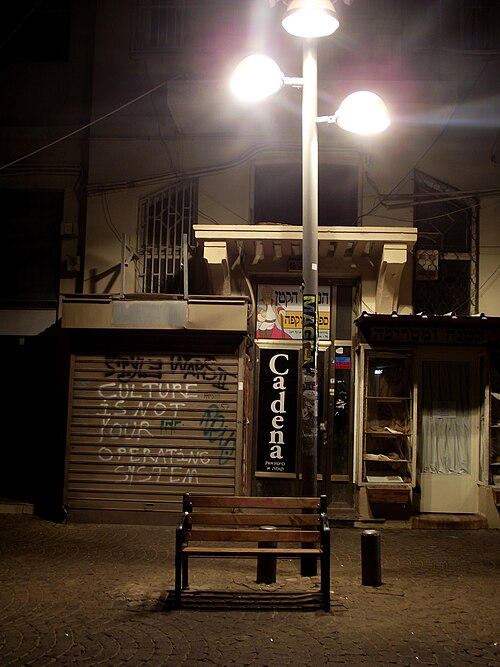
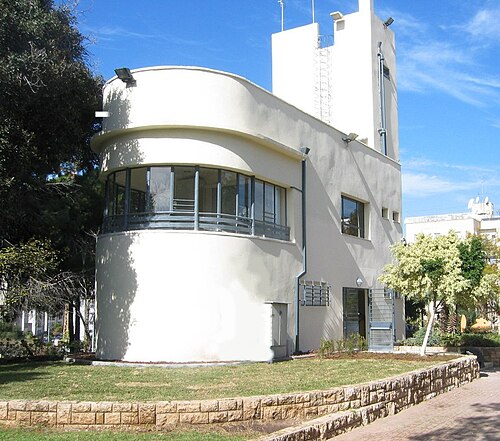
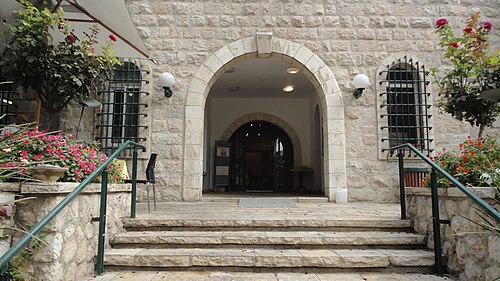
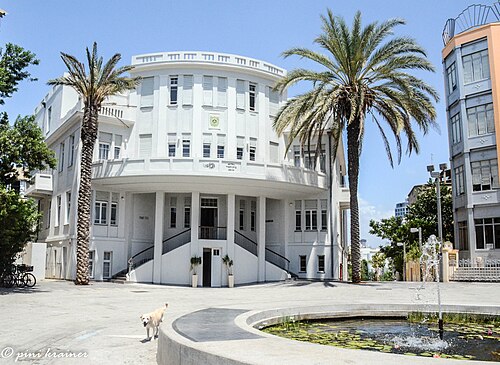
Neve Tzedek is a compact historic neighborhood within Tel Aviv-Yafo, founded in 1887 outside the walls of Jaffa. Its name means Oasis of Justice in Hebrew.
- Must see
- Activity
- Tel Aviv
Language · 11 published
Country guide
Israel occupies the Southern Levant, bordered by Lebanon, Syria, Jordan and Egypt, with the Mediterranean along its western coast, the Red Sea at its southern tip and Earth's lowest point, near the Dead Sea, to the east. Two cities carry most of what a visitor comes for and they are nothing alike. Jerusalem is the government seat and proclaimed capital, holding the sites the three Abrahamic religions hold in common; Tel Aviv is the largest urban area and the economic centre, a twentieth-century city on a beach. The Israeli-Palestinian conflict persists, and it governs where a visitor can go and when as firmly as any opening time does.
Reviewed by Elena Voss · Roavina Travel Editor
Every city catalogued in this country so far, ranked by how much there is to see.
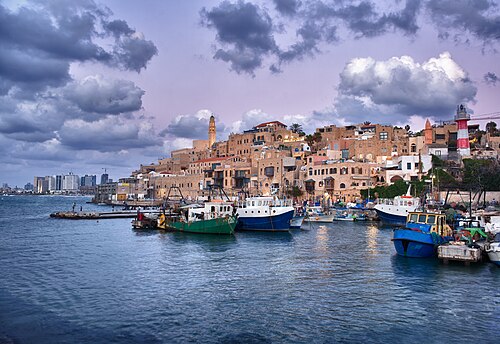
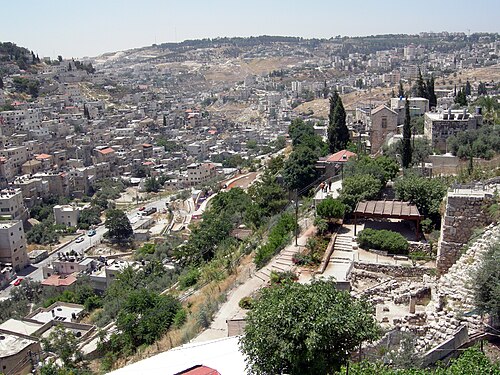
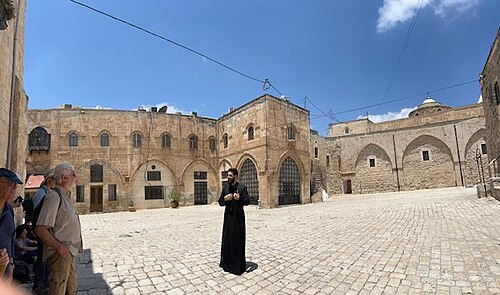
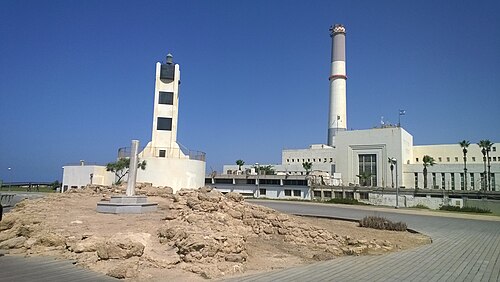
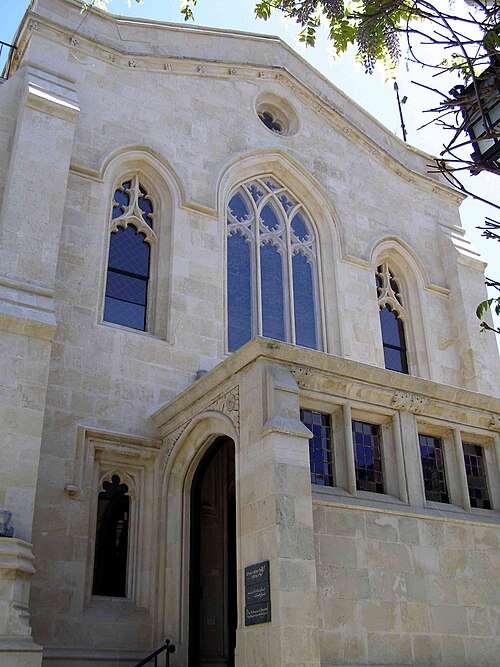
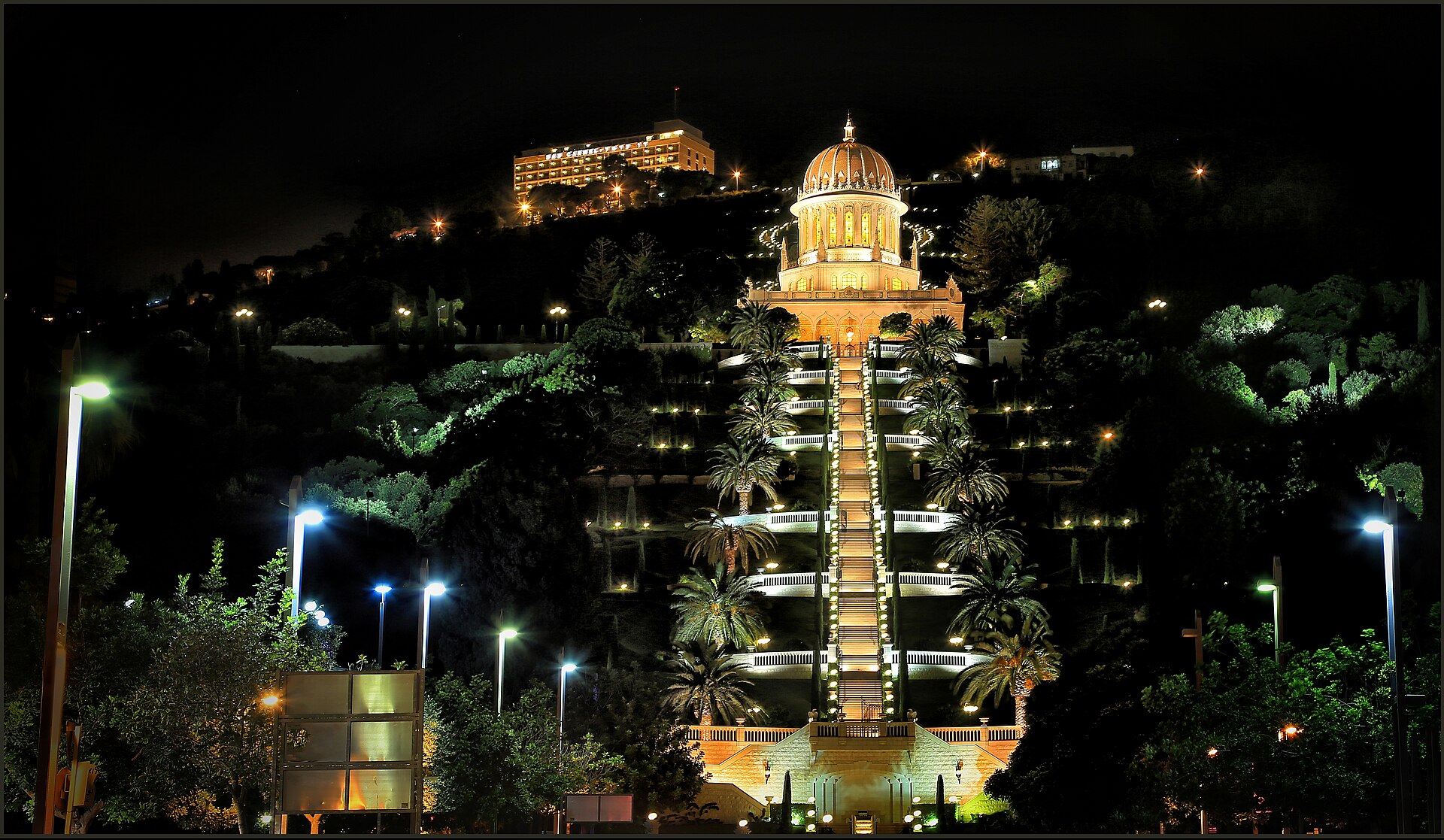
Photograph · askii · CC BY-SA 2.0
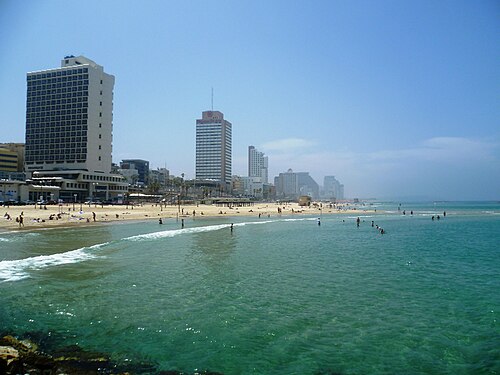
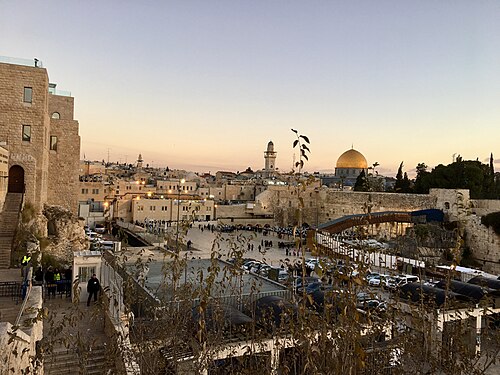
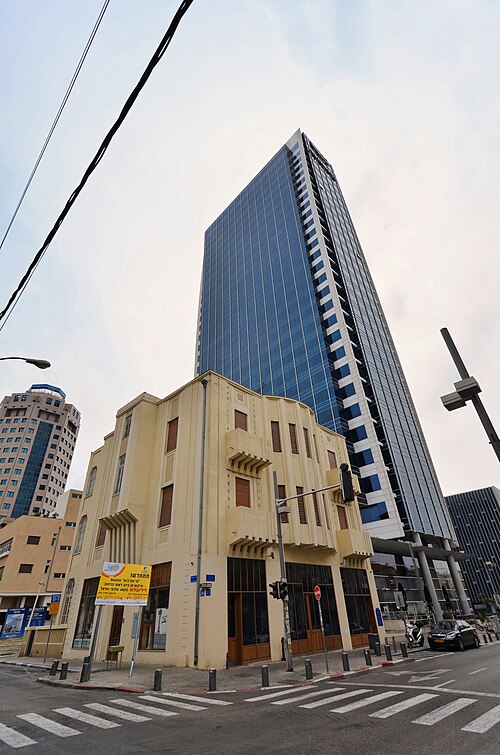
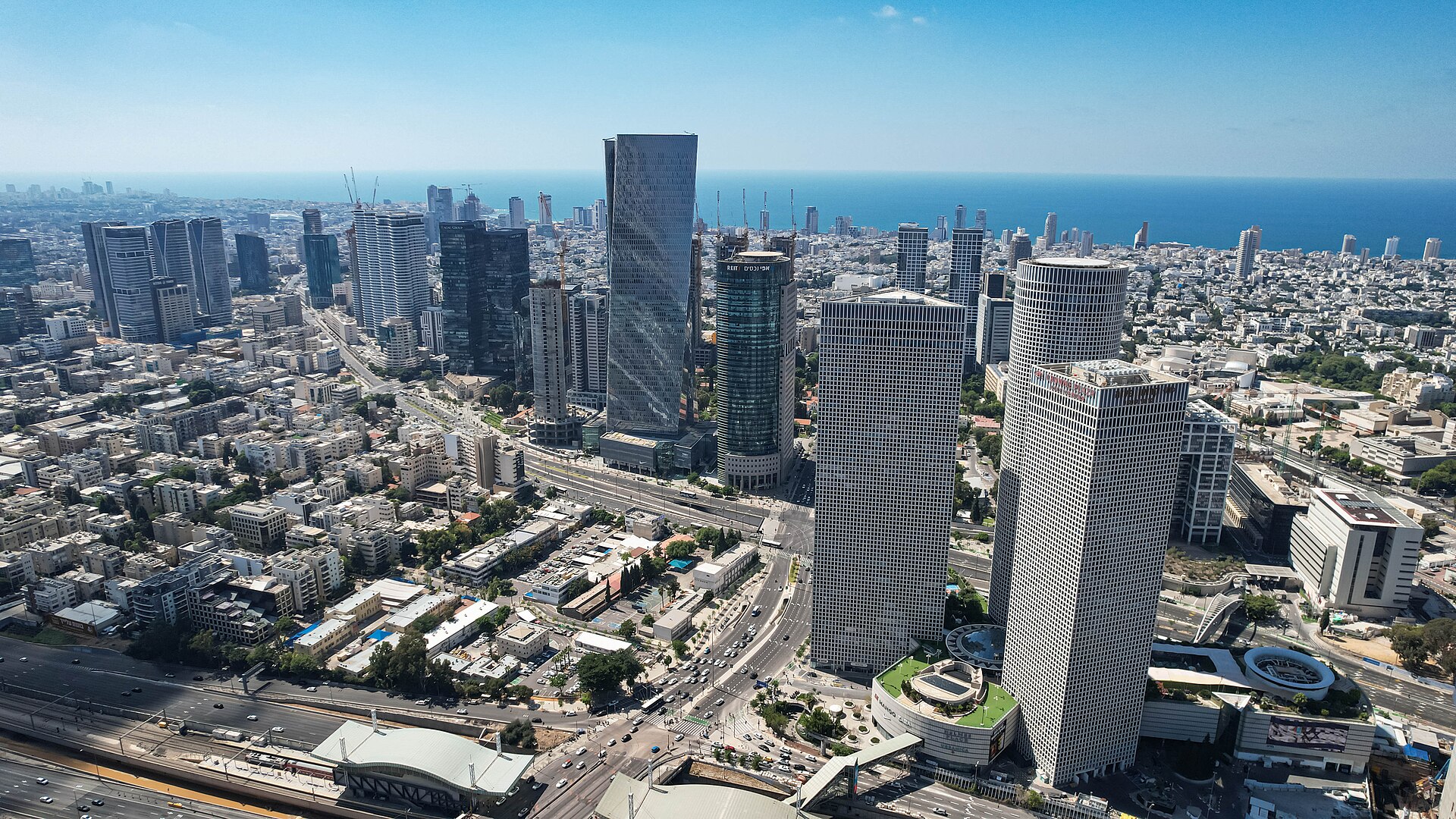
Photograph · Ynhockey · CC BY-SA 4.0
Ranked by importance — sitelinks, pageviews and heritage status, not editor preference.
108 places match
Category
Typical visit duration
Interests
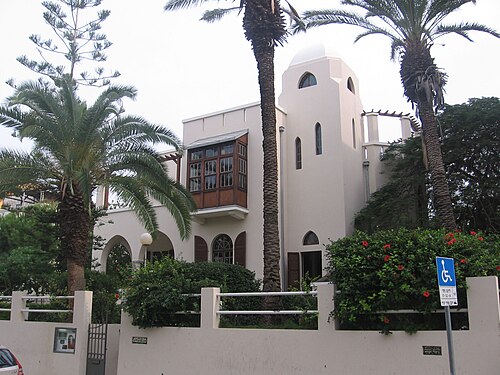
נווה צדק
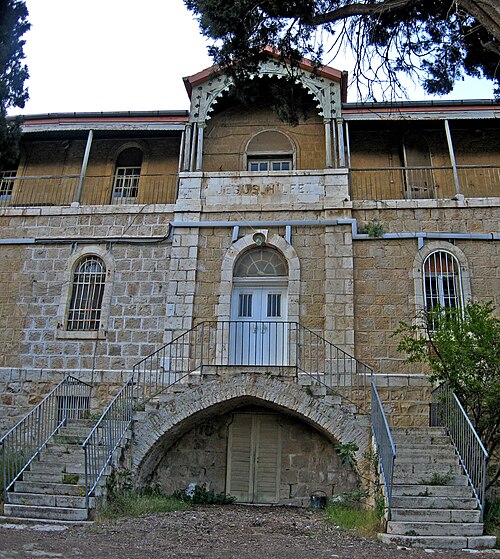
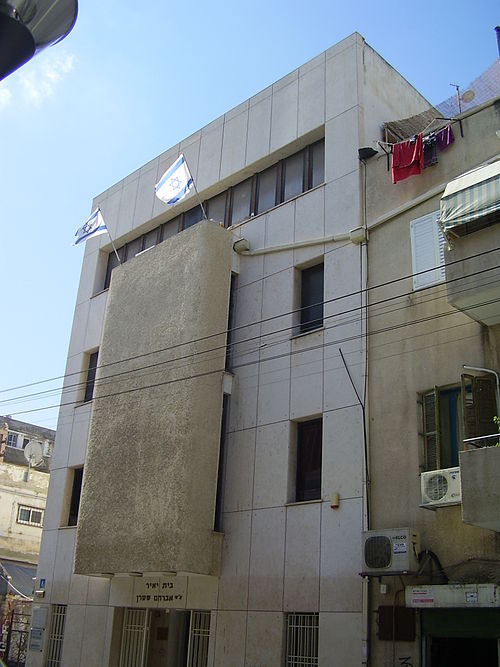
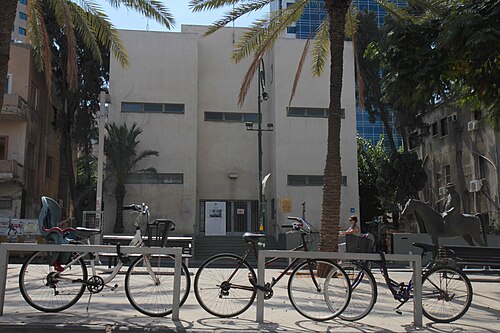
Neve Tzedek is a compact historic neighborhood within Tel Aviv-Yafo, founded in 1887 outside the walls of Jaffa. Its name means Oasis of Justice in Hebrew.
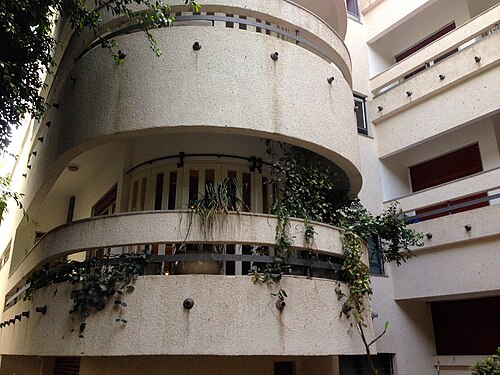
The White City of Tel Aviv is a UNESCO-listed urban ensemble, not one building or a gated attraction. UNESCO inscribed it in 2003 as an outstanding concentration of Modern Movement architecture adapted to Tel Aviv's cultural and climatic setting.
נמל יפו
Jaffa Port is the historic harbor at the southern edge of Tel Aviv-Yafo. Its maritime role reaches back millennia, while the present-day waterfront remains connected to working fishing activity.
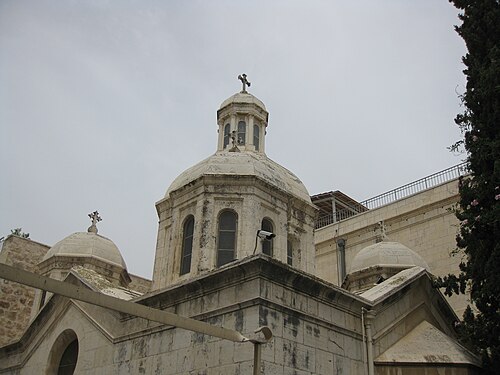
The Via Dolorosa is a processional route in the Old City of Jerusalem, traditionally held to be the path Jesus walked carrying his cross to crucifixion.
Gordon Beach is a public Mediterranean swimming beach in Tel Aviv, Israel. It occupies a central position along the city's coastline and functions as a distinct recreation stop separate from the contiguous Tel Aviv Promenade.
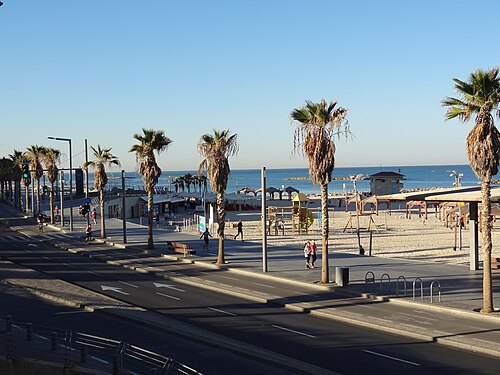
The Tel Aviv Promenade is a continuous seafront walkway and cycling route running along the Mediterranean coastline of Tel Aviv, Israel.
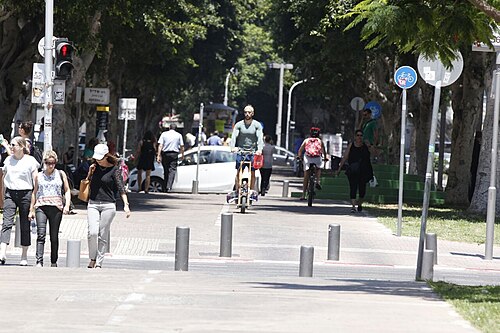
Rothschild Boulevard is a principal tree-lined avenue in central Tel Aviv, Israel. It forms the core public-space spine of the UNESCO-inscribed White City, recognized for its outstanding collection of Bauhaus and International Style architecture.
The City of David Archaeological Park is an independent ticketed archaeological park situated south of Jerusalem's Old City walls. It encompasses excavated remains associated with the ancient core of Jerusalem, identified with the biblical City of David.
Mount Zion is a hill in Jerusalem with deep historical and religious significance across multiple faiths.
שרונה
Sarona is a restored historical site in central Tel Aviv-Yafo, Israel, centred on a former Templar colony established by German Protestant settlers in the nineteenth century.
נמל תל אביב
Tel Aviv Port is a waterfront leisure and commercial district on Tel Aviv-Yafo’s Mediterranean coast.
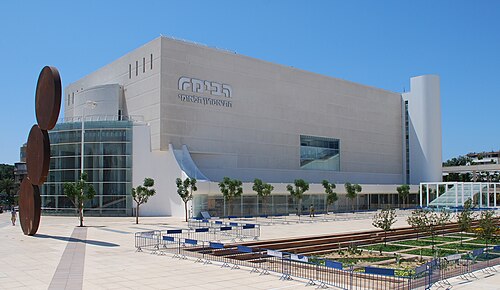
Habima National Theatre is Israel's national theatre, located in Tel Aviv at Habima Square. Established in 1917 in Moscow and relocated to Mandatory Palestine in 1928, it holds significant cultural and historical importance.
מרכז סוזן דלל למחול ולתיאטרון
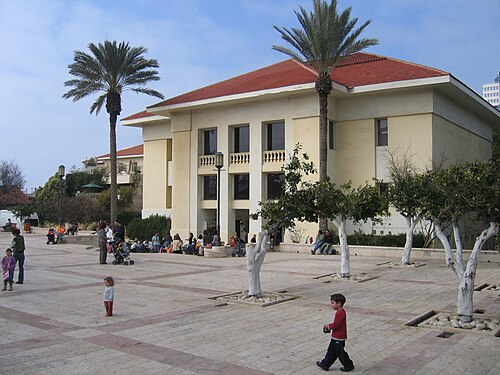
The Suzanne Dellal Centre for Dance and Theatre is Tel Aviv-Yafo's principal dance campus and a major cultural landmark in the Neve Tzedek neighbourhood.
מרכז יצחק רבין לחקר ישראל
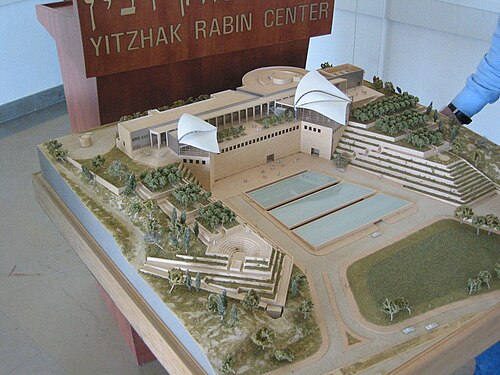
The Yitzhak Rabin Center is a museum and research institution in Tel Aviv-Yafo dedicated to the life and legacy of Yitzhak Rabin, the fifth Prime Minister of Israel.
Nahalat Binyamin Pedestrian Mall is a pedestrianised street in central Tel Aviv, Israel. It functions as a dedicated crafts market with scheduled market operations, operating distinctly from the neighbouring Carmel Market.
Kidron Valley is a deep ravine on the eastern side of the Old City of Jerusalem, running between the Temple Mount and the Mount of Olives.
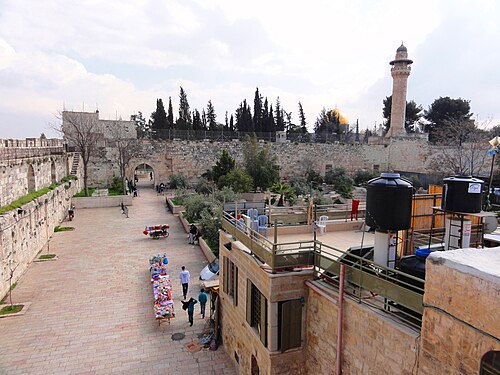
The Jewish Quarter is one of four traditional quarters in the walled Old City of Jerusalem. It occupies the southeastern sector of the historic enclosure, with boundaries roughly corresponding to ancient divisions.
מתחם התחנה
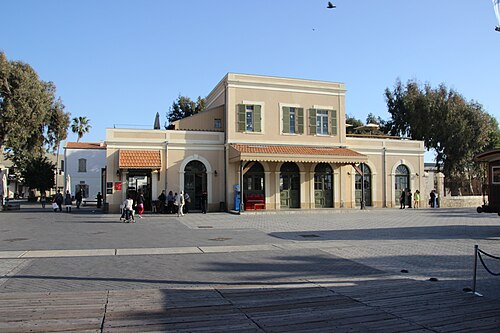
HaTachana is a heritage and visitor precinct in Tel Aviv-Yafo that reuses the historic Jaffa railway station. The original station was part of the Jaffa-Jerusalem railway, one of the earliest rail lines in the region.
מוזיאון אזור
Azor Museum is a local heritage museum in Azor, within the Tel Aviv metropolitan area.
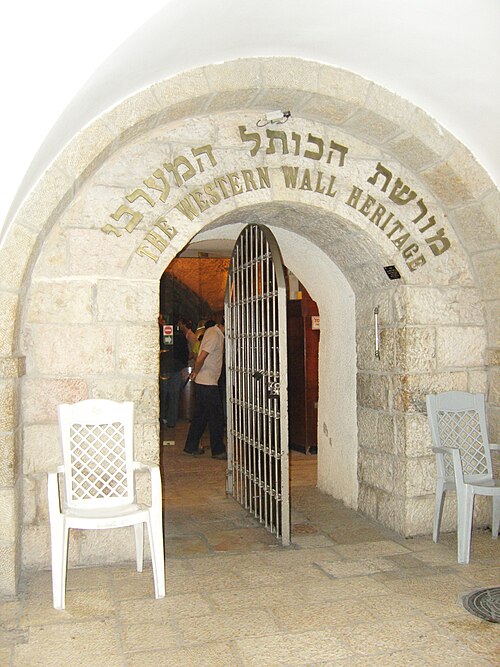
The Western Wall Tunnels are an underground archaeological route beside the northern extension of the Western Wall in Jerusalem’s Old City.
מוזיאון בת-ים לאמנות עכשווית
Bat Yam Museum of Art is a contemporary art museum in Bat Yam, the coastal city immediately south of Tel Aviv-Yafo. Its Hebrew name, מוזיאון בת-ים לאמנות עכשווית, identifies its focus on contemporary art.
The Muslim Quarter occupies the northeastern part of Jerusalem’s walled Old City and is the largest and most populous of its four traditional quarters.
בית אבא
Beit Abba, בית אבא, is listed as a museum in the Tel Aviv-Yafo visitor inventory.
The Christian Quarter is one of the four traditional quarters of the Old City of Jerusalem. It occupies the northwestern quadrant of the walled city and contains numerous sites of profound significance to Christianity.
The Armenian Quarter is one of the four traditional quarters of the Old City of Jerusalem. It occupies the southwestern corner of the walled city and represents the smallest of the four quarters by population.
מוזיאון ההגנה
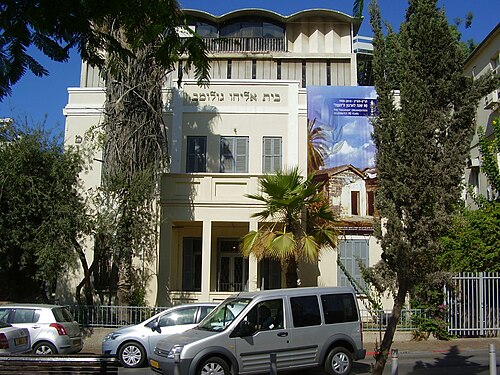
Bet Eliyahu, known locally as מוזיאון ההגנה, is a museum in Tel Aviv-Yafo dedicated to the Haganah, the Jewish defense organization that operated during the British Mandate period before the establishment of Israel.
העיר העתיקה
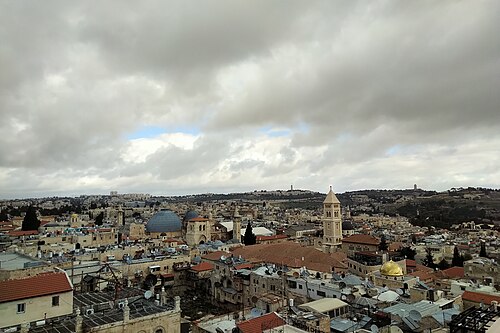
The Old City of Jerusalem is a walled area within the modern city of Jerusalem, recognized as a UNESCO World Heritage Site since 1981. It holds profound significance for Judaism, Christianity, and Islam.
הבניין ע״ש שמואל והרטה עמיר
The Herta and Paul Amir Building is a museum building in Tel Aviv-Yafo, known locally as הבניין ע״ש שמואל והרטה עמיר. Its distinctive identity comes from its role as a formal cultural building within the city’s museum landscape.
הרצלילינבלום
Herzlilinblum Museum is a cultural institution listed in the Tel Aviv-Yafo visitor inventory and referenced in Wikidata as Q7037613.
חוסמסה
Hussamssa, also known locally as חוסמסה, is a museum listed in the Tel Aviv-Yafo visitor inventory. The institution is a recognized cultural site within the municipality and offers travelers a destination beyond the city’s best-known museums.
מכון ז'בוטינסקי בישראל
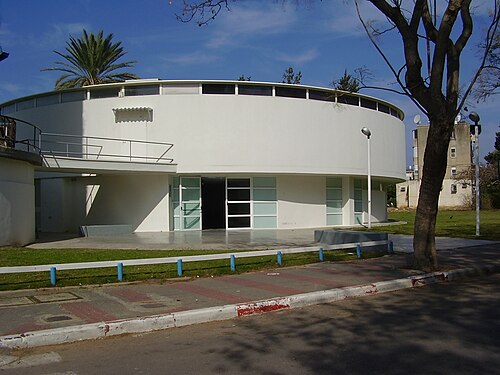
The Jabotinsky Institute in Israel is a specialised museum and research centre in Tel Aviv-Yafo devoted to Ze’ev Jabotinsky, his writing, political activity and historical legacy.
מוזיאון ז'בוטינסקי
The Jabotinsky Museum is a museum in Tel Aviv-Yafo dedicated to the life and legacy of Ze'ev Jabotinsky, a prominent Zionist leader, writer, and founder of the Revisionist Zionist movement.
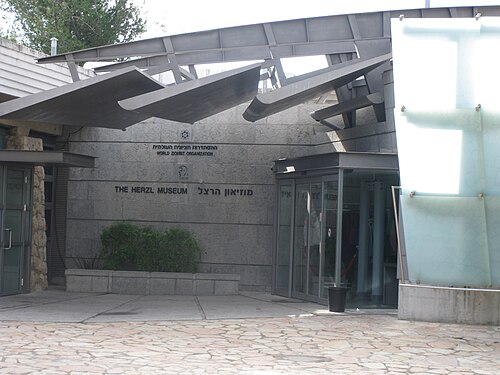
The Herzl Museum is a Jerusalem museum devoted to Theodor Herzl, the founder of modern political Zionism. It stands on Mount Herzl, a national memorial area that also contains Herzl’s grave, military cemeteries, and other commemorative sites.
הכותל המערבי
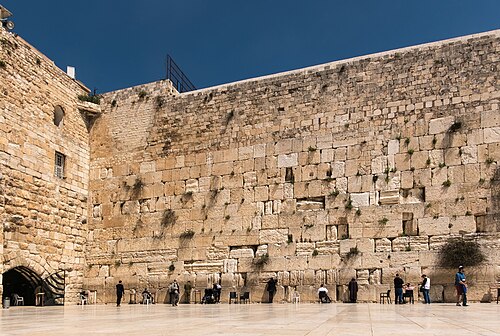
The Western Wall is an ancient limestone retaining wall on the western side of Jerusalem's Temple Mount. It is one of the city's most important Jewish prayer and pilgrimage sites and holds deep significance within Jerusalem's wider religious landscape.
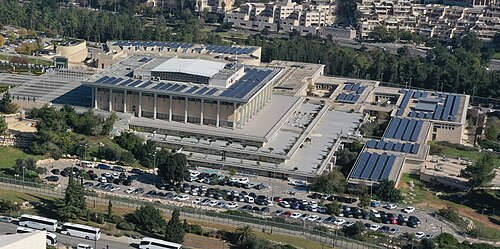
The Knesset is the unicameral national legislature of Israel, located in Jerusalem's Givat Ram neighborhood. Established in 1949 following Israel's independence, it serves as the seat of parliamentary democracy for the state.
בית ידידות מיין
Maine Friendship House, known locally as בית ידידות מיין, is a cultural house in Tel Aviv-Yafo dedicated to the friendship between the U.S. state of Maine and Israel.
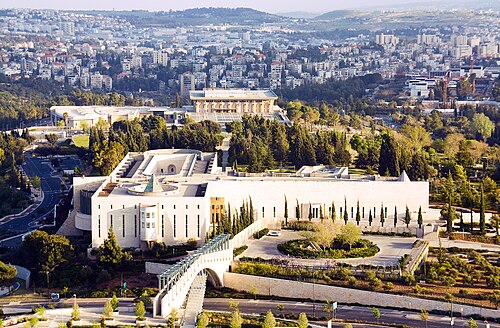
The Supreme Court of Israel is the highest judicial authority in the State of Israel, located in Jerusalem. It serves as both the final court of appeals and the High Court of Justice for administrative matters.
מוזיאון ישראל
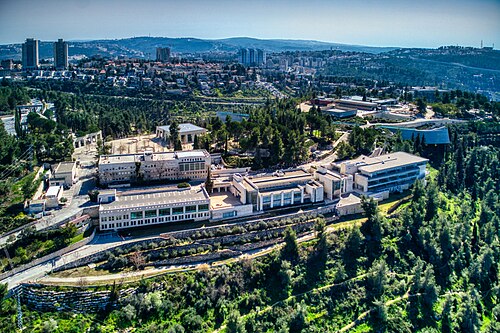
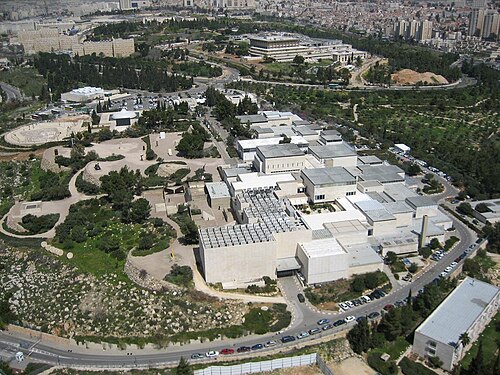
The Israel Museum is Jerusalem’s encyclopaedic museum, opened in 1965 on a large campus in Givat Ram. Its collections connect archaeology, Jewish cultural history, European and international art, Israeli art, design and photography.
מסגד אל אקצא
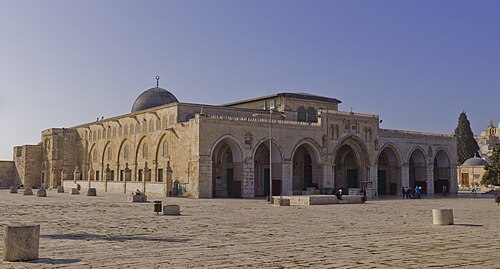
Al-Aqsa Mosque stands as one of Islam's holiest sites, occupying the southern portion of the Haram al-Sharif, or Temple Mount, in Jerusalem's Old City. The silver-domed mosque serves as a place of worship and pilgrimage for Muslims worldwide.
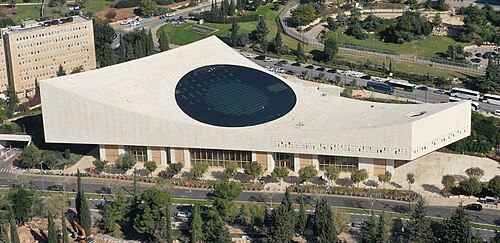
The National Library of Israel serves as the country's central research library and pre-eminent cultural institution dedicated to preserving the intellectual heritage of Israel and the Jewish people.
מגדל דוד
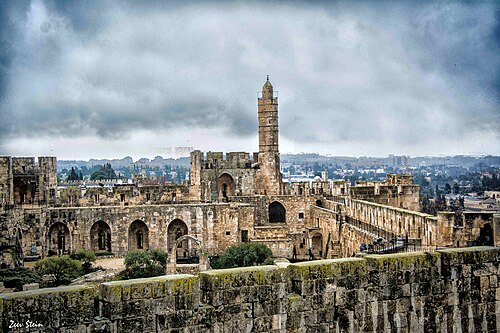
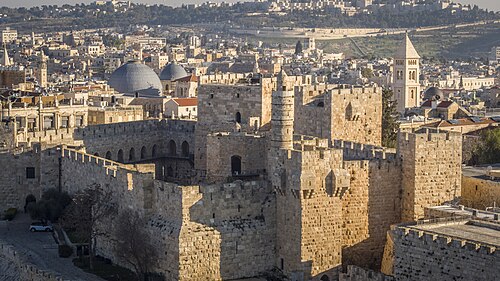
The Tower of David is a historic citadel beside Jaffa Gate, at the western edge of Jerusalem’s Old City. Its name reflects a later identification rather than a direct connection with King David.
جبل الزيتون
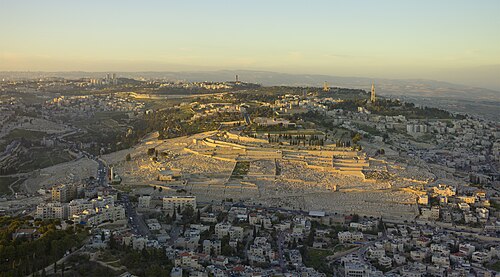
The Mount of Olives is a ridge east of Jerusalem's Old City, rising above the Kidron Valley. It is sacred within Jewish, Christian and Muslim traditions and combines broad views, churches, pilgrimage landmarks and a vast Jewish cemetery.
מוזיאון רוקפלר
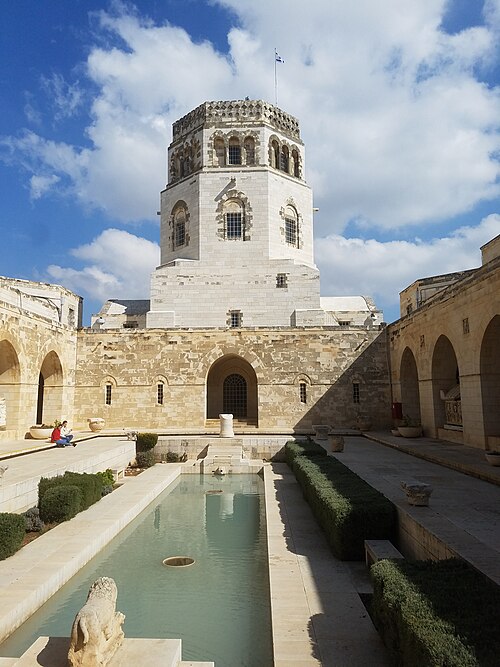
The Rockefeller Archaeological Museum is an archaeological museum in Jerusalem. It houses a significant collection of artifacts recovered from excavations conducted in the region during the British Mandate period and earlier.
كنيسة رقاد السيدة العذراء
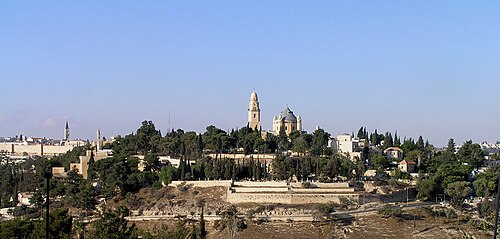
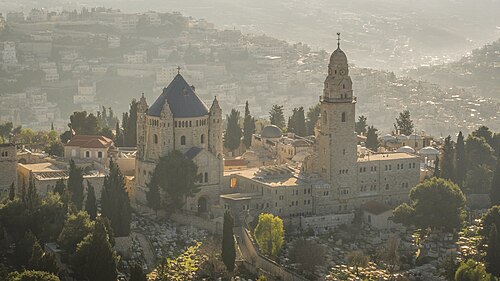
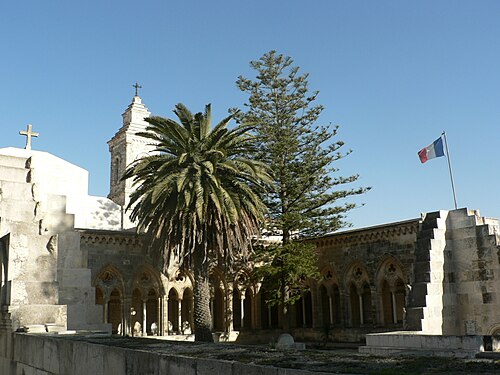
Dormition Abbey is a Benedictine monastery on Mount Zion, southwest of Jerusalem’s Old City walls. The early twentieth-century church commemorates the dormition, or falling asleep, of the Virgin Mary according to Christian tradition.
حديقة الجثسيماني
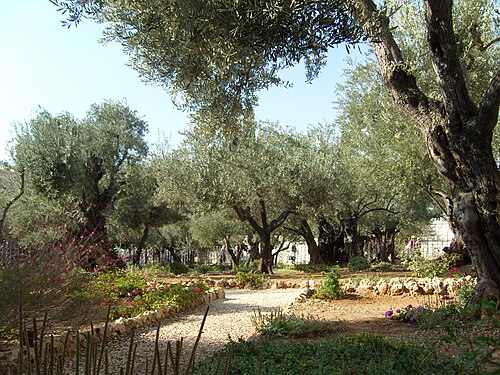
The Garden of Gethsemane is a garden at the foot of the Mount of Olives in East Jerusalem. It holds profound significance in Christian tradition as the site where Jesus is said to have prayed before his crucifixion.
יד ושם
Yad Vashem is Israel’s national Holocaust memorial and a major place of remembrance on the western slope of Mount Herzl in Jerusalem. Established by the Knesset in 1953, the institution combines commemoration, historical interpretation, documentation, research and education.
טחנת הרוח
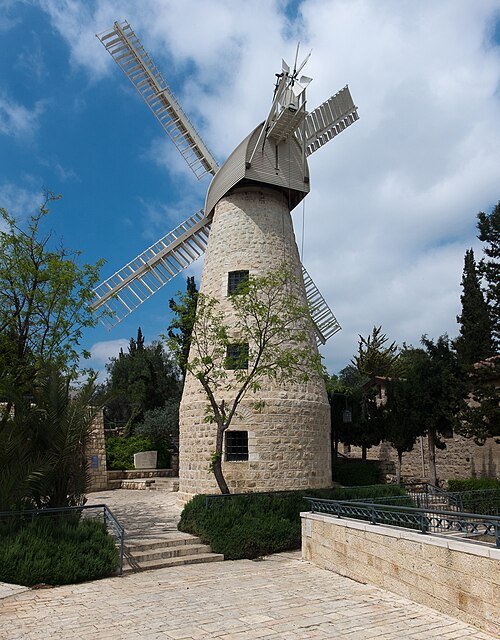
Montefiore Windmill is a historic landmark in Jerusalem’s Yemin Moshe neighborhood. Funded by the British Jewish philanthropist Moses Montefiore in the nineteenth century, it represents an effort to support Jewish settlement, agriculture and economic activity beyond the Old City walls.
אנו - מוזיאון העם היהודי
ANU – Museum of the Jewish People is a museum in Tel Aviv-Yafo dedicated to the narrative and culture of Jewish communities worldwide. Formerly known as Beit HaTfutsot, it underwent significant rebranding and renovation.
מוזיאון ארץ ישראל
Eretz Israel Museum is a multidisciplinary museum complex in Tel Aviv-Yafo devoted to the history and culture of the Land of Israel.
בית טיכו
Ticho House is a historic residence and cultural venue in central Jerusalem, close to Zion Square. The house was the home of artist Anna Ticho and ophthalmologist Dr.
מוזיאון תל אביב לאומנות
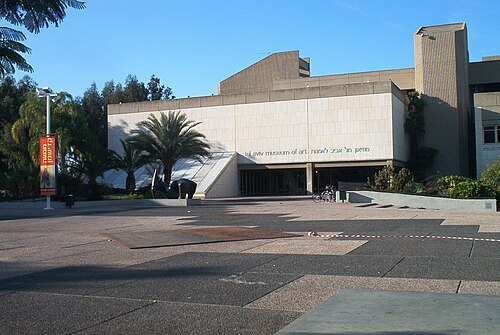
The Tel Aviv Museum of Art is a major visual-arts institution in Tel Aviv-Yafo, known for collections and exhibitions covering modern and contemporary art alongside works from other periods.
الحرم القدسي الشريف
Temple Mount is the religious compound in Jerusalem's Old City known in Islamic tradition as al-Haram al-Sharif.
בית הכנסת החורבה
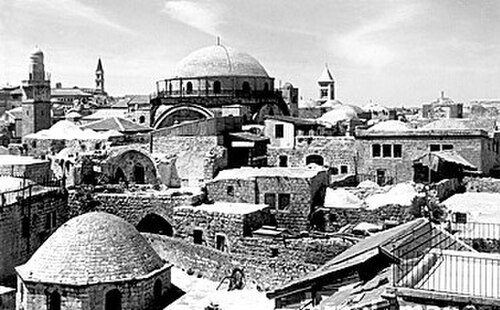
The Hurva Synagogue is a prominent Jewish house of worship in the Old City of Jerusalem, situated in the Jewish Quarter.
בית בן גוריון
Ben-Gurion House in Tel Aviv is the preserved home of David Ben-Gurion, Israel’s first Prime Minister. The residence presents a quieter, personal side of a major political figure, contrasting with the public scale of state history.
הרובע ההרודיאני
The Herodian Quarter is an archaeological site in Jerusalem's Old City revealing remains of wealthy residential structures from the late Second Temple period. Excavations uncovered substantial dwellings with mosaic floors, ritual baths, and domestic furnishings suggesting affluent inhabitants.
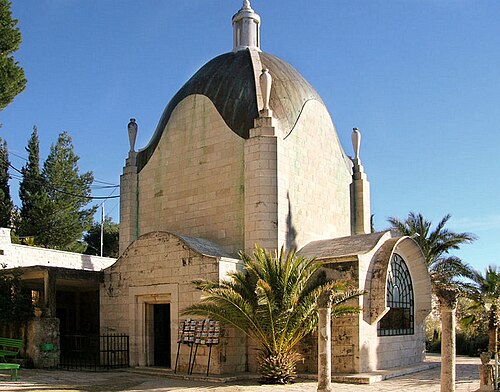
Dominus Flevit Church is a Roman Catholic church on the Mount of Olives in Jerusalem. Its name means "The Lord Wept" in Latin, referencing the Gospel account of Jesus weeping over the city.
מגדל השעון יפו
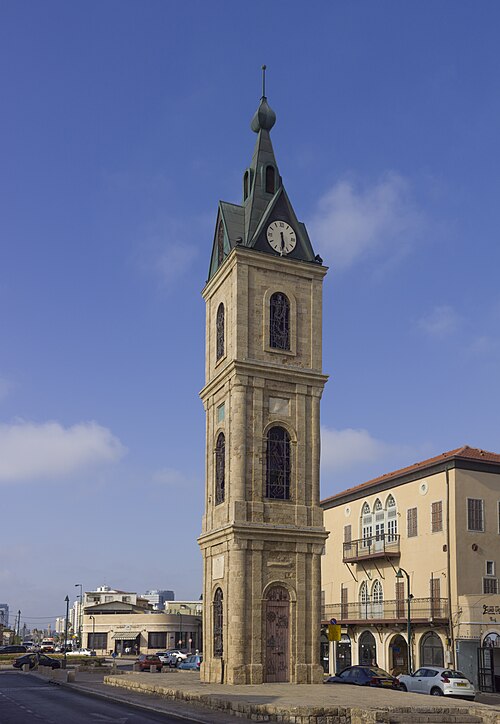
Jaffa Clock Tower is an Ottoman-era clock tower standing in central Jaffa, the ancient port district now incorporated into Tel Aviv-Yafo. Built during the late Ottoman period, it remains the defining landmark of this historic area.
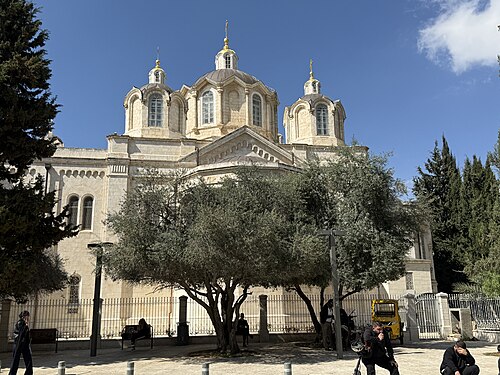
השילוש הקדוש
Holy Trinity Cathedral is a Christian religious site in Jerusalem. It serves the Russian Orthodox community and stands as a significant place of worship within the city's diverse religious landscape.
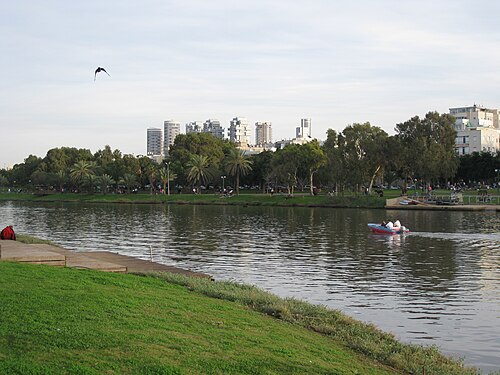
גני יהושע
Yarkon Park, known locally as פארק הירקון, is Tel Aviv-Yafo’s principal urban park and largest green space. It follows the Yarkon River through the northern part of the city, bringing lawns, gardens, paths and recreation into a dense coastal metropolis.
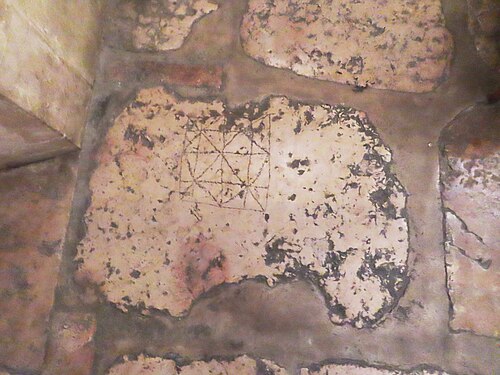
Lithostrotos
Lithostrotos is an exposed stone-pavement site inside the Convent of the Sisters of Zion in Jerusalem’s Old City.
בית ביאליק
Bialik House is the former Tel Aviv residence of Chaim Nachman Bialik, Israel’s national poet. The house now functions as a museum dedicated to his life, writing and cultural world.
בית הנסן
Hansen House is a historic stone compound in Jerusalem that began as a leprosy hospital in the late nineteenth century during the Ottoman period.
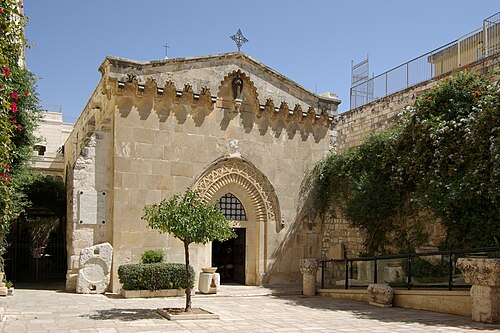
The Church of the Flagellation is a Roman Catholic church located in the Old City of Jerusalem. It stands within the Franciscan Monastery of the Flagellation complex near the traditional Via Dolorosa path.
מוזיאון לח"י
The Lehi Museum in Tel Aviv-Yafo presents the history of Lehi, also called the Stern Group, a Zionist underground movement active during the British Mandate of Palestine.
המושבה האמריקאית–גרמנית
The American–German Colony is a historic neighborhood in Jaffa, within Tel Aviv-Yafo. Its streets reflect nineteenth-century settlement by American and German communities and form part of Jaffa’s layered urban heritage.
תל קסילה
Tell Qasile is an archaeological site in Tel Aviv, Israel, located within the Eretz Israel Museum complex. It contains the remains of a Philistine settlement dating to the 12th-11th centuries BCE.
Church of the Condemnation
The Church of the Condemnation is a Roman Catholic chapel in Jerusalem's Old City, situated along the Via Dolorosa. It commemorates the traditional site where Jesus was condemned to death by Pontius Pilate.
מוזיאון נחום גוטמן
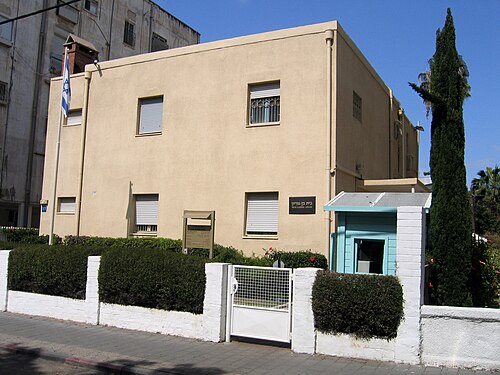
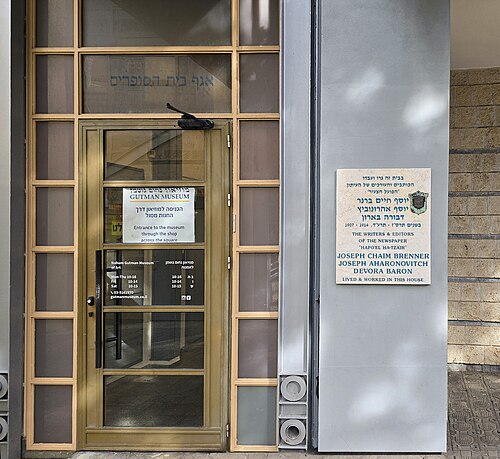
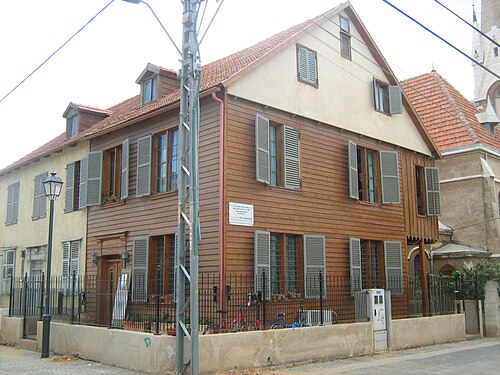
The Nahum Gutman Museum of Art is a museum dedicated to the work of Israeli artist Nahum Gutman, located in Tel Aviv-Yafo. It occupies a historic building in the Neve Tzedek neighborhood, one of the city's oldest districts.
פארק צ'ארלס קלור
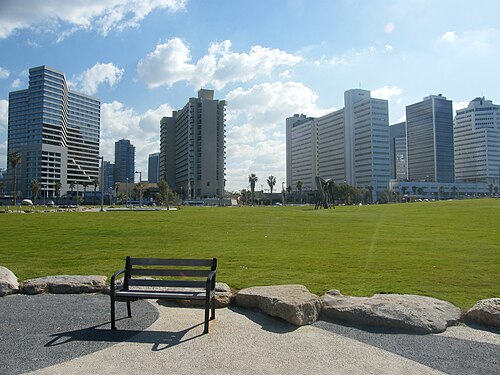
Charles Clore Park is a broad waterfront green space in Tel Aviv-Yafo, stretching along the Mediterranean coast between central Tel Aviv and Jaffa.
הקאמרי
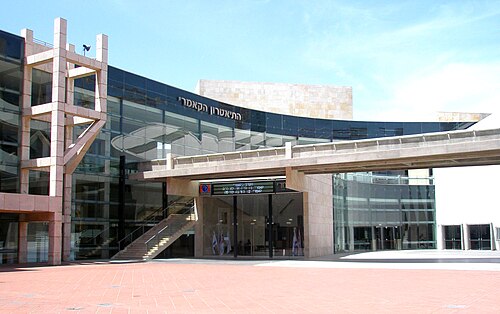
The Cameri Theatre is a prominent repertory theatre located in Tel Aviv-Yafo, Israel. Established in 1944, it has grown to become one of the country's leading theatrical institutions.
علية صهيون
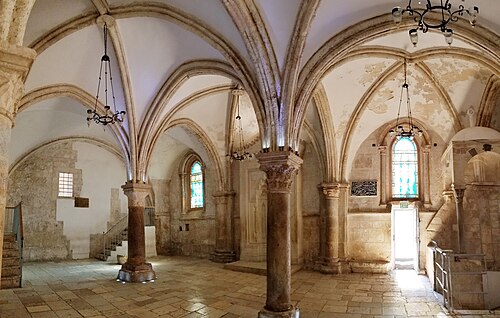
The Room of the Last Supper, also called the Cenacle, is an upper-floor chamber in Jerusalem traditionally venerated as the site of Jesus's final meal with his disciples.
قبر السيدة العذراء مريم
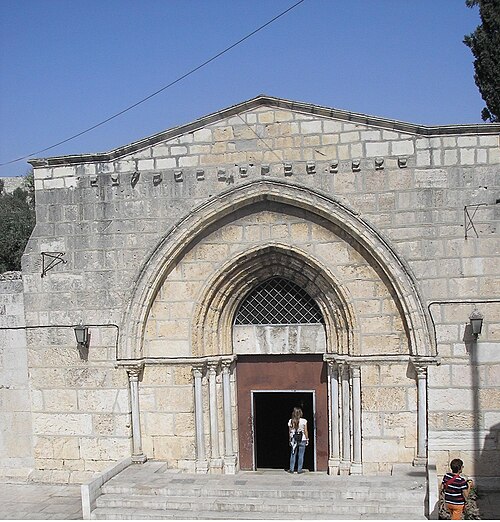
The Tomb of the Virgin Mary is a Christian shrine in Jerusalem traditionally believed to be the burial place of Mary, mother of Jesus.
בית ראובן רובין
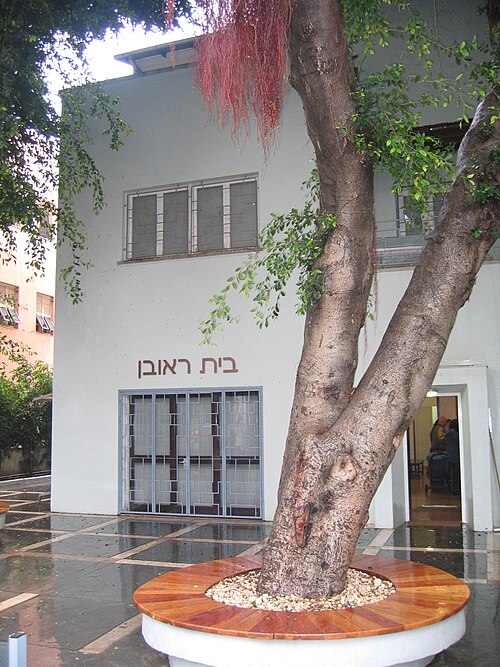
The Rubin Museum, also known as Beit Reuven, occupies Reuven Rubin’s former residence and studio in Tel Aviv-Yafo.
הגן הבוטני
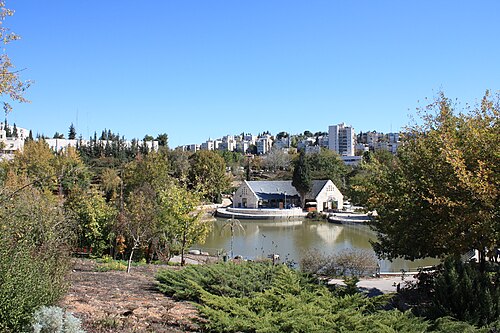
Jerusalem Botanical Gardens is a living plant collection and public green space in Jerusalem. It combines botanical conservation, research, education, and visitor enjoyment.
מוזיאון הטבע ע"ש שטיינהרדט
Steinhardt Museum of Natural History is a Tel Aviv-Yafo museum devoted to natural-history collections and public learning. It provides a way to explore biodiversity, ecology, specimens, and the natural world within a city known for art, beaches, and urban life.
الكنيسة اللوثرية
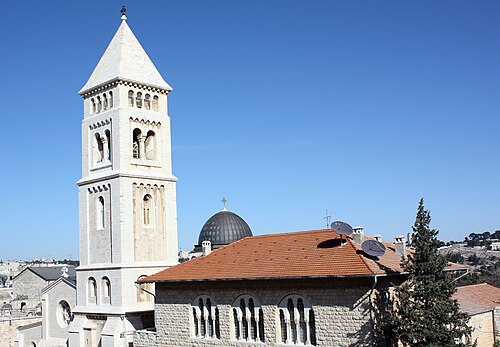
The Lutheran Church of the Redeemer stands in the Old City of Jerusalem, serving as a Protestant house of worship within the Christian Quarter. Completed in the late nineteenth century, it represents German Lutheran presence in the Holy Land.
كنيسة الصعود
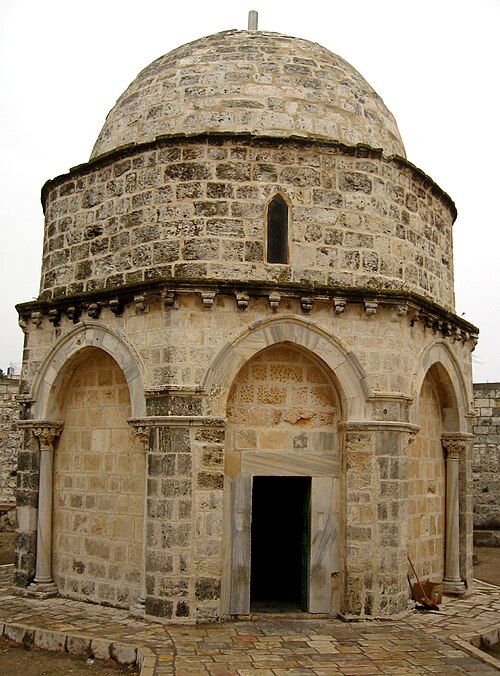
The Chapel of the Ascension is a Christian shrine on the Mount of Olives in Jerusalem. It marks the traditional site where believers hold that Jesus ascended into heaven forty days after resurrection.
كنيسة كل الأمم
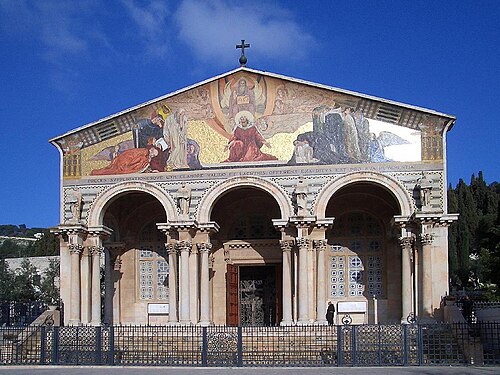
The Church of All Nations, also called the Basilica of the Agony, is a Roman Catholic church beside the Garden of Gethsemane on Jerusalem’s Mount of Olives.
היכל העצמאות
Independence Hall, also known as Beit Ha’atzmaut, is the Tel Aviv building where David Ben-Gurion proclaimed the establishment of the State of Israel on 14 May 1948.
מוזיאון בית יוסף באו
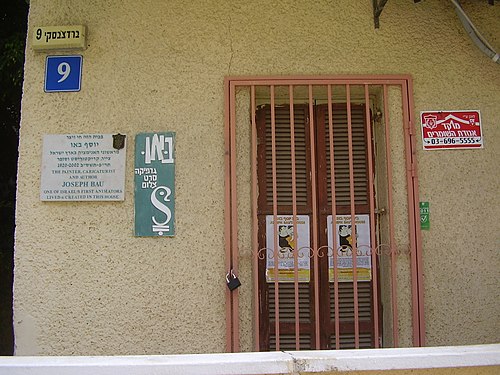
Joseph Bau House is a museum in Tel Aviv-Yafo devoted to Joseph Bau, a Holocaust survivor, artist, animator and graphic designer. The museum connects Bau’s personal history with his creative work, making the visit both biographical and artistic.
מוזיאון אילנה גור
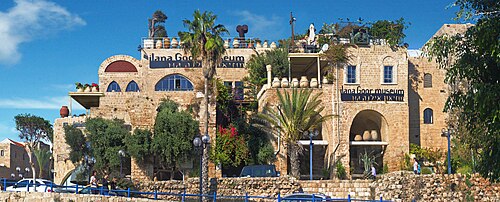
Ilana Goor Museum is a private museum in Jaffa’s historic quarter, housed in an eighteenth-century building that once served as a pilgrims’ inn. The museum combines the atmosphere of a former home with a collection shaped by artist Ilana Goor.
גן סאקר
Sacher Park is a large public green space in central Jerusalem, offering an outdoor pause within the city. It serves residents and visitors seeking open air, informal recreation, walking, and rest.
מוזיאון המדע ע"ש ברנרד בלומפילד
Bloomfield Science Museum is an interactive science museum in Jerusalem’s Givat Ram area. It turns scientific ideas into hands-on experiences and welcomes visitors of different ages, with a particularly strong appeal for children and families.
התחנה לחקר ציפורי ירושלים
Jerusalem Bird Observatory is an urban nature site in central Jerusalem, where wild birds can be watched against a city backdrop.
גן וואהל לוורדים
Wohl Rose Park is a landscaped public garden near Jerusalem’s Knesset and Israel Museum area. Its focus is roses, arranged in formal beds that create a calm outdoor stop within the city’s governmental and cultural district.
مورستان
The Muristan is a historic complex in the Christian Quarter of Jerusalem's Old City. Its name derives from the Persian word for hospital, reflecting its origins as a medical institution founded by the Knights Hospitaller during the Crusader period.
בית העיר תל אביב-יפו
Beit Ha'Ir, בית העיר תל אביב-יפו, is Tel Aviv-Yafo's municipal museum, known in English as the “House of the City.” Its role is to present the history and urban development of Tel Aviv-Yafo, making it a strong choice for travelers…
תל כודאדי
Tel Kudadi is an archaeological site in Tel Aviv-Yafo containing remains of an ancient settlement.
כנסיית המשיח
Christ Church Jerusalem is a historic Anglican church within the Old City walls near Jaffa Gate. Founded in the nineteenth century, it is recognised as the oldest Protestant church in the Middle East.
שבע טחנות
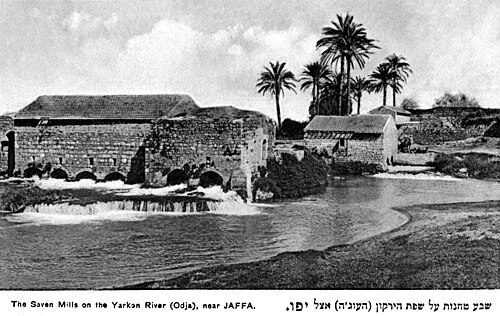
Sheva Tahanot, or שבע טחנות, is an archaeological site in Tel Aviv-Yafo whose name means Seven Mills. The name connects the place with milling and industrial activity, adding a practical, working dimension to the city’s historical landscape.
גבעת נפוליאון (תל גריסה)
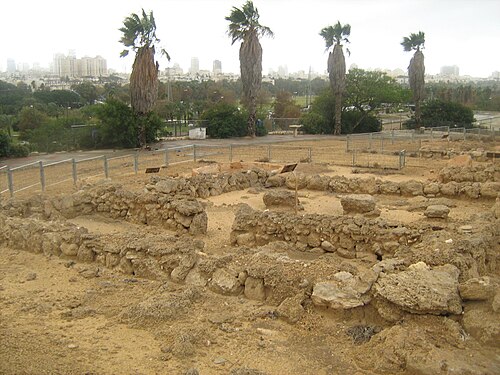
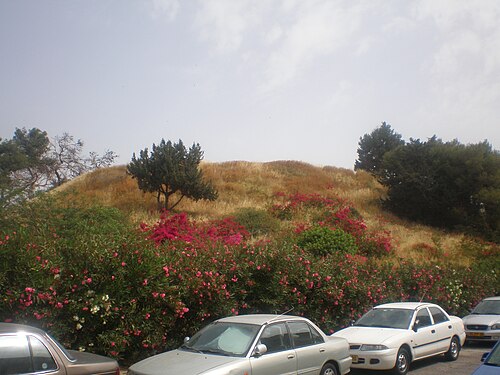
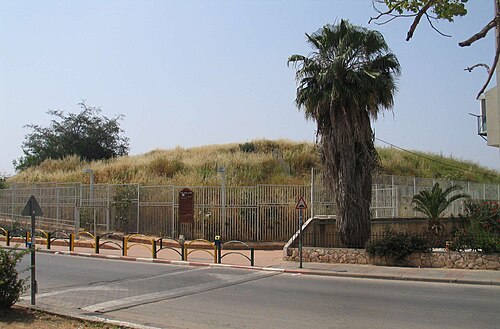
Tel Gerisa, also called Tel Napoleon, is an archaeological mound within Tel Aviv-Yafo. A tel is a settlement hill formed by layers of occupation built up over successive periods, making the landscape itself part of the historical evidence.
תל זיתון
Tel Zeton is an archaeological site within the Tel Aviv-Yafo municipal area.
ארבעת בתי הכנסת הספרדיים
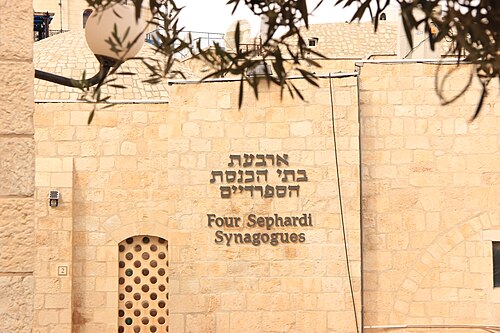
The Four Sephardic Synagogues constitute a historic synagogue complex in the Jewish Quarter of the Old City of Jerusalem.
שוק הכרמל
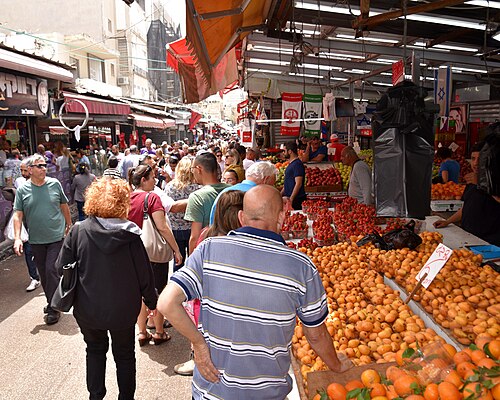
Carmel Market, or Shuk HaCarmel, is Tel Aviv-Yafo’s lively open-air market along Carmel Street. It is part of everyday city life as well as a popular stop for visitors.
كنيسة القيامة
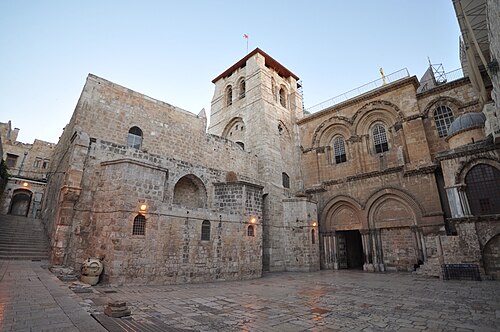
The Church of the Holy Sepulchre stands in Jerusalem's Old City as a major Christian pilgrimage destination. UNESCO recognizes its significance within the World Heritage Site of the Old City of Jerusalem and its Walls.
Église du Pater Noster
The Church of the Pater Noster stands on the Mount of Olives in Jerusalem, traditionally identified as the place where Jesus taught his disciples the Lord's Prayer.
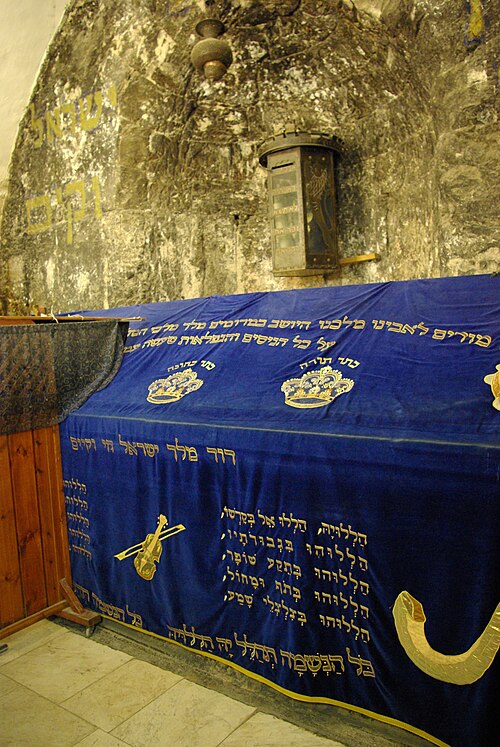
David's Tomb is a sacred site on the ground floor of a historic building on Mount Zion in Jerusalem. It sits beneath the Cenacle, the traditional location of the Upper Room.
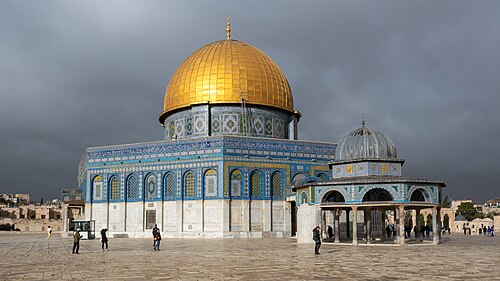
The Dome of the Rock is an Islamic shrine located on the Temple Mount in the Old City of Jerusalem. Completed in 691 CE, it is one of the oldest surviving Islamic monuments.
بستان قبر السيد المسيح
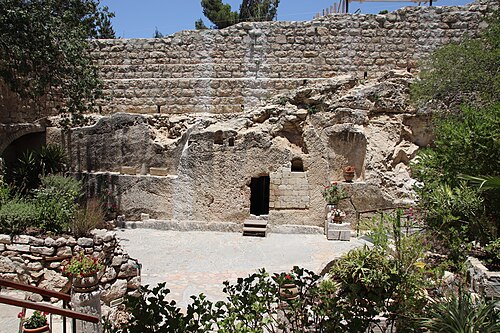
Garden Tomb is a rock-cut tomb set within a peaceful garden north of Jerusalem’s Old City. It was proposed in the nineteenth century as an alternative location connected with the burial and resurrection of Jesus.
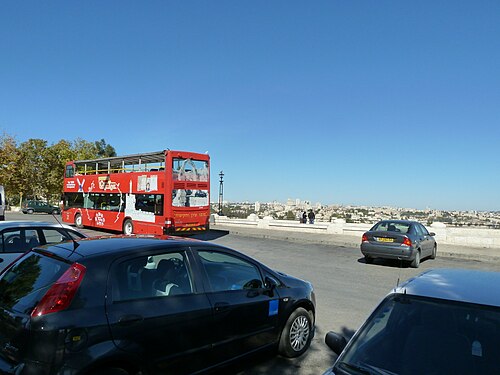
Haas Promenade is an elevated scenic viewpoint on a southern Jerusalem ridge. Its main experience is the broad panorama across the city, including views toward the Old City and Jerusalem’s surrounding urban landscape.
Source: OpenStreetMap contributors, Wikidata ·
Seven to ten days can divide time between Jerusalem and Tel Aviv with one carefully chosen extension to Haifa, the Galilee, Dead Sea or Negev. Religious calendars and changing security conditions can alter access, so keep the route flexible rather than booking every transfer tightly.
Use Israel’s Population and Immigration Authority for the current entry rule, including whether electronic travel authorisation is required. Eligibility depends on nationality and travel circumstances; recheck immediately before departure because border procedures may change faster than ordinary guide content.
Ben Gurion Airport links into the intercity rail and bus networks, and major cities have their own local transit products. Many public services reduce substantially from Friday evening to Saturday evening, so build a separate plan for that period and confirm current operations.
Spring and autumn can balance coastal heat with walking in Jerusalem, but holidays may sharply affect hours, transport and demand. Desert excursions need separate heat planning, and any official security restriction takes priority over the seasonal itinerary.
The Israeli new shekel is the working currency. Cards are widely accepted in cities, while markets and small operators may make cash useful; inspect the ILS amount and any service convention before payment instead of applying habits from another destination.
Emergency services use 100 for police, 101 for ambulance and 102 for fire; electricity is Type C and H at 230 V. Tap-water guidance is Not recorded in this dataset, and current civil-defence instructions should be checked through official channels.