The Muslim Quarter occupies the northeastern part of Jerusalem’s walled Old City and is the largest and most populous of its four traditional quarters. It is a living residential district as well as a major visitor area, with markets, religious buildings, homes and historic lanes closely interwoven. A visit is best understood as a walk through an active neighbourhood rather than a single enclosed attraction. The Muslim Quarter is one of the four traditional quarters of the Old City of Jerusalem. It occupies the northeastern portion of the walled city and is the largest and most populous of the four quarters. The area contains a dense network of residential streets, markets, and religious sites. Its boundaries follow the historical divisions established during the Ottoman period. The quarter has been a center of Muslim life in Jerusalem for centuries and remains a functioning residential neighborhood alongside its significance for visitors. Safety conditions vary. Visitors should consult current travel advisories, exercise situational awareness, and follow guidance from local authorities. The area is generally accessible but subject to rapid changes in conditions.
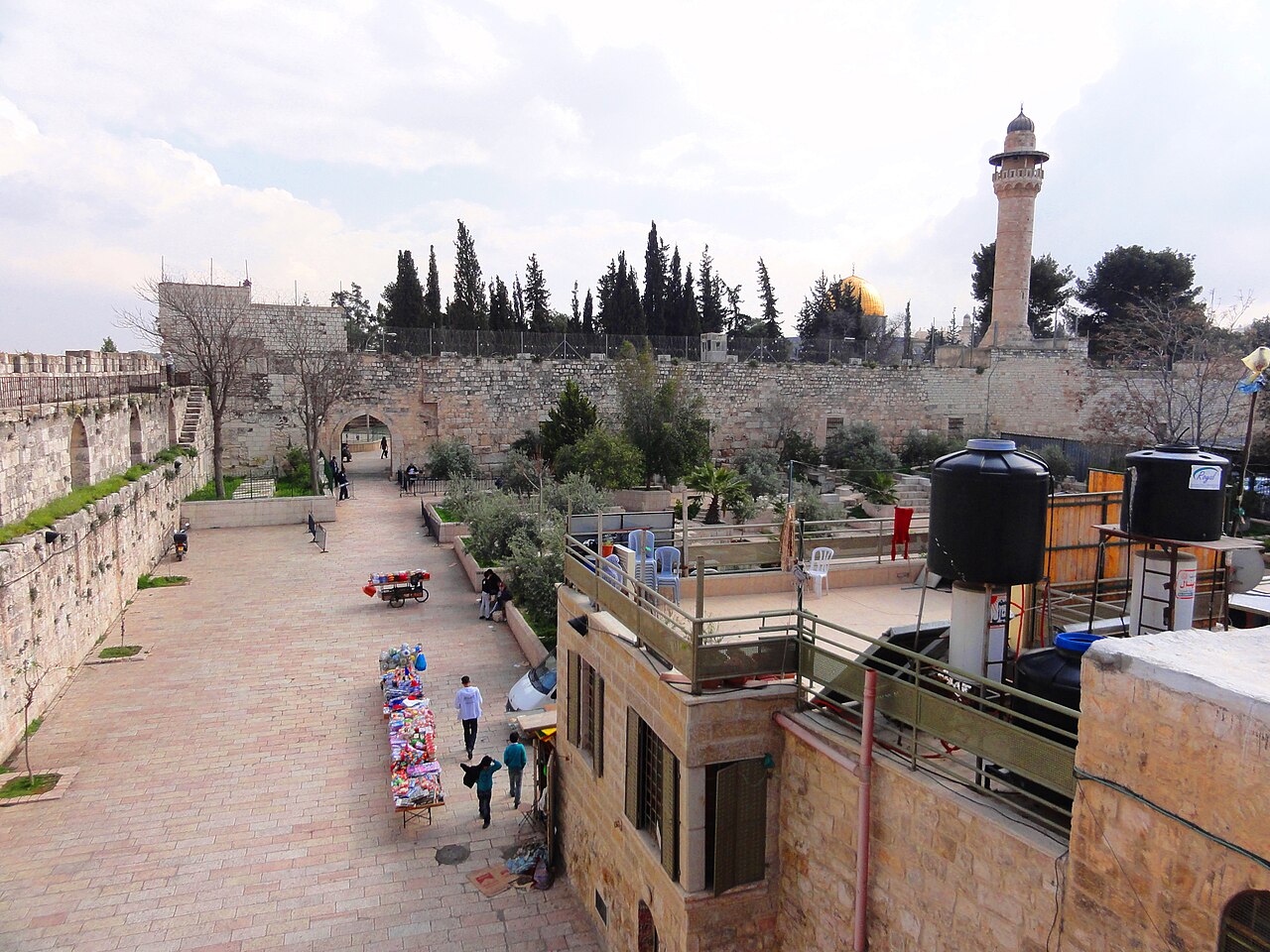
The quarter contains sections of the Old City souk, small shops, food vendors, mosques, madrasas and traditional residential architecture. The Via Dolorosa passes through its lanes, with several Stations of the Cross along the route. At the southern edge, the Temple Mount or Haram al-Sharif includes the Dome of the Rock and Al-Aqsa Mosque, where separate religious access rules apply. The Muslim Quarter contains numerous sites of religious and historical significance. The Dome of the Rock and Al-Aqsa Mosque are located at its southern edge on the Temple Mount or Haram al-Sharif. The Via Dolorosa passes through the quarter, with several Stations of the Cross marked along its route. The quarter also contains traditional markets including sections of the souk, historic mosques, madrasas, and residential architecture. The Damascus Gate provides a major northern entrance. Numerous small shops and food vendors operate throughout the area.
Set aside at least two hours for a focused walk through the markets and historic lanes. Following the Via Dolorosa or visiting particular religious sites can take less time, while a slower exploration can fill much of a day. Crowds, hills, security checks and frequent stops at shops make progress slower than a map distance suggests, so keep your schedule flexible. Visitors typically spend between two hours and a full day exploring the Muslim Quarter depending on their interests. Those following the Via Dolorosa or visiting specific religious sites may require less time. A more thorough exploration of the markets, architecture, and atmosphere warrants a longer visit.
Early morning is often the most comfortable time for walking before the lanes become busier and summer heat intensifies. Friday prayers, Ramadan and other religious observances strongly influence the quarter’s atmosphere and access. Summer is hot, while winter can be cool and wet. Choose clothing and footwear for hills, uneven paving and respectful entry near religious buildings.
Walking through the Muslim Quarter itself is free because it is a public area within the Old City. Individual religious or historic sites may have their own entry arrangements. The Temple Mount or Haram al-Sharif has additional protocols and can restrict access. Market purchases are commonly handled as small transactions, making some cash useful for vendors and shops along the lanes.
Enter through Damascus Gate for a direct northern approach, or use Herod’s Gate and Lions’ Gate. Public transport serves the area around the Old City walls, after which the quarter is explored on foot. The streets are narrow, hilly, uneven and often crowded. Taxis and private vehicles cannot enter the quarter itself, so plan to finish the journey at a gate.
This is an active residential and commercial district, so leave room for residents, shopkeepers and religious visitors. Wear modest clothing, especially near mosques and the Haram al-Sharif. Crowded lanes require attention to personal belongings and movement. Access can change during religious observances or security events. Ask before photographing people, negotiate market prices courteously and follow directions from security personnel.
The markets, stone buildings and narrow lanes offer varied street photographs, but the quarter is also home to many residents. Ask permission before photographing individuals, particularly shopkeepers, families or people engaged in worship. Be cautious near sensitive religious and security locations. Keep cameras secure in crowded passages, avoid drones and stop photographing immediately when a resident, attendant or officer asks you to do so.
Nothing non-essential is set before you choose, in regions where consent is required. If you decline, ads still appear and analytics is switched off entirely.

.jpg)