
5 min walk
Westerpark
- Must see
- Nature site
Language · 11 published
Museum · Amsterdam
Museum Het Schip
Reviewed by Elena Voss · Roavina Travel Editor
| Monday | Closed |
|---|---|
| Tuesday | 11:00 – 17:00 |
| Wednesday | 11:00 – 17:00 |
| Thursday | 11:00 – 17:00 |
| Friday | 11:00 – 17:00 |
| Saturday | 11:00 – 17:00 |
| Sunday | 11:00 – 17:00 |
Parsed from OpenStreetMap opening hours on 2026-09-09.
This place is a Museum. It was established in 1921. It was built in the Amsterdam School style. It was designed by Michel de Klerk. It carries the Rijksmonument heritage designation.
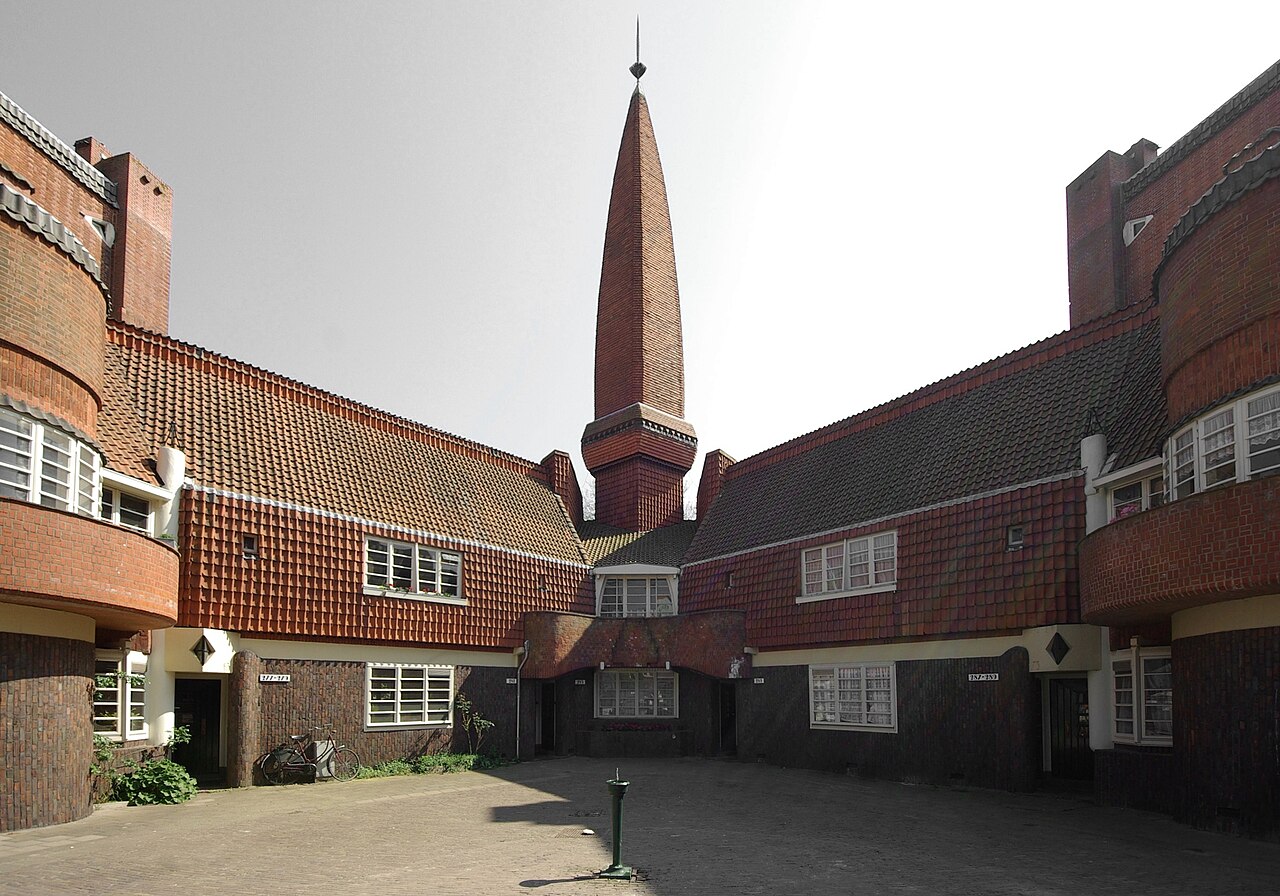
Het Schip is a social-housing complex in Amsterdam’s Spaarndammerbuurt, designed by Michel de Klerk and completed in 1921. Museum Het Schip interprets this building as a defining work of the Amsterdam School, a movement known for expressive brickwork, rounded forms and integrated decoration. Its importance lies in the way architectural ambition shaped everyday workers’ housing. Because parts of the complex remain occupied, Het Schip is both a museum subject and a living piece of Amsterdam’s urban fabric. Unlike a freestanding monument, its meaning is inseparable from the homes, streets and civic purpose for which it was created. The preserved workers’ apartment and former post office make that connection tangible, linking design history to the everyday institutions and domestic spaces that made the complex useful.
Checked 2026-08-26 · Source
Museum Het Schip presents the Amsterdam School through architectural drawings, models, photographs and decorative objects. A preserved workers’ apartment connects the movement’s visual language with domestic life in the early twentieth century. The former post office is also incorporated into the museum experience. Look closely at sculpted brickwork, stained glass, wrought iron and other details: these elements show how designers brought beauty and dignity into ordinary housing. Displays about social housing and Michel de Klerk place the building within a broader architectural and social story. The contrast between formal exhibits and the preserved domestic interior helps explain how the movement affected both public appearance and daily life.
Checked 2026-08-26 · Source
Allow around one to two hours for a focused museum visit. This gives enough time to see the exhibitions, study the preserved workers’ apartment and understand the connection between de Klerk’s design and the social-housing movement. Architecture enthusiasts may want longer, especially if they add an exterior walk through Spaarndammerbuurt. Take time to examine the tower, entrances, brick patterns and decorative elements from several viewpoints. The complex rewards patient observation because its character emerges through many small details rather than one single vista. A slower visit is useful for comparing the museum displays with the exterior forms visible from the surrounding streets.
Checked 2026-08-26 · Source
Het Schip suits visitors interested in architecture and social history who want a setting quieter than Amsterdam’s busiest central sights. Daylight helps reveal the exterior’s brickwork and sculptural forms, so pairing museum time with a neighbourhood walk is worthwhile. Amsterdam weather can change quickly, making a waterproof layer useful when moving between indoor displays and outdoor views. The complex is partly residential, giving the visit a different atmosphere from a vacant monument. Treat the surrounding streets as a living neighbourhood and behave considerately. The site works well as a deliberate detour from central Amsterdam rather than as a brief landmark photograph taken in passing.
Checked 2026-08-26 · Source
The museum visit includes exhibitions, a preserved workers’ apartment and the former post office. Viewing the complex from outside does not establish access to interior or residential areas, so visitors should remain within the designated museum route. No ticket price, discount, pass inclusion or tour surcharge is stated here.
Checked 2026-08-26 · Source
Het Schip is in the Spaarndammerbuurt neighbourhood northwest of Amsterdam’s city centre. Public transport serves the surrounding area, while cycling is a practical way to reach this part of the city through Amsterdam’s extensive bicycle network. Walking is feasible from nearby districts but takes longer from central tourist areas. Parking for private cars is limited in this residential neighbourhood, so cycling or public transport is generally more convenient. Once nearby, identify the museum entrance carefully among the residential parts of the complex and avoid private entrances. The approach is part of the experience: the building is encountered within an active neighbourhood rather than behind a separate museum campus.
Checked 2026-08-26 · Source
Het Schip is partly social housing, so distinguish the museum route from private apartments, entrances and shared residential spaces. Do not enter occupied areas or photograph residents and private windows. The complex is compact, but it should not be treated as though every doorway were an exhibit. Keep noise and behaviour considerate in the surrounding streets, and allow residents clear access to their homes. Interior routes may also include architectural features that require attention while you are looking upward or studying details. Visitors should remember that the building’s authenticity depends partly on its continuing residential use, not on unrestricted access to every part of it.
Checked 2026-08-26 · Source
The exterior is the strongest photographic subject at Het Schip. The distinctive tower, curved brick surfaces, sculptural masonry and carefully shaped entrances show the Amsterdam School’s ambition from different angles. Use public streets to understand the complex as urban design rather than photographing only its most famous façade. Spaarndammerbuurt provides useful architectural context, but it remains a residential neighbourhood. Avoid photographing residents, private windows and entrances, and keep equipment from obstructing museum access or residential movement. Wide views can reveal the relationship between the complex and its streets, while closer images work best when they isolate brick patterns, curves and decorative details without intruding on private life.
Checked 2026-08-26 · Source
It does not establish whether the museum route is step-free, whether lifts are available, or which mobility facilities exist, so this guide makes no accessibility claim.
It does not establish tour schedules, languages, frequency, booking arrangements or additional charges, so this guide makes no claim about guided-tour availability.
The museum includes one preserved workers’ apartment for visitors to view. Other apartments remain private homes, so visitors should stay within the museum route and respect residents’ privacy throughout the visit.
It therefore does not support a claim that refreshments are available inside the museum or that catering forms part of the visit.
It supports no claim about English audio interpretation, downloadable material or museum-provided listening equipment.
It therefore supports no claim about Amsterdam School publications, souvenirs or other merchandise being available at Het Schip.
Loading the interactive map…
The interactive map could not be loaded.
Last updated:
Source: OpenStreetMap contributors, Wikidata ·