.jpg)

10 min walk
Kalamandalam
- Notable
- Art and culture venue
Language · 11 published
Place of worship · Muscat
جامع السلطان قابوس الأكبر
Reviewed by Elena Voss · Roavina Travel Editor
| Monday | 08:00 – 11:00 |
|---|---|
| Tuesday | 08:00 – 11:00 |
| Wednesday | 08:00 – 11:00 |
| Thursday | 08:00 – 11:00 |
| Friday | Closed |
| Saturday | 08:00 – 11:00 |
| Sunday | 08:00 – 11:00 |
Checked 2026-08-31 · Source
Read from the OpenStreetMap access tags; anything not listed has no tag recorded.
Set the group type to family in the planner and the day window contracts to about three quarters of a solo day.
This place is a Place of worship. It was established in 1992. It was built in the Islamic architecture style.
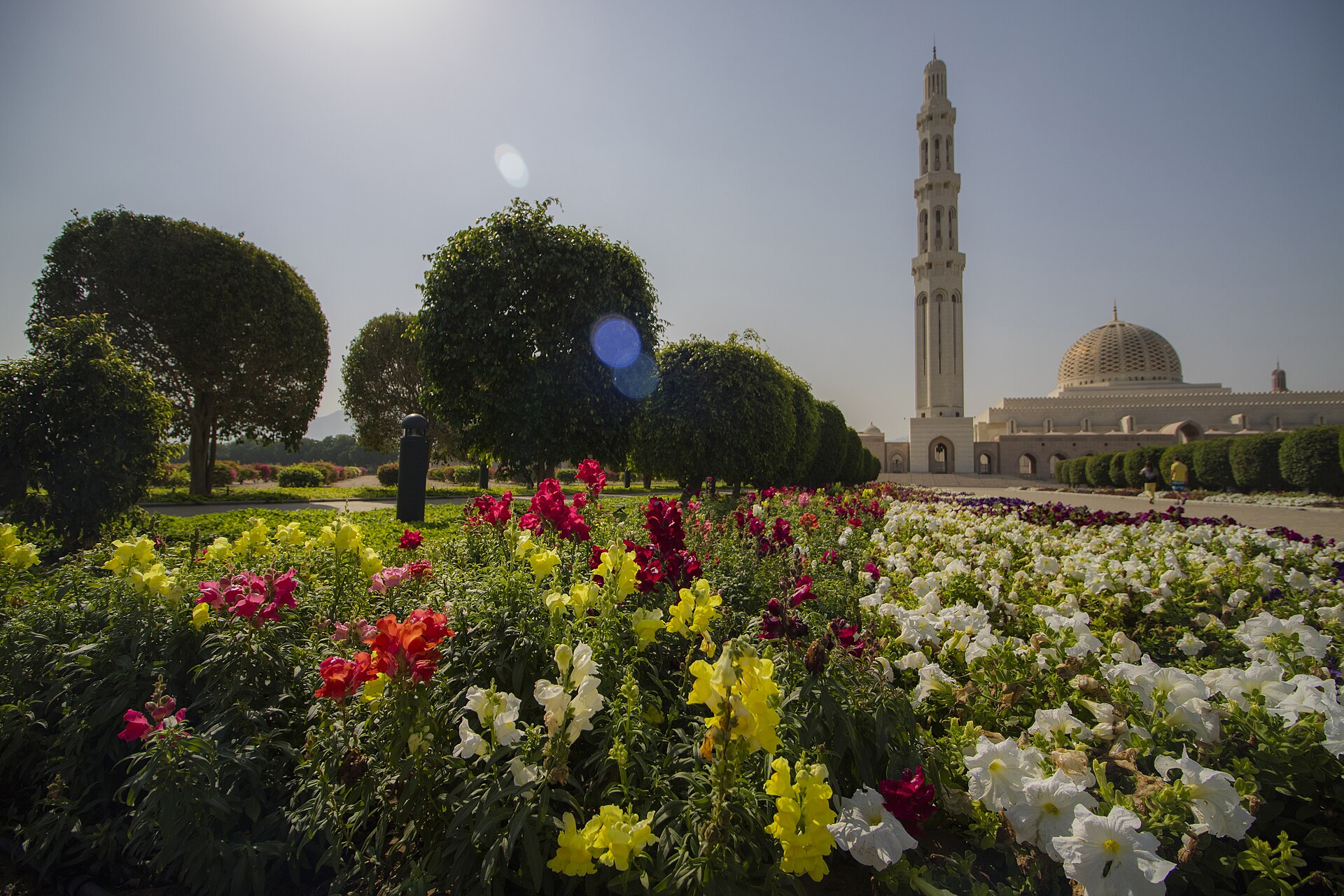
The Sultan Qaboos Grand Mosque is Oman's principal mosque and Muscat's defining modern religious and architectural landmark. Commissioned by Sultan Qaboos bin Said, it represents the country's foremost Islamic religious institution. The mosque serves as a major centre for worship and stands as one of the most significant contemporary religious buildings in the Arabian Peninsula. Its prominence in Muscat's urban landscape makes it an essential point of reference for understanding Oman's modern religious and cultural identity. Saturday–Thursday 08:00–11:00; Friday closed to non-Muslim sightseeing visitors. These are the official visiting hours for non-Muslims; worship access is separate.
Checked 2026-08-31 · Source
The mosque complex contains notable architectural and artistic elements that visitors commonly observe. These include extensive prayer halls, decorative features, and craftsmanship reflecting Islamic artistic traditions. The building incorporates various materials and design elements typical of contemporary mosque architecture in the region. Interior spaces are designed to accommodate substantial congregations for religious observances. A flexible visit lets travellers connect Sultan Qaboos Grand Mosque with the rest of the day without treating one room, viewpoint or photograph as the whole experience. These are the official visiting hours for non-Muslims; worship access is separate.
Checked 2026-08-31 · Source
Visitor duration varies considerably depending on individual interest in architecture, religious sites, and photography. A typical visit for general appreciation of the main spaces might reasonably occupy between sixty to ninety minutes. Those with deeper interest in architectural details, decorative elements, or seeking contemplative experience may extend their stay. The site's scale warrants sufficient time for proper circulation through accessible areas. Visitors should allow flexibility rather than planning tightly scheduled itineraries around this destination alone. General visitor admission is OMR 8.
Checked 2026-08-31 · Source
Religious sites typically observe different schedules for worshippers and non-Muslim visitors, with restrictions often applying during prayer times and Friday congregations. Seasonal considerations for Muscat include notably hot summer months from approximately May through September, when outdoor exploration becomes physically demanding. Saturday–Thursday 08:00–11:00; Friday closed to non-Muslim sightseeing visitors. Mwasalat Route 1, running between Al Mabelah Bus Station and Ruwi Bus Station, serves the named Al Ghubra_A stop. The mosque complex is south of Sultan Qaboos Road in Ghubra; the official tourism guide describes visitor arrival through the formal gardens on the eastern perimeter.
Checked 2026-08-31 · Source
Many significant religious sites in Oman do not charge admission fees for visitors, though this cannot be assumed without verification. Any applicable charges for services, guided tours, or special access would require direct confirmation from mosque administration or official tourism channels. Visitors should not rely on third-party information regarding costs. General visitor admission is OMR 8. The official national tourism page labels the mosque wheelchair accessible. The same source states that the mosque's facilities are equipped to serve visitors with special requirements. Visitors must dress modestly, with shoulders and knees covered.
Checked 2026-08-31 · Source
The mosque occupies a location within Muscat's urban area, accessible by road. Visitors typically arrive by private vehicle, taxi, or organised tour given limited public transportation options serving tourist destinations in Oman. Self-driving requires navigation awareness as Muscat's road network spreads across a elongated coastal geography. Mwasalat Route 1, running between Al Mabelah Bus Station and Ruwi Bus Station, serves the named Al Ghubra_A stop. The mosque complex is south of Sultan Qaboos Road in Ghubra; the official tourism guide describes visitor arrival through the formal gardens on the eastern perimeter.
Checked 2026-08-31 · Source
Respectful conduct is essential at this active religious site. Conservative dress covering arms and legs is required; women typically must cover hair. Behaviour should remain quiet and restrained throughout. Photography restrictions may apply in certain areas or circumstances, requiring attentive observation of posted guidance or staff direction. The official national tourism page labels the mosque wheelchair accessible. Visitors must dress modestly, with shoulders and knees covered. Yes. Women must cover their heads while visiting. Yes. Abayas, headscarves and other suitable coverings are available at the entrance when needed. Yes. Shoes must be removed and left in the designated area before entering the main prayer hall.
Checked 2026-08-31 · Source
Photography opportunities exist but with important limitations requiring visitor judgement. Exterior architectural photography is generally possible, capturing the building's scale and design against Muscat's sky. Interior photography may face restrictions depending on current policy, prayer activities, or specific zones. Tripods and professional equipment might attract scrutiny or prohibition. Visitors should observe others' behaviour and any signage before photographing, particularly regarding worshippers who may not wish to appear in images. Yes. Women must cover their heads while visiting. Yes. Abayas, headscarves and other suitable coverings are available at the entrance when needed.
Checked 2026-08-31 · Source
Visitors must dress modestly, with shoulders and knees covered.
Yes. Women must cover their heads while visiting.
Yes. Abayas, headscarves and other suitable coverings are available at the entrance when needed.
Yes. Shoes must be removed and left in the designated area before entering the main prayer hall.
Photography is permitted only in designated areas, with visitors expected to respect worshippers' privacy.
The main prayer hall accommodates about 6,500 worshippers, while the entire complex accommodates about 20,000.
Loading the interactive map…
The interactive map could not be loaded.

Last updated:
Source: OpenStreetMap contributors, Wikidata ·