1 min walk
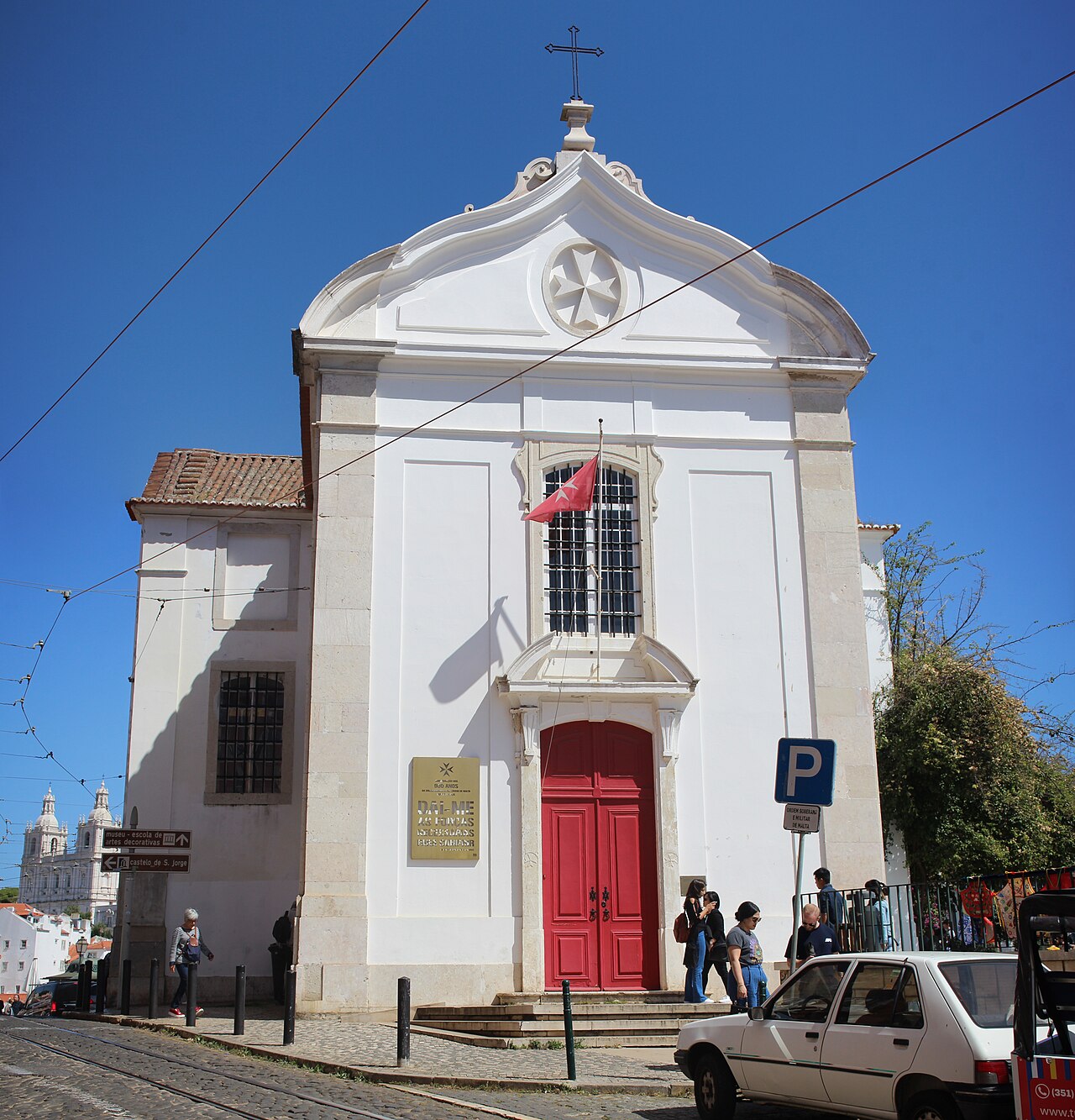
Igreja de Santa Luzia
- High · Heritage site
- Place of worship
Language · 11 published
Activity · Lisbon
Reviewed by Elena Voss · Roavina Travel Editor

| Monday | 00:00 – 23:59 |
|---|---|
| Tuesday | 00:00 – 23:59 |
| Wednesday | 00:00 – 23:59 |
| Thursday | 00:00 – 23:59 |
| Friday | 00:00 – 23:59 |
| Saturday | 00:00 – 23:59 |
| Sunday | 00:00 – 23:59 |
Checked 2026-08-31 · Source
Read from the OpenStreetMap access tags; anything not listed has no tag recorded.
Set the group type to family in the planner and the day window contracts to about three quarters of a solo day.
Alfama is the oldest district of Lisbon, Portugal, occupying a hillside between the São Jorge Castle and the Tagus river. Its name derives from the Arabic Al-hamma, meaning fountains or baths. The district survived the 1755 Lisbon earthquake relatively intact, preserving its medieval street plan of narrow winding alleys, flights of steps, and small squares. Historically a working-class Moorish quarter, later a fishing community, it remains a residential neighbourhood where daily life continues alongside tourism. Public neighbourhood with no attraction-wide visiting schedule; its outdoor streets remain accessible at all hours.
Checked 2026-08-31 · Source
Alfama contains Lisbon Cathedral, the Church of Saint Anthony, several small museums, and multiple miradouros including Miradouro de Santa Luzia and Miradouro das Portas do Sol. The National Pantheon occupies the Church of Santa Engrácia. Tram 28 passes through the district. Street patterns follow medieval rather than grid layouts. Individual churches, museums, and viewpoints function as separate destinations with their own entries. No district-wide closure days. Museums, churches, monuments, shops and restaurants within Alfama keep their own hours and closure days. Free to enter and explore as a public neighbourhood. Individual attractions and performances within Alfama may charge admission.
Checked 2026-08-31 · Source
A walking exploration of Alfama's core area typically requires two to four hours depending on pace, specific stops, and whether individual churches or museums are entered separately. The steep terrain and irregular surfaces slow progress compared to flat districts. Visitors combining Alfama with the adjacent São Jorge Castle should allocate additional time. Extended visits incorporating multiple miradouros, cathedral entry, and meals at local establishments can extend to a full day. Free to enter and explore as a public neighbourhood. Individual attractions and performances within Alfama may charge admission.
Checked 2026-08-31 · Source
Alfama functions as a public urban district accessible at all hours, though individual establishments, churches, and museums within it maintain independent schedules. Evening hours bring street activity around restaurants and fado venues. Daylight hours facilitate navigation of the narrow alleys and staircases. Visitors should consult individual attraction listings for current access times. Public neighbourhood with no attraction-wide visiting schedule; its outdoor streets remain accessible at all hours. Alfama has steep inclines, cobbled lanes, narrow alleys and stairways, so step-free movement is not continuous. The municipal Alfama accessibility route begins at Largo do Chafariz de Dentro and includes stair sections before Rua Norberto de Araújo.
Checked 2026-08-31 · Source
No general admission fee exists for entering Alfama as a public district. Individual churches, museums, viewpoints with facilities, the cathedral, and São Jorge Castle charge separate fees where applicable. Tram 28 requires standard public transport ticketing. Restaurant and fado performance pricing varies by establishment. Visitors should verify current costs at individual attraction entry points or official websites. Free to enter and explore as a public neighbourhood. Individual attractions and performances within Alfama may charge admission. Alfama has steep inclines, cobbled lanes, narrow alleys and stairways, so step-free movement is not continuous.
Checked 2026-08-31 · Source
Tram 28 and Tram 12 serve the district with stops at various points. Bus routes including 737 connect to the cathedral area. The Metro does not directly serve Alfama; the nearest stations are Terreiro do Paço, Baixa-Chiado, and Santa Apolónia, each requiring uphill walking. Carris tram 28E serves Alfama through the named stops Sé, Limoeiro, Miradouro Santa Luzia and Largo Portas Sol. These stops suit the cathedral and upper viewpoints, but onward travel through the neighbourhood is mainly on foot over steep, cobbled streets. The municipal Alfama accessibility route begins at Largo do Chafariz de Dentro and includes stair sections before Rua Norberto de Araújo.
Checked 2026-08-31 · Source
The narrow alleys, irregular steps, and steep inclines create trip hazards, particularly when wet. Pickpocketing occurs on crowded trams and in tourist-concentrated areas. Residential streets contain active vehicle traffic despite apparent pedestrian-priority layouts. Some alleys dead-end or require backtracking. Street signage is limited; navigation by landmark is often more reliable than address-following. Fado touts outside restaurants may apply pressure. Alfama has steep inclines, cobbled lanes, narrow alleys and stairways, so step-free movement is not continuous. A public lift connects Rua Norberto de Araújo with Miradouro de Santa Luzia, overcoming approximately 15 metres of elevation.
Checked 2026-08-31 · Source
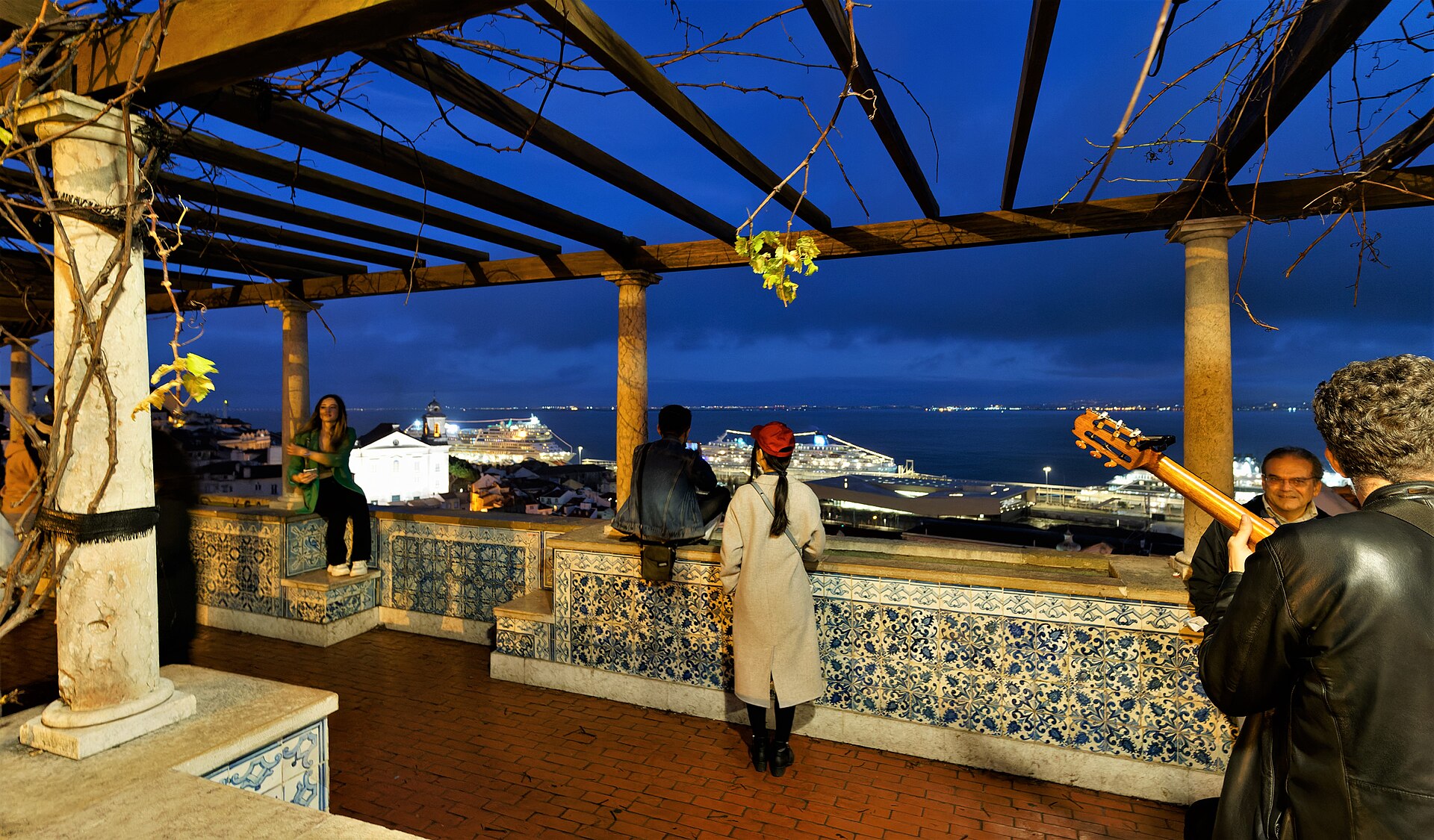
The miradouros offer established panoramic viewpoints over terracotta rooftops toward the river. Morning light illuminates the eastern-facing slopes; evening captures western aspects. Narrow streets create compressed perspectives and shadow patterns. Tram 28 presents moving subjects against architectural backdrops. The cathedral and church exteriors permit exterior photography; interior policies vary by individual institution and should be verified. Residential windows and doorways require discretion. Tripods may obstruct narrow passages and attract attention. Rooftop access is generally restricted to designated viewpoints. Wheelchair users should approach from the lower streets and plan routes around stairs rather than relying on a direct crossing of the neighbourhood.
Checked 2026-08-31 · Source
Alfama is Lisbon's oldest and most traditional neighbourhood, characterised by cobbled lanes, alleys and a hillside street pattern.
No. Alfama has steep inclines, cobblestones and stairways, and Lisbon's official tourism body recommends exploring it gradually on foot.
Largo do Chafariz de Dentro is a principal entrance to the neighbourhood and the starting point of Lisbon's municipal Alfama accessibility route.
Miradouro de Santa Luzia overlooks Alfama, the Tagus, Lisbon's port, the dome of the National Pantheon and the towers of São Miguel Church.
Lisbon Cathedral dates from 1147; its site also preserves Roman remains and a treasury that follow their own visitor arrangements.
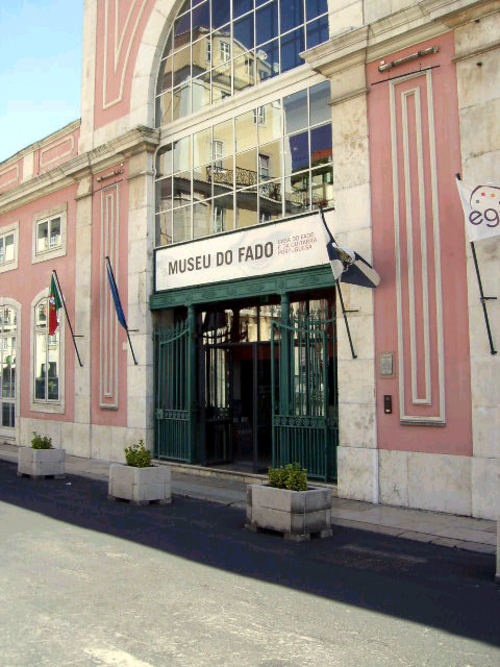
Alfama is identified by Lisbon's official tourism body as a heartland of fado, with Portuguese-guitar music heard in the neighbourhood's fado houses.
Loading the interactive map…
The interactive map could not be loaded.
Last updated:
Source: OpenStreetMap contributors ·