Al-Balad, Jeddah
جدة التاريخية
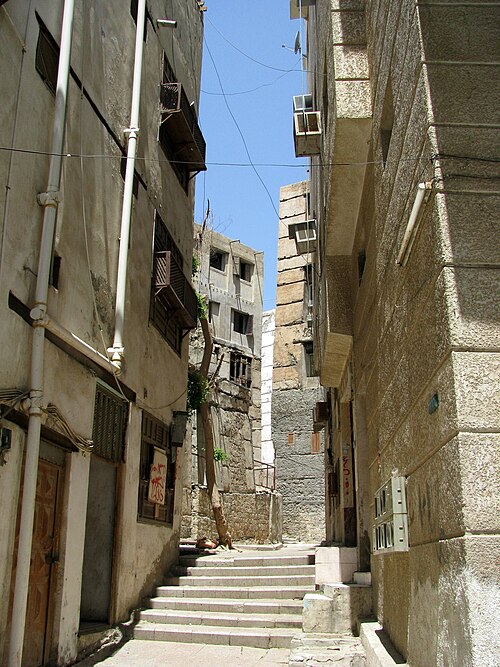
Al-Balad is Historic Jeddah, the old port district beside the Red Sea and a UNESCO World Heritage Site. The official Jeddah Historic District programme describes a 2.
- Must see
- Historic monument
Language · 11 published
City guide · Saudi Arabia
Jeddah stretches north along the Red Sea, with its historic core and modern waterfront forming separate visitor zones. Al-Balad contains the old houses, markets and gates in a compact walking area. The Corniche and waterfront attractions extend for many kilometres, while major museums, mosques and newer leisure districts sit inland or farther north. Grouping stops by coastline section prevents a day from disappearing into repeated road transfers.
Reviewed by Elena Voss · Roavina Travel Editor
Set your days, your pace and the hours you actually want to be out. The planner works around closing days and travel time, and leaves room to eat.
Ranked by importance — sitelinks, pageviews and heritage status, not editor preference.
14 places match
Category
Typical visit duration
Interests
جدة التاريخية
Al-Balad is Historic Jeddah, the old port district beside the Red Sea and a UNESCO World Heritage Site. The official Jeddah Historic District programme describes a 2.
سوق العلوي
Souq Al Alawi is a traditional marketplace situated within Al-Balad, the historic district of Jeddah.
باب مكة
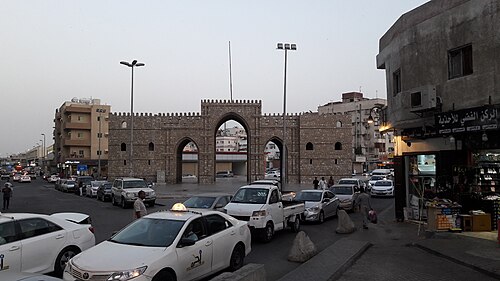
Bab Makkah, known locally as باب مكة, is a historic city gate in Jeddah, Saudi Arabia. The name translates to Mecca Gate, reflecting its historical significance as a departure point for pilgrims traveling to the holy city of Mecca.
Al-Shafi'i Mosque is an active historic mosque in Jeddah, Saudi Arabia. Its local name is مسجد الشافعي. The mosque maintains an independent religious function and is kept as a separate point of interest from the broader historic district stops.
Bait Baeshen is a heritage house museum in Jeddah, Saudi Arabia. The local name is بيت باعشن. It stands as an independently visitable historic residence, preserved separately from broader district heritage stops.
شارع قابل
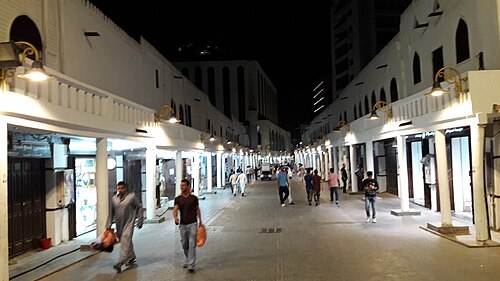
Qabil Street, known locally as شارع قابل, is a historic commercial thoroughfare in Jeddah's Al-Balad district. The street occupies a significant position within the UNESCO World Heritage-listed old town, representing traditional Hijazi urban fabric.
Bab Sharif Gate stands as a historic gateway in Jeddah's Al-Balad district, the city's UNESCO-recognized old town. The structure replaces a former excess mall entry with a design rooted in traditional Hijazi architecture.
بيت الشربتلي
Bait Al-Sharbatly is a historic building in Jeddah, Saudi Arabia, bearing the local name بيت الشربتلي. It stands within the city's historic core, reflecting the architectural heritage of the Red Sea coastal settlement.
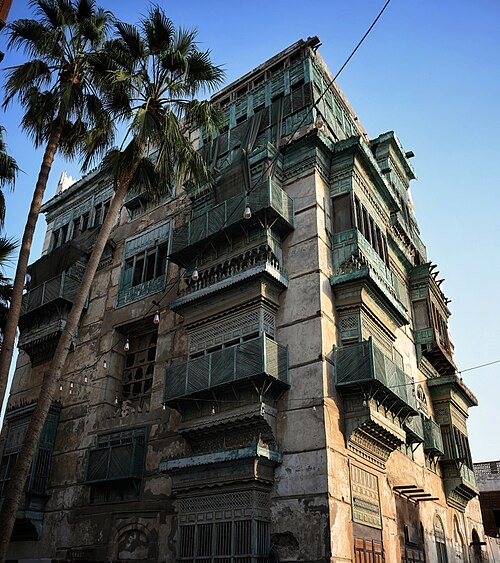
Al Fordha Gate is a historic entrance in Al-Balad, Jeddah’s old town. It marks the transition from the contemporary city into a district known for coral-stone buildings, wooden roshan balconies, merchant houses, souqs, and narrow lanes.
Khuzam Palace Main Gate stands as a surviving palace landmark in Jeddah, representing an era of architectural heritage that has endured amid rapid urban transformation.
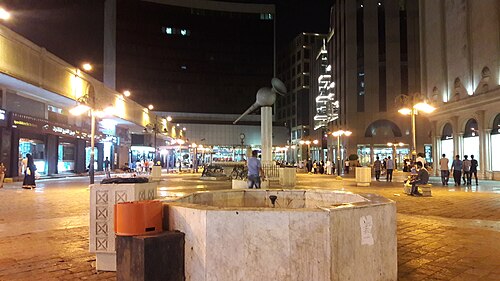
Al Falak Square, or ميدان الفلك, is a public landmark in Jeddah. It occupies a site formerly associated with a non-visitor airport terminal function and now serves as a civic urban space.
Ribat Al-Khunji Al-Kabeer is a historic building in Jeddah, Saudi Arabia, known locally as رباط الخنجي الكبير. The site occupies ground that formerly served as a cemetery, giving the building a distinctive connection with the changing use of urban space.
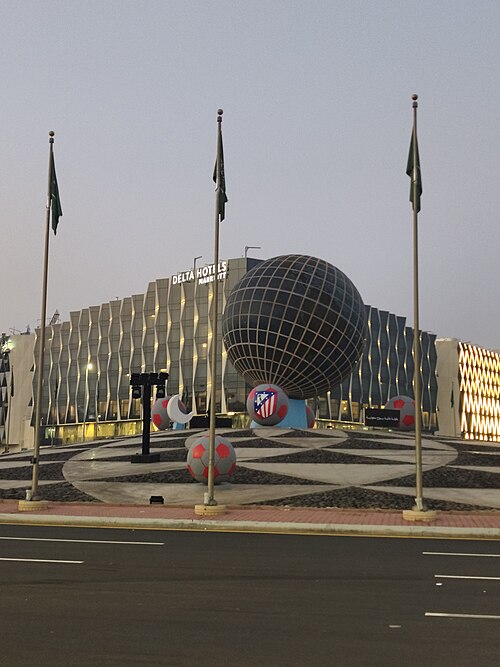
دوار الكرة الأرضية
The Globe Roundabout is a notable urban landmark in Jeddah, Saudi Arabia. Locally known as دوار الكرة الأرضية, it functions as a distinctive traffic circle within the city's public-space network.
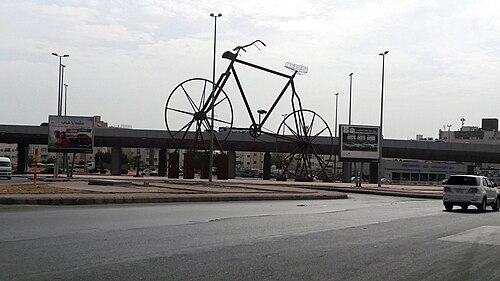
دوار الدراجة
Bicycle Roundabout, locally known as دوار الدراجة, is a distinctive traffic circle in Jeddah, Saudi Arabia.
Source: OpenStreetMap contributors, Wikidata ·
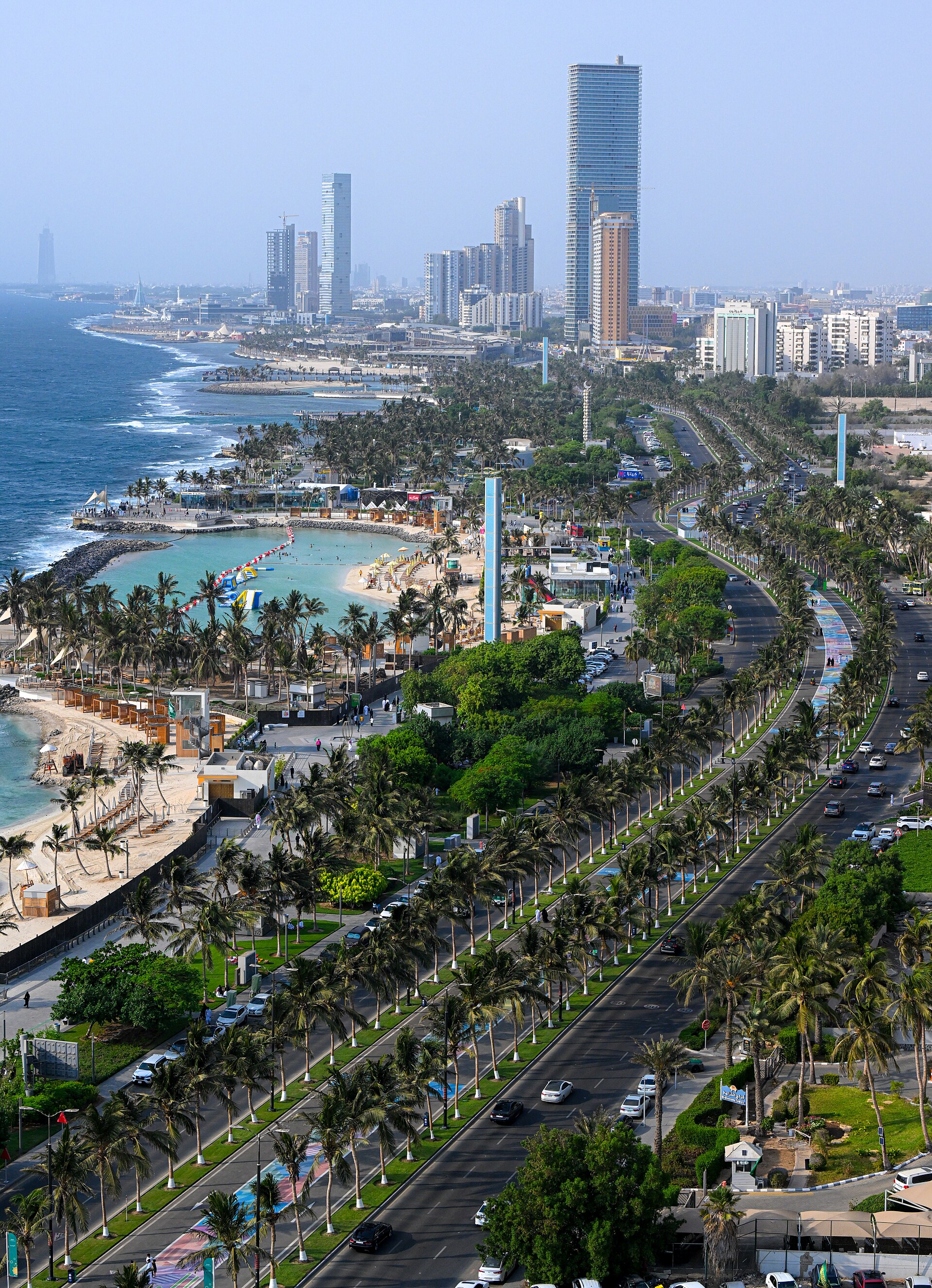
Al-Balad forms the historic centre around its coral-stone houses, souqs and surviving gates. The older central waterfront lies west of it around King Fahd's Fountain. The Corniche continues north through landscaped waterfront sections, public art and leisure areas. Newer commercial and residential districts spread inland, while airport-side and northern attractions lie far beyond the historic core. Treat Al-Balad, central Jeddah and the northern waterfront as separate route blocks.
Checked 2026-08-26
Walk inside Al-Balad, then use a taxi, ride-hailing service or rental car between the historic centre, waterfront sections and northern districts. Saudi Tourism's official Jeddah guide identifies rental cars, ride-sharing apps and local taxis as city transport options. Confirm current fares and pickup arrangements before travel, especially at the airport or after a late waterfront visit, and avoid assuming that the entire Corniche is one short pedestrian route.
Checked 2026-08-26
No fixed stay length is recorded. Separate Al-Balad, the central waterfront and the northern Corniche into geographic blocks, then add inland museums according to priority.
Yes. Its historic houses, markets, gates and lanes form Jeddah's most coherent walking district. Begin and end road transfers at an agreed edge-of-quarter pickup point.
Do not treat the waterfront as one short central promenade. Its attractions extend across several sections, so select a cluster and use road transport between distant stops.
Saudi Tourism's Jeddah guide identifies taxis, ride-sharing apps and rental cars. Check current operator terms and arrange the return journey for farther northern districts.
Al-Balad, the King Fahd's Fountain area and the northern waterfront are distinct zones. Combining all three without planned transfers creates unnecessary backtracking.