
5 min walk
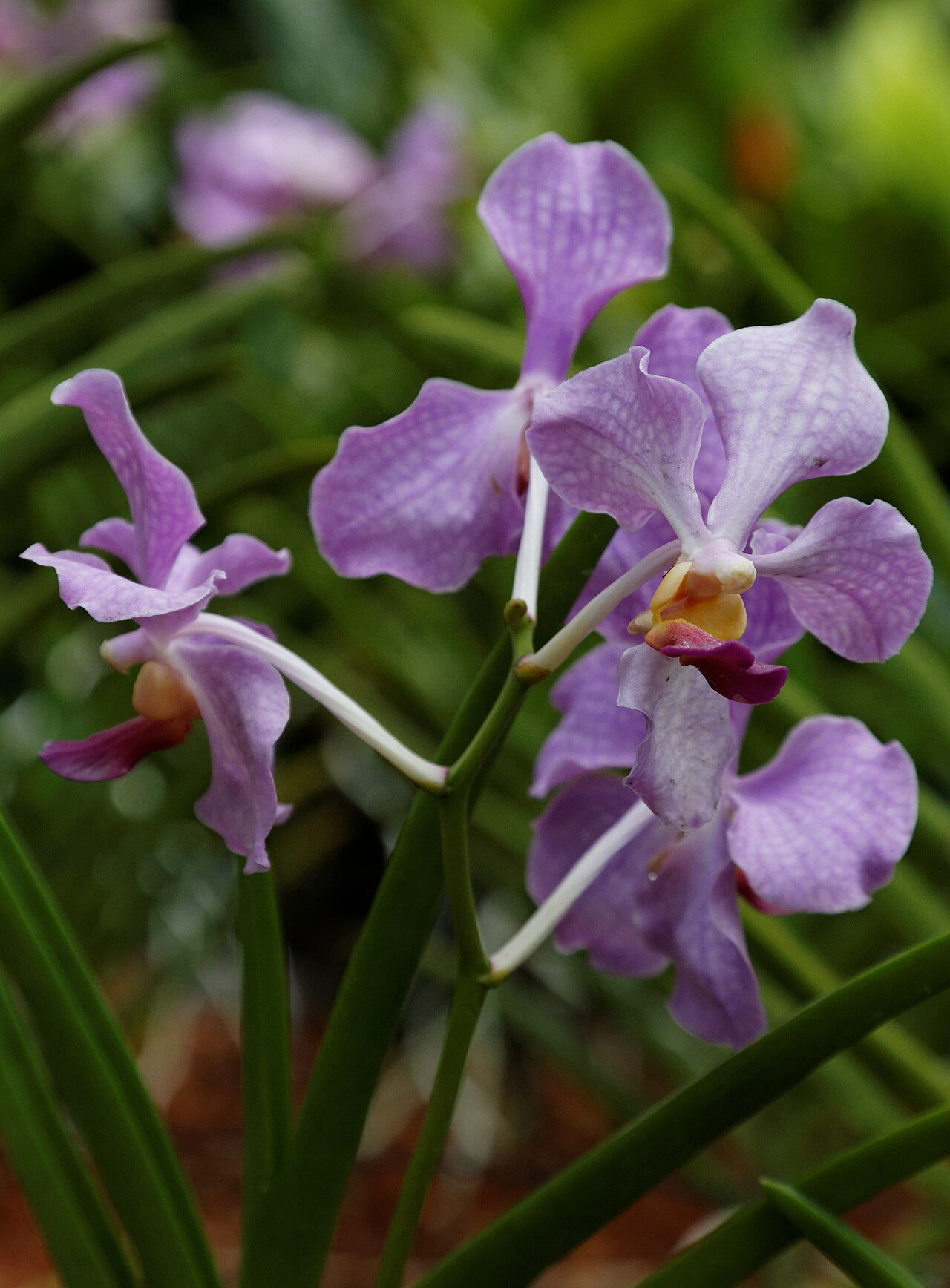
National Orchid Garden
- Must see
- Nature site
Nature site · Singapore
| Monday | 05:00 – 23:59 |
|---|---|
| Tuesday | 05:00 – 23:59 |
| Wednesday | 05:00 – 23:59 |
| Thursday | 05:00 – 23:59 |
| Friday | 05:00 – 23:59 |
| Saturday | 05:00 – 23:59 |
| Sunday | 05:00 – 23:59 |
Checked 2026-08-26 · Source
| Per person | Free entry |
|---|
Checked 2026-08-26 · Source
Read from the OpenStreetMap access tags; anything not listed has no tag recorded.
Set the group type to family in the planner and the day window contracts to about three quarters of a solo day.
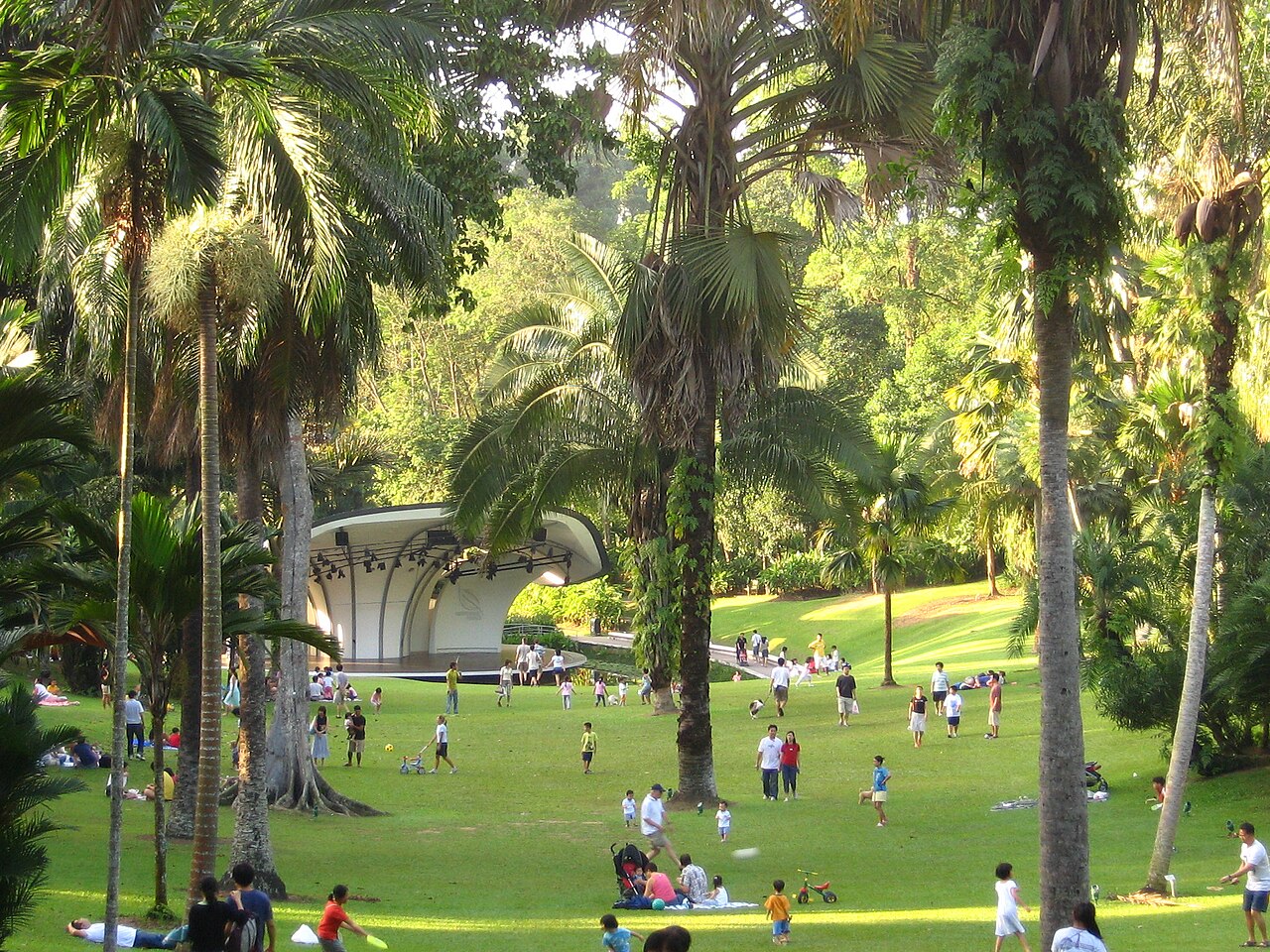
The Singapore Botanic Gardens is an 82-hectare botanic garden roughly ten minutes' walk from the Orchard Road shopping belt, open from 5am to midnight every day and free to enter. It has stood on its present ground since 1859, when a second Agri-Horticultural Society bought 23 hectares of abandoned plantation land at Tanglin from one of its own founders, Whampoa (Hoo Ah Kay), and hired Lawrence Niven to lay it out in the manner of the English Landscape Movement. Niven's bandstand hill, ring roads, Swan Lake and main gate are still where he put them, which is why a walk here is partly a walk through a nineteenth-century plan rather than a modern park. An earlier attempt, Stamford Raffles' botanical and experimental garden of 1822 on Government Hill, had effectively closed by 1829. The scientific reputation was made later, by Henry Nicholas Ridley, Director from 1888, who worked out how to tap the Para rubber tree without killing it and badgered Malayan planters into growing it; by 1920 Malaya was producing over half the world's rubber. UNESCO inscribed the Gardens on the World Heritage List on 4 July 2015, on two criteria: the exchange of botanical knowledge it carried, and its surviving colonial garden landscape. It was the first tropical botanic garden listed, the first in Asia, and the third anywhere.
Checked 2026-08-26 · Source
The Gardens describes itself as a living museum: more than 300 plant families, some 49,000 unique accessions and 9,700 species, with the oldest specimen dating from 1859. What that means on the ground is a chain of separate gardens threaded along a single long north-south spine. The National Orchid Garden, opened in 1995 and extended in 2021 with the Tropical Montane Orchidetum, holds over 1,500 orchid species and 3,000 hybrids and is the only ticketed part of the site. Around it sit Palm Valley, established in 1879 with more than 350 palm species; the one-hectare Ginger Garden with over 550 species of the ginger order, a waterfall and a moss-lined cave; the Healing Garden of Southeast Asian medicinal plants, arranged by the part of the body they treat; the Evolution Garden, which walks 3.5 billion years of plant history past petrified wood and lepidodendron models; and the Fragrant, Foliage and Ethnobotany Gardens. A six-hectare tract of primary rainforest survives inside the boundary, with the Learning Forest and the OCBC Arboretum's dipterocarp collection extending it northwards. Indoor stops include the Heritage Museum, the CDL Green Gallery, the Botanical Art Gallery, the Centre for Ethnobotany and the Seed Bank. Jacob Ballas Children's Garden, for children up to 14, is a separate walled garden with its own hours.
Checked 2026-08-26 · Source
Allow three hours. That figure is this guide's planning default rather than a number the Gardens publishes; what the Gardens publishes is three tiers of advice, and three hours sits deliberately between the middle two. For an hour, the Gardens suggests the National Orchid Garden alone at a comfortable pace, taking in the Tan Hoon Siang Mist House, the Orchidarium, the Bromeliad Collection and the Cool House — and adds, in its own words, that it would be sad if you only stayed an hour. Two hours buys the Orchid Garden more slowly plus the Rain Forest and, if the pace allows, part of the Learning Forest. Four to five hours is the unhurried half day: in from the Tanglin Entrance past Swan Lake, the heritage trees and the outdoor sculptures, up to the Bandstand and the Ginger Garden, then the Orchid Garden and the Rain Forest, out at the Nassim Entrance for lunch at around 1pm. Two published trail timings anchor the arithmetic: the Rain Forest Trail is 600 metres and 30 to 40 minutes, and the Learning Forest audio tour is one kilometre and 60 to 90 minutes. The Gardens warns twice about a cost visitors forget — 15 to 25 minutes of walking between the gates and the nearest MRT stations, at both ends.
Checked 2026-08-26 · Source
Early. The Gardens itself names 6am to 8am as the best window, for cooler air and more bird activity, and the grounds have been open since 5am by then. Nothing else in the day is as comfortable, and nothing else is as quiet. The trade-off is that almost every attraction inside the grounds opens later than the gates: the outdoor themed gardens and the Rain Forest from 7am, Jacob Ballas Children's Garden from 8am, the National Orchid Garden from 8.30am, and the museums, galleries and Seed Bank from 9am. An early walk therefore covers the landscape, the lake and the heritage trees, not the collections. Two weekdays carry fixed closures: the Healing Garden is closed every Tuesday, and Jacob Ballas Children's Garden is closed every Monday unless that Monday is a public holiday. The indoor rooms each close on one dated day a month — the Heritage Museum and the Forest Discovery Centre on the last Monday, the CDL Green Gallery on the last Tuesday, the Centre for Ethnobotany on the last Wednesday, the Botanical Art Gallery on the last Thursday. The Gardens publishes no best-month or busiest-month guidance, and none is invented here; it does say routine maintenance rotates through specific attractions each month, so its notices page is worth reading the day before.
Checked 2026-08-26 · Source
Entry to the Gardens is free for everyone, every day. The only admission charge on the site is for the National Orchid Garden, and it is charged per person at two rates: a local rate for Singapore citizens, permanent residents and people living in Singapore on employment passes, work permits or dependant passes, and a standard rate for everyone else. Adults pay $5 local and $15 standard. Seniors aged 60 and above pay $1 local and $3 standard, as do students — the local student rate applies to students of local public and private institutions who can produce a valid student pass. Children below 12 enter free at either rate. Tickets are bought at the ticketing counter at the Orchid Garden's own entrance rather than online, the garden is open 8.30am to 7pm, and the last ticket sale and last entry are both at 6pm, which is the deadline that catches late arrivals. Bulk ticketing enquiries go to 6475 5060. Everything else that might look ticketed is not: the Rain Forest Trail, the Learning Forest and its audio tour, Jacob Ballas Children's Garden, the Heritage Museum and the galleries are all free, and the Gardens states plainly that admission charges apply only to the National Orchid Garden.
Checked 2026-08-26 · Source
No car is needed. Two MRT stations serve opposite ends of the site: Napier on the Thomson-East Coast Line for the Tanglin Entrance at the south, and Botanic Gardens on the Circle and Downtown Lines, at Bukit Timah Road and Cluny Park Road, for the Bukit Timah Entrance at the north. Because the grounds are long and narrow and the two stations sit at opposite ends, the station chosen decides which half of the Gardens is seen first — arrive at Napier for Swan Lake, the Bandstand and the Orchid Garden, at Botanic Gardens for the Eco Lake, the Learning Forest and the children's garden. Buses 7, 75, 77, 105, 106, 123, 174, 174E and 502 stop on Holland and Napier Road for the Tanglin Entrance; 48, 66, 67, 153, 154, 156 and 170 stop on Bukit Timah and Dunearn Road. Three further gates exist: Nassim, off Evans and Cluny Road, and Tyersall and Gallop, both off Tyersall Avenue. Drivers have eight parking zones inside the grounds, charged by the minute at $0.02, open 5am to midnight daily including public holidays, with no overnight parking; the Jacob Ballas car park closes on Mondays. Coaches and hop-on hop-off tours set down at the Tyersall Entrance, which is also the closest drop-off for the Orchid Garden.
Checked 2026-08-26 · Source
Rain closes things. The Gardens states that during inclement weather the Rain Forest, the Learning Forest, Mingxin Foundation Rambler's Ridge and the Water Play zone in the children's garden are closed, and that they reopen only after an inspection confirms conditions are safe — so an afternoon storm can remove the forest half of a planned visit with no notice. Two longer closures stand at the time of writing: the Public Reference Library is shut until 2027 while the herbarium and library collections are digitised, and the Water Play zone closes from 31 August to 3 September, resuming on 4 September. The Gardens is governed by the Parks and Trees Act, and the rules it highlights are worth knowing before arrival: no smoking, no feeding the wildlife including the swans and turtles, no cycling, scooters, skateboards or skating anywhere inside, no tents or furniture, and no ball games, frisbees, kites or drones. Bicycles are parked at the gates. Pets are allowed on a leash in the open grounds but are barred from a long list of areas, including every indoor attraction, the National Orchid Garden, the Healing Garden, the Rain Forest, the Learning Forest boardwalks and the arboretum. Staff sit at four visitor desks daily from 8am to 5.30pm for first aid, lost property and free wheelchair loans.
Checked 2026-08-26 · Source
Casual photography needs no paperwork. The Gardens states that casual sessions such as family portraits and graduation photographs require no submission, while filming for documentaries and media requires an online permit application at least 14 days before the date of use, with the approval carried on paper or on a phone for spot checks by duty officers. Drones are prohibited outright, alongside kites and model aircraft, so there are no aerial shots to plan for. The light argument follows the Gardens' own advice to come between 6am and 8am: the grounds open at 5am, the low sun comes through the palms of Palm Valley and across the water at Swan Lake, and the paths are close to empty. The catch is that the collections most people photograph open later — 7am for the outdoor themed gardens and the Rain Forest, 8.30am for the National Orchid Garden — so an early start is for landscape and birds, and a second pass is needed for orchids. The Bandstand, an octagonal gazebo on a rise ringed with yellow rain trees, is the most photographed structure in the Gardens and a long-standing wedding-photography spot, which is worth knowing if solitude is the point. Inside the Rain Forest and the Ginger Garden the canopy is dark enough that a still subject and a steady hand matter more than the hour.
Checked 2026-08-26 · Source
Yes. The Gardens states that it is free entry for everyone, every day, and that admission charges apply only to the National Orchid Garden. The Rain Forest Trail, the Learning Forest and its audio tour, Jacob Ballas Children's Garden, the Heritage Museum and the galleries all cost nothing. Parking, if a car is used, is charged separately at $0.02 per minute.
The grounds are open 5am to midnight daily, with no closed day. The attractions inside keep their own shorter hours: the outdoor themed gardens and the Rain Forest 7am to 7pm, Jacob Ballas Children's Garden 8am to 7pm with last entry at 6.30pm, the National Orchid Garden 8.30am to 7pm with last entry at 6pm, and the museums, galleries and Seed Bank 9am to 6pm.
It is charged per person at a local and a standard rate. Adults pay $5 local and $15 standard; seniors aged 60 and above and students pay $1 local and $3 standard; children below 12 enter free. The local rate covers Singapore citizens, permanent residents and holders of employment passes, work permits or dependant passes. Tickets are sold at the counter at the garden's entrance, and the last sale is at 6pm.
Three hours is this guide's planning default. The Gardens publishes no single figure but offers three tiers: an hour covers the National Orchid Garden alone, two hours adds the Rain Forest and part of the Learning Forest, and four to five hours is an unhurried half day from the Tanglin Entrance to lunch at Nassim at about 1pm. Add the 15 to 25 minutes the Gardens warns about for the walk to an MRT station.
No car is needed. Napier station on the Thomson-East Coast Line serves the Tanglin Entrance at the south end, and Botanic Gardens station on the Circle and Downtown Lines serves the Bukit Timah Entrance at the north. The site is long and narrow with a station at either end, so the station chosen decides which half is seen first. Drivers have eight parking zones inside, open 5am to midnight at $0.02 per minute, with no overnight parking.
The Gardens itself never closes, but parts of it do. Jacob Ballas Children's Garden closes every Monday unless it is a public holiday, and its car park closes with it; the Healing Garden closes every Tuesday. The indoor rooms close one dated day a month: the Heritage Museum and the Forest Discovery Centre on the last Monday, the CDL Green Gallery on the last Tuesday, the Centre for Ethnobotany on the last Wednesday, the Botanical Art Gallery on the last Thursday.
Loading the interactive map…
The interactive map could not be loaded.

Last updated:
Source: OpenStreetMap contributors, Wikidata ·