
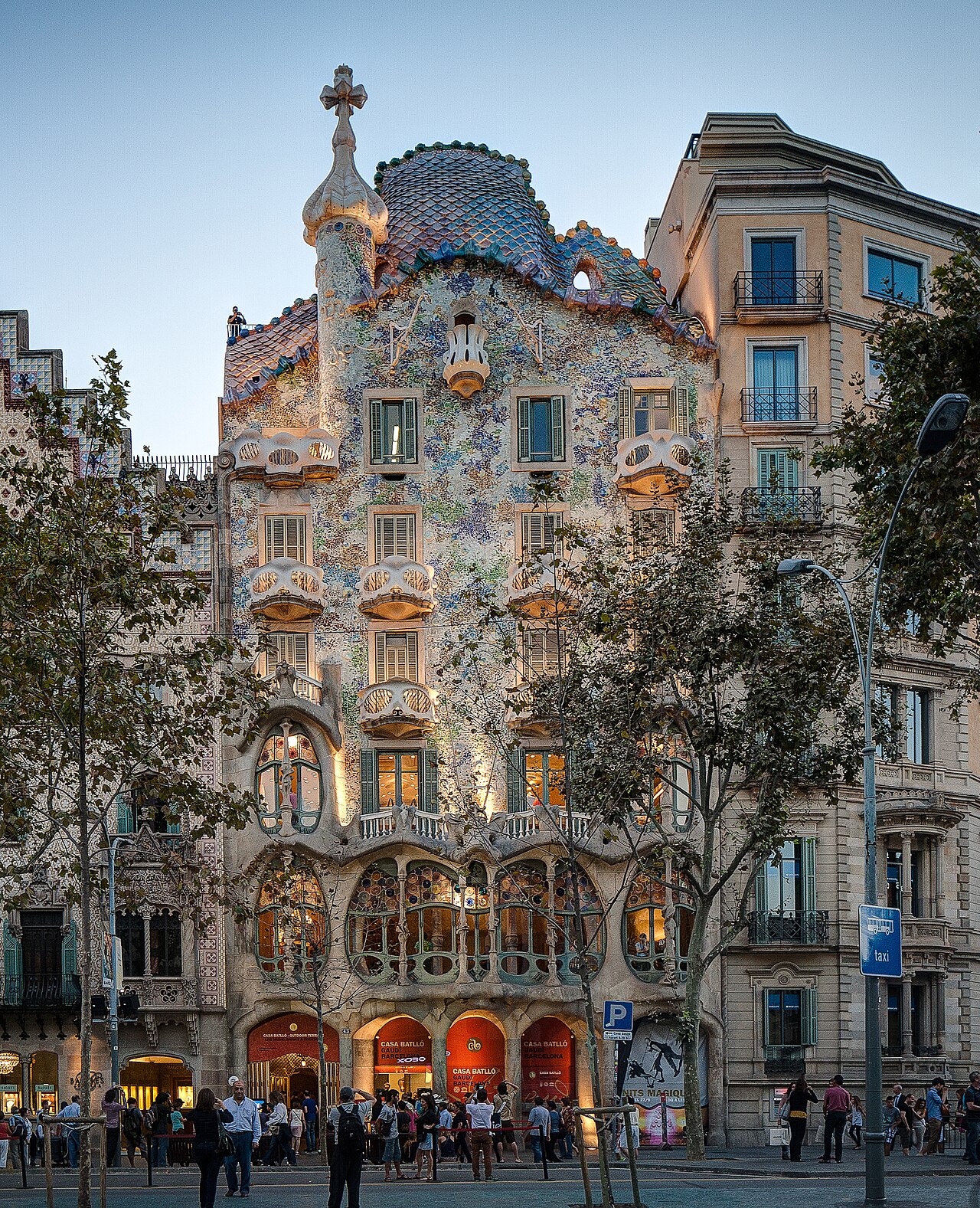
2 min walk
Casa Batlló
- Must see · Heritage site
- Art and culture venue
Language · 11 published
Museum · Barcelona
Museu Tàpies
Reviewed by Elena Voss · Roavina Travel Editor
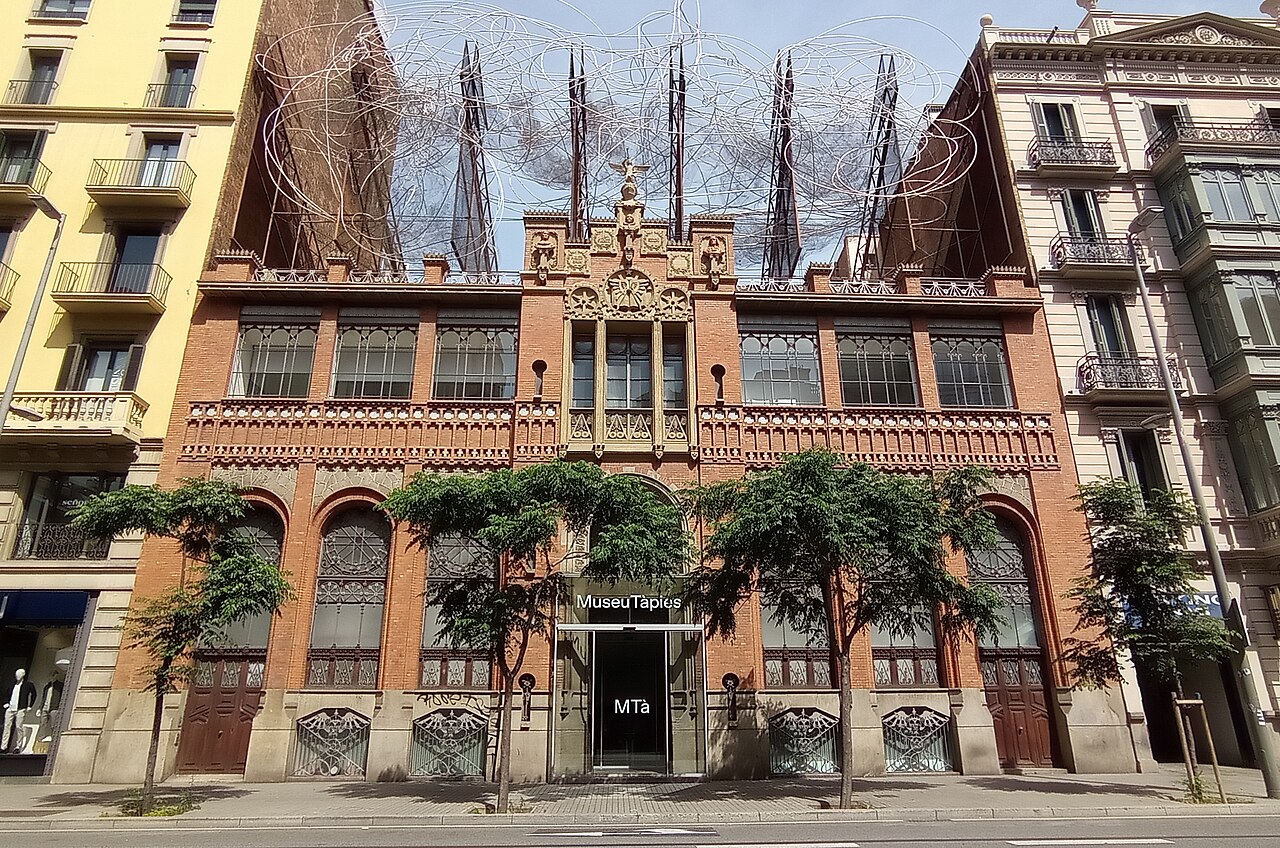
This place is a Museum. It opened in 1990. It was designed by Lluís Domènech i Montaner. It carries the bien de interés cultural heritage designation.
Tàpies Museum is a Barcelona art museum devoted to Antoni Tàpies, the Catalan painter and sculptor. It occupies the former Montaner i Simón publishing house, a Modernista building designed by Lluís Domènech i Montaner. That setting gives the visit two subjects at once: Tàpies’s art inside and Barcelona architecture outside. The exposed brickwork and decorative details make the building an important part of the experience, especially for visitors interested in Catalan Modernisme. Inside, the museum presents Tàpies’s artistic legacy in a setting that connects twentieth-century experimentation with the city’s architectural history. It works well as a focused cultural stop in the Eixample, particularly when you want a quieter museum visit between Barcelona’s larger headline attractions.
Checked 2026-08-26 · Source
The collection brings together paintings, sculptures, drawings, and prints from across Antoni Tàpies’s career. Look for the physical qualities that define his work: marble dust, sand, and found objects become part of the surface rather than remaining hidden materials. The displays trace his movement from early surrealist influences toward the informalist language for which he became known. Temporary exhibitions broaden the museum’s programme into contemporary art and related cultural themes. The institution also maintains archives and documentation connected with Tàpies’s practice and twentieth-century Catalan art. Read the labels closely if you want to follow how his techniques and ideas changed over time, then step back to take in the works as large visual compositions.
Checked 2026-08-26 · Source
Allow about one to two hours for a balanced visit to Tàpies Museum. That gives you time to see the main displays, study the changing surfaces of the paintings, and appreciate the Modernista building without rushing. Visitors who enjoy close analysis of technique or who find a temporary exhibition especially engaging can stay longer. The museum’s manageable scale also makes it easy to place within a wider Eixample day. Pair it with a walk through the district’s grid of streets and façades, or continue toward other central Barcelona cultural sights after your visit. Give yourself a little extra time if you prefer reading every label or returning to particular works.
Checked 2026-08-26 · Source
Morning is a good time to visit Tàpies Museum when you want concentrated viewing before the surrounding Eixample becomes busier. The indoor galleries keep the experience separate from Barcelona’s changing weather, so the museum can also anchor a rainy or very hot part of the day. Summer and major holiday periods bring more visitors to Barcelona generally, while festival days can make central streets livelier. If you prefer a slower experience, build the museum into an earlier cultural walk rather than leaving it between the city’s busiest midday stops. The building and collection reward attention, so choose a time when you can linger rather than passing through hurriedly.
Checked 2026-08-26 · Source
Plan Tàpies Museum as a ticketed museum visit within your Barcelona cultural itinerary. The museum’s purpose is to present Antoni Tàpies’s work, its archives, and related exhibitions in a dedicated indoor setting, so allow enough time to make the admission worthwhile. Keep the visit focused on the galleries and the building rather than treating it as a quick photo stop. A one-to-two-hour slot gives the museum room in your day without crowding out nearby Eixample walks. The practical admission details are intentionally left out here; the guide does not provide a verified ticket amount or entry schedule, so this section focuses on how to use the visit in a day plan.
Checked 2026-08-26 · Source
Tàpies Museum is in Barcelona’s central Eixample, where the regular grid makes the approach easy to combine with walking. Passeig de Gràcia and Urquinaona are the nearest named metro stations in the guide, and several bus routes run through the surrounding avenues. From the historic centre, walk north into the Eixample and use the straight streets and broad intersections to orient yourself. The central location also suits taxi travel and cycling along the city’s urban network. Once nearby, look for the Modernista façade of the former Montaner i Simón building: its exposed brick and decorative treatment help distinguish the museum from the surrounding blocks.
Checked 2026-08-26 · Source
Treat Tàpies Museum as both an art collection and a historic interior. Give the building’s original Modernista details the same care as the gallery displays, and keep personal belongings close while moving through central Barcelona. Crowding can make it harder to stand back from larger works, so leave space around the pieces and move patiently between rooms. Exhibition areas can have their own visitor rules, especially when temporary displays are in place. The strongest experience comes from slowing down: Tàpies’s mixed-media surfaces are easy to underestimate from a distance, while close viewing reveals sand, marble dust, and other materials embedded in the works.
Checked 2026-08-26 · Source
Make the Modernista building a photographic subject as well as the artwork. Exposed brickwork, decorative details, and the relationship between the former publishing house and its current museum use provide useful architectural frames. Inside, compose carefully around Tàpies’s textured surfaces and avoid letting documentation replace looking closely. Keep equipment unobtrusive in the galleries and follow the museum’s displayed rules for individual works or temporary exhibitions. The building’s exterior is especially useful for a short stop before or after the collection, while the interior rewards photographs that show material, scale, and the surrounding architectural context together.
Checked 2026-08-26 · Source
The museum occupies the former Montaner i Simón publishing house, a Modernista building designed by Lluís Domènech i Montaner. Its exposed brickwork and decorative details are part of the visit.
The museum presents Antoni Tàpies’s paintings, sculptures, drawings, and prints, including works using materials such as marble dust, sand, and found objects.
Plan around one to two hours for the main displays and the building. A longer visit suits visitors who want to examine techniques closely or spend time with temporary exhibitions.
It is in the central Eixample. Passeig de Gràcia and Urquinaona are the nearest named metro stations in this guide, with bus routes along the surrounding avenues.
His work often treats materials as part of the image itself, incorporating marble dust, sand, and found objects into paintings and other mixed-media pieces.
Yes. Its manageable scale suits a one-to-two-hour cultural stop, followed by a walk through the Eixample’s grid of streets, façades, and nearby central Barcelona sights.
Loading the interactive map…
The interactive map could not be loaded.
Last updated:
Source: OpenStreetMap contributors, Wikidata ·