

2 min walk
Museu de la Música de Barcelona
- Must see
- Museum
Art and culture venue · Barcelona
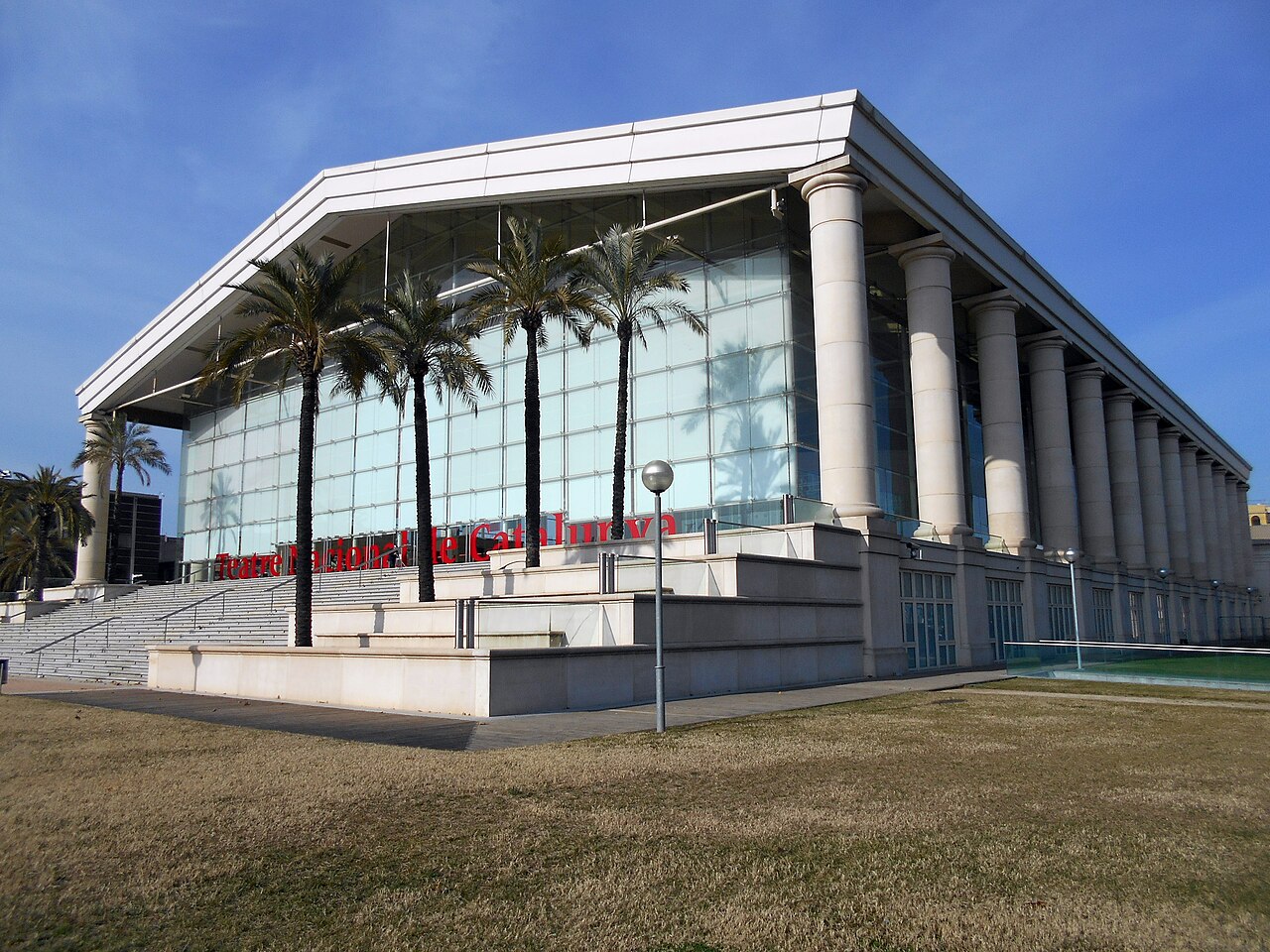
Teatre Nacional de Catalunya is one of Barcelona’s principal theatrical institutions and a major performing arts venue. It stands at Plaça de les Arts, where its contemporary Catalan architecture forms part of the city’s cultural landscape. The theatre is a working venue devoted to dramatic arts, so its character changes with the programme. Plan it as an evening or matinee experience connected to the surrounding urban district, rather than as a conventional museum with a permanent touring route. Teatre Nacional de Catalunya is a major performing arts venue in Barcelona, serving as one of Catalonia's principal theatrical institutions. Located in the Plaça de les Arts within the city's urban landscape, it functions as a cultural hub dedicated to dramatic arts. The building represents contemporary Catalan architectural design and stands as a significant landmark within Barcelona's extensive network of cultural facilities. Its establishment responded to long-standing regional aspirations for a dedicated national theatre infrastructure. A flexible visit lets travellers connect Teatre Nacional de Catalunya with the rest of the day without treating one room, viewpoint or photograph as the whole experience. The venue primarily functions as a working theatre rather than a permanent tourist installation.
Checked 2026-08-26 · Source
The complex contains several performance spaces serving productions of different scales. The main auditorium hosts larger dramatic presentations, while additional halls and rehearsal areas support smaller events and theatre production. Audience areas include foyers, circulation spaces and the rooms used before and after performances. The building’s arrangement combines practical theatre functions with contemporary architectural design. For a visitor, the strongest experience comes from seeing a performance and noticing how the public spaces frame the transition from the plaza into the auditorium.
Checked 2026-08-26 · Source
Allow the full running time of the chosen production, including its interval when one is scheduled. A performance commonly occupies a substantial part of an evening or afternoon, while time in the foyer and the approach across Plaça de les Arts adds a little more. If you are attending without a performance, the public experience is more limited than at a museum. Build the theatre around the programme and leave enough time to arrive calmly before the curtain.
Checked 2026-08-26 · Source
The programme determines when Teatre Nacional de Catalunya is most useful for a visit. Evening performances suit a cultural night in Barcelona, while matinees can fit a daytime plan. Demand can rise for premieres, festivals and prominent productions, so a popular event may shape the rest of your schedule. The plaza and exterior can be appreciated while walking through the district, but the theatre’s principal purpose is its scheduled dramatic programme.
Checked 2026-08-26 · Source
Admission is tied to a specific performance or event rather than to a general sightseeing ticket. Seating and production choice influence the booking, and the theatre’s programme determines what is available on your date. Read the event information before choosing a place in your itinerary, especially if the production is part of a festival or has a fixed start time. A ticketed performance gives the clearest way to experience the building as an audience member.
Checked 2026-08-26 · Source
The theatre is set in Barcelona’s developed central urban fabric and can be reached through the city’s public transport network, followed by a walk to Plaça de les Arts. The surrounding area is suitable for combining the venue with other cultural or city-centre stops. If you drive, plan for regulated street parking or a commercial car park rather than expecting a dedicated visitor space. Arrive early enough to complete the final walk without turning the journey into a rushed entrance.
Checked 2026-08-26 · Source
Teatre Nacional de Catalunya follows the practical rhythm of a working theatre. Entry is organised around the performance start, and late arrivals may need to wait for a suitable pause before entering the auditorium. Keep phones silent and do not record during the production. Crowds concentrate around the foyer and doors immediately before the curtain. If you need a particular seating arrangement, discuss it during booking so the theatre can address the request before the event.
Checked 2026-08-26 · Source
The exterior and Plaça de les Arts provide the clearest photographic subjects, especially when the building’s contemporary lines are set against the open space around it. Inside, keep the camera away during performances and follow staff directions in foyers and circulation areas. Flash is distracting in an audience setting, while a quiet camera or phone is more appropriate before the event begins. Treat other spectators as part of a private audience rather than as subjects for close portraits.
Checked 2026-08-26 · Source
It is a working performing arts venue with several performance spaces, a main auditorium, foyers and production areas. The central visitor experience is a scheduled theatrical performance.
The theatre is at Plaça de les Arts in Barcelona, within a developed urban cultural district connected to the city’s public transport network.
Yes. The complex includes a main auditorium and additional halls that support productions of different scales, together with rehearsal and audience areas.
Build the visit around the start and running time of a chosen production. Allow extra time for the walk to Plaça de les Arts and for entering before the performance begins.
Keep it silent and do not record. Theatre etiquette protects the concentration of performers and the audience throughout the production.
The contemporary exterior and the open setting of Plaça de les Arts offer the most useful subjects. Inside, photograph only where staff and event rules permit it.
Loading the interactive map…
The interactive map could not be loaded.

Last updated:
Source: OpenStreetMap contributors, Wikidata ·